
Reviewed · WHIRLING DERVISH CEREMONIES
Whirling Dervish Ceremony Tickets in Istanbul
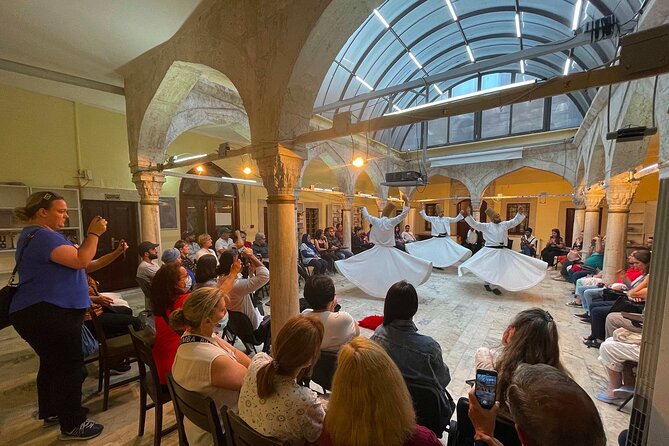
Let the music set the pace. This one-hour Whirling Dervish Ceremony offers a close look at the Mevlevi tradition in a small, old-fashioned salon near Hagia Sophia. I like the live traditional music and the brief introduction to Sufism, Rumi, and the dervish ritual. I also like the central location, which makes this an easy evening stop in Istanbul’s old town.
The main drawback is the venue. It is a small, roughly two-century-old dervish house, and the seating can feel cramped. Show times have also run late, and the coffee, tea, and booklet promised with the ticket have not always been provided. Go with an open mind, and arrive early for a better seat.
In This Review
- Key points to know before booking
- What the ceremony is really about
- Entering the old dervish house near Hagia Sophia
- Arrive early for the best chairs
- The opening explanation gives the ritual a frame
- Live music carries much of the performance
- Watching the dervishes turn
- Coffee, tea, and the information booklet
- Is $22.88 fair for one hour?
- Who should book this ceremony?
- My booking advice
- FAQ
- How long does the Whirling Dervish Ceremony last?
- Where does the ceremony take place?
- Is the admission ticket included?
- Is the experience offered in English?
- Are coffee and tea included?
- Is an information booklet provided?
- Does the ceremony explain the Mevlevi tradition?
- Is skip-the-line access available?
- Can most people participate?
- Can I cancel for a full refund?
Key points to know before booking
- A one-hour Sufi ceremony near Hagia Sophia: The central old-town location fits easily into a day of sightseeing.
- Live music comes before and during the ritual: Expect a strong musical element, with less continuous dancing than some people anticipate.
- A small, intimate room: You can see the performers from close by, but some seats have blocked views.
- A short introduction helps explain the tradition: The presenter gives basic context about the Mevlevi Order, dervishes, and Rumi.
- Coffee, tea, and a booklet are included in the plan: These extras may not always be available, so treat them as a bonus rather than the main reason to book.
- The ticket costs $22.88 per person: That is fair for a short cultural performance in central Istanbul, provided the event starts on time and your expectations match the format.
What the ceremony is really about
The Whirling Dervish Ceremony is not simply a folk dance show. It is a Sufi religious ritual connected with the Mevlevi Order, a tradition linked to the medieval poet and spiritual teacher Rumi, who is closely associated with Konya.
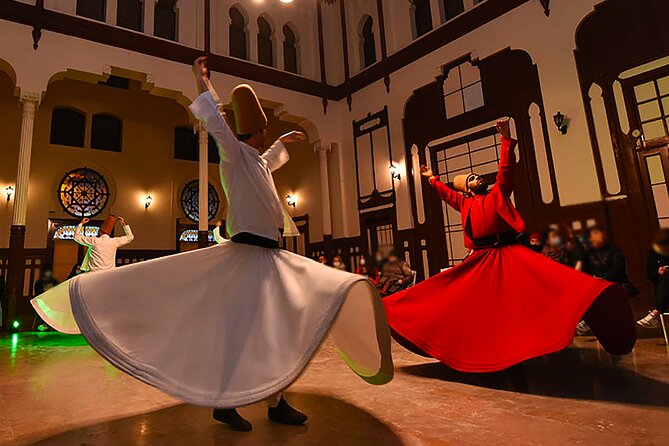
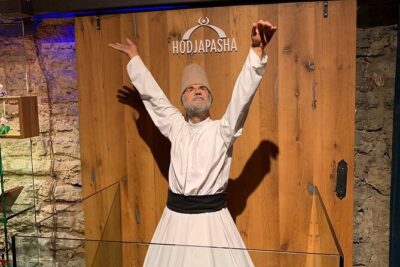
The turning movement represents a spiritual path. The dervish raises one hand toward heaven and lowers the other toward the earth, a gesture often understood as receiving divine grace and passing it on. You do not need a specialist understanding of Sufism to appreciate the sight, but a little context makes the ceremony easier to follow.
I recommend listening carefully to the opening explanation. It gives you a basic map of what you are seeing, which matters because much of the ritual is quiet, repeated, and symbolic rather than theatrical.
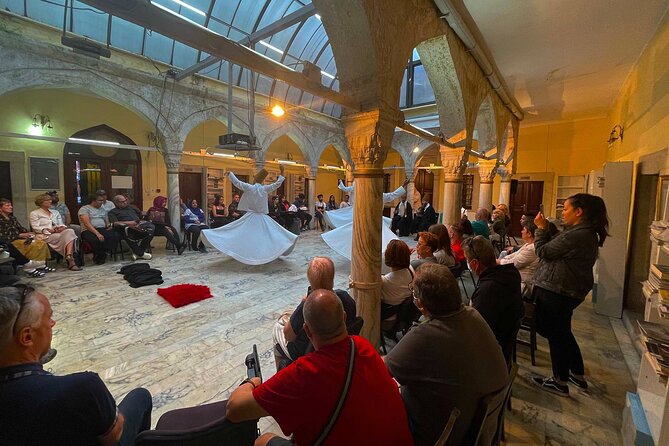
The experience takes place in a traditional house near Hagia Sophia, in the heart of Istanbul’s old town. The building’s age is part of its appeal. Some of the atmosphere comes from the old walls, the close room, and the sense that you are watching a long-standing tradition in a place with its own past.
This is also why the setting can feel imperfect. The old house is not a polished concert hall. It may feel humid, and the small room can become crowded. If you want a grand stage, perfect sightlines, and elaborate production, this may not be your best choice.
More Whirling Dervish Ceremonies in Istanbul
- Istanbul: Hodjapasha Whirling Dervishes Show & Exhibition
★ 4.4 · 4,790 reviews - Istanbul: Whirling Dervishes Ceremony and Mevlevi Sema
★ 4.3 · 1,694 reviews - Istanbul: Whirling Dervish Ceremony next to Hagia Sophia
★ 4.5 · 906 reviews
Entering the old dervish house near Hagia Sophia
The location is one of the strongest points. After visiting Hagia Sophia, the Blue Mosque, Topkapi Palace, or the nearby streets of Sultanahmet, you can reach the ceremony without planning a separate cross-town trip.
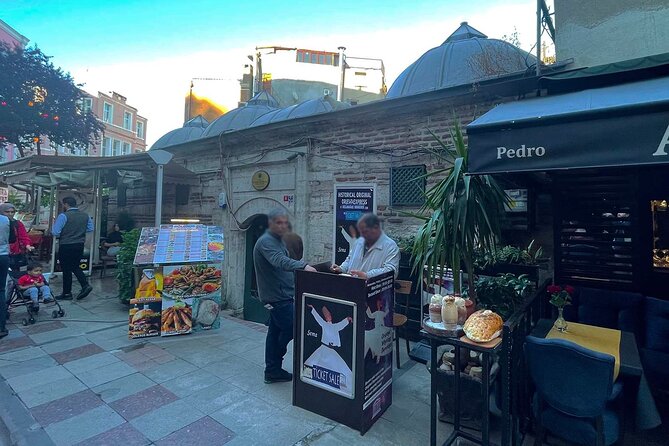
The venue is near public transportation, another practical advantage. The exact location information has caused confusion at times, however. Some people have had difficulty matching the directions with the actual entrance, and even ticket sellers near the site have not always been clear about the venue.
I would allow extra time to find the door. Keep your confirmation available on your phone, and do not assume that the most prominent nearby sign will be the correct entrance. Since the experience is sometimes booked about two weeks ahead, confirm the location details before leaving for the event.
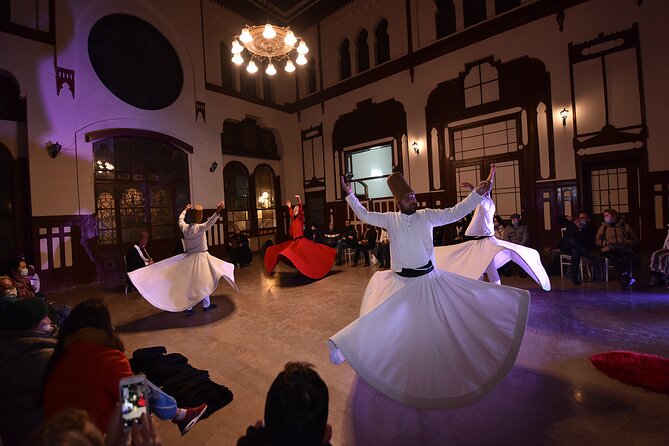
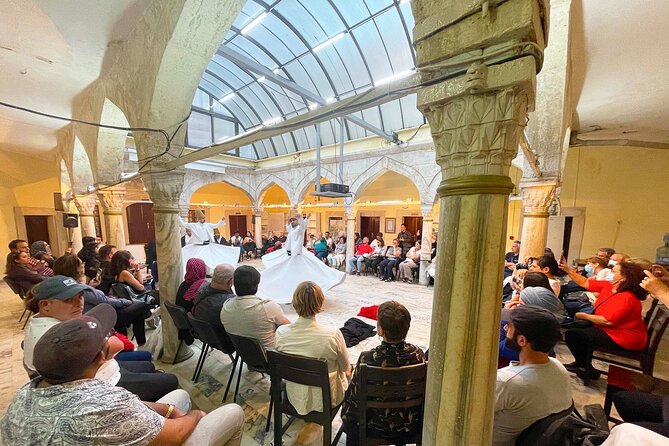
Once inside, expect a compact room rather than the spacious hall shown in some promotional images. The provider has explained that the larger venues pictured elsewhere are not currently being used, and the ceremony takes place in the smaller historic house instead.
That change matters. A small room lets you see the performers at close range, which can make the ceremony feel personal. It also means that a late arrival may leave you with a poor view.
Arrive early for the best chairs
Seating is not assigned in a way that guarantees everyone an equally good view. Some of the chairs are closer to the performers, while others sit behind taller audience members or at less useful angles.
I would arrive early, even though the ceremony itself lasts only about an hour. Early arrival gives you a better chance of sitting where you can see the full turning movement without someone’s head in front of you.
The room has air conditioning according to one detailed account, but other comments describe it as humid because of the old building. Conditions may vary. The important point is that comfort is more basic than luxurious.
There is also some uncertainty around the start time. One performance reportedly began about 40 minutes late, while another account describes a scheduled 6:30 p.m. start moving first to 7 p.m. and then to 7:20 p.m. without much explanation.
That is a serious weakness for a short event. A delay of 30 or 40 minutes can disrupt dinner plans, evening walks, or a connection to another attraction. If you book this ceremony, avoid placing another fixed activity immediately afterward.
The opening explanation gives the ritual a frame
Before the performers begin, a presenter gives a short explanation of the ceremony and the Mevlevi tradition. This is one of the most useful parts for first-time visitors.
Without an introduction, you might see several men turning in white garments and wonder how the hand positions, music, and repeated movements fit together. The presentation helps connect the performance to Rumi, Sufi practice, and the idea of spiritual transformation.
The explanation is brief, not a full lecture. That suits the one-hour format, but it will not answer every question about the symbolism. One audience member found that the projected images and visual elements were not explained clearly enough.
You should think of the introduction as a starting point. It gives you enough background to watch with more understanding, but anyone seeking a serious religious or historical lesson should look for a longer cultural program.
Something different for another day:
- Istanbul: Bosphorus Dinner Cruise & Show with Private Table
★ 4.8 · 44,561 reviews - Istanbul: Daytime or Sunset Sightseeing Cruise & Audio Guide
★ 4.8 · 14,430 reviews - Istanbul: Bosphorus Dinner Cruise with Turkish Night Show
★ 4.8 · 10,127 reviews - Best of Istanbul 1, 2 or 3-Day Private Guided Istanbul Tour
★ 5.0 · 8,922 reviews
Live music carries much of the performance
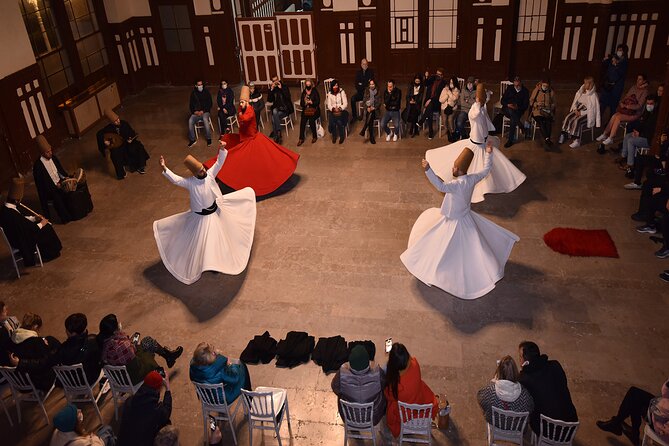
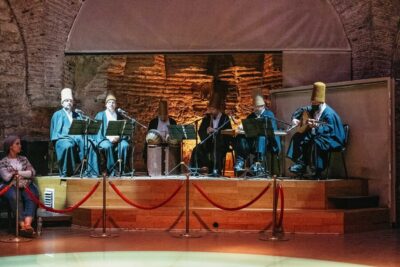
The musicians are a major part of the experience. Traditional sounds begin the program, and the live music continues to shape the mood as the dervishes turn.
Several aspects of the music receive strong praise. It can feel solemn, hypnotic, and more affecting than a recorded soundtrack. If you pay attention to the instruments and the repeated melodies, you may find that the ceremony works as much through sound as through movement.
This is also where expectations matter. The program includes a lot of playing, and the dancers may not whirl continuously for the full hour. If you arrive expecting nonstop spinning, the performance can seem slow.
The repetition is intentional within the religious form. Still, some people will find one melody and similar movements too monotonous. I would choose this event for its combination of music, ritual, and atmosphere, not as a fast-moving stage show.
The lighting and projected imagery add a modern layer. Images appear on the wall during parts of the ceremony, and they can match the music well. On the other hand, the lighting may be brighter than you want for a mystical setting, and unrelated posters or photographs in the background can pull your attention away.
That mixture of old and new is not always graceful. You may see an atmospheric ritual in an old house with distracting advertising materials or a modern image behind the performers. The ceremony can still feel sincere, but the presentation is not perfectly controlled.
Watching the dervishes turn
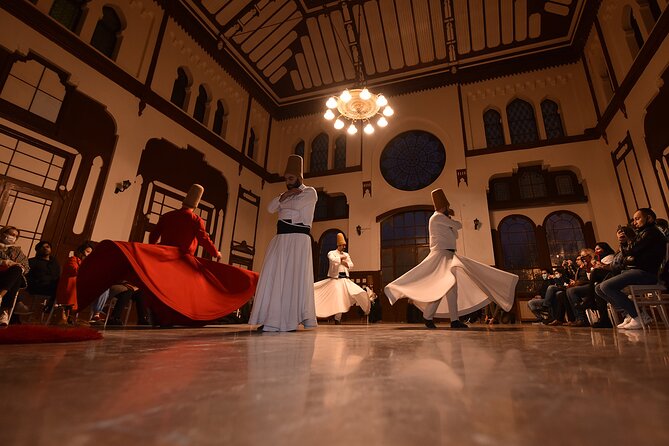
The central part of the event features the dervishes performing the sema ritual. At times, four performers have appeared; at other times, only three were present. Costumes may also differ from the images used to advertise the experience, so do not book it expecting a specific number of dancers or a particular red costume.
The turning itself is impressive. The performers maintain their motion with great control, and it is easy to wonder how they avoid becoming dizzy. Their concentration gives the ritual its force.
You are close enough to notice the calm posture, the steady arms, and the care in each movement. That proximity can make the experience feel less like a large commercial production and more like a small cultural presentation.
The intimate room has a trade-off. You may feel near the action, but a narrow view can make it hard to photograph the full ceremony. If taking pictures matters to you, choose a front or unobstructed seat rather than arriving at the last minute.
It is best to watch rather than treat the program as a photo opportunity. The ceremony moves slowly, and its effect depends on patience. Give the music and turning time to work on their own terms.
Coffee, tea, and the information booklet
Coffee and tea are listed as included, along with an information booklet about Sufis, dervishes, and Rumi. These are useful additions, especially if you want to learn a little before or after the ceremony.
In practice, the refreshments have not always been served. One account describes receiving only a small cup of water, and another says the booklet was not provided. Because of this, I would regard the drinks and printed material as uncertain extras.
The booklet would be especially helpful for visitors unfamiliar with Sufi traditions. Without it, you still receive the short spoken explanation, but you lose the chance to review the terms and symbolism later.
Do not let the refreshments determine your decision. At $22.88, the real value is the performance, the live music, and the central setting. If tea and coffee are available, enjoy them. If not, the ticket should still make sense to you without them.
Is $22.88 fair for one hour?
The price is reasonable for a short cultural event in central Istanbul, but the value depends on what you want from the evening.
At $22.88 per person, you are paying for an admission ticket, a performance lasting about an hour, a live musical element, and a convenient location near major sights. You are not paying for a full guided tour, a long history lesson, or a large-scale theater production.
I think the price works well for someone who wants a simple evening activity between old-town sightseeing and dinner. The event is also family-friendly in the sense that most people can participate, and the short length is manageable for children who can sit quietly.
The value drops if you have a tight schedule, need reliable start times, or expect a polished hall with generous seating. A lengthy delay can make a one-hour ceremony consume most of an evening.
Skip-the-line entry is another small advantage. It can speed up entry, though it does not solve the seating issue inside. Arriving early remains the best way to improve your experience.
Free cancellation is available if you cancel at least 24 hours before the local start time. Cancellations made later, along with late changes, are not eligible for a refund.
Who should book this ceremony?
I would recommend it to you if you are curious about Islamic mysticism, Rumi, traditional music, or the quieter side of Istanbul. It works particularly well after a day among the major monuments, when you want an hour of reflection instead of another busy attraction.
It also suits people who prefer small cultural settings to large tourist shows. The old house, close seating, and live music can feel sincere and personal, even when the room has distracting modern details.
You may want to choose another performance if you dislike repetition, need an exact start time, or want a large, comfortable venue. The ceremony is not designed as a rapid series of dances, and some of the movement may feel similar for long stretches.
I would also be cautious if your main goal is photography. Seating can block the view, and the small room limits your ability to frame the performers cleanly.
My booking advice
Book this experience if you see it as a quiet Sufi ceremony with live music, not a high-energy dance show. Arrive early, allow room for a possible delay, and confirm the location carefully because the entrance information has caused confusion.
The strongest reasons to go are the authentic-feeling ritual, the intimate old-town setting, and the musicians. The biggest risks are late starts, cramped seating, inconsistent extras, and a presentation that sometimes mixes spiritual ceremony with distracting modern signs.
For $22.88, I consider it a fair choice for the right audience. If you want to understand a little of Istanbul’s spiritual side and can accept a modest venue, book it. If you need polished production and strict timing, spend your evening elsewhere.
FAQ
How long does the Whirling Dervish Ceremony last?
The ceremony lasts approximately one hour.
Where does the ceremony take place?
It takes place in a traditional house near Hagia Sophia in Istanbul’s old town.
Is the admission ticket included?
Yes, admission to the Whirling Dervish Ceremony is included.
Is the experience offered in English?
Yes, the experience is offered in English.
Are coffee and tea included?
Coffee and tea are listed as included, although they may not always be available at the venue.
Is an information booklet provided?
An information booklet about Sufis, dervishes, and Rumi is listed as included, but it may not always be provided.
Does the ceremony explain the Mevlevi tradition?
Yes, a presenter gives a brief introduction to the Mevlevi Order, dervishes, and Rumi before the performance.
Is skip-the-line access available?
Yes, skip-the-line access is included for faster entry.
Can most people participate?
Yes, most people can participate, and the experience is near public transportation.
Can I cancel for a full refund?
Yes, you can cancel for a full refund if you cancel at least 24 hours before the experience’s local start time. Late cancellations and changes are not accepted for a refund.
Just added around Istanbul
- 2-Day Gallipoli and Troy Tour from Istanbul and return★ 5.0 · 17 reviews
- Sabiha Gokcen Airport Transfer Service (SAW)★ 4.0 · 17 reviews
- Istanbul Princes’ Islands Boat Trip with Lunch★ 4.0 · 17 reviews
- Best of Istanbul Full Day Private Tour With Guide★ 5.0 · 17 reviews
- Glories of Turkey 12-Day From Istanbul★ 5.0 · 17 reviews
- Istanbul: Bosphorus Morning or Sunset Yacht Tour with Snacks★ 4.9 · 17 reviews
- Full-Day Istanbul to Bursa Excursion With Cable Car★ 4.0 · 18 reviews
- Istanbul – Old City Tour★ 5.0 · 18 reviews
Whirling Dervish Ceremonies, compared.
Hodjapasha Whirling Dervishes Show & Exhibition
Read our review →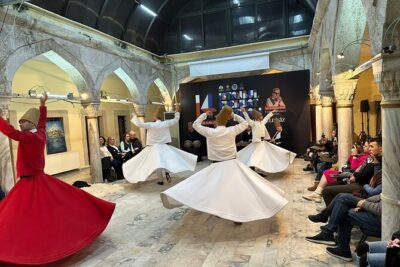
Istanbul Hodjapasha Whirling Dervishes Show & Exhibition
Read our review →
Istanbul Traditional Turkish Dinner and Dervish Experience
Read our review →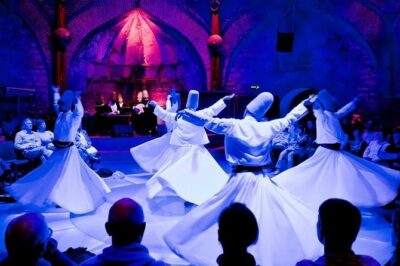
Whirling Dervish Ceremony: Go on a Spiritual Journey
Read our review →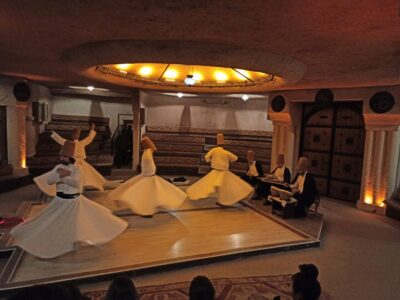
Browse the lists this tour appears in