
Reviewed · HAGIA SOPHIA & OLD CITY TOURS
Istanbul – Old City Tour
History comes alive in Istanbul’s old center. This private tour brings together Topkapi Palace, the Blue Mosque, Hagia Sophia, Basilica Cistern, and the Hippodrome in one well-planned day. I like the private format, which lets your group move at its own pace, and I like the chance to have the city’s complicated past explained by a local guide rather than pieced together from museum labels.
The main consideration is cost. At $264.34 for up to eight people, the price is reasonable for a full private tour, especially with several people sharing it, but entrance fees, food, and drinks are extra. The schedule is also full, so you should expect a long day of walking and standing.
In This Review
- Five details that shape the experience
- Why this private Istanbul tour works
- Topkapi Palace and four centuries of Ottoman power
- Blue Mosque: a short stop with a working purpose
- Hagia Sophia and the layers of Istanbul
- Basilica Cistern beneath the streets
- The Hippodrome and the public life of Constantinople
- What the $264.34 price really covers
- Timing, pickup, and the practical side of the day
- Who will get the most from this tour
- Should you book the Istanbul Old City Tour?
- FAQ
- How much does the Istanbul Old City Tour cost?
- How long does the tour last?
- Which attractions are included in the route?
- Are entrance fees included?
- Where does the tour start?
- Can the guide pick my group up elsewhere?
- Where does the tour end?
- Is this a private tour?
- What language is the tour offered in?
Five details that shape the experience
- Five major sights in one day: You visit Topkapi Palace, the Blue Mosque, Hagia Sophia, Basilica Cistern, and the Hippodrome.
- A private guide for your group: No strangers join you, and the day can be tailored to your interests.
- Topkapi takes the largest share of time: The two-hour visit gives this former Ottoman palace room to breathe.
- Admission fees are separate: Topkapi Palace and the Basilica Cistern require extra payment, while the Blue Mosque, Hagia Sophia, and Hippodrome are listed as free stops.
- Pickup is flexible: You can meet at Hagia Sophia, your hotel, Galataport, Sarayburnu port, or another agreed site or museum.
- A strong guide can make the difference: Nese is praised for making complicated history clear and conversational.
Why this private Istanbul tour works
Istanbul’s Old City is compact on a map but dense with landmarks. A few streets can take you from the imperial Ottoman court to a Byzantine church, a Roman sporting ground, and an underground water system. That makes this area ideal for a guided walk, but it can also feel like a lot to absorb without a clear thread.
This tour gives you that thread. The route moves through the political, religious, and daily life centers of old Constantinople and Ottoman Istanbul. You are not simply checking off five attractions. You are seeing how different empires used the same small patch of the city.
The private setup matters. Your group can ask questions, pause when a detail catches your attention, or spend less time on a stop that does not suit you. A shared group tour may cost less per person, but it cannot offer the same control.
The guide is the key part of the experience. Nese receives especially warm praise for reducing large amounts of history to the essential points without making the conversation feel like a lecture. One guest describes her as easy to talk with, almost like a friend explaining the city’s wonders. That is exactly the kind of guide you want in a place with several centuries competing for your attention.
The tour is offered in English and lasts about six to eight hours. That broad time range gives some flexibility, but it also means the exact pace may depend on entrance lines, prayer times, your group’s interests, and how long you spend inside Topkapi Palace.
More City Tours in Istanbul
- Istanbul: Private Turkish Bath, Massage, and Spa in Old City
★ 4.6 · 3,225 reviews - ISTANBUL BEST: Iconic Landmarks Full Day PRIVATE Guided City Tour
★ 5.0 · 1,032 reviews - Istanbul: Best of The City Full-Day Tour with Transfers
★ 4.6 · 616 reviews
Topkapi Palace and four centuries of Ottoman power
Topkapi Palace is the longest stop, at about two hours, and rightly so. It served as the main home of Ottoman sultans for roughly 400 years, from 1465 to 1856. The Ottoman Empire itself lasted 624 years, so this palace covers a major part of that long period.
I like starting with Topkapi because it gives the rest of the day political context. This was not only a royal residence. It also hosted state business, official ceremonies, and court entertainment. As you move through the palace, you can think about the decisions made here and the people who lived behind its walls.
The palace also contains important Islamic relics, including Muhammad’s cloak and sword. For many visitors, these objects are among the most meaningful parts of the visit. Your guide can help place them within the wider religious and imperial story, rather than leaving you to read a few short labels and move on.
Two hours is enough for a substantial visit, but it is not unlimited. Topkapi is large, and the entrance fee is not included. If your group wants to see every available section at a slow pace, you may need to discuss priorities with the guide. If you prefer a focused introduction to Ottoman Istanbul, the planned time should work well.
The palace is also the point where the extra costs become most noticeable. The tour price covers the private guide, not museum or attraction admission. Confirm the current entrance arrangements when booking so you know what to budget beyond the headline price.
Blue Mosque: a short stop with a working purpose
The Sultan Ahmed Mosque is better known as the Blue Mosque because of the blue tiles used inside. Built between 1609 and 1616 during the reign of Ahmed I, it remains an active mosque as well as a major sight.
The planned visit lasts about 30 minutes. That is enough for an introduction to the building and its role, though it will not feel like an unhurried architectural study. The mosque includes the founder’s tomb, a religious school, and a hospice, which helps show that it was designed as more than a place for formal prayer.
Because it is still used for worship, the visit has a different character from a museum stop. Your guide can explain what you are seeing, but access and timing may be shaped by religious services. The listed admission is free, but you should still follow the site’s rules and dress expectations.
I appreciate the shorter time here. Istanbul offers so much, and spending two hours at every monument would make the day exhausting. The Blue Mosque works well as a focused stop between the palace and Hagia Sophia.
Hagia Sophia and the layers of Istanbul
Hagia Sophia receives about an hour, making it one of the central stops. Its story crosses several religious and political eras. From its dedication in 360 until 1453, it served as an Eastern Orthodox cathedral and the seat of the Patriarchate of Constantinople. It later became a mosque, then a museum, and once again a mosque.
That changing role is the main reason to visit with a guide. The building is not just old and impressive. It reflects the shifts that shaped Istanbul itself. A clear explanation can help you understand why Christian and Islamic elements appear within the same monument and why its status has changed over time.
The stop is listed as free, while the tour does not include attraction entrance fees. Since religious use and visitor arrangements can change, your guide is useful for explaining what you can see during your visit. The one-hour allocation gives you time to take in the major features without turning the whole day into a single building tour.
You should also expect this stop to feel different from Topkapi. Topkapi tells the story of Ottoman court life and government. Hagia Sophia brings together faith, empire, architecture, and political change in one place. Taken together, the two stops give you a strong sense of why the Old City matters.
More Hagia Sophia and old city walks:
- Istanbul: Hagia Sophia Skip-the-Line Ticket & Museum Option
★ 3.7 · 4,958 reviews - Istanbul: Blue Mosque & Hagia Sophia Guided Tour w/ Tickets
★ 4.8 · 3,600 reviews - Istanbul: Hagia Sophia Skip-the-Line Ticket and Audio Guide
★ 4.3 · 2,246 reviews - Istanbul: Basilica Cistern & Hagia Sophia Combo Ticket
★ 4.6 · 1,990 reviews
Basilica Cistern beneath the streets
The Basilica Cistern is only about 150 meters southwest of Hagia Sophia, so the route between the two sights is efficient. This underground reservoir was built in the sixth century during the reign of Byzantine Emperor Justinian I.
It is the largest of several hundred ancient cisterns beneath Istanbul. That fact alone changes how you see the city. Above ground, you are walking through imperial squares and monumental buildings. Below ground, an enormous water system reveals the practical work needed to keep the city running.
The visit lasts about 30 minutes, and admission is not included. That short slot gives you a vivid look at the structure, but you may want more time if underground architecture interests you. The stop also offers a welcome change of mood after the grand religious and royal buildings.
I would pay attention here to the contrast between function and atmosphere. This was built as infrastructure, yet its underground setting makes it one of the more memorable stops. Your guide can connect it to the larger Byzantine city and explain why water storage mattered so much.
The Hippodrome and the public life of Constantinople
The Hippodrome is a brief 15-minute stop, but it fills an important gap in the story. It was a Roman circus where chariot and horse races took place, and it also served as a major social and sporting center in Constantinople.
Do not expect a long indoor visit. This is a place to understand the shape and purpose of the old public arena. Your guide’s explanation is particularly useful because the modern setting can make it hard to picture the noise, crowds, and competition that once filled this space.
The Hippodrome helps balance the day. Topkapi represents imperial power. The mosques and Hagia Sophia represent religious life. The cistern represents city infrastructure. The Hippodrome shows public entertainment and social life.
At 15 minutes, this stop is more of a historical orientation than a full attraction visit. That is fine, as long as you know what to expect. It adds context without taking time away from the larger monuments.
What the $264.34 price really covers
The listed price is $264.34 per group of up to eight people. That makes the math important. A group of eight pays about $33 per person for the private guide service. A couple pays about $132 each before entrance fees, so the value changes sharply with group size.
For a family or group of friends, this can be a sensible way to see the Old City. You receive a private tour lasting six to eight hours, and the guide can focus on your group rather than a large crowd. For two people, the price is harder to justify unless you place a high value on private guiding and a tailored pace.
The price does not include food, drinks, or museum and attraction entrance fees. Build those costs into your day. Topkapi Palace and the Basilica Cistern are specifically listed as paid stops, while the Blue Mosque, Hagia Sophia, and Hippodrome are listed as free.
I would compare this with the cost of arranging several separate guided visits. The appeal here is not just seeing five places. It is having one person connect them into a single story and handle the movement between them.
Timing, pickup, and the practical side of the day
The usual start window is 8:00 to 9:00 in the morning, Monday through Sunday, during the stated operating period from February 12, 2025, through December 1, 2026. Starting early is useful in an area where several major sights draw visitors.
The listed meeting point is in front of Hagia Sophia at Sultan Ahmet, Ayasofya Meydanı No. 1. Pickup can also be arranged at Galataport, Sarayburnu port, your hotel, or the front of a nominated site or museum. This flexibility is especially useful if you arrive by cruise ship or want to begin close to your accommodation.
The tour ends back at the meeting point. If you are picked up somewhere else, confirm the return arrangement before the day begins. The information provided confirms the end point as the meeting point, so it is worth clarifying how that applies to hotel or port pickup.
Six to eight hours is a serious sightseeing block. Wear comfortable shoes, keep water with you, and avoid planning another demanding activity immediately afterward. Food and drinks are not included, so ask your guide about a suitable break if your group needs one.
The tour is private, and only your group participates. Service animals are allowed, public transportation is nearby, and most people can take part. Those details make the tour broadly practical, though the length and amount of walking may still matter if anyone in your group has limited stamina.
Who will get the most from this tour
I would recommend this experience to first-time visitors who want a strong introduction to Istanbul’s Old City in one day. It is also a good fit for families and small groups that want to ask questions without slowing down a larger party.
It suits you particularly well if you enjoy history but do not want to read a guidebook while standing in line. The attractions are important, but their connections are just as valuable. A guide can explain why a Roman arena, Byzantine cistern, Ottoman palace, and two major mosques sit so close together.
You may want a different plan if you prefer to spend an entire day at one museum or explore without a fixed route. The schedule covers a lot. A private tour gives you flexibility, but the five-stop plan still creates a clear structure.
Guide quality will shape your experience. Nese receives especially strong praise for making major historical facts easy to understand and for keeping the tone friendly. If she is your guide, tell her early what interests you most. If you are drawn to Ottoman court life, religious architecture, or Byzantine engineering, that information can help shape the day.
Should you book the Istanbul Old City Tour?
Book it if you want the essential Old City sights explained in English by a private guide, especially if you are sharing the cost with several people. The combination of Topkapi Palace, the Blue Mosque, Hagia Sophia, Basilica Cistern, and the Hippodrome gives you a useful first look at Istanbul’s central historic district.
Think twice if you are traveling as a couple on a tight budget or if entrance fees will stretch your spending. The tour price covers guiding, not admissions, food, or drinks.
For a small group that values clear explanations and an adaptable day, this is a strong choice. The 5-star rating from all 18 recorded reviews and the praise for Nese’s friendly, focused style support the idea that the guide is the main value. Just budget for the extra tickets and prepare for a full day on your feet.
FAQ
How much does the Istanbul Old City Tour cost?
The tour costs $264.34 per group, with up to eight people included.
How long does the tour last?
The tour lasts approximately six to eight hours.
Which attractions are included in the route?
The route includes Topkapi Palace, the Blue Mosque, Hagia Sophia Grand Mosque, Basilica Cistern, and the Hippodrome.
Are entrance fees included?
No. Museum and attraction entrance fees are not included. Food and drinks are also excluded.
Where does the tour start?
The listed meeting point is Hagia Sophia Grand Mosque at Sultan Ahmet, Ayasofya Meydanı No. 1, in Istanbul’s Fatih district.
Can the guide pick my group up elsewhere?
Yes. Pickup can be arranged at Galataport, Sarayburnu port, your hotel, or the front of a nominated site or museum.
Where does the tour end?
The activity ends back at the meeting point.
Is this a private tour?
Yes. Only your group participates in the tour.
What language is the tour offered in?
The tour is offered in English.
Just added around Istanbul
- 2-Day Gallipoli and Troy Tour from Istanbul and return★ 5.0 · 17 reviews
- Sabiha Gokcen Airport Transfer Service (SAW)★ 4.0 · 17 reviews
- Best of Istanbul Full Day Private Tour With Guide★ 5.0 · 17 reviews
- Istanbul Princes’ Islands Boat Trip with Lunch★ 4.0 · 17 reviews
- Glories of Turkey 12-Day From Istanbul★ 5.0 · 17 reviews
- Istanbul: Bosphorus Morning or Sunset Yacht Tour with Snacks★ 4.9 · 17 reviews
- Full-Day Istanbul to Bursa Excursion With Cable Car★ 4.0 · 18 reviews
- Full Day Cruise Tour in Bosphorus and Two Continents★ 4.0 · 18 reviews
Hagia Sophia & Old City Tours, compared.

Hagia Sophia Skip-the-Line Ticket & Museum Option
Read our review →
Blue Mosque & Hagia Sophia Guided Tour w/ Tickets
Read our review →
Private Turkish Bath, Massage, and Spa in Old City
Read our review →
Old City, Waterfalls, Olympos Cable Car, Boat
Read our review →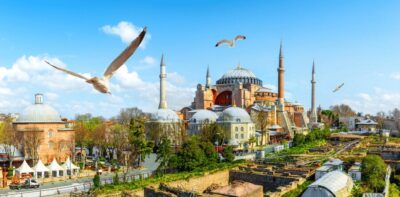
Hagia Sophia Skip-the-Line Ticket and Audio Guide
Read our review →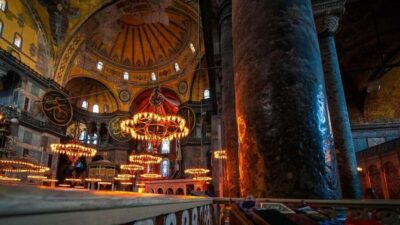
Blue Mosque, Hagia Sophia, & Basilica Cistern Tour
Read our review →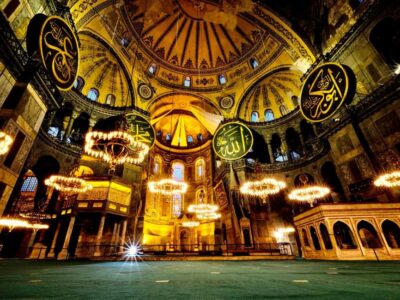
Hagia Sophia Skip-the-Line Ticket with Audio Tour
Read our review →Browse the lists this tour appears in