
Reviewed · WHIRLING DERVISH CEREMONIES
Istanbul: Whirling Dervishes Ceremony and Mevlevi Sema
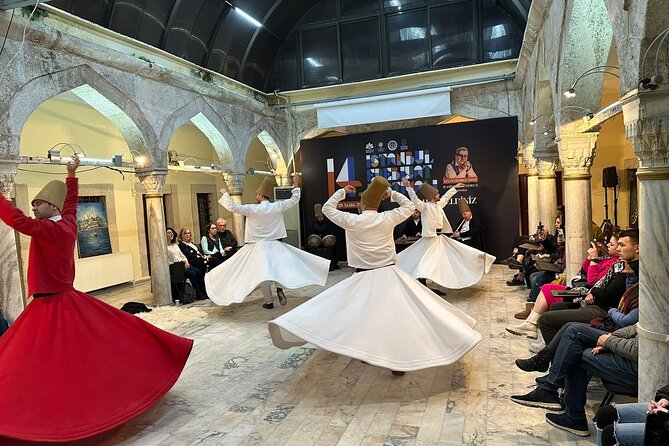
Silence gives the ceremony its power. In Istanbul’s Hoca Rüstem Medrese, the Mevlevi Sema ritual unfolds through live music, chanting, and the controlled turning of dervishes in white robes. I like the intimate setting and the way the hour stays focused, with no long speeches or padded entertainment.
I also like the chance to see a tradition linked to Mevlana Jelaleddin Rumi and the Mevlevi Sufi order without leaving the city center. The main drawback is clear: there is little or no spoken explanation before the ceremony, so you will get much more from it if you read about the symbolism first.
In This Review
- Key points to know before you go
- Entering the Hoca Rüstem Medrese
- The first half: musicians, prayer, and a slower pace
- When the dervishes begin to whirl
- A religious ceremony, not a stage spectacle
- What the one-hour schedule feels like
- Is $23 a fair price?
- How to prepare for a more meaningful visit
- Who will appreciate this ceremony most?
- Should you book the Istanbul Whirling Dervishes Ceremony?
- FAQ
- How long does the Whirling Dervishes Ceremony last?
- Where does the ceremony take place?
- How early should I arrive?
- Is an audio guide included?
- Is hotel pickup included?
- Is the ceremony wheelchair accessible?
- Can I cancel the booking?
Key points to know before you go
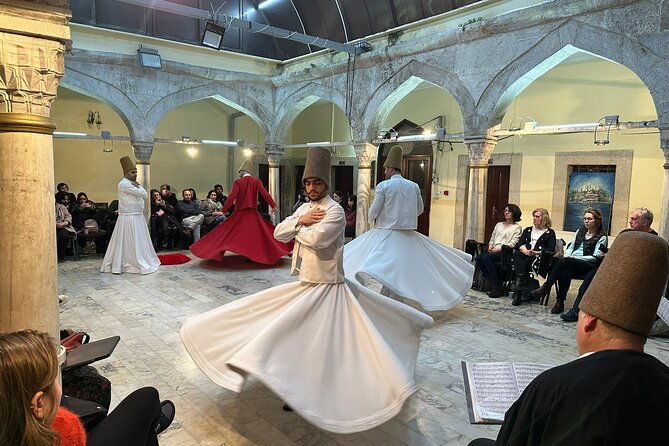
- The music takes up roughly the first half: A small group of musicians performs before the dervishes enter, setting a calm and serious tone.
- The ceremony lasts one hour: It is long enough to feel meaningful, but short enough to fit neatly between sightseeing and dinner.
- Arrive well before the required 15 minutes: The hall has limited seating, and early arrivals have a better chance at a clear front-row view.
- This is a spiritual ritual, not simply a dance show: Quiet attention is more suitable than applause or loud conversation.
- An English audio guide is included: Bring a charged smartphone and headphones so you can use it.
- The location is central but can be hard to spot: It is in the Fatih and Sultanahmet area, close to major sights, yet a map or careful directions may help.
Entering the Hoca Rüstem Medrese
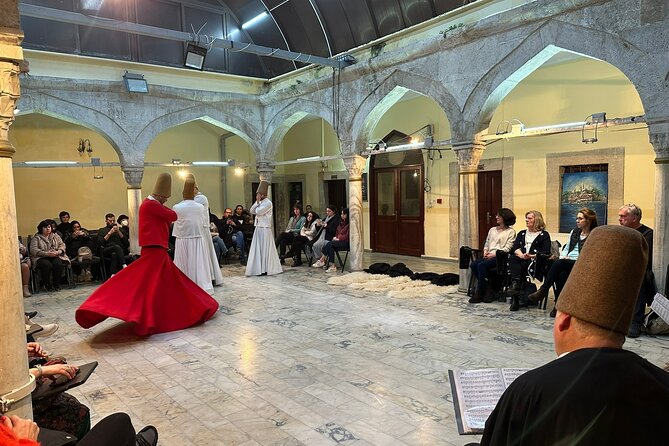
The setting does much of the work before the music begins. Hoca Rüstem Medrese is a historic religious building in central Istanbul, and its small scale gives the ceremony a close, personal feel. You are not sitting in a giant theater where the performers disappear in the distance.
That intimacy has a trade-off. Seating is limited, and the room can feel crowded when it fills. A pillar or a poor angle may block part of the performance, especially the dancers’ footwork. If seeing the full movement matters to you, arrive earlier than the stated 15-minute arrival time.
Several people found the venue easy to reach because it sits near the main Sultanahmet sights. At the same time, the entrance is not always obvious in the narrow streets of Fatih. Allow extra time to find it, particularly if you do not know Istanbul well. Arriving early is useful for two reasons: you can locate the hall without rushing, and you can choose a better seat.
The atmosphere before the ceremony is relaxed. Tea has been served to early arrivals, a small but welcome touch on a cold evening. Do not count on tea as the main attraction, but it adds warmth while you wait.
More Whirling Dervish Ceremonies in Istanbul
- Istanbul: Hodjapasha Whirling Dervishes Show & Exhibition
★ 4.4 · 4,790 reviews - Istanbul: Whirling Dervish Ceremony next to Hagia Sophia
★ 4.5 · 906 reviews - Istanbul Hodjapasha Whirling Dervishes Show & Exhibition
★ 4.0 · 503 reviews
The first half: musicians, prayer, and a slower pace
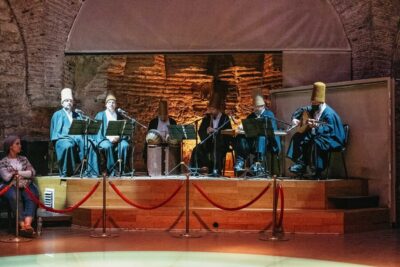
Expect the opening section to be musical rather than visual. A small ensemble plays traditional instruments, with singing and chanting forming part of the opening prayer. Some accounts describe this portion as about 20 minutes, while others experienced closer to half an hour before the dervishes appeared.
This pacing matters. If you expect constant spinning from the moment you sit down, the opening may seem slow. I think it works better when you treat the music as the beginning of the ritual rather than as background entertainment. The sound creates a quieter frame of mind and helps explain why the whirling is not presented as a flashy dance number.
The musicians are a major part of the experience. Their performance gives the ceremony its emotional center, and the singing and instruments can be as memorable as the movement that follows. You may not understand the words, but you can still follow the mood: solemn, measured, and devotional.
There is no promise of a full lecture in the hall. The English audio guide app supplies added information, but you need your smartphone and headphones. If you want to follow the ceremony closely, download or prepare the app before the show begins rather than fumbling with your phone once the room becomes quiet.
When the dervishes begin to whirl
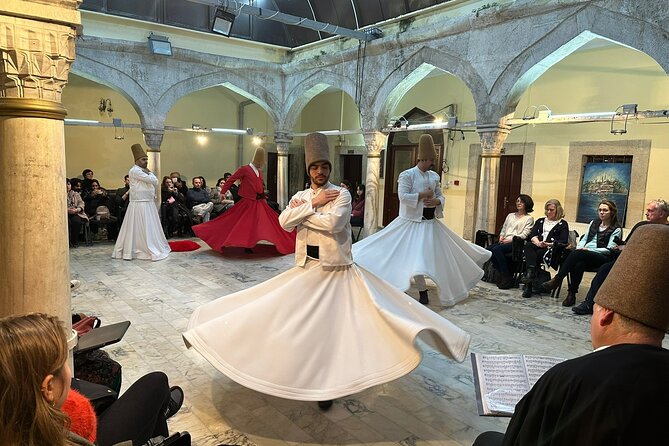
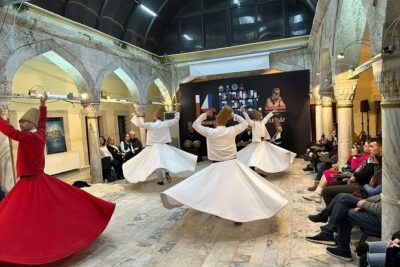
The dervishes enter after the musical opening, wearing the distinctive clothing associated with the Mevlevi tradition. Their movement is highly controlled. Arms open, the body turns, and the wide skirts form a steady circle around each performer.
The effect is hypnotic, but the important point is what the movement means. In Mevlevi thought, whirling expresses harmony with creation. The turning motion connects to the cycles found throughout life and nature, such as day and night, summer and winter, life and death, and the circulation of blood.
The ceremony also presents a spiritual journey. The black cloak can symbolize death or the shedding of the ego, while the white clothing is associated with birth or a burial shroud. The tall felt hat represents a tombstone for the ego. One traditional explanation says the raised right hand receives divine grace, while the lowered left hand passes that blessing toward the earth and humanity.
The exact symbolism is much easier to appreciate when you know it before entering the hall. Without that preparation, you will still see remarkable balance and discipline, but the performance may seem like a beautiful sequence of repetitive turns. That is why I recommend reading a short explanation first, even if you plan to use the audio guide.
You may also notice that the ceremony does not build toward a loud theatrical finale. It remains restrained. That restraint is part of its appeal, though it will not suit anyone seeking a fast-moving cultural show with narration, costumes, and a big finish.
A religious ceremony, not a stage spectacle
This distinction deserves plain treatment. The Sema is a Sufi religious practice connected with the Mevlevi order, not merely a folk dance invented for tourists. It is presented for visitors in Istanbul, but the tone remains formal and devotional.
That creates an unusual situation. You pay an admission fee, sit with other people, and watch a sacred ritual in a public program. Some people may feel slightly uncomfortable when applause breaks out at the end. I suggest following the mood of the room and remaining quiet during the ceremony. Do not chat, call out, or treat the hall like a photography studio.
Photography can also be tricky. The room may be dim, and side lighting panels can distract from the performers. A crowded seating arrangement may make it difficult to capture the footwork or a full view of the skirts. I would put your phone away for most of the ceremony and take only a few discreet images if permitted.
The best reward is attention. Watch the hands, the balance, and the way each performer keeps a steady center while turning. The visual simplicity gives you time to notice small details that would be lost in a louder production.
Something different for another day:
- Istanbul: Bosphorus Dinner Cruise & Show with Private Table
★ 4.8 · 44,561 reviews - Istanbul: Daytime or Sunset Sightseeing Cruise & Audio Guide
★ 4.8 · 14,430 reviews - Istanbul: Bosphorus Dinner Cruise with Turkish Night Show
★ 4.8 · 10,127 reviews - Best of Istanbul 1, 2 or 3-Day Private Guided Istanbul Tour
★ 5.0 · 8,922 reviews
What the one-hour schedule feels like
The total duration is about one hour. A typical flow looks like this:
- You arrive, find your seat, and may receive tea if you come early.
- The musicians begin with traditional music, singing, and an opening prayer.
- The dervishes enter for the Sema ritual.
- The ceremony closes without the kind of theatrical finale or extended commentary found in a conventional performance.
This compact schedule makes the experience easy to add to an Istanbul day. You can visit nearby historic sights before the ceremony and arrange dinner afterward. One practical suggestion is to avoid scheduling something that requires you to leave halfway through. The opening music is part of the experience, not a waiting period before the main event.
The hour also helps with comfort. Seats are not described as luxurious, but they are adequate for a short event. The room has washrooms, and the temperature has generally been comfortable. If you have mobility concerns, the activity is listed as wheelchair accessible, though you should still check the exact seating arrangement when booking.
Is $23 a fair price?
At $23 per person, this is a reasonably priced cultural experience in central Istanbul. You are paying for a one-hour ceremony, live musicians, access to a distinctive historic venue, and an English audio guide. There is no hotel pickup, private guide, meal, or extended walking tour, so the value rests almost entirely on the ritual itself.
I think the price works best for someone who wants a focused introduction to Mevlevi culture. You are not paying for a full course in Sufism. You are paying for a carefully timed performance in a setting that helps the music and movement make sense.
The value is weaker if you want extensive interpretation. The lack of an opening explanation is the most consistent weakness. The audio guide helps, but it does not replace a live host who can explain how the ritual unfolds or how you should behave.
Flexible booking improves the value. You can reserve now and pay later, and cancellation is free up to 24 hours before the start time. Check the available starting times because the exact schedule is not fixed in the basic description.
How to prepare for a more meaningful visit
I would do three simple things before leaving your hotel.
First, read about Mevlana Jelaleddin Rumi and the Mevlevi order. The order grew from the Sufi tradition associated with Rumi in the 12th century, and its central idea is a path of love, devotion, and unity with God.
Second, charge your smartphone and pack headphones. The English audio guide is included, but it is only useful if your phone is ready. You can also read a short explanation on your own before the ceremony begins.
Third, arrive early. The stated requirement is 15 minutes before the start, but that is the minimum, not the ideal. The small hall has limited seating, and a front-row place can make a real difference. Arriving early also gives you time to find the entrance and settle down before the music starts.
Dress and behavior should reflect the religious character of the event. The supplied information does not set a formal dress code, but quiet, respectful clothing and conduct are sensible. Most importantly, do not assume applause is expected simply because you have paid for a ticket.
Who will appreciate this ceremony most?
I would recommend it to you if you enjoy music, religious art, cultural traditions, and experiences that ask for patience. It is especially suitable if you have already seen Istanbul’s major mosques and palaces and want something less familiar than another sightseeing stop.
It can also work well for couples, older family members, and first-time visitors who want a short evening activity. The one-hour length is manageable, and the central location makes it easy to combine with other plans.
You may be disappointed if you expect a narrated show, a large cast, lively stage lighting, or a detailed lesson in Islamic history. The ceremony is quiet and repetitive by design. Some people find that meditative; others may find the opening music or extended whirling too slow.
The experience also suits independent learners. I like the fact that you can prepare at your own pace rather than being pushed through a scripted lecture. But you must take responsibility for that preparation. A few minutes of reading can turn an attractive spectacle into a more thoughtful encounter with Sufi practice.
Should you book the Istanbul Whirling Dervishes Ceremony?
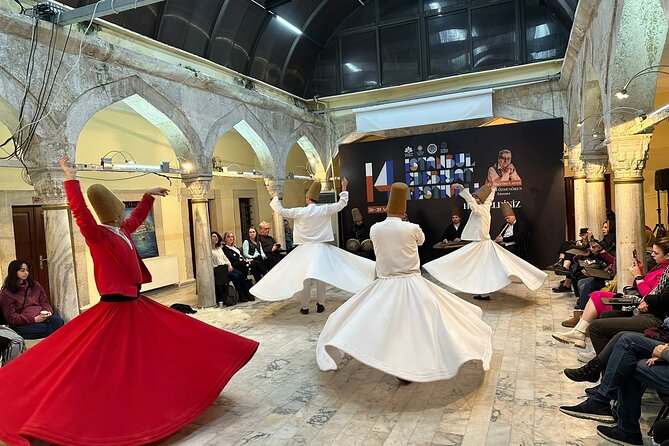
Yes, if you want a short, affordable look at Istanbul’s spiritual culture and you are willing to approach it with respect. The live music, small venue, and disciplined whirling create a memorable hour, and the central location makes the plan easy.
Book it with realistic expectations. This is not a guided cultural class, and the lack of explanation may leave you with questions. Arrive early, bring headphones and a charged phone, read about the Sema beforehand, and keep your applause and photography restrained.
For $23, I think it is a good choice for a culturally curious visitor. If you want only one evening performance in Istanbul, this offers more meaning than a generic tourist show, but only if you give the ritual the quiet attention it deserves.
FAQ
How long does the Whirling Dervishes Ceremony last?
The ceremony lasts one hour. The musical opening takes roughly the first 20 to 30 minutes, followed by the dervishes’ ritual whirling.
Where does the ceremony take place?
It takes place at the Hoca Rüstem Medrese in central Istanbul, in the Fatih and Sultanahmet area.
How early should I arrive?
You must arrive at least 15 minutes before the show begins. Arriving earlier is recommended because seating is limited and early arrival gives you a better chance of finding a clear view.
Is an audio guide included?
Yes. An English audio guide app is included. Bring a charged smartphone and headphones.
Is hotel pickup included?
No. Hotel pickup and drop-off are not included, so you make your own way to the venue.
Is the ceremony wheelchair accessible?
The activity is listed as wheelchair accessible.
Can I cancel the booking?
Yes. You can cancel up to 24 hours before the scheduled time for a full refund. You can also reserve now and pay later.
Just added around Istanbul
- Istanbul Imperial & Bosphorus Tour – Incl. Lunch★ 5.0 · 62 reviews
- Istanbul to Cappadocia 2 Day Tour with Guide, Flights and Hotels★ 4.5 · 62 reviews
- A Magical Evening in Istanbul: Private City Tour★ 4.5 · 62 reviews
- Istanbul: Private Guided Tour★ 4.5 · 62 reviews
- 2-Days Private Tour to Gobeklitepe and Karahantepe from Istanbul★ 5.0 · 62 reviews
- Private 7-Hour Istanbul Tour with Red Carpet Treatment★ 4.7 · 62 reviews
- Istanbul Private Walking Tour: Highlights & Gems with a Local★ 5.0 · 63 reviews
- Small-Group Istanbul Old City Guided Tour★ 5.0 · 63 reviews
Whirling Dervish Ceremonies, compared.
Hodjapasha Whirling Dervishes Show & Exhibition
Read our review →
Istanbul Hodjapasha Whirling Dervishes Show & Exhibition
Read our review →
Istanbul Traditional Turkish Dinner and Dervish Experience
Read our review →

Whirling Dervish Ceremony: Go on a Spiritual Journey
Read our review →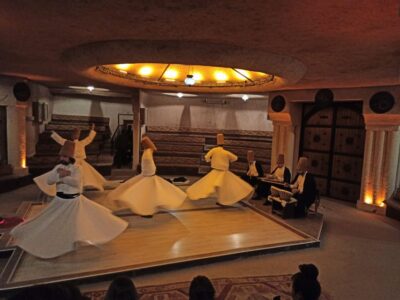
Browse the lists this tour appears in