
Reviewed · HAGIA SOPHIA & OLD CITY TOURS
Istanbul: Whirling Dervish Ceremony next to Hagia Sophia
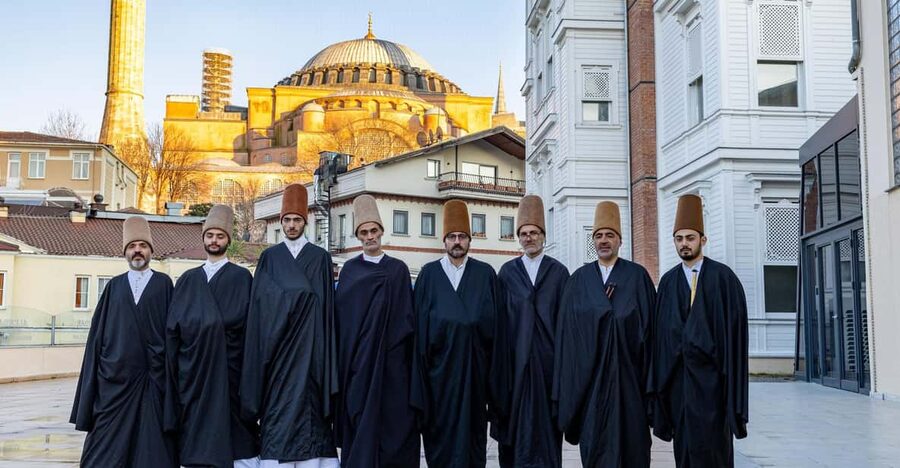
Let the city noise fade for one hour. This 55-minute Sufi ceremony offers a calm, serious look at one of Istanbul’s best-known cultural traditions, held in a traditional wooden arts center beside Hagia Sophia. I like the thoughtful introduction before the ritual and the live music, which gives the ceremony much more meaning than a silent display of spinning. I also like the modest $17 price, especially with a drink and multilingual audio guide included.
The main consideration is that this is a religious ritual, not a fast-moving stage show. The pace is slow and meditative, and some visitors may find the music or spoken introduction hard to follow. Sound quality has occasionally been uneven, and the English guide may speak quickly, so arrive ready to listen closely and keep your phone put away.
In This Review
- Key points to know before you go
- Why this ceremony is different from a tourist show
- Finding the white wooden house near Hagia Sophia
- The opening music sets the pace
- The dervishes enter with deliberate movement
- The explanation makes the short ceremony worthwhile
- Tea or sherbet adds a small local touch
- How much value do you get for $17?
- Who will enjoy the Sema most?
- My practical advice for a better visit
- Should you book this ceremony?
- FAQ
- How long does the whirling dervish ceremony last?
- How much does the ceremony cost?
- Where is the meeting point?
- When does the entrance gate open?
- Is Hagia Sophia close to the ceremony venue?
- What is included with admission?
- Is there a guide?
- Can I eat or order other drinks there?
- Can children attend?
- Is the venue wheelchair accessible?
- Can I cancel my booking?
- Do I need to remain silent during the ceremony?
Key points to know before you go
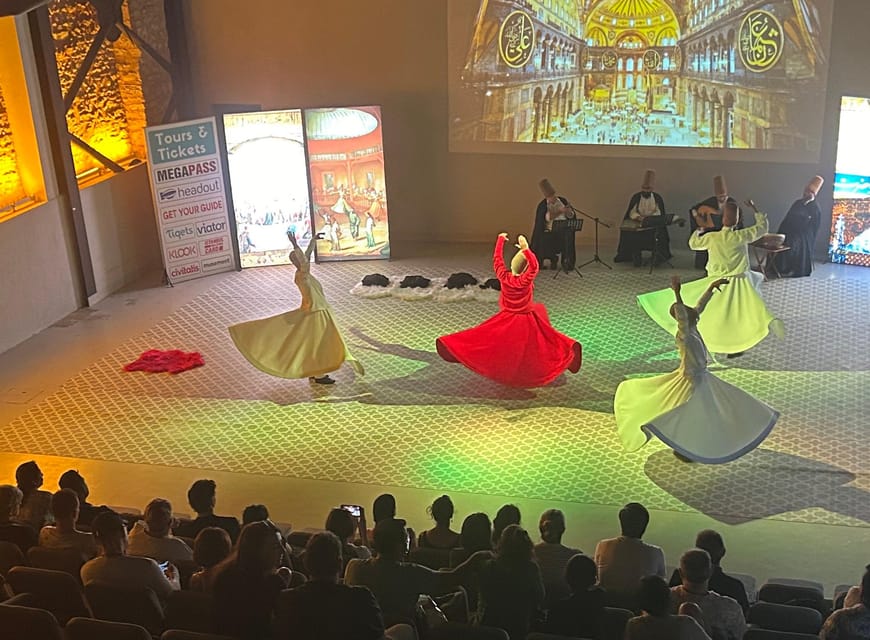
- The ceremony lasts 55 minutes: It is short enough to fit neatly into a day of sightseeing around Sultanahmet.
- The setting is a traditional wooden house: Meet at the gate of the large white wooden building near the Basilica Cistern.
- Live Turkish music carries the ritual: Strings, drums, and flutes begin the ceremony before the dervishes enter.
- The ritual has UNESCO recognition: Sema, the whirling dervish ceremony, is listed as Intangible Cultural Heritage.
- A local drink is included: You receive tea or sherbet, along with water.
- Ticket money supports arts education: The venue is connected with an arts center and scholarship work, according to the introduction given at the ceremony.
Why this ceremony is different from a tourist show
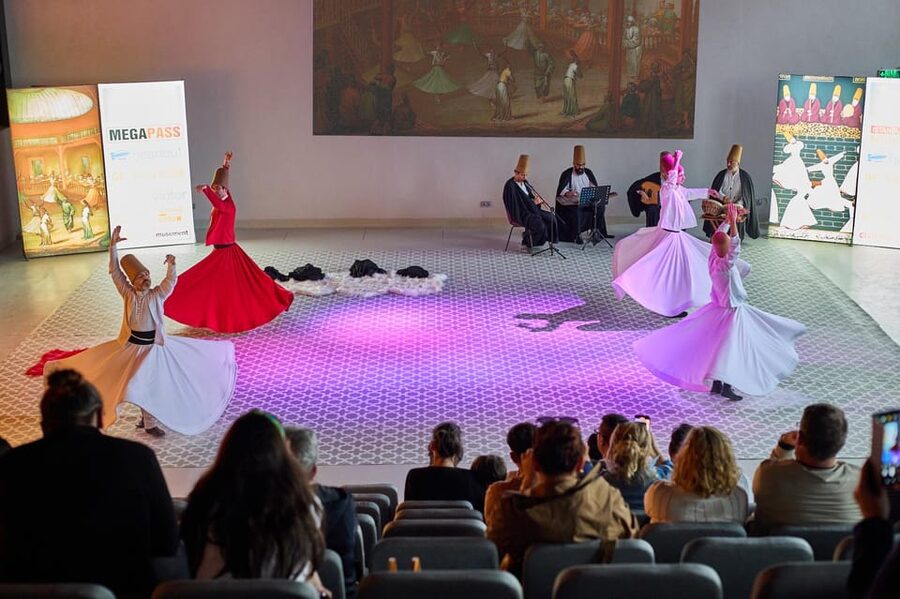
Istanbul offers plenty of polished cultural spectacles. This experience aims for something quieter and more sincere. The dervishes are local followers of a Sufi tradition, and the ceremony follows a religious form rather than a choreographed entertainment format built for applause.
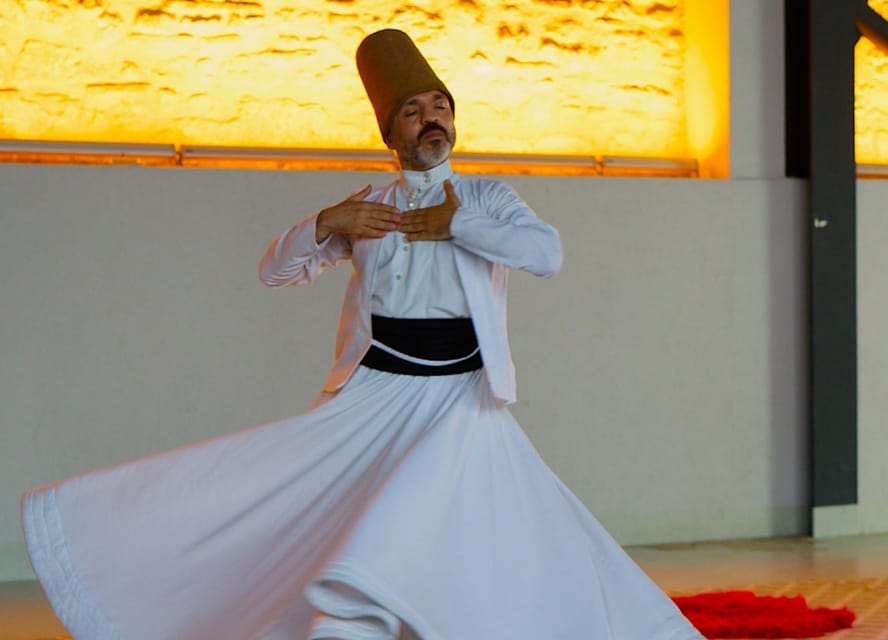
That distinction matters. You are not being asked to watch a dance routine with a dramatic finale. You are watching a spiritual practice shaped by prayer, music, controlled movement, and silence. The central turning motion represents a mystical movement toward divine love and unity. One hand faces upward toward heaven while the other points downward toward the earth, symbolizing the receiving and sharing of divine blessing.
You do not need to be religious to appreciate the ceremony. You do need to give it some respect. The room is quiet, the movement is deliberate, and the meaning unfolds gradually. I found the value here in the change of pace. After a day of traffic, crowds, mosque visits, and bargaining, sitting still while the music develops can feel like a welcome reset.
The ceremony is linked with the teachings of the Persian poet and mystic Rumi. A short explanation introduces Rumi, Sufi thought, and the purpose behind the Sema. If you read a little about Rumi, Shams Tabrizi, or the ney flute before arriving, you will have more to hold on to during the ritual. You can still enjoy it without preparation, but a little background helps the symbols land.
More Whirling Dervish Ceremonies in Istanbul
- Istanbul: Hodjapasha Whirling Dervishes Show & Exhibition
★ 4.4 · 4,790 reviews - Istanbul: Whirling Dervishes Ceremony and Mevlevi Sema
★ 4.3 · 1,694 reviews - Istanbul Hodjapasha Whirling Dervishes Show & Exhibition
★ 4.0 · 503 reviews
Finding the white wooden house near Hagia Sophia
The meeting point is next to the entrance of the Basilica Cistern. Look for the reception desk at the gate of the large white wooden house. The gate opens 30 minutes before the ceremony starts, which gives you time to find the entrance, check in, and settle into your seat.
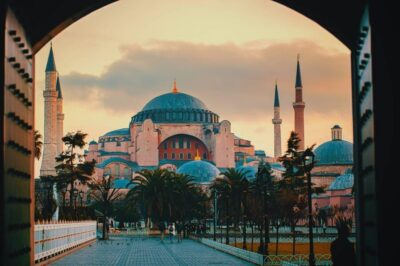
This location is one of the experience’s strongest points. You are in the historic core of Istanbul, close to Hagia Sophia and the Basilica Cistern, so the ceremony fits easily beside major Sultanahmet sights. Plan to arrive with enough time to look for the correct building. One phone map has reportedly sent people to the wrong side of the road, so use the Basilica Cistern entrance as your main reference point.
The building itself adds character. It is not presented as a large modern theater or a hotel ballroom. The traditional wooden setting suits the subject and helps the ceremony feel connected to Istanbul’s older artistic and spiritual life.
The room is arranged so that the seats have a clear view. Seating is described as comfortable, and the space is designed to let you see the ceremony from every seat. That is useful here because the gestures and hand positions matter. You do not want to spend the ritual craning around someone’s shoulder.
The hall is not perfect for photography. Illuminated panels at either side of the room can create harsh reflections, and a projected or painted visual element in the background has distracted some people. I would bring your camera only if you can use it quietly and without letting it pull you away from the ceremony.
The opening music sets the pace
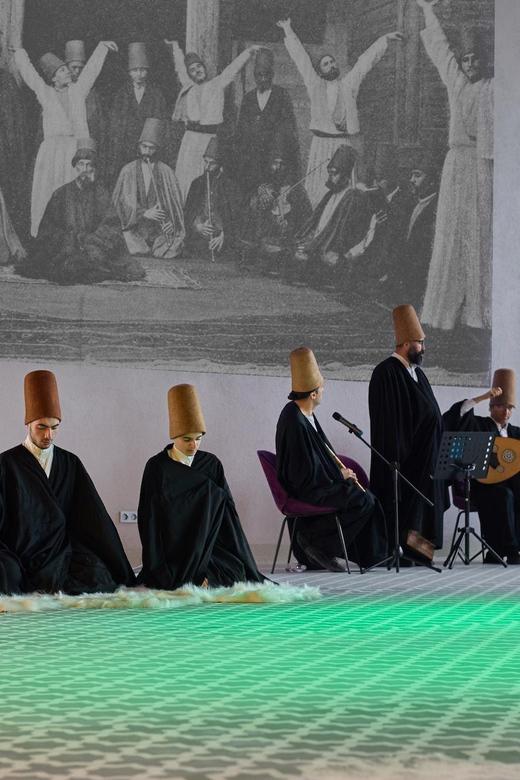
The ceremony begins with instrumental Turkish music. Traditional strings, drums, and flutes establish the sound before the dervishes arrive. This opening is not filler while people take their seats. It prepares you for the slower rhythm of the Sema.
The music uses pieces composed from the 1400s through the early 1800s. That gives the opening a strong sense of connection with older Ottoman and Sufi musical traditions. You may not recognize the instruments or musical structure, but the live sound makes a big difference. It is easier to understand the ceremony as a complete ritual when the music is performed in the room rather than played through a recording.
I especially like that the music is given room to breathe. The ceremony is not rushed from one visual moment to the next. The sounds gradually establish a calm mood, and the controlled rhythm prepares you for the dervishes’ entrance.
If you expect a concert, the music may seem brief. If you treat it as the doorway into the ritual, it makes better sense. Keep your phone silent and avoid talking. The venue specifically asks for silence, and even a quiet conversation can break the concentration of the room.
The dervishes enter with deliberate movement
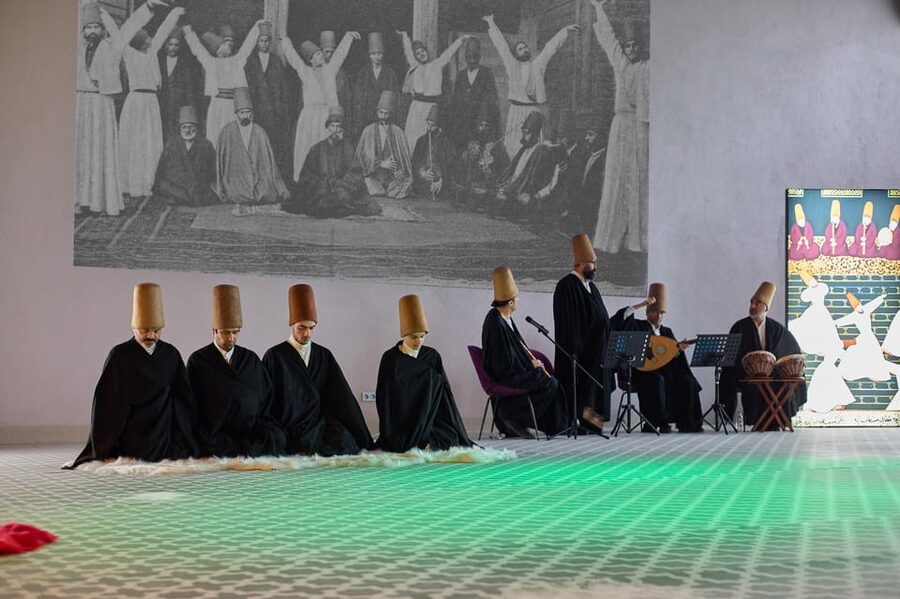
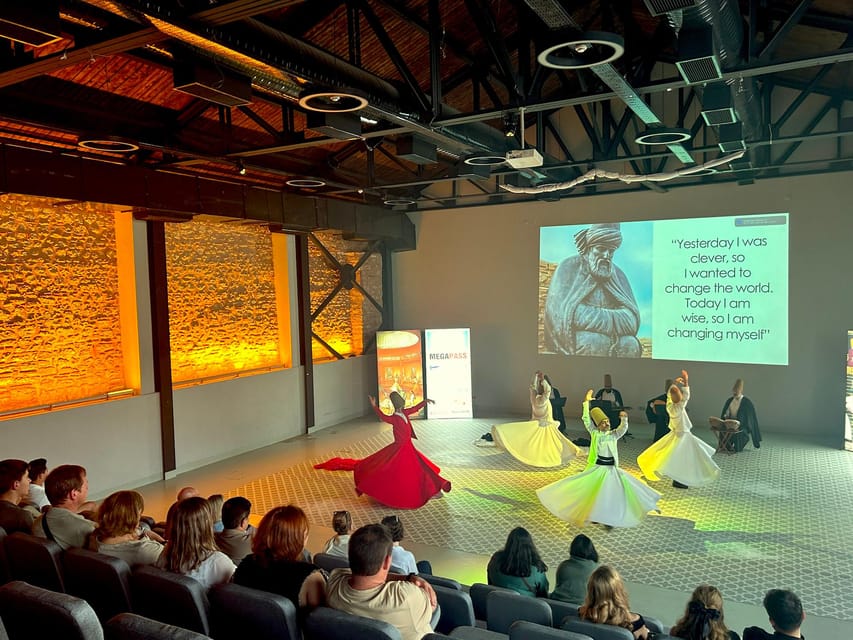
After the musical opening, the dervishes enter and begin the prayer ceremony. Their movements start calmly, then increase in pace with the music. The turning is not presented as a stunt or test of balance. It is a physical expression of spiritual discipline and surrendering the ego.
The visual effect is hypnotic, but the ceremony does not chase spectacle. You may find the first part almost still, with small gestures carrying as much meaning as the later turning. The contrast is important. The dervishes’ white garments, measured steps, and repeated movements create an image that is easy to remember, but the ritual’s power comes from restraint.
I would not go expecting every part to be explained while it happens. The spoken context comes mainly before and after the ceremony. During the Sema, the music, prayers, and movement take over. This is why the initial talk matters so much.
The presentation explains what you are about to see, including the history and symbolism of the ceremony. At the end, there may be time for questions and further discussion. An English-speaking host leads the live explanation, and a smart audio guide is available in English, German, French, Italian, Russian, Spanish, and Arabic.
The songs themselves are not translated into English. If understanding every prayer is important to you, this may leave a gap. The audio guide provides useful background, but it does not turn every line of the ritual into a live translation.
More Hagia Sophia and old city walks:
- Istanbul: Hagia Sophia Skip-the-Line Ticket & Museum Option
★ 3.7 · 4,958 reviews - Istanbul: Blue Mosque & Hagia Sophia Guided Tour w/ Tickets
★ 4.8 · 3,600 reviews - Istanbul: Private Turkish Bath, Massage, and Spa in Old City
★ 4.6 · 3,225 reviews - Istanbul: Hagia Sophia Skip-the-Line Ticket and Audio Guide
★ 4.3 · 2,246 reviews
The explanation makes the short ceremony worthwhile
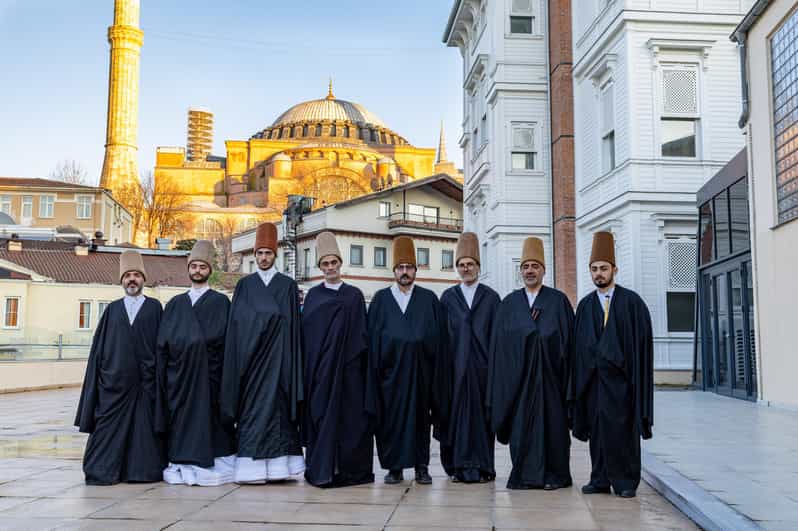
At $17, the included explanation is a major part of the value. Without it, you might see beautiful turning and music but miss the reason behind the gestures. With it, you can watch the ritual with a basic understanding of Sufi ideas and the structure of the Sema.
The introduction is described as short, which is appropriate for a 55-minute experience. It gives you enough context without turning the evening into a lecture. The guide also answers questions afterward, making the event feel more like a cultural lesson than a simple ticketed show.
There are a few practical limits. Some people have had trouble hearing the first explanation clearly, and one person found the guide spoke too fast. If you are listening in English, sit where you can hear well and do not be shy about focusing closely during the introduction.
The digital guide is useful for filling in gaps. You can access it in seven languages, which makes the activity more welcoming for international visitors. Still, I would not rely on your phone during the actual ritual. Using it for information is one thing. Checking messages or taking constant photos will work against the quiet mood.
Tea or sherbet adds a small local touch
At the end, you receive a local drink, either tea or sherbet, as well as water. It is a small inclusion, but it fits the atmosphere better than a generic bottle of soda. Tea gives the experience a familiar Turkish finish, while sherbet offers a more traditional taste.
Do not mistake this for a meal or a food tour. Food and other drinks are not included. The drink is a courtesy, not the reason to book. Still, it gives you a gentle moment to pause after the ceremony and, when offered, continue the conversation with the guide.
The value also comes from the venue’s wider purpose. The arts center is described as supporting local arts education, and several explanations have noted that ticket income helps fund student scholarships. If that remains part of the current operation, your admission supports more than an evening activity. It helps make the cultural setting feel connected to the local community.
How much value do you get for $17?
The price is unusually reasonable for a central Istanbul cultural experience. You receive admission, live music, the ceremony itself, a drink, water, an English host, and access to the multilingual digital guide.
I would compare the price with what you are getting, not with the cost of a basic museum ticket. This is a scheduled evening activity in the historic center, with a seated venue and live performers. The explanation adds useful cultural context, and the setting is close to two of Istanbul’s major sights.
The ceremony is short, and that is both a benefit and a limitation. At 55 minutes, it will not consume your whole evening. You can place it between sightseeing stops or after visiting Hagia Sophia and the Basilica Cistern. On the other hand, some people may wish it lasted longer, especially once the music and turning have settled into a rhythm.
For a first visit to Türkiye, I think the price makes it an easy addition. It is affordable enough that you do not need to build an entire day around it. The best value comes if you are open to a quiet cultural experience rather than seeking a large-scale show.
Who will enjoy the Sema most?
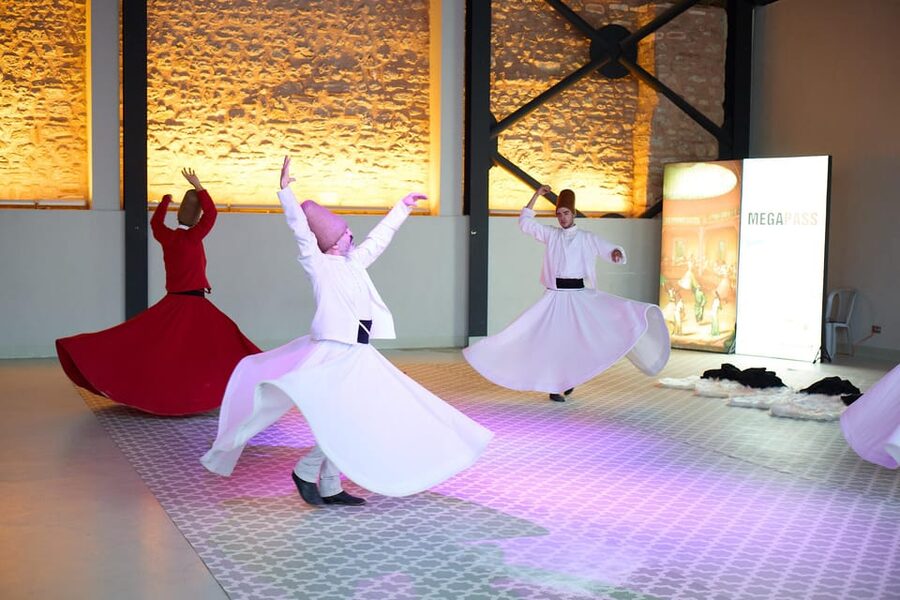
I would recommend this ceremony to anyone interested in Turkish culture, Sufi tradition, religious art, live music, or Rumi. It suits people who enjoy reflection and symbolism more than noise and action.
It is also a good choice for first-time visitors who want something beyond mosques, palaces, and food stops. Istanbul can be overwhelming. This ceremony gives you 55 minutes in which the city’s pace drops away.
Families can attend, but children under two are not suitable for the experience. Older children may understand the ceremony better if you explain beforehand that it is a religious ritual and that silence is important. One family found the full price for young children less appealing, so keep that in mind when calculating the cost.
The venue is wheelchair accessible, though access may require staff assistance. One party needed extra help despite the advertised accessibility, and the staff worked to make it possible. If you use a wheelchair, contact the provider in advance so the arrival and seating arrangement are clear.
This is not the right pick if you need constant narration, translated prayers, or a lively spectacle. It may also disappoint you if you dislike sitting quietly for a gradual ritual. The ceremony asks something from you: patience, attention, and respect.
My practical advice for a better visit
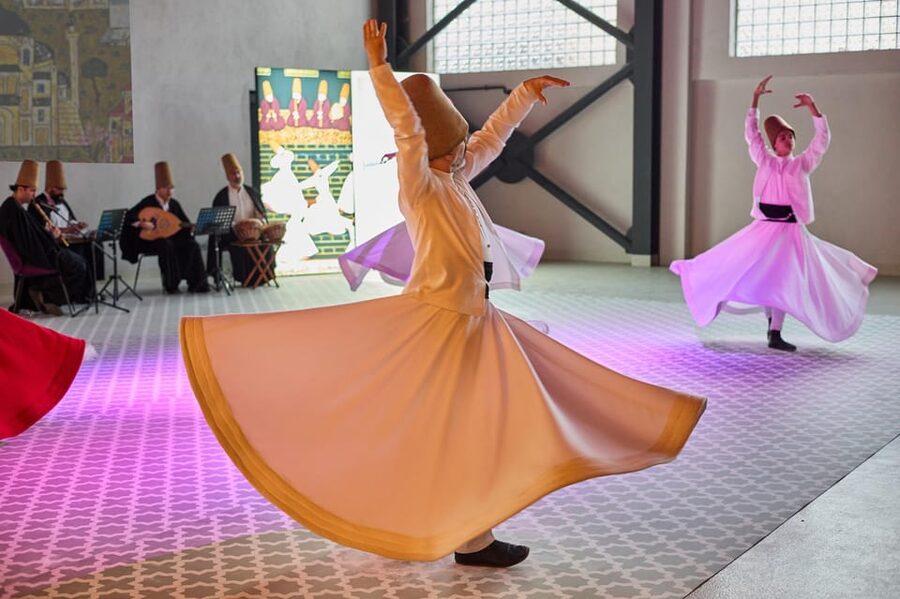
Arrive early. The entrance opens 30 minutes before the start, and early arrival helps you find the white house and settle into the room without a last-minute rush.
Use the Basilica Cistern entrance as your navigation anchor. If your map pin looks wrong, check the opposite side of the road before wandering farther through Sultanahmet.
Read a short introduction to Rumi and Sufism before you go. You do not need a long academic study. Just knowing that the turning represents a spiritual journey, and that the raised and lowered hands have symbolic meaning, will make the ritual easier to follow.
Visit the restroom before or after the ceremony. The organizers specifically ask you to do this because leaving during the ritual can disturb the silence.
Keep your phone out of sight if possible. Photos and videos may be allowed, but reflection is part of the experience. Bright screens and frequent camera movements can distract you and the people around you.
Listen closely to the opening explanation. The sound has not always been perfect, and the guide may speak quickly. If you miss a point, the audio guide and post-ceremony questions can help.
Give yourself time afterward if you want to ask questions. The formal ritual is short, but the conversation at the end can add depth, especially if you are curious about the music, Rumi, or the meaning of the movements.
Should you book this ceremony?
I would book it if you want an affordable, respectful introduction to Sufi culture in the center of Istanbul. The setting beside Hagia Sophia, live Turkish music, clear pre-ceremony context, and local drink make this more worthwhile than a bare stage presentation.
Book with the right expectations. You are attending a solemn prayer ritual that unfolds slowly. It may move you, calm you, or simply give you a new cultural perspective. It will not entertain you in the usual tourist-show sense.
For $17, the risk is low. If you are willing to sit quietly, listen, and let the music set the pace, this can become one of the most memorable hours of a Sultanahmet visit. If you need a fast, highly translated program, choose a different evening activity.
FAQ
How long does the whirling dervish ceremony last?
The experience lasts 55 minutes.
How much does the ceremony cost?
The listed price is $17 per person.
Where is the meeting point?
Meet your host next to the entrance of the Basilica Cistern. The reception desk is at the gate of the large white wooden house.
When does the entrance gate open?
The gate opens 30 minutes before the ceremony starts.
Is Hagia Sophia close to the ceremony venue?
Yes. The ceremony takes place next to Hagia Sophia in the historic center of Istanbul.
What is included with admission?
Admission, live music, the authentic ritual, water, and one local traditional drink are included. You can choose tea or sherbet.
Is there a guide?
Yes. An English-speaking host provides explanations before and after the ceremony. A smart audio guide is also available in English, German, French, Italian, Russian, Spanish, and Arabic.
Can I eat or order other drinks there?
Food and other drinks are not included. The included drink is tea or sherbet, along with water.
Can children attend?
Children under two years old are not suitable for this activity.
Is the venue wheelchair accessible?
The experience is listed as wheelchair accessible. Staff assistance may be needed, so contact the provider ahead of time if you require specific access support.
Can I cancel my booking?
You can cancel up to 24 hours in advance for a full refund.
Do I need to remain silent during the ceremony?
Yes. Silence is important, and you should use the restroom before or after the ceremony rather than leaving during the ritual.
Just added around Istanbul
- Istanbul Imperial & Bosphorus Tour – Incl. Lunch★ 5.0 · 62 reviews
- Istanbul to Cappadocia 2 Day Tour with Guide, Flights and Hotels★ 4.5 · 62 reviews
- A Magical Evening in Istanbul: Private City Tour★ 4.5 · 62 reviews
- Istanbul: Private Guided Tour★ 4.5 · 62 reviews
- 2-Days Private Tour to Gobeklitepe and Karahantepe from Istanbul★ 5.0 · 62 reviews
- Private 7-Hour Istanbul Tour with Red Carpet Treatment★ 4.7 · 62 reviews
- Istanbul Private Walking Tour: Highlights & Gems with a Local★ 5.0 · 63 reviews
- Private Istanbul Airport Transfer to Blue Mosque Sultan Ahmet★ 5.0 · 63 reviews
Hagia Sophia & Old City Tours, compared.
Hagia Sophia Skip-the-Line Ticket & Museum Option
Read our review →
Blue Mosque & Hagia Sophia Guided Tour w/ Tickets
Read our review →
Private Turkish Bath, Massage, and Spa in Old City
Read our review →
Old City, Waterfalls, Olympos Cable Car, Boat
Read our review →
Hagia Sophia Skip-the-Line Ticket and Audio Guide
Read our review →
Blue Mosque, Hagia Sophia, & Basilica Cistern Tour
Read our review →
Hagia Sophia Skip-the-Line Ticket with Audio Tour
Read our review →Browse the lists this tour appears in