
Reviewed · WHIRLING DERVISH CEREMONIES
Istanbul: Hodjapasha Whirling Dervishes Show & Exhibition
Let the music slow your evening down. The Hodjapasha Whirling Dervishes experience offers a quiet look at Sufi tradition inside a restored 550-year-old Ottoman Turkish bath. You will hear classical Turkish music, watch the Mevlevi Sema ceremony, and see dervishes turn through a ritual linked to spiritual thought, love, and humanity’s return to God.
I like the historic setting and the serious tone of the ceremony. This is not a noisy stage act. It is a religious ritual presented for visitors, so the hour feels calm, formal, and unusual. The main drawback is that the chairs can be close together and uncomfortable, while the repeated whirling may feel slow if you want a lively dance performance.
In This Review
- Key points before you book
- Why this ceremony feels different from an ordinary dance show
- Entering the former Ottoman bath near Sirkeci
- The exhibition gives the ritual a needed frame
- Classical Turkish music opens the evening
- The dervishes enter with formality and purpose
- The seven stages of the Sema
- A quiet ending with prayer
- Seating, timing, and the practical details
- Who will enjoy the Hodjapasha experience most
- Is $32 good value for one hour?
- Should you book it?
- FAQ
- Where does the Whirling Dervishes ceremony take place?
- How far is the venue from public transportation?
- How long does the experience last?
- What does the ticket include?
- Is photography allowed during the ceremony?
- Can I talk or applaud during the ceremony?
- Are young children allowed?
- Are seats assigned?
- Can I cancel my booking?
Key points before you book
- A 550-year-old setting: The ceremony takes place inside the restored Hocapaşa Culture Center, a former Ottoman bath near Sirkeci.
- A seven-part Sema ceremony: The whirling represents a spiritual journey and follows music, chanting, prayer, and formal movements.
- Live Turkish music first: The program begins with classical music and may include vocals, ney flute, oud, kanun, and Ottoman percussion.
- Arrive early for the exhibition: The foyer display explains Sufism, the dervishes, and the meaning of the ceremony.
- Silence is part of the experience: Photography, conversation, and applause are not permitted during the performance.
- Book early for better seats: Seating is allocated according to booking order, but this does not appear to guarantee a particular row.
Why this ceremony feels different from an ordinary dance show
The first thing to understand is the word ceremony. The whirling dervishes are not simply performing a choreographed dance for entertainment. The Mevlevi Sema is a spiritual practice associated with the Mevlevi tradition, and the movements represent the soul’s ascent through knowledge, love, and union with the divine.
That distinction shapes the whole evening. There is no dramatic plot, comic host, or big finish. Instead, you sit quietly while musicians establish the mood, the dervishes enter, and the ritual unfolds in measured stages.
I think this is the right experience for you if you enjoy music, religious traditions, architecture, or cultural events that ask for patience. If you need constant action, you may find the whirling repetitive. The beauty comes from the pattern, the silence, and the concentration.
The ceremony lasts about one hour. That is long enough to give you a proper sense of the ritual, but short enough to fit neatly into an Istanbul sightseeing day. You can schedule it after visiting the Spice Bazaar, Topkapı Palace, Hagia Sophia, or the Basilica Cistern, since the venue is in the central Sultanahmet and Sirkeci area.
More Museums in Istanbul
- Istanbul: Hagia Sophia Skip-the-Line Ticket & Museum Option
★ 3.7 · 4,958 reviews - Istanbul: Topkapi Palace & Harem Museum Ticket & Audio Guide
★ 4.1 · 3,977 reviews - Istanbul Hodjapasha Whirling Dervishes Show & Exhibition
★ 4.0 · 503 reviews
Entering the former Ottoman bath near Sirkeci
The meeting point is the Hocapaşa Culture Center, about 100 meters from the Sirkeci Tram Stop. That makes the venue fairly simple to reach if you are using Istanbul’s tram system. Once inside, you enter a building that gives the evening much of its character.
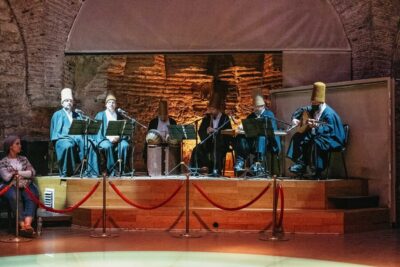
The center is a restored Ottoman Turkish bath, with an old domed interior and stone surfaces that help carry the music. The architecture is not a mere backdrop. It changes the way the ceremony sounds and feels. A ney solo or quiet vocal passage can linger in the room, while the dervishes’ white skirts move beneath the central dome.
You should expect stairs to the performance area. This venue is not suitable for wheelchair users, and the setting may be difficult for anyone who cannot manage steps. Children under seven are not allowed, which also helps preserve the quiet mood.
Try to arrive early. The exhibition in the entrance area gives you useful background before you take your seat. It covers the history and meaning of the dervishes, with information panels and artifacts that help explain what you are about to see.
I would not treat the exhibition as a large museum visit. It is compact, but it answers the basic questions most first-time viewers have: Who are the dervishes? Why do they turn? What do the costumes and movements mean? Giving yourself time to read this material makes the ceremony easier to follow.
The exhibition gives the ritual a needed frame
Without background, you may see men in tall felt hats and long white robes turning in circles and wonder what the movements signify. The foyer information helps prevent the ceremony from becoming a pretty but puzzling spectacle.
The Mevlevi Sema is connected to the teachings of Mevlana Jalal al-Din Rumi, the 13th-century Persian poet and mystic. The supplied program explains the ceremony as a journey representing humanity’s spiritual ascent through thought and love. You also receive a booklet, so you can read about the order of the ritual either before the performance or while waiting.
The exhibition is especially useful because the ceremony itself does not stop to explain each stage. There is no running commentary during the ritual, and that is appropriate. A spoken explanation would interrupt the atmosphere.
If you have questions about Sufism, the exhibition may not answer every one of them. One useful improvement would be the chance to speak with someone about the tradition after reading the panels. Still, the combination of the booklet and the foyer display gives you enough context to watch with respect rather than confusion.
Classical Turkish music opens the evening
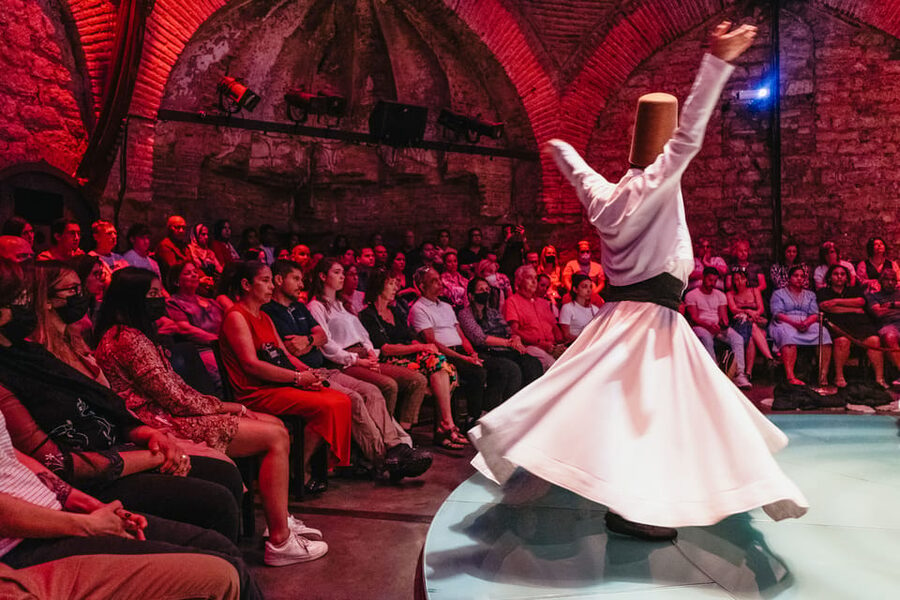
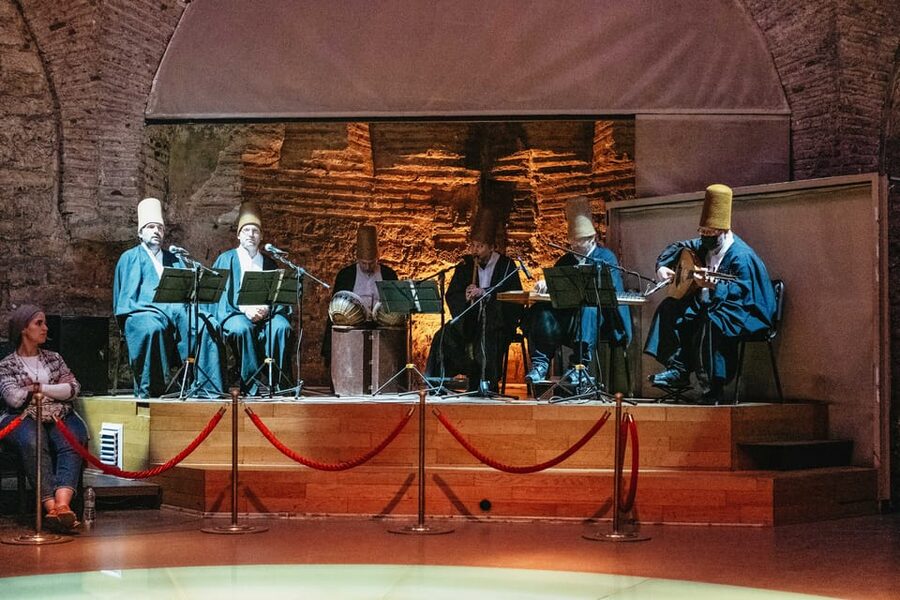
The program begins with a concert of classical Turkish music. This opening matters. The musicians do not simply provide background sound for the whirling. Their music sets the spiritual and formal tone of the Sema.
The musical texture can include vocals, ney, oud, kanun, and Ottoman-era percussion. The ney, a reed flute, has a thin, haunting sound that suits the stone bath particularly well. The kanun brings bright, precise notes, while the oud adds a warmer, rounded tone.
The music follows traditional Turkish modes and includes composed passages and instrumental improvisation. The pace may be adjusted to fit the one-hour program, so you are hearing a concise version rather than an all-night religious gathering. That makes it practical for a visitor, though anyone seeking a longer devotional ceremony may find the format abbreviated.
You receive bottled water, and complimentary drinks are available during the experience. Bring your attention as well as your thirst. Phones should be turned off, and the room is expected to remain quiet.
The sound of a cough can carry a long way under the dome. If you have a dry throat, it is sensible to bring a cough drop or make sure you have water before the music begins. Small noises become surprisingly noticeable in such a still room.
More Whirling Dervish Ceremonies in Istanbul
- Istanbul: Whirling Dervishes Ceremony and Mevlevi Sema
★ 4.3 · 1,694 reviews - Istanbul: Whirling Dervish Ceremony next to Hagia Sophia
★ 4.5 · 906 reviews - Istanbul Traditional Turkish Dinner and Dervish Experience
★ 5.0 · 490 reviews - Whirling Dervish Ceremony: Go on a Spiritual Journey
★ 4.0 · 177 reviews
The dervishes enter with formality and purpose
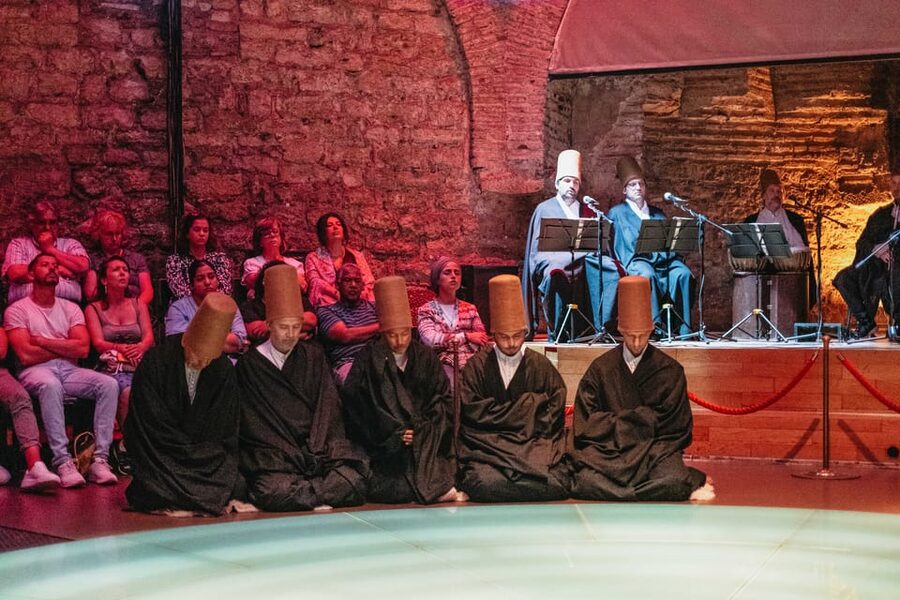
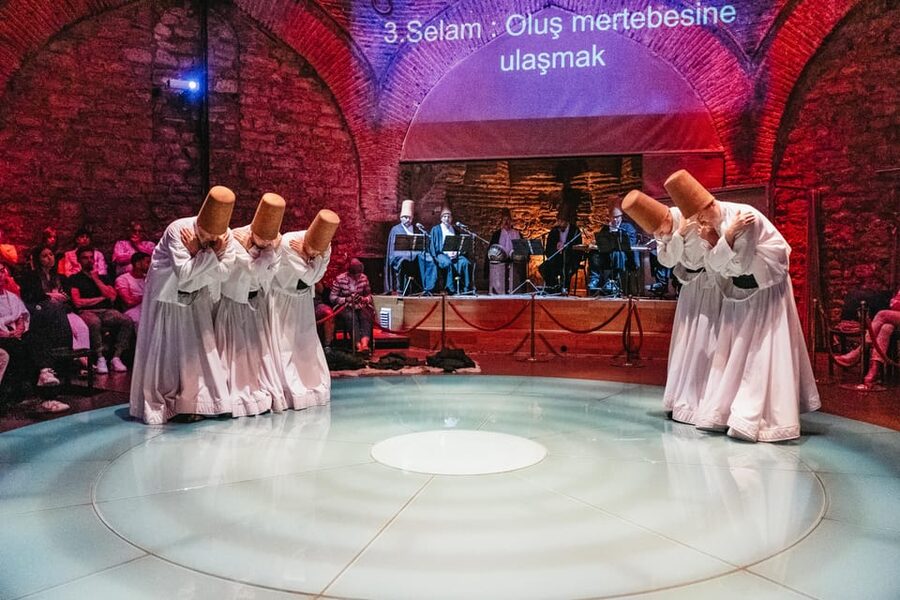
After the musical opening, the dervishes and the sheikh take their places. The ceremony includes praise for the Prophet Mohammed, followed by chanting and the sound of the drum.
The entrance is restrained. You should not expect theatrical lighting or a big announcement. The formal clothing, controlled movement, and solemn music establish the sense that you are witnessing something sacred.
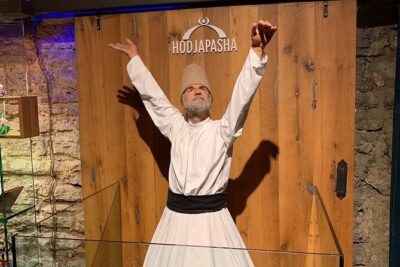
The dervishes wear dark outer cloaks at first, then reveal white garments beneath. Their clothing carries symbolic meaning within the ceremony, and the booklet can help you understand these details. The tall hat and flowing robe also create the visual image most people associate with the Whirling Dervishes.
The atmosphere depends on the audience behaving properly. Talking, photography, and applause are prohibited. That may seem strict if you are used to cultural performances where the audience reacts freely, but the silence is one of the strengths of this experience.
I appreciate the photography ban here. You may feel disappointed about leaving your camera in your pocket, but the rule keeps the room from filling with glowing screens and shutter sounds. It also reminds you to watch carefully rather than search for the perfect image.
The seven stages of the Sema
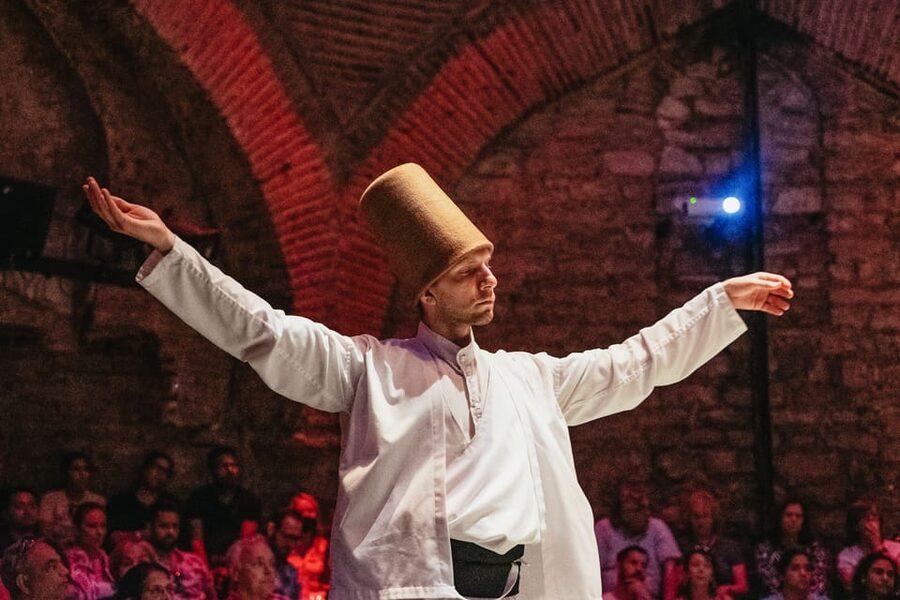
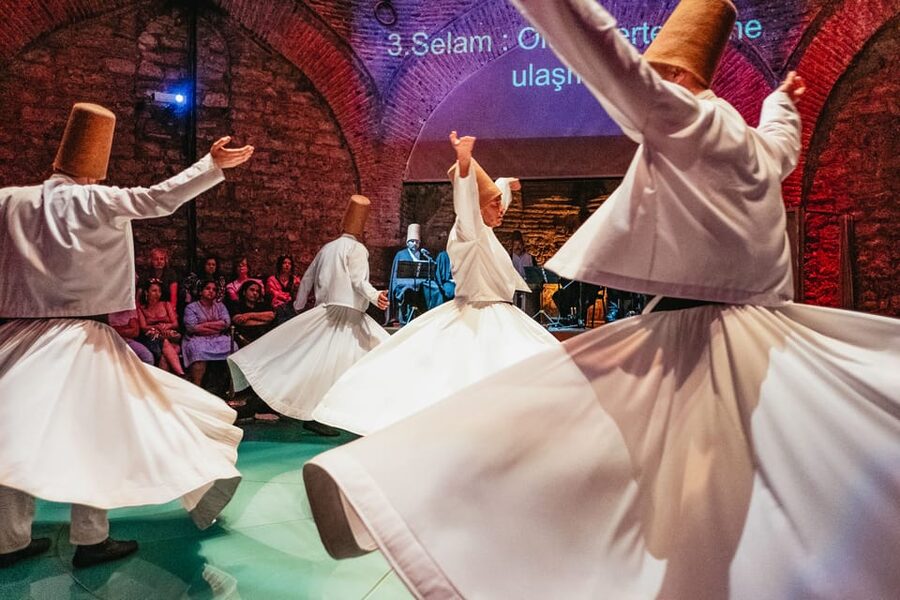
The central part of the evening is the seven-part Sema ceremony. The stages represent the birth of humanity and the soul’s spiritual journey. The movements are controlled and repetitive, but they are not random spinning.
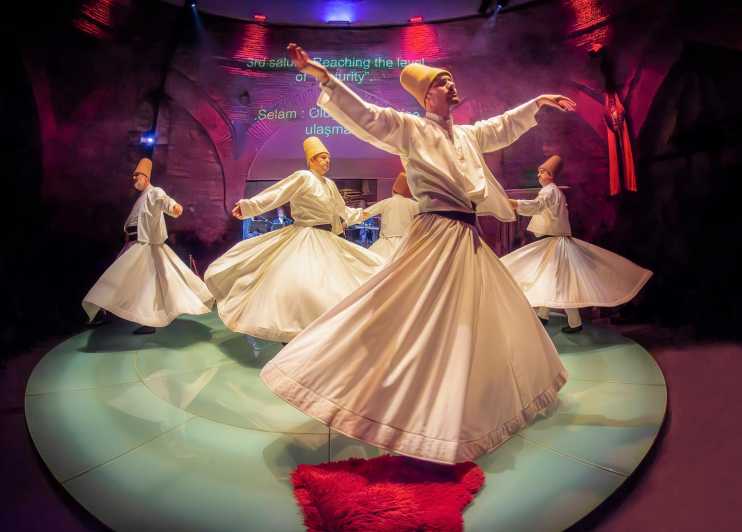
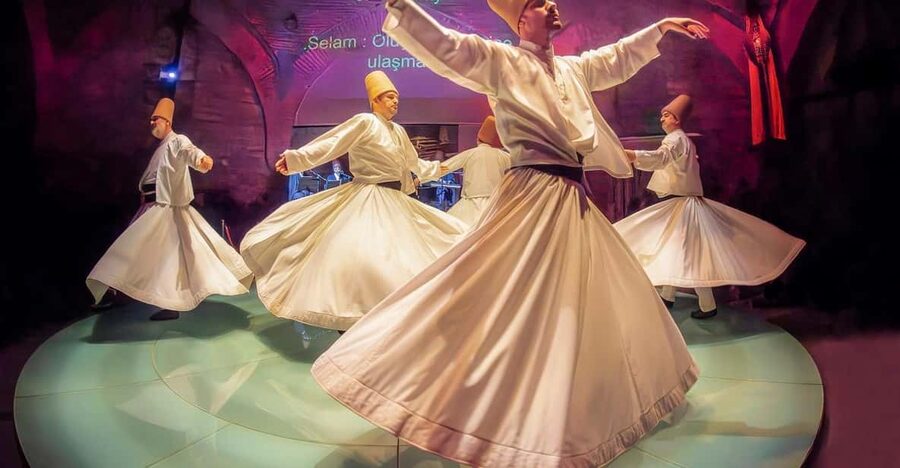
The dervishes turn with one hand raised and the other lowered, a gesture traditionally understood as receiving divine grace and passing it onward. Their bodies rotate while they move around the circular performance space. The effect is hypnotic, especially when several dervishes turn together in measured harmony.
You may notice that they can stop with remarkable precision. They do not stagger off after spinning. Each movement has a place, and the pauses are as important as the turning itself.
The ceremony can include more than 30 minutes of whirling across its different sections. That is enough time for the spectacle to become meditative rather than merely surprising. At first, you may focus on the physical skill. Gradually, the repeated motion, music, and silence can shift your attention toward the ritual’s spiritual meaning.
Still, keep your expectations realistic. If you are looking for an energetic folk dance, this is not it. The movements are graceful and demanding, but the mood is solemn. Some people find the steady turning calming and moving. Others may feel that the action becomes repetitive. Both reactions are reasonable.
A quiet ending with prayer
The Sema concludes with a Fâtiha for the souls of prophets, martyrs, and believers. It also includes a prayer for the salvation of the country.
This ending reinforces the fact that you are watching a religious ceremony, not a stage finale. There is no applause at the end, and you should remain quiet until the formal portion is complete. The conclusion may feel understated, but that restraint fits the entire evening.
For me, the most important value here is access. You are given a respectful way to encounter a spiritual side of Islam that many visitors would otherwise know only through photographs. The ceremony does not attempt to turn belief into a souvenir. It presents the tradition in a controlled setting and asks you to pay attention.
The intimate room helps. A huge theater would make the dervishes seem distant. Here, the dome, stone surfaces, music, and close seating create a direct sense of presence.
Seating, timing, and the practical details
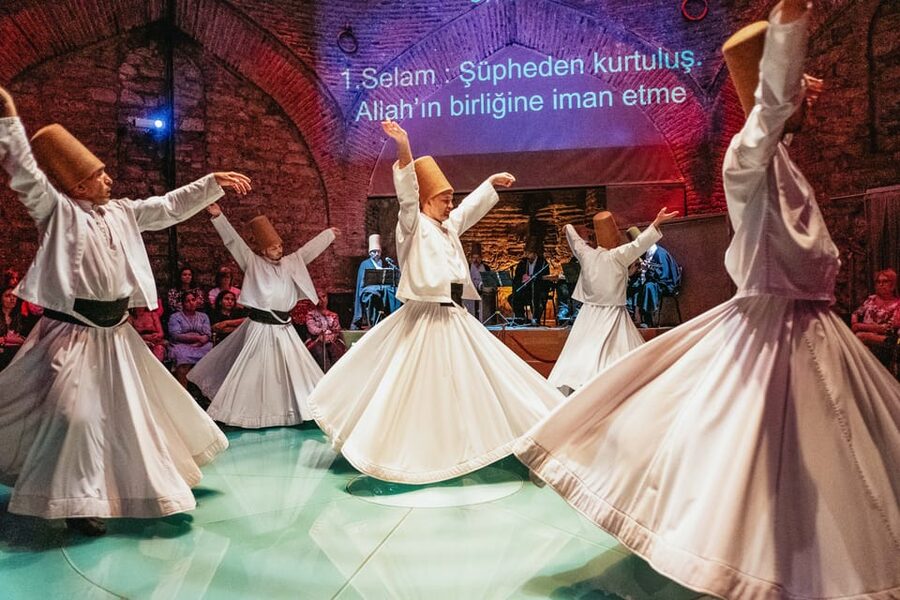
The ticket costs about $32 per person for a one-hour experience. That is not the cheapest evening activity in Istanbul, but the price includes the Mevlevi Sema ceremony, a program booklet, bottled water, access to the historic venue, and the exhibition area.
The value depends on what you want. If you judge the ticket only by minutes of entertainment, it may feel expensive. If you value the building, live music, cultural context, and the chance to watch a complete ceremonial presentation, the price is easier to justify.
Book early if seating matters to you. Seats are allocated in the order bookings are made, although early booking is not an absolute promise of a particular front-row place. Arriving early is still wise, both for the exhibition and to avoid distracting late arrivals.
The chairs may be tightly arranged. If you are broad-shouldered or dislike close seating, you may find the layout uncomfortable. The limited space also means you should settle in before the ceremony starts rather than expect to move around.
The performance lasts one hour, and starting times vary. Check the available time when booking so you can plan dinner and other sightseeing around it. Free cancellation is available up to 24 hours before the activity for a full refund, and you can reserve while paying later, which helps if your Istanbul schedule is still changing.
Who will enjoy the Hodjapasha experience most
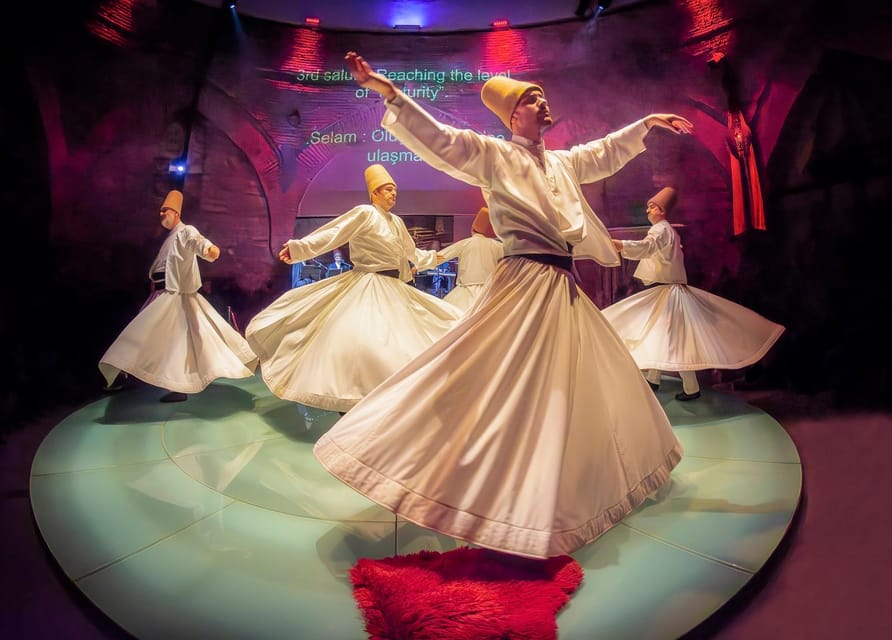
I recommend this for adults and older children who can sit quietly and treat the ceremony with respect. It suits you especially well if you enjoy:
- Sufi and Islamic culture
- Classical Turkish music
- Historic architecture
- Slow, meditative performances
- Religious ceremonies presented with context
- Unusual evening activities in central Istanbul
It may not suit you if you want audience participation, photography, lively dancing, or an explanatory guide speaking throughout the event. Children under seven are not permitted, and the venue is not suitable for wheelchair users.
You should also think about your personal response to repetition. The whirling is the heart of the ceremony, but it is intentionally simple. Its impact grows from concentration and rhythm, not from changing scenery or dramatic tricks.
Is $32 good value for one hour?
I think the price is fair if you make use of the whole experience. Arrive early, read the exhibition, review the booklet, listen closely to the music, and respect the silence. If you arrive just before the start and think of it as a one-hour dance show, you may feel less satisfied.
The restored bath is part of the ticket’s value. So is the live ensemble. The ceremony brings together architecture, music, costume, movement, and religious meaning in one compact visit.
The experience also avoids much of the touristy feel that can weaken cultural performances. It is presented for visitors, but the ritual remains solemn. That balance is difficult to get right, and Hodjapasha handles it well.
The overall rating is 4.4 from 4,790 ratings, with especially strong praise for the venue, music, spiritual atmosphere, and the dervishes’ concentration. The repeated concerns are practical rather than serious: close seating, stairs, no photography, and the fact that the whirling may feel dull to anyone expecting a conventional dance performance.
Should you book it?
Book the Hodjapasha Whirling Dervishes ceremony if you want a thoughtful cultural evening rather than a flashy show. The historic bath, live Turkish music, helpful exhibition, and strict silence create an experience that can feel peaceful and genuinely moving.
I would book early, arrive at least enough time to read the foyer material, and choose this on a night when you are willing to slow down. Skip it if you need lively entertainment or easy wheelchair access. For many visitors, though, this is one of Istanbul’s most memorable chances to see a living spiritual tradition in an intimate historic setting.
FAQ
Where does the Whirling Dervishes ceremony take place?
It takes place at the Hocapaşa Culture Center, also called the HodjaPasha Culture Center, near Sultanahmet and Sirkeci in central Istanbul.
How far is the venue from public transportation?
The center is about 100 meters from the Sirkeci Tram Stop.
How long does the experience last?
The Mevlevi Sema ceremony lasts one hour.
What does the ticket include?
The ticket includes entry to the Mevlevi Sema ceremony, a program booklet, and bottled drinking water.
Is photography allowed during the ceremony?
No. Photography is not allowed inside during the performance.
Can I talk or applaud during the ceremony?
No. Talking, applause, and other disruptions are prohibited during the ceremony.
Are young children allowed?
Children under seven years old are not permitted.
Are seats assigned?
Yes. Seats are allocated according to the order in which bookings are made.
Can I cancel my booking?
You can cancel up to 24 hours in advance for a full refund. A reserve-now-and-pay-later option is also available.
More Show
- Istanbul: Bosphorus Dinner Cruise & Show with Private Table
★ 4.8 · 44,561 reviews - Istanbul: Bosphorus Dinner Cruise with Turkish Night Show
★ 4.8 · 10,127 reviews - Istanbul: Bosphorus Cruise with Dinner Show
★ 4.4 · 2,181 reviews - Bosphorus Dinner Cruise with Show and Private Table
★ 4.5 · 2,021 reviews
More Whirling Dervish Ceremonies
- Istanbul: Whirling Dervishes Ceremony and Mevlevi Sema
★ 4.5 · 128 reviews - Istanbul Whirling Dervish Ceremony, A Mystical Sufi Experience
★ 4.5 · 123 reviews - Istanbul: Traditional Turkish Dinner and Dervish Experience
★ 5.0 · 109 reviews - Cappadocia Whirling Dervishes ceremony
★ 5.0 · 276 reviews
Just added around Istanbul
- Istanbul Imperial & Bosphorus Tour – Incl. Lunch★ 5.0 · 62 reviews
- Istanbul to Cappadocia 2 Day Tour with Guide, Flights and Hotels★ 4.5 · 62 reviews
- A Magical Evening in Istanbul: Private City Tour★ 4.5 · 62 reviews
- Istanbul: Private Guided Tour★ 4.5 · 62 reviews
- 2-Days Private Tour to Gobeklitepe and Karahantepe from Istanbul★ 5.0 · 62 reviews
- Private 7-Hour Istanbul Tour with Red Carpet Treatment★ 4.7 · 62 reviews
- Istanbul Private Walking Tour: Highlights & Gems with a Local★ 5.0 · 63 reviews
- Small-Group Istanbul Old City Guided Tour★ 5.0 · 63 reviews
Whirling Dervish Ceremonies, compared.
Istanbul Hodjapasha Whirling Dervishes Show & Exhibition
Read our review →
Istanbul Traditional Turkish Dinner and Dervish Experience
Read our review →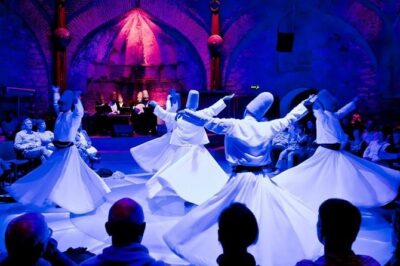
Whirling Dervish Ceremony: Go on a Spiritual Journey
Read our review →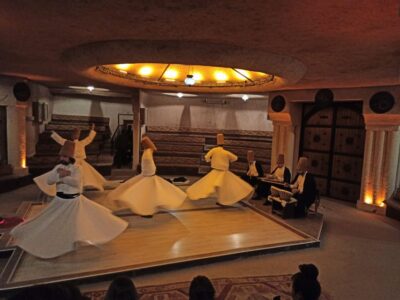
Browse the lists this tour appears in