Reviewed · ISTANBUL TOURS
Tour to Byzantium
Byzantine Istanbul hides in plain sight. This four-hour tour gives you a useful way to connect the Golden Horn, Chora, and ancient city walls, rather than seeing them as scattered sights. I especially like the chance to visit Fener, Panagia of Blachernae, Tekfur Palace, and the old walls in one outing. I also like the focus on Constantinople before modern Istanbul took shape. The main drawback is that the schedule can feel tight, and Kariye Museum is visited from outside rather than through its famous interior.
The tour works best for you if you have already seen the major sights around Sultanahmet and want a quieter, more specialized history lesson. Umut receives especially warm praise for his command of Byzantine history, though guide availability is not guaranteed. You should also allow extra time for pickup, since the free shuttle may take 45 to 60 minutes before the sightseeing begins.
In This Review
- Key points about this Byzantine Istanbul tour
- Why Byzantine Istanbul deserves a separate tour
- Starting at the Golden Horn
- Fener and the Orthodox Patriarchate
- Panagia of Blachernae and its holy water
- Chora and the missed mosaics inside Kariye
- Anemas Dungeons and the darker side of palace power
- Tekfur Palace beside the old walls
- Walking the Byzantine city walls
- Guide quality and the value of the history lesson
- Price, transport, and the real time commitment
- Who should book this Byzantine tour?
- Should you book Tour to Byzantium?
- FAQ
- How long does the Tour to Byzantium last?
- What is the price?
- What languages are available?
- Is hotel pickup included?
- Is hotel drop-off included?
- Is the Kariye Museum visited from inside?
- What should I bring?
- What happens if I need to cancel?
Key points about this Byzantine Istanbul tour
- The Golden Horn begins the story: See the natural harbor that helped make Constantinople a powerful imperial capital.
- Fener connects religion and empire: Visit the Patriarchate, linked to the rise of Christianity in the Roman Empire.
- Panagia of Blachernae adds a living religious site: Learn about its holy water and sacred bath traditions.
- Chora is seen from outside: The former monastery is famous for mosaics and frescoes, but this outing does not include an interior visit.
- Tekfur Palace and Anemas Dungeons reveal palace life: One was a surviving imperial pavilion, the other a severe prison complex.
- The city walls put Byzantine scale into perspective: The old defenses once stretched about 22 kilometers and included 96 towers.
Why Byzantine Istanbul deserves a separate tour
Most first visits to Istanbul center on Ottoman landmarks: Hagia Sophia, the Blue Mosque, Topkapi Palace, and the Grand Bazaar. Those places deserve their time, but they can leave you with only a faint idea of the city before 1453.
This tour shifts the focus to Byzantium and Constantinople, the imperial capital that lasted for more than 1,000 years from the fourth to the fifteenth century. You are not simply checking off monuments. You are tracing how the city was defended, worshipped in, ruled, and expanded.
I like that the route moves away from the most crowded central sights. You walk through parts of Istanbul where Byzantine remains appear beside later buildings and ordinary streets. The setting is not a preserved ancient town. It is a modern city layered over an old one, and that makes a guide particularly useful.
The tour is advertised as four hours, while the detailed description refers to three hours of sightseeing. Pickup can add another 45 to 60 minutes, depending on your hotel. Plan for a half-day commitment rather than a quick three-hour appointment.
Other Istanbul trips people book alongside this one:
- Istanbul: Bosphorus Dinner Cruise & Show with Private Table
★ 4.8 · 44,561 reviews - Istanbul: Daytime or Sunset Sightseeing Cruise & Audio Guide
★ 4.8 · 14,430 reviews - Istanbul: Bosphorus Dinner Cruise with Turkish Night Show
★ 4.8 · 10,127 reviews
Starting at the Golden Horn
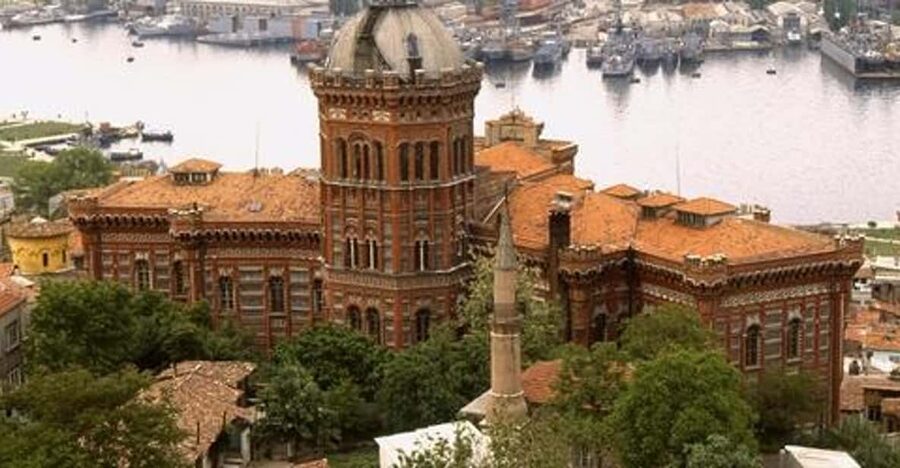
The Golden Horn is a natural naval harbor shaped like a curved horn. Its name also refers to the golden reflection seen from the hills in bright sunshine. For Byzantium, this sheltered waterway was more than a scenic backdrop. It helped protect ships and supported the city’s position as an imperial center.
I find this a smart place to begin because it gives the rest of the tour a practical frame. Constantinople grew powerful partly because of its location between Europe and Asia, with water on several sides and strong defenses around its landward edge.
The tour highlights the crossing toward the Golden Horn and the views around this historic harbor. The exact walking distance and amount of time by the water are not specified, so you should expect an introduction to the area rather than a long waterfront walk.
Your guide’s explanation matters here. Without context, the Golden Horn can look like just another busy waterway. With the Byzantine story in place, you can picture it as a strategic harbor tied to the city’s trade, defense, and daily life.
Fener and the Orthodox Patriarchate
The route continues to Fener, home to the Patriarchate. This is one of the tour’s strongest stops for understanding the religious side of Constantinople.
Constantine the Great declared Christianity the official religion of the Roman Empire, and the Patriarchate became a major center of Orthodox Christianity. The site links the Roman imperial world with the continuing traditions of Eastern Christianity.
I like this stop because it adds a human and spiritual dimension to the tour. Walls and ruins show how the city worked, but the Patriarchate helps explain what shaped its people and rulers. Your guide can also place the site within the long transition from Roman rule to Byzantine identity.
Fener is not presented as a large archaeological park. You are seeing a neighborhood and an active religious center, so respectful behavior is important. Wear practical clothing and follow any instructions given at the site.
Panagia of Blachernae and its holy water
The Church of Panagia of Blachernae was one of the best-known shrines dedicated to the Holy Virgin. It was famous for its Hagiasma, or holy water, and its Hagion Lousma, a sacred bath.
This stop is valuable because it shows how Byzantine religion worked through places, rituals, and traditions rather than through grand architecture alone. The church’s importance came from its role as a celebrated shrine, not simply from its size or appearance.
You may find this stop more meaningful if you are interested in Christian history, Orthodox traditions, or the religious life of Constantinople. The experience is less about a spectacular monument and more about understanding why this particular place mattered.
The provided information does not promise a long interior visit or a formal religious service. Treat it as a historical and cultural stop, and listen closely to the guide for details about the shrine’s traditions.
Something different for another day:
- Best of Istanbul 1, 2 or 3-Day Private Guided Istanbul Tour
★ 5.0 · 8,922 reviews - Istanbul: Basilica Cistern Fast-Track Entry and Audio Guide
★ 4.6 · 7,521 reviews - Istanbul: Hagia Sophia Skip-the-Line Ticket & Museum Option
★ 3.7 · 4,958 reviews - Istanbul: Hodjapasha Whirling Dervishes Show & Exhibition
★ 4.4 · 4,790 reviews
Chora and the missed mosaics inside Kariye
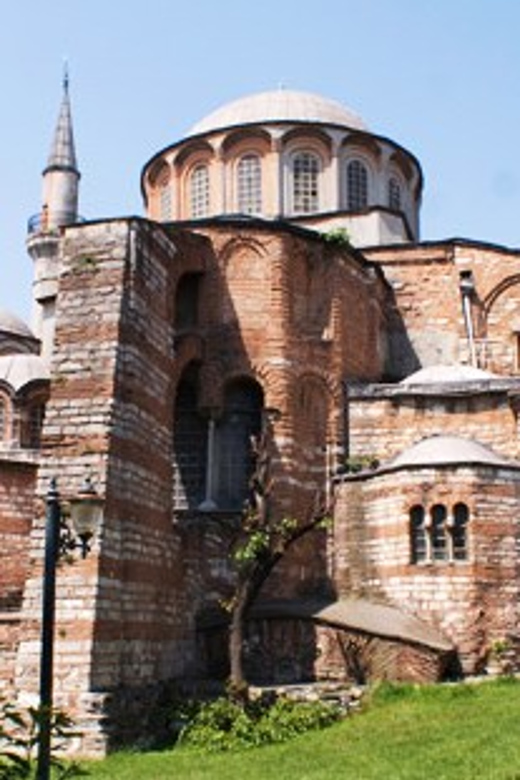
St. Savior in Chora, now known as the Kariye Museum, began as a Byzantine monastery. It is famous for mosaics and frescoes showing scenes from the Bible.
That artistic reputation makes the tour’s limitation important: the visit is from outside, with no interior entry. You can see the building and learn why it matters, but you should not book this outing expecting to study the mosaics up close.
This is probably the biggest disappointment for art lovers. The interior decoration is one of Chora’s main reasons for fame, so you may want to make a separate plan if the mosaics are high on your list. The tour still gives you useful context, but it cannot replace an interior visit.
I appreciate that the limitation is clear. It lets you decide honestly. For a broad introduction to Byzantine Istanbul, an exterior stop works. For Byzantine art, it is not enough by itself.
Anemas Dungeons and the darker side of palace power
The Anemas Dungeons formed part of the Blachernae Palace complex. Their unusual structure included 14 separate dungeons, each with two basement levels below sea level.
These cells were used for high-ranking statesmen. That detail changes the way you read the site. This was not merely a place for common criminals. It reflects the danger of imperial politics, where military leaders, officials, and other powerful figures could fall from favor.
The architecture is the main reason to pay attention. The stacked levels and below-sea-level spaces make the dungeons unusual, even among old prison sites. The description calls them unique in the world for their structure, though the tour does not specify how much time you spend inside or which sections are open.
This is a good stop for you if you prefer the less polished side of history. It is not a pretty palace visit. It helps balance the religious sites and grand imperial story with a reminder that Constantinople was also a place of punishment, suspicion, and political struggle.
Tekfur Palace beside the old walls
Tekfur Palace was built in the twelfth century beside the city walls. It is described as the only surviving pavilion of the Blachernae Palace.
That makes it one of the most useful stops on the route. You are not looking at a complete imperial palace. You are seeing a surviving fragment and using it to imagine the larger Blachernae complex that once served the Byzantine court.
Its location beside the walls also helps the itinerary make sense. Palace life and defense were closely linked here. The rulers of Constantinople needed grand residences, but they also needed protection from attacks approaching across the land.
I like the contrast between Tekfur Palace and the dungeons. One suggests ceremony and royal residence. The other suggests confinement and fear. Together, they give you a more rounded picture of imperial power than a single church or palace could provide.
The information supplied does not specify the condition of every room or the exact interior access at Tekfur Palace. Expect a historical visit focused on the surviving structure and its place beside the fortifications.
Walking the Byzantine city walls
The final major section focuses on the remains of the fifth-century Byzantine city walls. They once surrounded the acropolis of Byzantium and stretched about 13 miles, or 22 kilometers, with 96 towers and nine main gates.
Those numbers are useful because they show the scale of Constantinople’s defenses. This was not a short barrier around a small settlement. It was a huge defensive system built to protect the imperial capital from land attacks.
Walking near the walls gives you a different experience from visiting a single monument. You see how the city’s edge was organized and how architecture served a military purpose. The remains also make clear that the Byzantine city was much larger and more complex than the familiar central tourist district.
The tour does not promise a full 22-kilometer walk, and that would not fit a four-hour outing. You should expect selected sections and explanations rather than a long-distance hike.
Wear comfortable shoes. The route includes streets and historic areas, and old masonry can mean uneven ground. Bring your passport or ID card, which is required for the activity.
Guide quality and the value of the history lesson
A history-heavy tour rises or falls on the guide. The most praised guide named in the feedback is Umut, described as a true historian who gave a strong explanation of Constantinople and the Byzantine Empire. If you are assigned Umut, that is a real plus. The operator also offers English and Spanish tours.
A good guide can connect the stops into one story:
- The Golden Horn explains the city’s strategic location.
- Fener shows the importance of Orthodox Christianity.
- Panagia of Blachernae reveals the power of sacred places.
- Chora points to Byzantine artistic achievement.
- The dungeons show the risks of imperial politics.
- Tekfur Palace links court life to defense.
- The walls explain how the city survived for centuries.
The tour has also been praised for adding an extra site when time and conditions allowed. Do not count on that as part of the fixed schedule, but it suggests some flexibility may be possible.
This is not the right choice if you want a relaxed outing with long independent stops. The route covers a lot in a short period. It suits you best if you enjoy asking questions, listening to historical explanation, and accepting that some locations will be brief.
Price, transport, and the real time commitment
At $85 per person, the price includes air-conditioned transportation, museum entrance fees, and pickup from centrally located Istanbul hotels. That is fair value if you want several outlying Byzantine sites without arranging separate transport.
The price is less attractive if your main goal is only Chora, especially since the interior is not included. It becomes more worthwhile when you value the guide’s historical explanation and the combination of sites.
Pickup is offered between 13:00 and 14:00, depending on your hotel. The shuttle itself can take 45 to 60 minutes, so your afternoon may begin slowly. After the tour, there is no hotel drop-off. You will need to make your own way back.
Only centrally located hotels qualify for pickup. When you confirm your booking, the local supplier will tell you the exact time and whether free shuttle service is available. If your hotel cannot be reached, you will receive an alternative meeting point.
At least six people are needed for the tour to operate, but Tuesday afternoon departures are guaranteed. That detail matters if your Istanbul schedule is short. For other days, confirm the departure status before building your plans around it.
Free cancellation is available up to 24 hours before the activity, and you can reserve now while paying later. Those policies help if your itinerary is still shifting, but they do not remove the need to confirm the pickup time after booking.
Who should book this Byzantine tour?
I would recommend it to you if you have already covered the main Ottoman sights and want to understand the older city. It is also a good match for anyone interested in Christian history, Byzantine art, Roman imperial history, military architecture, or the long story of Constantinople.
You will get the most from it if you:
- Want a guided historical explanation instead of a self-guided ruin hunt
- Prefer less crowded areas to Istanbul’s best-known monuments
- Are comfortable with a fast route and several short stops
- Do not mind viewing Chora from outside
- Can spare most of an afternoon
- Need transport to sites away from Sultanahmet
I would hesitate if you have limited time and have not yet seen Hagia Sophia, the Blue Mosque, Topkapi Palace, or the Grand Bazaar. I would also hesitate if Chora’s mosaics are your top priority, since this visit does not include the interior.
Should you book Tour to Byzantium?
Book it if you want the broad story of Byzantine Istanbul, not just one famous building. The strongest parts are the variety of stops, the city-wall context, and the chance to see Fener, Blachernae, Tekfur Palace, and the dungeons in one guided outing.
Go in with clear expectations. This is a compact history tour with transport, not a leisurely archaeological walk. The interior of Kariye Museum is not included, pickup may consume an hour, and the final route depends on operating conditions and group size.
For a first-time visitor, I would place it after Istanbul’s major central sights. For a history-minded visitor with an extra afternoon, it offers a useful look at the city before the Ottoman era. If Umut is leading your departure, expect an especially strong history lesson. Otherwise, the tour still offers solid value when you want the older layers of Istanbul explained rather than merely photographed.
FAQ
How long does the Tour to Byzantium last?
The activity duration is listed as four hours, while the detailed description refers to three hours of touring. Pickup can take an additional 45 to 60 minutes.
What is the price?
The price is $85 per person.
What languages are available?
The tour is available with a live guide in English or Spanish.
Is hotel pickup included?
Free pickup is available from centrally located Istanbul hotels. The supplier confirms the exact time and shuttle availability after booking.
Is hotel drop-off included?
No. Hotel drop-off is not included.
Is the Kariye Museum visited from inside?
No. St. Savior in Chora, now the Kariye Museum, is visited from outside, with no interior visit included.
What should I bring?
Bring your passport or ID card.
What happens if I need to cancel?
You can cancel up to 24 hours in advance for a full refund. You can also reserve now and pay later.
Just added around Istanbul
- 2-Day Gallipoli and Troy Tour from Istanbul and return★ 5.0 · 17 reviews
- Sabiha Gokcen Airport Transfer Service (SAW)★ 4.0 · 17 reviews
- Istanbul Princes’ Islands Boat Trip with Lunch★ 4.0 · 17 reviews
- Best of Istanbul Full Day Private Tour With Guide★ 5.0 · 17 reviews
- Glories of Turkey 12-Day From Istanbul★ 5.0 · 17 reviews
- Istanbul: Bosphorus Morning or Sunset Yacht Tour with Snacks★ 4.9 · 17 reviews
- Full-Day Istanbul to Bursa Excursion With Cable Car★ 4.0 · 18 reviews
- Istanbul – Old City Tour★ 5.0 · 18 reviews
Istanbul Tours, compared.
Bosphorus Dinner Cruise & Show with Private Table
Read our review →
Daytime or Sunset Sightseeing Cruise & Audio Guide
Read our review →
Bosphorus Dinner Cruise with Turkish Night Show
Read our review →
Best of Istanbul 1, 2 or 3-Day Private Guided Istanbul Tour
Read our review →
Hagia Sophia Skip-the-Line Ticket & Museum Option
Read our review →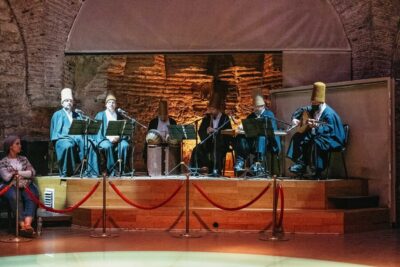
Hodjapasha Whirling Dervishes Show & Exhibition
Read our review →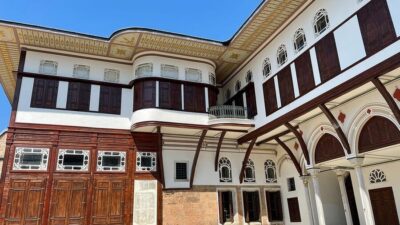
Topkapi Palace & Harem Museum Ticket & Audio Guide
Read our review →