
Reviewed · MULTI-DAY TURKEY TOURS
Pearl’s of Turkey – 8 Days
Turkey packs a lot into eight days. This tour links Istanbul’s grand monuments with Gallipoli, Troy, Ephesus, Pamukkale, and Antalya, making it a useful choice if you want a guided route without arranging every hotel, transfer, and meal yourself. I especially like the small maximum group of 12 and the use of locally owned restaurants, which should make the trip more personal than a large coach tour.
I also like the mix of famous places and less obvious stops, from the Asklepion medical sanctuary near Pergamon to Antalya’s old town. The main drawback is the pace: you change regions often, spend several hours on the road, and must budget separately for most archaeological-site entry fees.
In This Review
- Key points before you book
- What $1,400 covers, and what it does not
- Istanbul begins with imperial power and crowded lanes
- Gallipoli and Troy bring a different kind of history
- Pergamon explains the ancient world through medicine
- Ephesus is the archaeological high point
- Pamukkale and Hierapolis make a memorable sixth day
- Antalya closes with mountain views and an old town stroll
- The pace, group size, and practical trade-offs
- Who should book Pearl’s of Turkey?
- FAQ
- How long is Pearl’s of Turkey?
- Which places are included on the route?
- How many nights of accommodation are included?
- Are historic-site entry tickets included?
- What meals are included?
- How large is the tour group?
Key points before you book
- A full sweep of western Turkey: The route covers Istanbul, Gallipoli, Troy, Pergamon, Ephesus, Pamukkale, and Antalya in one week.
- Small-group format: The tour is limited to 12 people, which should make it easier to hear the guide and ask questions.
- Seven nights in four bases: You spend two nights in Istanbul, one in Canakkale, two in Kusadasi, and two in Antalya.
- Historic-site tickets cost extra: Your guide has prepaid skip-the-line tickets, but you pay the entry cost separately in cash using Turkish lira, US dollars, or euros.
- Meals are partly covered: The package includes seven breakfasts and six lunches, while drinks and personal expenses are extra.
- A useful final correction: Cappadocia is praised in one comment connected with this experience, along with a guide named Hati, but Cappadocia is not part of this eight-day route.
What $1,400 covers, and what it does not
At $1,400 per person, the tour is priced as a packaged trip rather than a string of sightseeing tickets. You receive seven nights of accommodation, airport pickup, transport between regions, the meals specified in the schedule, and the services of an English-speaking guide. Internal flights are included in the tour description, although you should confirm the exact flight sectors before paying because the detailed inclusion list does not spell them out.
The hotel pattern is practical. You stay two nights in Istanbul, one night in Canakkale, two nights in Kusadasi, and two nights in Antalya. The company describes these as centrally located special-class hotels with a regional character, rather than properties designed for large tour groups. That can add atmosphere, though hotel standards may feel less uniform than on a conventional chain-based package.
The price looks strongest if you value convenience. Arranging the same route independently would mean coordinating airport transfers, long-distance transport, hotels, guides, and several early starts. The value is less clear if you already enjoy planning transport and prefer to linger for several days in one city.
Plan for extra money at the historic sites. Entry charges are not included, even though the guide holds prepaid tickets to help you avoid long lines. You can settle the cost with the guide in cash, in lira, US dollars, or euros. Drinks with meals, souvenirs, and other personal expenses are also outside the package.
More multi-day tours across Turkey:
- Best of Turkey-10 Days
★ 5.0 · 233 reviews - 8-Day Private Guided Turkey Tour with Accommodation
★ 5.0 · 231 reviews - Colors of Turkey – 8 Days
★ 5.0 · 102 reviews
Istanbul begins with imperial power and crowded lanes
Your first day is deliberately simple. You are met at Istanbul or Sabiha Gökçen Airport and taken to the hotel for check-in. The transfer is listed as taking about an hour, though actual road time will depend on which airport you use and traffic conditions.
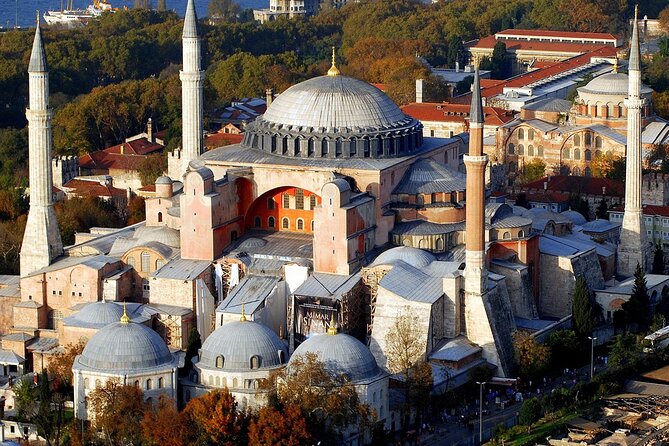
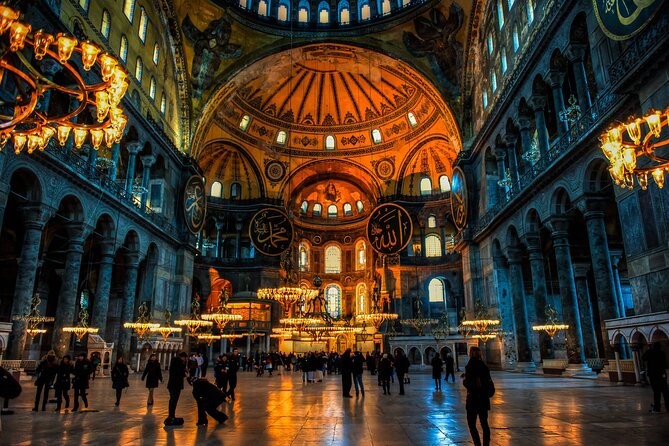
Day two is a concentrated tour of the Old City. Start with Hagia Sophia Grand Mosque, the former Byzantine religious center and one of Istanbul’s defining buildings. The visit is scheduled for about an hour. Entry is not included, so ask your guide about current visiting arrangements and appropriate clothing for a mosque.
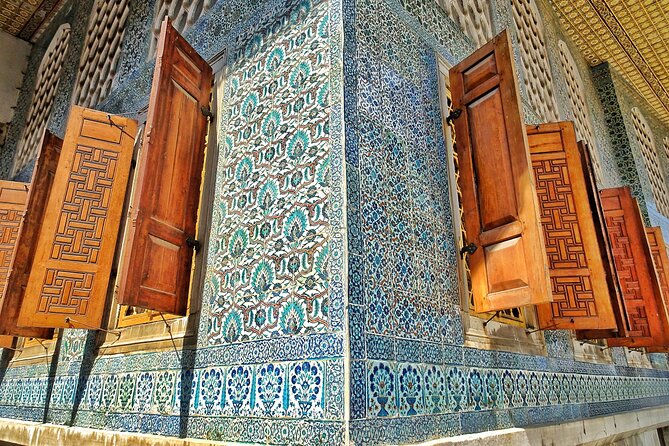
Topkapı Palace receives two hours, which is more useful than a quick photo stop. This was the Ottoman sultans’ residence and government center for almost four centuries. You can expect courtyards, imperial rooms, and displays that help explain how the Ottoman court operated. Since the palace complex is large, two hours will provide an introduction rather than a complete look at every section.
The Hippodrome offers a change of scale. Once the Roman city’s public center, it could hold about 100,000 spectators. Today, the open space is easier to grasp with a guide who can connect its surviving monuments to the races, ceremonies, and political gatherings that once filled it.
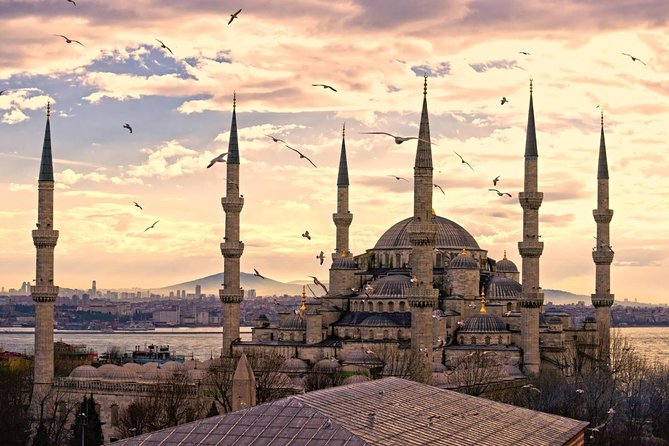
The Blue Mosque follows. Its six minarets and large dome make it one of the Old City’s most recognizable sights. Admission is listed as free, but the mosque remains an active place of worship, so visiting hours can be affected by prayer services.
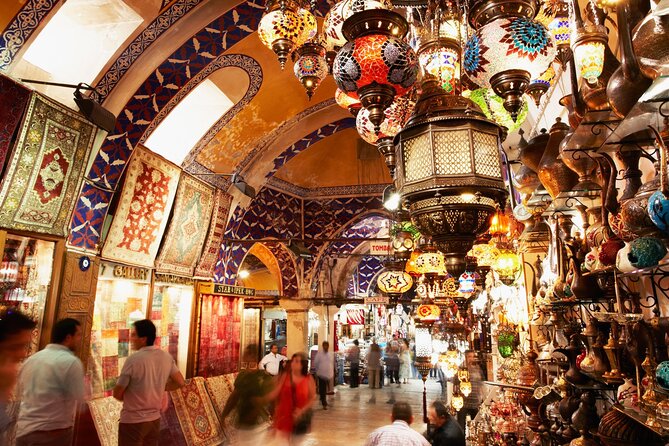
The day finishes at the Grand Bazaar, where two hours can disappear quickly among thousands of shops and numerous entrances. Go in with a little patience. This is a place for browsing, comparing prices, and enjoying the spectacle, not for rushing through a checklist. If you plan to buy anything substantial, keep your spending money separate and agree on prices before committing.
Gallipoli and Troy bring a different kind of history
Day three moves from Istanbul toward Canakkale, with about four hours of driving before the Gallipoli visits. This is one of the more demanding travel days, but the subject matter gives it weight.
The Gallipoli program includes Brighton Beach, ANZAC Cove, Beach Cemetery, the Lone Pine Australian Memorial, tunnels and trenches at Johnston’s Jolly, the Turkish 57th Regiment Memorial, and Chunuk Bair, associated with New Zealand forces. The battlefield stops are spread across a peninsula, so the short two-hour schedule means you will see key points rather than study every site in detail.
Gallipoli is best approached as a place of remembrance, not simply as a military sightseeing stop. The memorials represent different national experiences of the same campaign. Give yourself time to listen closely, especially at the cemeteries and memorials, where a guide can provide context that is easy to miss from a vehicle window.
Troy follows, with about two hours at the archaeological site before the transfer to your hotel. The ruins connect to the Trojan War, Helen of Troy, Prince Paris, Achilles, and Hector, but the remains are not a single perfectly preserved city. Troy was built and rebuilt over many periods, so the pleasure is in learning to read layers of walls, ramps, baths, an odeon, and temple remains.
The site includes the Walls of Troy II, the Megaron House, the Ramp of Troy II, a Roman bath, and the Temple of Athena. The famous wooden horse is not an ancient survivor, so keep your expectations focused on archaeology and literary tradition rather than a complete Homeric city.
You sleep in Canakkale that night. It is a sensible overnight stop after Gallipoli and Troy, and it prevents the day from becoming an even longer push toward the Aegean coast.
Pergamon explains the ancient world through medicine
After breakfast on day four, you leave Canakkale for Pergamon. The visit is split between the ancient city and the Asklepion, giving you about three hours in total at sites that are often overshadowed by Ephesus.
Pergamon was a major capital for nearly four hundred years and passed through several cultural periods. The remains include temples, palaces, agoras, and the setting associated with the famous Altar of Zeus and the parchment library. Much of the site is spread across open ground, so comfortable shoes and sun protection are sensible choices.
The Asklepion is especially interesting because it presents ancient medicine in a concrete way. Known as the Pergamum God of Health, Asklepios was linked to treatments, diet, and healing practices. The sanctuary became an important medical center, and figures associated with ancient medicine, including Hippocrates and Galenus, are connected with Pergamon in the tour’s historical account.
The schedule gives the Asklepion about an hour. That is enough to see the main remains, but not enough for a slow, scholarly visit. Still, the stop adds variety to the route. You are not only looking at temples and columns; you are also considering how people sought medical care long before modern hospitals.
After lunch, you continue to Kusadasi, with about two hours of driving listed for this section. Kusadasi becomes your base for two nights, which is welcome after the previous day’s transfer and sightseeing.
Something different for another day:
- Istanbul: Bosphorus Dinner Cruise & Show with Private Table
★ 4.8 · 44,561 reviews - Istanbul: Daytime or Sunset Sightseeing Cruise & Audio Guide
★ 4.8 · 14,430 reviews - Istanbul: Bosphorus Dinner Cruise with Turkish Night Show
★ 4.8 · 10,127 reviews - Best of Istanbul 1, 2 or 3-Day Private Guided Istanbul Tour
★ 5.0 · 8,922 reviews
Ephesus is the archaeological high point
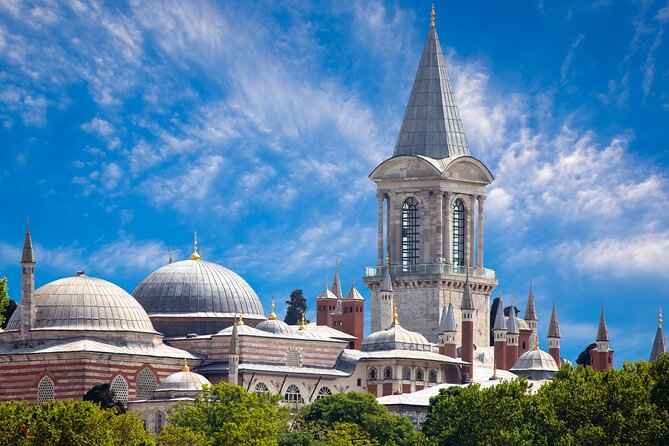
Day five begins at the House of the Virgin Mary. The site is associated with the belief that Mary spent her final days there, and a church was built in the sixth century over the foundations of an earlier house. It is a religious stop, so its appeal will depend partly on your interest in Christian tradition and pilgrimage.
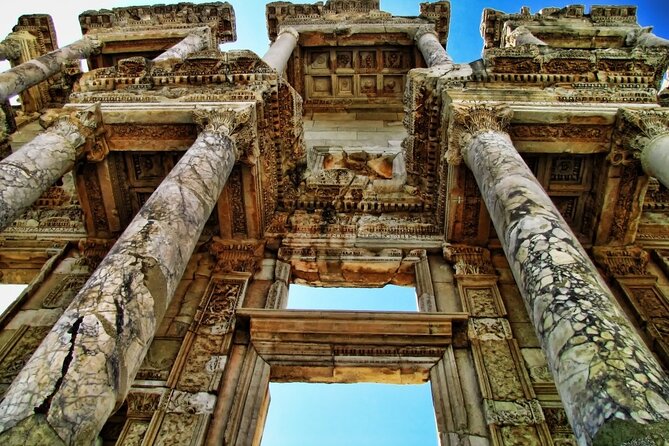
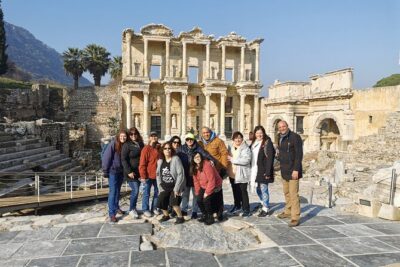
Ephesus receives two hours, and this is the place where a careful guide matters most. The ancient city is unusually readable. You walk along streets lined with major public buildings, including the Library of Celsus and a huge Roman theater. The setting gives you a strong sense of city planning, public life, and the scale of Ephesus during its peak.
The tour describes Ephesus as the second-largest city in the Roman world after Rome during the first century, with more than 250,000 people. Exact ancient population figures can be debated, but there is no doubt that this was a major urban center. The surviving streets and monuments make the past feel close without requiring much imagination.
Two hours is efficient, not generous. You will see the main route, but you may want more time for inscriptions, side streets, and smaller remains. If the schedule allows, stay near the guide and ask which buildings deserve your attention. Entry is extra, and the prepaid tickets should help reduce waiting at the entrance.
The Temple of Artemis is the final stop. It was one of the Seven Wonders of the Ancient World, but little remains today. That contrast is worth understanding. You are visiting the location and surviving fragments of a once-famous sanctuary, not a standing temple comparable to the Parthenon.
Pamukkale and Hierapolis make a memorable sixth day
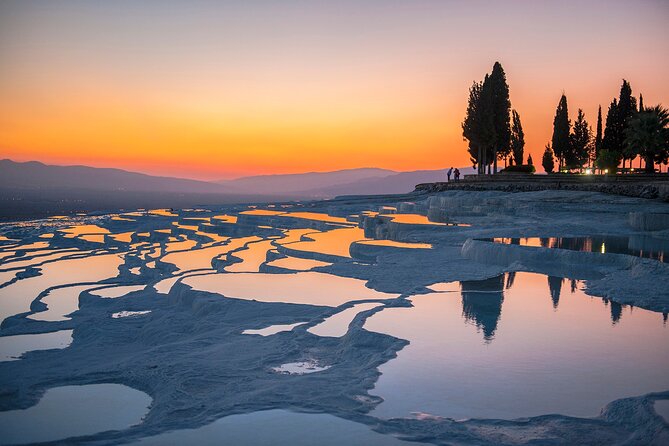
Day six takes you from Kusadasi toward Pamukkale, with the full-day visit followed by a transfer to Antalya. Pamukkale means Cotton Castle, a fitting name for its white calcium terraces. Warm spring water, listed at about 35 degrees Celsius, formed the deposits over time.
The terraces are the visual star, but conditions underfoot matter. You may walk on or near the formations according to the current access rules, and the surface can be wet or uneven. Bring footwear that is easy to manage and follow site instructions carefully. The water is famous for its supposed healing qualities, yet this is also a fragile UNESCO World Heritage setting.
The schedule allows three hours at Pamukkale. That gives you time to appreciate the terraces and visit nearby Hierapolis, but the area is broad enough that you will need to manage your pace. The ancient city grew around the springs and became an important spa settlement in antiquity.
Hierapolis has one of Anatolia’s largest necropolises, with about 1,200 gravestones. The Sacred Pool is another highlight, where thermal water moves over Roman ruins beneath the surface. The stop combines natural scenery with archaeology in a way few other sites on this route can match.
The program lists only one minute for Hierapolis, clearly a scheduling error rather than a realistic visit time. In practice, your three-hour Pamukkale stop appears to include both areas, but you should confirm the exact allocation with the operator. Afterward, the drive to Antalya is listed at about three hours.
Antalya closes with mountain views and an old town stroll
Day seven is lighter in mood. The Tunektepe cable car carries you from the coast toward a summit listed at 1,365 meters above sea level. From the top, you can see the Antalya coastline, mountains, pine forests, and the Mediterranean. The ride is scheduled for two hours, including time for views and photographs.
Cable-car operations can depend on weather and other local conditions, so keep your expectations flexible. The excursion is included as a stop, but the admission ticket is not included in the package.
Next comes Upper Duden Waterfalls, where you walk through a park beside falling water. The visit lasts about an hour. It is a useful break from ruins and museums, and the sound of the water gives the day a more relaxed rhythm.
After lunch at a local restaurant with a panoramic view, you have roughly one to one and a half hours of free time in Kaleiçi, Antalya’s old town. The area includes Hadrian’s Gate, the Clock Tower, the Kesik Minare, and city walls linked to the second century. Narrow stone streets lead past boutiques, galleries, museums, and shops selling souvenirs.
The free time is not long, so choose your priorities before you set off. I would focus on the old streets and Hadrian’s Gate rather than trying to enter every museum. You spend your final two nights in Antalya, which gives you a comfortable finish instead of another evening transfer.
Day eight is simply breakfast, hotel check-out by noon, and the end of the service. Airport transport is not specified for departure, so arrange your onward transfer in advance.
The pace, group size, and practical trade-offs
The maximum group of 12 is one of the strongest features. You should have a better chance of hearing explanations, asking questions, and moving through entrances without the slow shuffle of a large coach group. Small groups do not remove the fixed schedule, however. The route still covers a lot of ground.
You should be comfortable with repeated hotel changes and long drives. The busiest stretches are Istanbul to Gallipoli, the Gallipoli and Troy combination, and the Pamukkale to Antalya transfer. The reward is geographic range. In one week, you move from Byzantine and Ottoman Istanbul to battlefield memorials, Greek and Roman ruins, thermal terraces, and a Mediterranean city.
The food plan helps control daily costs. Seven breakfasts and six lunches are included, and the company describes the restaurants as family-owned local places serving regional flavors. Drinks are extra, so budget for them separately. Dinner is not listed as included, giving you some freedom but also requiring additional planning.
The tour is offered in English. Pickup is available from Istanbul or SAW Airport, and you are asked to provide international flight details at booking. Pre- and post-tour accommodation can also be arranged through the company.
The overall rating is listed as five out of five from 38 ratings, with 100 percent recommending the experience. One associated comment praises a guide named Hati, good food, safe walking, and a hammam experience, but it also refers to Cappadocia and Hera Cave Suites, neither of which appears in this route. Treat that comment as evidence that the company may operate other programs, not as a promise that those experiences belong to Pearl’s of Turkey.
Who should book Pearl’s of Turkey?
I would recommend this tour if you want Turkey’s major western sights arranged in a single package and you prefer a guide to handle the route. It suits people who value history, do not mind early starts, and would rather spend eight days seeing many regions than settle into one city.
It is also a good fit for first-time visitors who want airport pickup, hotel coordination, included lunches, and a small group. The combination of Ephesus, Pamukkale, and Istanbul alone gives the tour strong appeal, while Gallipoli, Troy, Pergamon, and Antalya add useful range.
I would think twice if you dislike long transfers, want generous free time, or expect every entrance ticket to be covered by the advertised price. You should also confirm the internal-flight details, departure transfer, hotel names, and expected ticket costs before booking.
Free cancellation is available up to 24 hours before the start time for a full refund. Changes or cancellations inside that 24-hour window are not accepted or refunded.
FAQ
How long is Pearl’s of Turkey?
The tour lasts approximately eight days, from airport pickup and hotel check-in on day one through hotel check-out by noon on day eight.
Which places are included on the route?
The route includes Istanbul, Gallipoli, Troy, Pergamon, the Asklepion, Kusadasi, the House of the Virgin Mary, Ephesus, the Temple of Artemis, Pamukkale, Hierapolis, and Antalya.
How many nights of accommodation are included?
Seven nights are included: two nights in Istanbul, one night in Canakkale, two nights in Kusadasi, and two nights in Antalya.
Are historic-site entry tickets included?
No. Entry fees are separate. The guide has prepaid skip-the-line tickets, and you pay the cost of the tickets in cash using Turkish lira, US dollars, or euros.
What meals are included?
The package includes seven breakfasts and six lunches, as listed in the schedule. Beverages with meals and personal expenses are not included.
How large is the tour group?
The tour has a maximum of 12 participants. It is offered in English, and most people can take part according to the provided tour information.
Just added around Istanbul
- 2-Day Gallipoli and Troy Tour from Istanbul and return★ 5.0 · 17 reviews
- Sabiha Gokcen Airport Transfer Service (SAW)★ 4.0 · 17 reviews
- Best of Istanbul Full Day Private Tour With Guide★ 5.0 · 17 reviews
- Istanbul Princes’ Islands Boat Trip with Lunch★ 4.0 · 17 reviews
- Glories of Turkey 12-Day From Istanbul★ 5.0 · 17 reviews
- Istanbul: Bosphorus Morning or Sunset Yacht Tour with Snacks★ 4.9 · 17 reviews
- Full-Day Istanbul to Bursa Excursion With Cable Car★ 4.0 · 18 reviews
- Istanbul – Old City Tour★ 5.0 · 18 reviews
Multi-Day Turkey Tours, compared.
8-Day Private Guided Turkey Tour with Accommodation
Read our review →
Eastern Turkey 12-Day Sightseeing Tour from Trabzon
Read our review →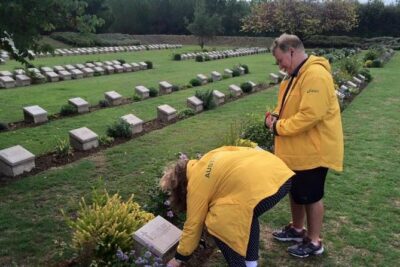
Aegean Delight 8-Day – Istanbul: Pamukkale, Gallipoli, Ephesus
Read our review →Browse the lists this tour appears in