
Reviewed · SHOW
Istanbul: Hodjapasha Rhythm of The Dance Show
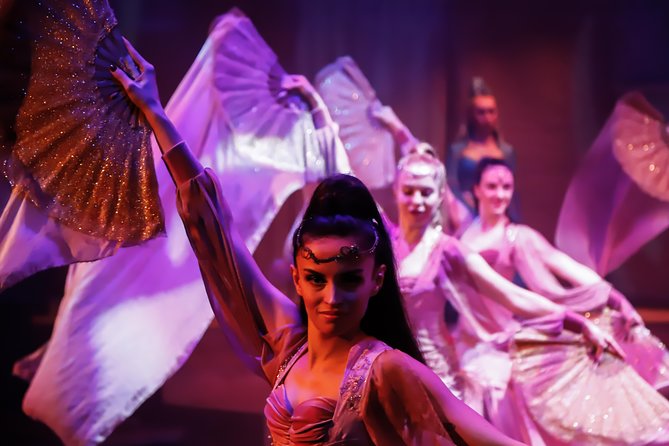
Old Istanbul provides the stage. The Hodjapasha Rhythm of the Dance show turns a 550-year-old Ottoman bath into an intimate theater for Turkish folk dances, live music, colorful costumes, lighting, and video projections. I like the impressive setting and the wide range of dances from Anatolia and other cultural regions connected with Türkiye. The main consideration is that this is a polished stage show, not a quiet or strictly traditional folk performance.
The 65-minute program moves quickly, with energetic dancers, drum-driven music, solo pieces, group choreography, and a modern take on dervish-style movement. I also like the assigned seating, which prevents a scramble at the door and gives you a better chance of enjoying the show from a clear viewpoint. There is no pickup service, and finding the center can take extra time in the maze of streets near the venue.
In This Review
- Key points before you book
- Entering the 15th-century Hodjapasha Hamam
- Finding your seat before the music begins
- The opening: color, rhythm, and group movement
- From Anatolia to the wider region
- The drumming, solo dances, and modern touches
- Belly dance and the show’s crowd-pleasing side
- Why 65 minutes works well in Istanbul
- Is $32 good value?
- Who will enjoy Rhythm of the Dance most?
- Practical tips for a smoother evening
- Should you book this Istanbul dance show?
- FAQ
- Where does the Rhythm of the Dance show take place?
- How long is the performance?
- What is included in the ticket?
- Is hotel pickup included?
- Are seats assigned?
- Is the experience suitable for wheelchair users?
- Can I cancel the booking?
Key points before you book
- A historic hammam becomes the theater: The restored Hodjapasha Hamam gives the evening a setting you will not get in a standard concert hall.
- A fast-moving 65-minute program: The show packs many dance styles, musical moods, costumes, and lighting effects into a manageable evening activity.
- Assigned seats reduce the usual theater fuss: Seats are allocated according to booking order, so you do not need to crowd the entrance to find a place.
- Turkish regional culture takes center stage: The dances draw from different parts of Anatolia, with influences connected to Arab, Balkan, and Levant cultures.
- Live music adds force: Drumming is a major crowd-pleaser, while the lighting and projections add a modern stage feel.
- A good first-night choice: The lively pace can help you get into Istanbul time without taking up your entire evening.
Entering the 15th-century Hodjapasha Hamam
The venue is part of the experience, not just a room where the performance happens. The Hodjapasha Culture Center occupies a restored Ottoman Turkish bath built in the 15th century, giving you original architecture and a sense of place before the dancers even appear.
You enter through the culture center and can see a Dervish exhibition in the foyer. That small display gives useful context, especially if this is your first contact with the whirling dervish tradition. It also helps explain why movement, music, and spiritual expression have such an important place in Turkish culture.
Do not treat the address as a quick glance at a map and a casual stroll from your hotel. One visitor, Anne from France, found the center difficult to locate among the surrounding alleys and needed help from local shopkeepers. I would arrive early, especially if you do not know the area. The meeting point is the Hodjapasha Culture Center itself, and the ticket does not include hotel pickup.
The historic setting has a practical trade-off. An old bath was designed for another purpose, so it does not offer the roomy layout or modern facilities of a purpose-built theater. The experience is listed as unsuitable for wheelchair users, an important point to check before booking.
A few more tours and experiences worth a look
- Istanbul: Bosphorus Dinner Cruise & Show with Private Table
★ 4.8 · 44,561 reviews - Istanbul: Bosphorus Dinner Cruise with Turkish Night Show
★ 4.8 · 10,127 reviews - Istanbul: Hodjapasha Whirling Dervishes Show & Exhibition
★ 4.4 · 4,790 reviews
Finding your seat before the music begins
Seats are allocated on a first-booked, first-served basis. This is one of the program’s better arrangements. You have a designated place rather than joining a queue and hoping to secure a clear view.
The venue is intimate, and several visitors specifically appreciated that even a relatively small audience still had a good view of the stage. The seating plan also keeps people from blocking the entrance while everyone tries to claim a favorite spot.
If the show is important to your evening plans, book earlier rather than later. The seating rule means early booking can affect where you sit. The exact starting time varies, so check availability for the date you want and build in time to find the building.
Bring water expectations down to earth. Bottled drinking water is included, but there is no bar, so do not count on buying wine, coffee, or a cocktail inside. Alison from the United Kingdom specifically noted the lack of a bar, while also confirming that free water was available.
The opening: color, rhythm, and group movement
Once the show begins, the mood changes quickly. The performance is designed as entertainment first, with strong visual effects and a steady run of dance numbers rather than long explanations between acts.
Professional dancers perform folk dances associated with different regions of Anatolia. The program uses traditional costumes and music, but the choreography also includes modern touches. That mix makes the show accessible if you know little about Turkish dance, while giving experienced culture seekers something more polished than a simple demonstration.
The costumes do much of the storytelling. Skirts, layered fabrics, bright colors, and coordinated group outfits help distinguish the styles as the program moves from one number to the next. The lighting then changes the feel of the historic room, particularly during solo performances.
The dances are energetic rather than meditative. Anna from the United States praised the way the acts flowed from one to the next, while Andrei from Germany described the program as varied, dynamic, and colorful. That pacing matters: you are unlikely to spend much of the 65 minutes waiting for the next section to start.
From Anatolia to the wider region
The show presents Türkiye as a meeting point of several cultural currents. Alongside dances from Anatolian regions, the program has been described as drawing on Arab, Balkan, and Levant traditions. It is not a lecture in regional history, but the variety gives you a useful visual introduction to the country’s cultural range.
You may see the differences in group formations, footwork, gestures, music, and costume design. Because the numbers are short and varied, you get a broad sample rather than one dance style repeated for an hour.
That breadth is one of the strongest reasons to choose this performance. If you have only one evening for a cultural show, it gives you a compact overview. If you want a detailed study of one specific folk tradition, it may feel too broad and theatrical.
The show also includes humorous or playful moments. Jianwen from South Korea enjoyed a small comedy section and the interaction between performers and the audience. These touches keep the program from feeling formal or museum-like, though they also confirm that this is a stage production built to entertain an international audience.
Something different for another day:
- Istanbul: Daytime or Sunset Sightseeing Cruise & Audio Guide
★ 4.8 · 14,430 reviews - Best of Istanbul 1, 2 or 3-Day Private Guided Istanbul Tour
★ 5.0 · 8,922 reviews - Istanbul: Basilica Cistern Fast-Track Entry and Audio Guide
★ 4.6 · 7,521 reviews - Istanbul: Hagia Sophia Skip-the-Line Ticket & Museum Option
★ 3.7 · 4,958 reviews
The drumming, solo dances, and modern touches
The drumming is a major part of the show’s appeal. Anthony from New Zealand singled out the drumming as fantastic, and Muhammad from Azerbaijan found the drummer especially memorable. Expect percussion to provide some of the biggest bursts of energy in the program.
The solo pieces change the scale of the performance. Instead of watching a large group move together, you can focus on one dancer’s control, rhythm, and use of the stage. The lighting and video projections are especially important here, creating a more contemporary visual style than the traditional costumes alone would suggest.
The program also includes a modern solo Sama performance. Mina from Switzerland called this the highlight of the evening, while Beinaroviča from Latvia particularly liked a modern dervish dance performed by a woman. This is worth knowing if you expect only the familiar image of male whirling dervishes in long white robes.
The production is not the same as attending a formal Sema ceremony. A Sema performance is slower, quieter, and more meditative. Rhythm of the Dance is quicker, more colorful, and more theatrical. If you want both sides of Turkish performance culture, the Hodjapasha center presents a useful contrast between the two.
Belly dance and the show’s crowd-pleasing side
Belly dance is another popular part of the program. Emma from Germany named the belly dance presentation as her favorite, and Anna also found it impressive. It provides a change of mood from the regional group dances and gives the production one of its most familiar forms of Turkish entertainment.
The performance is designed for a mixed international audience, so you do not need prior knowledge of Turkish folklore to follow it. The combination of music, costume, movement, and lighting communicates more than spoken explanation would in a short show.
Some viewers may find the modern staging less authentic than a village festival or local community performance. That is a fair criticism, but it is also the point of this experience. You are seeing a professional cultural presentation in a historic Istanbul venue, not a field recording brought to life.
The dancers’ energy is a consistent strength. Helena from the United States praised the costumes and choreography, while Sarah from the United States found all the performers highly talented. The program works best when you want an exciting evening with cultural content, rather than a scholarly presentation.
Why 65 minutes works well in Istanbul
The short running time is a practical advantage. Istanbul evenings can be tiring after a day of mosques, markets, ferries, and steep streets. A 65-minute show gives you a complete activity without demanding the stamina of a long theater production.
Sandra from the United States considered it a useful choice for a first full day in the city because it was lively and entertaining, yet short enough to help with adjusting to Istanbul time. I agree with that logic. It can fit after sightseeing without forcing you to surrender the entire evening.
The trade-off is that you may wish it lasted longer. Ákos from Hungary wanted twice the running time, and other visitors described it as short but nonstop. The show does not spend much time explaining each dance, so the program favors momentum over background detail.
You should also expect the performance to finish promptly rather than linger. Najla from Saudi Arabia enjoyed the dancers, music, and sequence of acts but wished the performers had paused to greet the audience. If you prefer a relaxed finale with photographs or extended applause, the ending may feel abrupt.
Is $32 good value?
At $32 per person, the show is reasonably priced for an evening performance in a central historic venue. You are paying for admission, a program booklet, bottled water, professional dancers, live music, lighting, projections, and the use of an unusual Ottoman building.
The value is strongest if you want several experiences in one package: a cultural introduction, a live performance, and a look inside a restored hammam. The 65-minute length also makes the price easier to justify for visitors with packed itineraries.
It is less compelling if your main goal is an informal local event or a highly detailed cultural explanation. The show is produced for entertainment, and the modern choreography, dramatic lighting, and occasional comedy make that clear.
Repeat attendance may still have appeal. Claudia Marcela from Canada attended three times over the years and found the program updated enough to feel different on each visit. That suggests the production can change over time, though you should not book expecting a completely different show every night.
Who will enjoy Rhythm of the Dance most?
I would recommend this for first-time visitors who want a lively introduction to Turkish music and dance without committing to a long performance. It also suits couples, families with older children, and anyone who prefers a fixed one-hour cultural activity over a full dinner show.
It is a good match for you if you enjoy:
- Colorful costumes and strong stage lighting
- Fast changes between dance styles
- Live percussion and energetic group performances
- A historic venue with a small-scale theater feel
- A mix of traditional material and modern choreography
- A short evening activity with assigned seating
You may want another type of performance if you prefer silence, ritual, or detailed narration. For that mood, a Sema ceremony at the same center is a different experience. Rhythm of the Dance is the choice for movement, color, humor, and applause.
The accessibility limitation is serious. The activity is listed as unsuitable for wheelchair users, so contact the provider before booking if access needs are part of your plans. The lack of pickup also means you are responsible for reaching the center and allowing time to locate the entrance.
Practical tips for a smoother evening
Arrive early enough to find the building without rushing. The surrounding alleys can be confusing, and the show’s historic location is part of its charm but not necessarily its simplest feature.
Book ahead if you care about seating position. Seats are assigned according to booking order, and that policy is helpful once you are inside, but it gives early bookers the advantage.
Use the foyer exhibition as a short cultural warm-up. The Dervish display can help you distinguish this lively dance program from the slower Sema ceremony held at the same center.
Plan for water, not drinks. A bottle is included, but no bar is available.
Keep the evening flexible around the show. The performance lasts 65 minutes, but your total time should include finding the center, settling into your seat, and leaving the historic building afterward.
Cancellation is flexible if your plans change: you can cancel up to 24 hours before the performance for a full refund. The reserve-now, pay-later option can also help if your Istanbul schedule is still taking shape.
Should you book this Istanbul dance show?
Book it if you want an upbeat, visually rich introduction to Turkish folklore in a memorable old building. The best parts are the professional dancers, strong drumming, regional variety, striking costumes, modern solo work, and the sense of watching a show inside an Ottoman bath rather than an ordinary theater.
I would not choose it for a quiet spiritual ceremony, a detailed history lesson, or a fully traditional village performance. But at $32 and just 65 minutes, it offers solid value for a first or second evening in Istanbul, especially when you want culture with plenty of energy.
FAQ
Where does the Rhythm of the Dance show take place?
The performance takes place at the Hodjapasha Culture Center in Istanbul, inside a restored 550-year-old Ottoman Turkish bath known as the Hodjapasha Hamam.
How long is the performance?
The show lasts 65 minutes.
What is included in the ticket?
Admission to the performance, a program booklet, and bottled drinking water are included.
Is hotel pickup included?
No. Pickup service is not included, so you need to make your own way to the Hodjapasha Culture Center.
Are seats assigned?
Yes. Seats are allocated on a first-booked, first-served basis.
Is the experience suitable for wheelchair users?
The activity is listed as unsuitable for wheelchair users.
Can I cancel the booking?
Yes. You can cancel up to 24 hours in advance for a full refund. You can also reserve now and pay later to keep your plans flexible.
Just added around Istanbul
- Istanbul to Cappadocia 2 Day Tour with Guide, Flights and Hotels★ 4.5 · 62 reviews
- Istanbul Imperial & Bosphorus Tour – Incl. Lunch★ 5.0 · 62 reviews
- A Magical Evening in Istanbul: Private City Tour★ 4.5 · 62 reviews
- Istanbul: Private Guided Tour★ 4.5 · 62 reviews
- 2-Days Private Tour to Gobeklitepe and Karahantepe from Istanbul★ 5.0 · 62 reviews
- Private 7-Hour Istanbul Tour with Red Carpet Treatment★ 4.7 · 62 reviews
- Istanbul Private Walking Tour: Highlights & Gems with a Local★ 5.0 · 63 reviews
- Private Istanbul Airport Transfer to Blue Mosque Sultan Ahmet★ 5.0 · 63 reviews
Show, compared.
Bosphorus Dinner Cruise & Show with Private Table
Read our review →
Bosphorus Dinner Cruise with Turkish Night Show
Read our review →
Hodjapasha Whirling Dervishes Show & Exhibition
Read our review →
Bosphorus Dinner Cruise with Show and Private Table
Read our review →Bosphorus Dinner Cruise with Turkish Night Show
Read our review →
Dinner Cruise On The Bosphorus with Turkish night show
Read our review →