
Reviewed · GALLIPOLI & TROY TOURS
Full-Day Troy Tour From Istanbul
Troy rewards curiosity. This long day from Istanbul links Greek myth with a real archaeological site, taking you across the Dardanelles by ferry and into the ruins of one of the ancient world’s most famous cities. I especially like the strong storytelling from guides such as Charlie, Cindy, Hasan, and Emre, and the chance to see the countryside beyond Istanbul. The main drawback is simple: you spend roughly nine hours getting there and back, with limited time at Troy itself.
The tour also gets two practical things right. Lunch is included, and the ferry crossing breaks up the bus journey with a welcome change of pace. You should still expect a demanding 15-hour schedule, an early pickup, and a site visit that can feel rushed if you want to study every stone.
In This Review
- Key points to know before booking
- Why Troy is worth the long ride from Istanbul
- The early departure and the road south
- Lunch with views of the Dardanelles
- Crossing the Dardanelles by ferry
- Meeting the Trojan Horse at the entrance
- Reading Troy’s walls and seven settlement layers
- Achilles, the Scaean Gate, and the Trojan Horse
- Roman Troy: baths, theater, council, and market
- How much time do you get at the archaeological site?
- What the $176 price includes
- Who should book this Troy day trip?
- Final verdict: worth it for the right kind of history fan
- FAQ
- How long is the Troy tour from Istanbul?
- Where does pickup take place in Istanbul?
- Is lunch included?
- Is breakfast included?
- Is dinner included on the way back?
- What language is the tour conducted in?
- Is the tour suitable for wheelchair users?
Key points to know before booking
- About 15 hours door to door: Pickup begins around 6:00 AM, with return to Istanbul close to 11:00 PM.
- Troy is reached by road and ferry: The Dardanelles crossing gives the journey a memorable pause.
- The guide matters here: Ruins can be confusing without someone explaining the different periods, myths, and buildings.
- Lunch is included, dinner is not: A later rest stop allows you to buy food on the return journey.
- Expect an open archaeological site: Comfortable shoes, sunglasses, and sun protection make a real difference.
- Best for history fans and first-time visitors to Troy: Less suitable if you dislike long bus rides or need wheelchair access.
Why Troy is worth the long ride from Istanbul
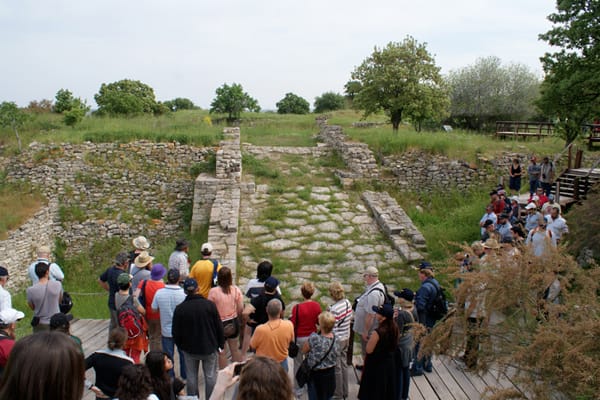
Troy is not a grand city of intact columns. Much of what you see consists of foundations, broken walls, earthworks, and partial outlines. Without context, the site can seem modest for a place linked to Helen, Achilles, Paris, and the Trojan Horse.
That is exactly why a guide is so important. A good explanation helps you read the layers beneath your feet and understand that Troy was rebuilt repeatedly. The site is presented through several settlement levels, including remains dating back more than 3,000 years. The guide connects these physical traces with the stories associated with Homer and the Trojan War.
I would not choose this excursion only for dramatic ruins. I would choose it because Troy sits at the meeting point of archaeology, literature, and legend. You are not simply looking at stones. You are trying to separate what may have happened from what later poets made unforgettable.
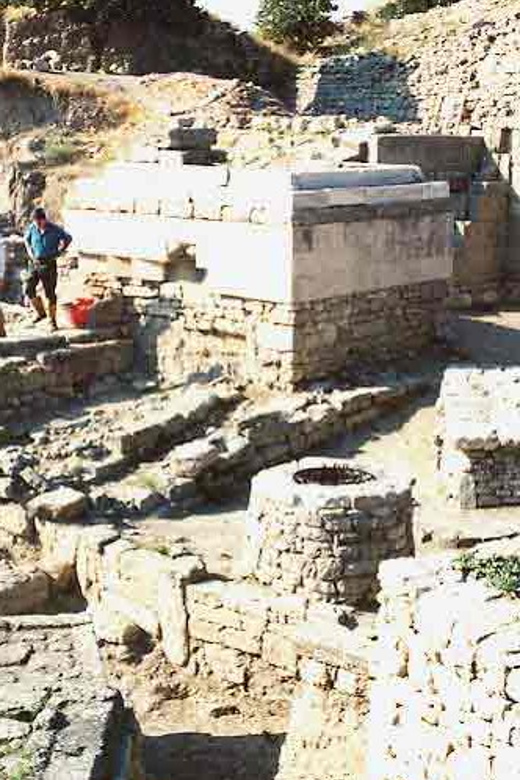
The tour covers the main areas of the site, including Troy’s walls, the Temple of Athena, the Megaron House, Schliemann’s trench, the Roman Bath, the Odeon, the Bouleuterion, and the Agora. Each is easier to appreciate when you understand its purpose.
More Gallipoli and Troy trips:
- Istanbul to Gallipoli Full Day Tour with Lunch and Transfers
★ 5.0 · 567 reviews - Gallipoli Full-Day Tour from Istanbul
★ 4.9 · 468 reviews - From Istanbul: Gallipoli and Anzac Full-Day Tour
★ 4.9 · 345 reviews
The early departure and the road south
The morning begins early. Pickup is listed at 6:00 AM from Taksim, 6:15 AM from Sirkeci, and 6:30 AM from Beyazıt, Laleli, and Sultanahmet. Other central European-side areas, including Beşiktaş, Beyoğlu, Şişli, Ortaköy, and Bebek, may also be served on request.
That broad pickup area is useful if you are staying in central Istanbul, but it can make the start feel less precise. Be ready before the stated time, and confirm exactly where the vehicle will meet you. One passenger had trouble identifying the correct bus in a crowded pickup area, so a clear meeting point matters.
The bus transfer runs through Istanbul and onward toward Çanakkale. Depending on traffic and stops, the road portion is long. One direct account put the journey at around four and a half hours each way, which is the central issue with this outing.
Still, the travel is not entirely dead time. You see a different side of Turkey beyond Istanbul, and the organized stops help break up the ride. The vehicle is air-conditioned, though one past departure was criticized for poor airflow and heat. That suggests you should dress in light layers and speak up early if the cabin becomes uncomfortable.
An open-buffet breakfast may be available for an extra fee. Since breakfast is not included, you should either eat before pickup or budget for this added stop.
Lunch with views of the Dardanelles
Lunch is served before the afternoon visit to Troy, at a restaurant with views over the Dardanelles. The meal is included in the tour price, but drinks are extra.
This is a sensible part of the schedule. After a long morning on the road, you get a proper break before walking through the archaeological site. Several comments praised the meal, while one described the lunch stop less favorably. I would set expectations at decent group-tour food rather than a special culinary event.
The Dardanelles setting adds more than scenery. This narrow waterway has shaped movement between Europe and Asia for thousands of years, and the ferry crossing later gives you a physical sense of that passage. Keep some time to look outside instead of treating the ferry as just another transfer.
A useful warning concerns the return stop. Dinner is not included, so you will need to pay for your own food when the bus pauses on the way back. One account noted that this was clearly understood and caused no problem, but it is worth remembering after such a long day.
Crossing the Dardanelles by ferry
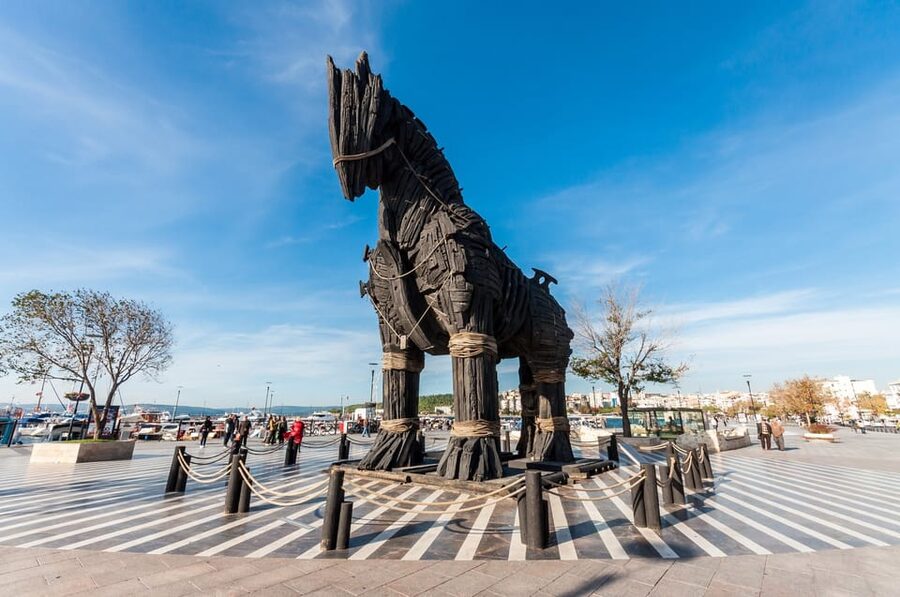
The ferry is one of the tour’s most appealing features. It breaks the long road journey and lets you experience the strait at water level, rather than viewing it only through a bus window.
The crossing also gives the day a sense of movement and place. Istanbul can feel like a complete world of its own, but this trip carries you far beyond the city and across a major waterway before reaching Troy. You get a brief chance to stretch, take photographs, and enjoy open views.
Do not expect an extended cruise. This is a working ferry crossing, part of the transport plan rather than a separate sightseeing voyage. Even so, it is an important relief from the bus and helps make the long journey feel more varied.
A few more tours and experiences worth a look
- Istanbul: Full-Day Highlights Tour with Guide and Lunch
★ 4.6 · 1,662 reviews - From Istanbul: Full-Day Princes Island Tour with Lunch
★ 4.0 · 1,550 reviews - ISTANBUL BEST: Iconic Landmarks Full Day PRIVATE Guided City Tour
★ 5.0 · 1,032 reviews - Istanbul: Best of The City Full-Day Tour with Transfers
★ 4.6 · 616 reviews
Meeting the Trojan Horse at the entrance
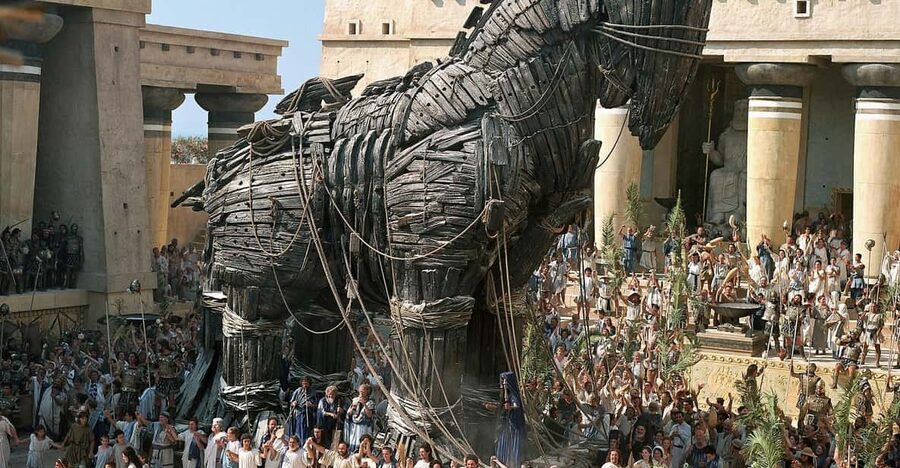
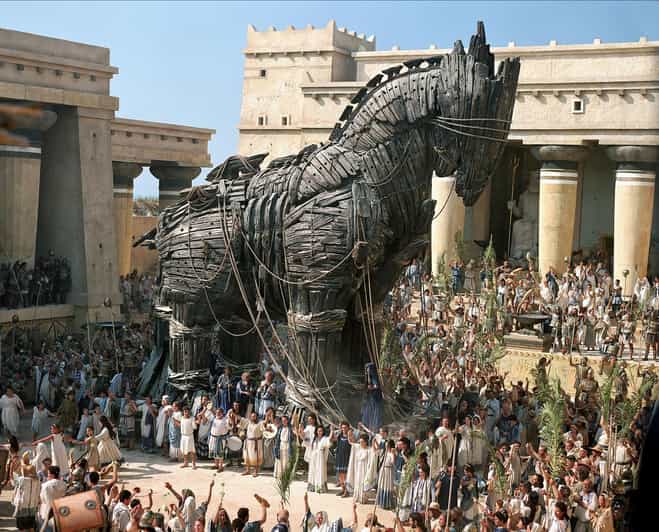
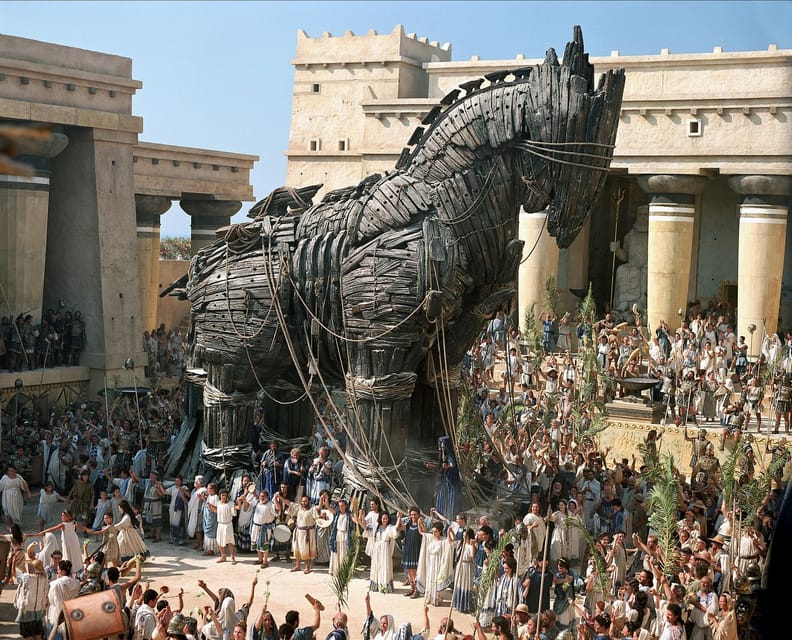
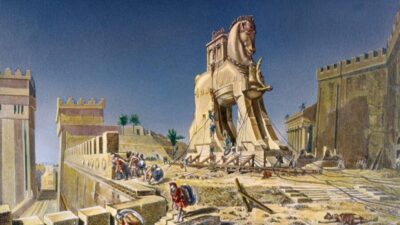
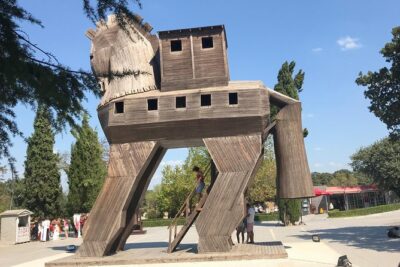
At the entrance to Troy, you see a full-size replica of the Trojan Horse associated with the movie Troy. It is not an ancient object, of course, but it provides the obvious opening photograph and a playful bridge between modern cinema and the old legend.
The replica is useful for setting the mood, especially if you know the story of the Greek forces hiding inside the horse. Just keep your expectations in check. The horse is a modern reconstruction, while the archaeological interest begins beyond it.
This is a good point to ask your guide how the literary story relates to the actual site. Paris and Helen, Achilles, the Scaean Gate, and the horse all belong to a mixture of myth, poetry, and historical interpretation. The strongest guides make those distinctions clear without draining the stories of their power.
Reading Troy’s walls and seven settlement layers
The first real impression of Troy may be confusing. Walls overlap, pathways cross uneven ground, and the remains do not announce themselves like a perfectly preserved Roman forum. I found the most useful way to approach the site is to think vertically: different cities were built on top of earlier ones.
The remains of the city walls are among the most important features. They help you picture Troy as a defended settlement rather than a collection of isolated buildings. The guide also points out the trench linked with Heinrich Schliemann, whose excavations helped bring Troy to modern attention but also caused damage to earlier layers.
The Temple of Athena offers another reminder that Troy continued long after the period associated with the Trojan War. The Megaron House helps show earlier building styles and domestic space. These foundations are not visually dramatic, but they are valuable if you want to understand how archaeologists reconstruct a vanished city.
Allow yourself time to look closely at the masonry and changes in ground level. You may find that the site becomes clearer after the guide explains what you are seeing. Without that explanation, it is easy to walk past an important feature and notice only grass and stones.
Achilles, the Scaean Gate, and the Trojan Horse
The myths give the visit its emotional charge. Near the Scaean Gate, the guide discusses the death of Achilles, one of the central figures in the Trojan War story. Whether you approach the tale as literature, legend, or a distant memory of conflict, standing near the location gives the story a physical setting.
You also learn about the Gate of Troy VI, where the Trojan Horse may have been taken according to the traditional account. The wording matters. Archaeology cannot confirm every scene from Homer, and a responsible guide should explain what is known, what is likely, and what belongs to later storytelling.
This was one of the most praised parts of the experience. Guides such as Charlie, Cindy, Hasan, Chari, and Emre were singled out for making the myths clear, lively, and easy to follow. Cindy was noted for placing the stories in context, while Charlie was praised for combining information with humor.
For you, the lesson is practical: do some preparation. Watching the movie Troy or reading about Helen, Achilles, and Homer before the excursion can make the site easier to understand. The film is not a reliable archaeology lesson, but it gives you a basic cast of characters and makes the guide’s explanations easier to follow.
Roman Troy: baths, theater, council, and market
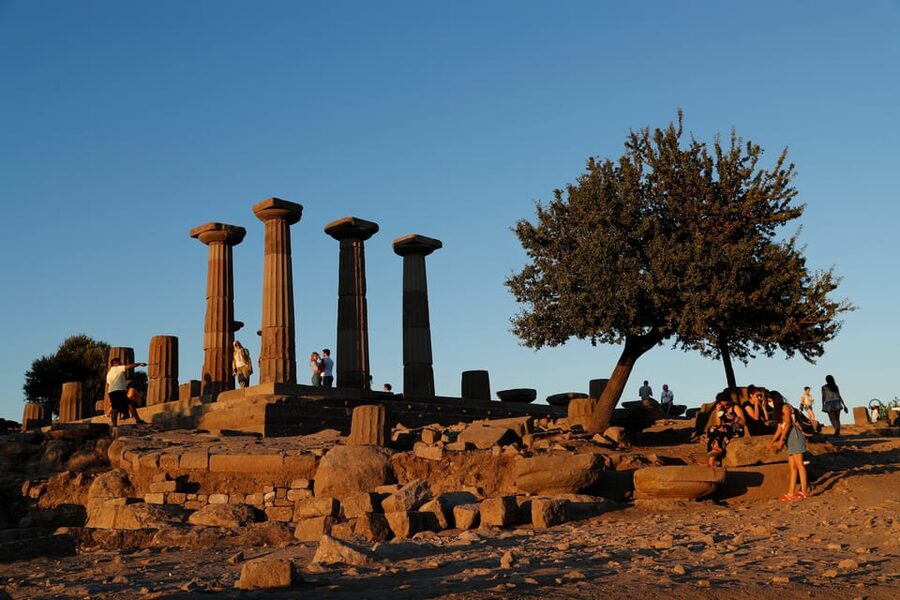
The site is not limited to the Bronze Age city. Troy remained important in later periods, and the Roman remains show how its role changed over time.
The Roman Bath gives you a glimpse of public life and Roman building practice. The Odeon was used for musical performances and poetry readings, which is a useful reminder that ancient cities were places of culture and civic life, not only warfare.
At the Bouleuterion, the city council met. The building helps you picture local administration and public decision-making, even though only ruins remain. The Agora, or marketplace, adds another everyday layer. Here you can think about trade, food, work, and ordinary routines rather than only kings and heroes.
These later ruins are easy to overlook if you arrive expecting only the Trojan War. I like that the tour includes them because they widen the story. Troy was not frozen in the age of Achilles. It was occupied and reshaped over many centuries.
How much time do you get at the archaeological site?
The ruins portion ends around 5:00 PM, followed by departure for Istanbul at approximately 6:00 PM. That gives you a limited window, especially after the long approach.
This is the tour’s biggest weakness. One passenger felt the guide had to move almost at a run and that there was barely an hour to explore. Another found the site fascinating but admitted that the ruins themselves could seem unimpressive and hard to read without explanation.
You should expect a guided overview rather than a slow archaeological study. There may not be enough time to linger at every structure, visit the on-site museum, or browse a gift shop. One account specifically regretted missing the museum and instead stopping at a nearby village for souvenirs.
If Troy is a lifelong interest, this schedule may frustrate you. If you want a well-organized first look and prefer not to arrange complex transport yourself, the brief visit can still be worthwhile.
The site is exposed, with much of the route outdoors. Summer may feel hot because there is little shade, while winter can bring unpleasant weather. Wear comfortable shoes, bring sunglasses, and pack a camera. The tour is not suitable for wheelchair users.
What the $176 price includes
At $176 per person, this is not a cheap day trip. The price becomes easier to judge when you count what is included: central Istanbul pickup and drop-off, air-conditioned bus transport, ferry-related transfers, Troy admission, lunch, and an English-speaking guide.
The value is strongest for anyone who does not want to arrange the Istanbul to Çanakkale route independently. You avoid working out the long-distance connections, local transfers, ferry timing, site entrance, and return journey. The guide is also a major part of the value because Troy makes far more sense with interpretation.
The value is weaker if you want maximum time at the ruins. A long journey for a short site visit means you are paying mainly for convenience and access, not for a leisurely day at Troy. Drinks at lunch, breakfast, and dinner on the return stop cost extra.
Free cancellation up to 24 hours before departure and the option to reserve without paying immediately make the booking less rigid. Pickup is limited to central hotels on Istanbul’s European side, so you should check your accommodation area before relying on included transport.
Who should book this Troy day trip?
I would recommend it to you if:
- Troy has been on your list for years.
- You want an English-speaking guide to explain the myths and ruins.
- You are comfortable with a 15-hour day.
- You prefer an organized trip to planning several long-distance connections.
- You enjoy seeing countryside and waterways as part of the journey.
- You are visiting Turkey once and want to add Troy without changing hotels.
I would hesitate if you dislike sitting on buses, need a relaxed pace, or want to spend several hours inside the archaeological site. The amount of travel is not a minor detail. It is the defining feature of the day.
The tour suits solo visitors especially well because transport, lunch, entrance, and guiding are handled for you. It also works for couples and families with older children who already have an interest in ancient stories, though the early start and late return require stamina.
Final verdict: worth it for the right kind of history fan
I would book this tour if my main goal were to see Troy from Istanbul without building a complicated independent itinerary. The ferry, countryside, included lunch, and strong English-language guiding make the day feel fuller than a simple bus transfer.
I would not book it expecting spectacular ruins or a slow, private exploration. You will spend far more time in transit than at the site, and the visit can feel hurried. But if you prepare with the basic Trojan War stories and listen closely to the guide, Troy’s modest remains can become surprisingly moving.
For most first-time visitors, this is a worthwhile but demanding introduction. For serious archaeology fans, a longer stay near Çanakkale would likely offer better value in time. The right choice depends on what you want more: convenience from Istanbul, or extra hours among the stones.
FAQ
How long is the Troy tour from Istanbul?
The tour lasts about 15 hours. Pickup begins around 6:00 AM, and hotel drop-off is expected at approximately 11:00 PM.
Where does pickup take place in Istanbul?
Pickup is available from central European-side areas, including Taksim, Sirkeci, Sultanahmet, Beyazıt, Laleli, Beşiktaş, Beyoğlu, Şişli, Ortaköy, and Bebek. Exact times listed are 6:00 AM from Taksim, 6:15 AM from Sirkeci, and 6:30 AM from Beyazıt, Laleli, and Sultanahmet.
Is lunch included?
Yes. Lunch is included and is served at a restaurant with views of the Dardanelles. Drinks are not included.
Is breakfast included?
No. An open-buffet breakfast may be available for an additional cost.
Is dinner included on the way back?
No. The return journey includes a rest stop where you can buy dinner at your own expense.
What language is the tour conducted in?
The live tour guide and included guiding are in English.
Is the tour suitable for wheelchair users?
No. The tour is listed as unsuitable for wheelchair users. Comfortable shoes are recommended because the Troy site includes outdoor archaeological paths and uneven ruins.
Just added around Istanbul
- Istanbul to Cappadocia 2 Day Tour with Guide, Flights and Hotels★ 4.5 · 62 reviews
- Istanbul Imperial & Bosphorus Tour – Incl. Lunch★ 5.0 · 62 reviews
- A Magical Evening in Istanbul: Private City Tour★ 4.5 · 62 reviews
- Istanbul: Private Guided Tour★ 4.5 · 62 reviews
- 2-Days Private Tour to Gobeklitepe and Karahantepe from Istanbul★ 5.0 · 62 reviews
- Private 7-Hour Istanbul Tour with Red Carpet Treatment★ 4.7 · 62 reviews
- Istanbul Private Walking Tour: Highlights & Gems with a Local★ 5.0 · 63 reviews
- Private Istanbul Airport Transfer to Blue Mosque Sultan Ahmet★ 5.0 · 63 reviews
Gallipoli & Troy Tours, compared.
Istanbul to Gallipoli Full Day Tour with Lunch and Transfers
Read our review →


Istanbul to Gallipoli, Canakkale and Troy. 2 Day Tour with Hotel
Read our review →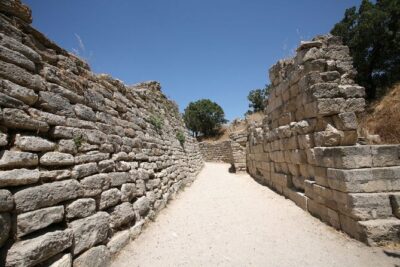
Istanbul to Truva Troy Guided Day Tour with Lunch and Transfers
Read our review →Browse the lists this tour appears in