Reviewed · ISTANBUL TOURS
Ancient Rome Under Istanbul
Istanbul keeps its oldest secrets below street level. This tour makes the city’s Roman and Byzantine past feel close and human, especially when you enter ancient cisterns and see ruins beneath modern shops and hotels. I like the unusual route, which reaches places you would probably miss alone, and I like the strong guiding, especially from guides such as Ece, Ege, AJ, and Erkan. The main caution is that the experience can last closer to three hours than five, and access to some sites may depend on the day.
This is not a grand parade through Istanbul’s famous monuments. It is a walking tour built around fragments, explanations, and the strange surprise of finding old stonework under ordinary modern buildings. At the listed price of $45, it offers good value for history fans, though you should arrive expecting an informal archaeological walk rather than a full-day sightseeing program.
In This Review
- Key points before you book
- Why Istanbul’s Roman past is underground
- Meeting at Binbirdirek and setting the scene
- Stop one: Roman and Byzantine remains below today’s city
- Stop two: Küçük Ayasofya and Gazi Süleyman Paşa Mosque
- Stop three: The Hippodrome in Sultanahmet Square
- The guides make or break this experience
- Is $45 a fair price?
- Who should book this walk?
- Practical details that affect your day
- Should you book Ancient Rome Under Istanbul?
- FAQ
- Where does the tour start?
- What time does the tour begin?
- Where does the tour end?
- How long does Ancient Rome Under Istanbul last?
- What does the tour include?
- Are food and drinks included?
- How large is the group?
- Is hotel pickup included?
- What is the cancellation policy?
Key points before you book
- Ancient ruins under modern buildings: You may enter cisterns, chapels, shops, hotels, and other spaces where Roman or Byzantine remains survive below present-day Istanbul.
- A guide-led history lesson: Ece, Ege, AJ, and Erkan have received especially strong praise for making complex Roman, Byzantine, and Turkish history easy to follow.
- Küçük Ayasofya adds architectural context: This former church, now Gazi Süleyman Paşa Mosque, helps explain ideas later used at Hagia Sophia.
- Sultanahmet Square connects the pieces: The former Hippodrome gives you a clear setting for Byzantine public life, races, and ceremonies.
- Small groups keep the walk personal: The maximum group size is 15, and the tour may run with only one or two people.
- Plan for walking and flexible timing: The stated duration is about three to five hours, but the route can finish in roughly three hours.
Why Istanbul’s Roman past is underground
Istanbul is often presented through its mosques, palaces, and monumental churches. Those buildings matter, but they show only part of the city’s story. Roman and Byzantine Istanbul is also preserved in low spaces, foundations, cisterns, fragments of walls, and chapels tucked below buildings used for everyday business.
That is the central idea here. You walk through the modern old city, then pause when your guide points out traces below your feet. A hotel, shop, or restaurant may sit above masonry that belongs to a much older period. The contrast gives the tour its character. You are not looking at history from behind a grand fence. You are seeing how the old city has been built over, reused, and adapted.
This approach suits you if you enjoy asking what was here before? It is less suitable if you need every stop to be a large, fully restored monument with clear signage. Some remains are modest. Their value comes from the explanation and the setting.
Your guide supplies the missing pieces. The best guides connect architecture with people, power, religion, conquest, and daily life. Ece is repeatedly singled out for her energy, warmth, and ability to explain Roman-era Istanbul in a clear way. Ege is praised for giving the historical setting over coffee before beginning the walk. AJ is remembered for making the city’s past feel lively and personal.
Other Istanbul trips people book alongside this one:
- Istanbul: Bosphorus Dinner Cruise & Show with Private Table
★ 4.8 · 44,561 reviews - Istanbul: Daytime or Sunset Sightseeing Cruise & Audio Guide
★ 4.8 · 14,430 reviews - Istanbul: Bosphorus Dinner Cruise with Turkish Night Show
★ 4.8 · 10,127 reviews
Meeting at Binbirdirek and setting the scene
The tour starts at Binbirdirek, on Divan Yolu Avenue, at 10:00 a.m. The meeting address is Divan Yolu Cd. No:15 in Fatih, close to Istanbul’s old-city sights and public transportation. The activity returns to this same meeting point at the end.
The opening matters because this tour works best when you understand the city’s layers before seeing the remains. Some guides have spent a substantial part of the morning explaining the historical setting over tea or coffee. That introduction can help you place Roman and Byzantine buildings in the wider story of Istanbul.
The tone is usually conversational rather than formal. You can ask questions, and a small group makes it easier to stop when something catches your eye. A solo booking may still go ahead, and one-person tours have taken place. That can be a pleasant surprise if you prefer private attention, but it also means the exact rhythm depends heavily on your guide.
A word about transportation: the published meeting point is in the old city, so plan to reach it yourself unless your booking clearly confirms another arrangement. Some visitors have used public transportation with a guide, while confusion has occurred around hotel pickup and taxi costs. If pickup is offered, confirm in advance if it costs extra. Do not assume it is included.
Stop one: Roman and Byzantine remains below today’s city
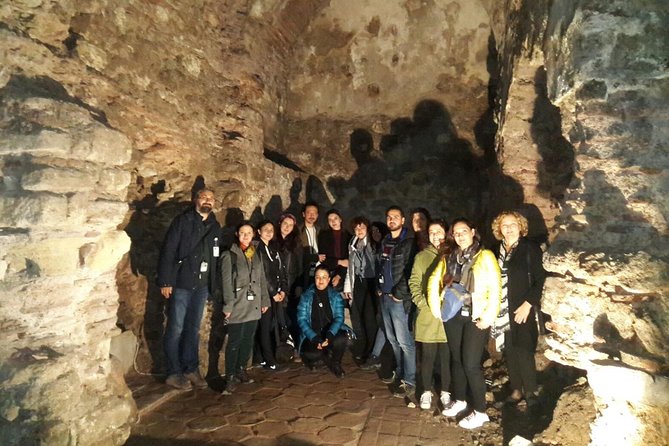
The main portion of the experience is a roughly three-hour exploration of Roman and Byzantine ruins beneath modern Istanbul. This is where the tour earns its title.
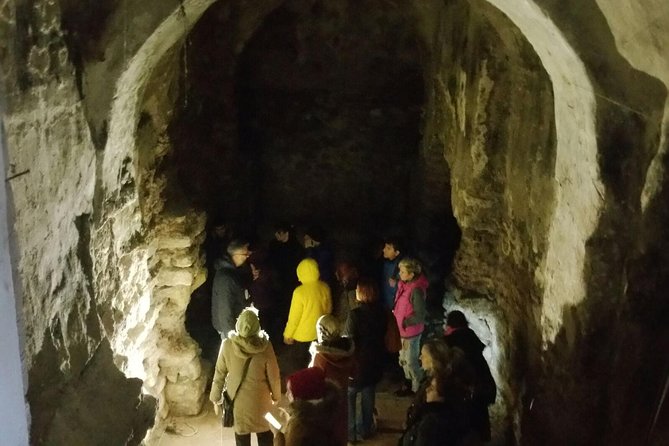
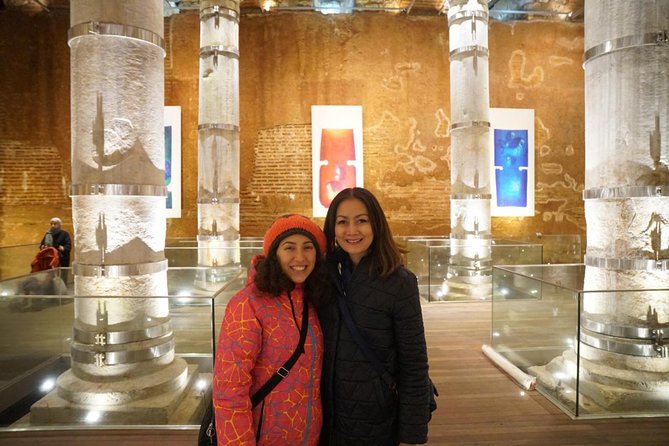
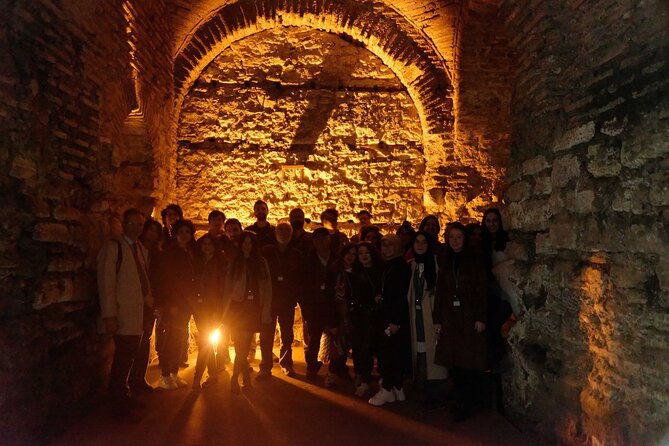
You may move in and out of spaces below shops, hotels, or other buildings. The remains can include ancient cisterns and Byzantine chapels, along with other pieces of the old city that are not part of the usual sightseeing circuit. The route is not simply an underground tunnel walk. It combines surface streets with enclosed archaeological spaces, so you see how the old structures relate to the current neighborhood.
The cisterns are a major draw. These underground reservoirs reveal the practical side of Byzantine urban life. They were built to store water, and their presence helps you understand the scale and needs of an imperial city. A guide can also explain why such spaces survived even as the buildings above them changed.
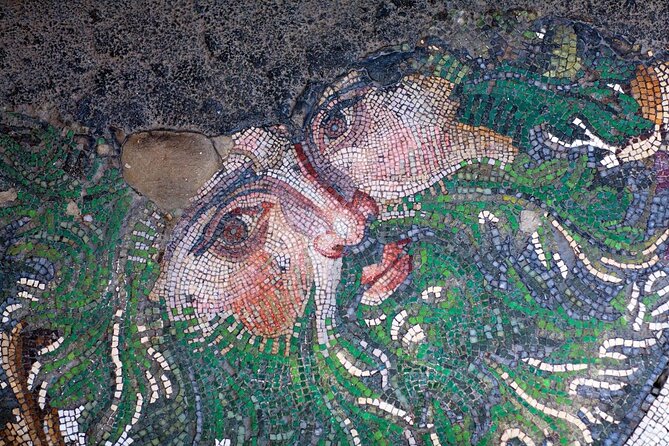
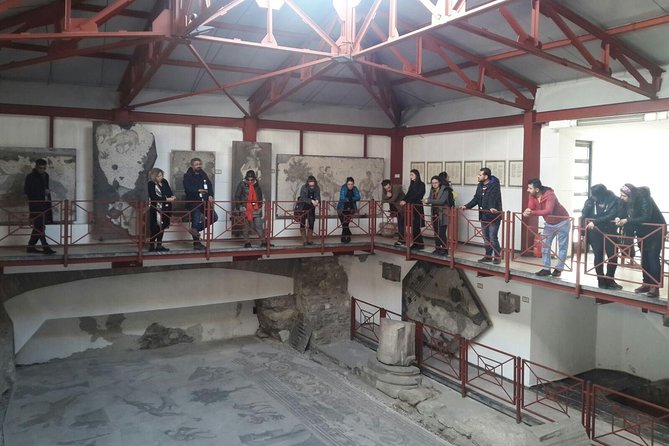
The chapels offer a different kind of encounter. Their remains may be less complete than the famous churches nearby, but fragments of mosaic, masonry, or floor plans can suggest how worship spaces once fitted into the city. One especially appealing detail from the experience is the chance to imagine the people who created tiny mosaics and worked in spaces now partly concealed by later construction.
You should keep your expectations measured. Not every ruin is open in the same way every day, and access can depend on the properties that contain them. One dissatisfied participant reported that some intended places were not accessible, while the tour provider stated that the planned sites were entered. The practical lesson is simple: ask your guide at the start which locations are open that day, and treat the route as flexible.
This stop is strongest when you enjoy interpretation. On its own, an old wall under a hotel might be hard to read. With Ece or another strong guide explaining who built it, how the city changed, and why the remains are still there, the fragment becomes meaningful.
Stop two: Küçük Ayasofya and Gazi Süleyman Paşa Mosque
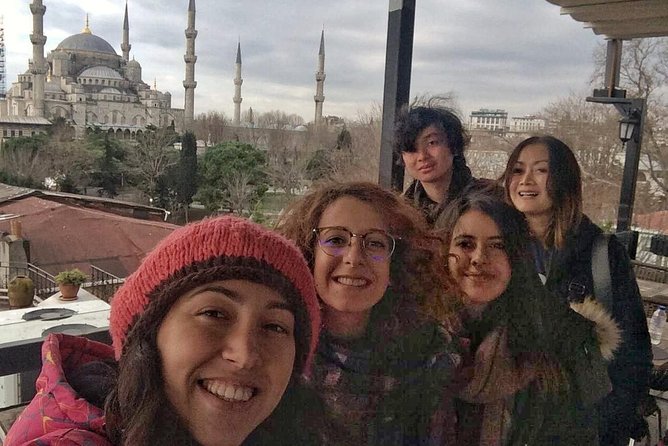
The tour then spends about 20 minutes at Küçük Ayasofya, also known as Gazi Süleyman Paşa Mosque. Like Hagia Sophia, it began as a church and was later converted into a mosque.
The site is presented as an architectural model for the builders of Hagia Sophia. That makes this a useful stop for anyone who wants to understand Istanbul’s major monuments through comparison rather than isolated sightseeing. Your guide explains the design and the stories tied to the building, helping you notice how religious and political changes shaped its use.
Twenty minutes is enough for a focused explanation, but not enough for a slow, detailed architectural study. You will likely get the building’s role in the larger story rather than an exhaustive examination of every surface. That is fine if you see this as one piece of a larger route.
The stop also reinforces a theme running through the whole tour: buildings in Istanbul often carry several identities. A church can become a mosque, a Roman structure can be covered by later construction, and a modern business can operate above an ancient foundation. The city’s past is not arranged in neat museum rooms. It is mixed into the present.
Something different for another day:
- Best of Istanbul 1, 2 or 3-Day Private Guided Istanbul Tour
★ 5.0 · 8,922 reviews - Istanbul: Basilica Cistern Fast-Track Entry and Audio Guide
★ 4.6 · 7,521 reviews - Istanbul: Hagia Sophia Skip-the-Line Ticket & Museum Option
★ 3.7 · 4,958 reviews - Istanbul: Hodjapasha Whirling Dervishes Show & Exhibition
★ 4.4 · 4,790 reviews
Stop three: The Hippodrome in Sultanahmet Square
The final named stop is the Hippodrome, now Sultanahmet Square, with about 15 minutes set aside for it. This is the broad public space that once hosted Byzantine chariot races, ceremonies, and large gatherings.
After the confined cisterns and fragments under buildings, the square gives you room to picture the scale of imperial public life. It also helps connect the underground remains to the city above. You are standing in one of the places where politics, sport, religion, and spectacle met.
The stop is brief, so do not expect a long visit to every monument in the square. Instead, use the time to orient yourself. The guide’s explanation can turn an ordinary walk across the plaza into a clearer picture of ancient Istanbul and its crowds.
Because the Hippodrome is now part of the active center of Sultanahmet, it also gives you a useful sense of modern Istanbul. Bazaars, monuments, pedestrians, and daily city life all share the same space. The old arena is gone, but the location still acts as a meeting place.
The guides make or break this experience
The strongest praise focuses on the guides, not on luxury touches or elaborate transport. Ece is the name that appears most often in positive accounts. She is described as thorough, friendly, accommodating, and able to explain difficult material without making it feel like a lecture. One particularly thoughtful detail is that she extended the time for a participant delayed by rain and offered practical Istanbul tips over tea.
Ege also receives warm praise for his passion and energy. Starting with an hour of historical context over coffee worked well for a small group on a rainy day. If you are paired with Ege, expect a guide who enjoys the subject and wants you to understand the setting before looking at the stones.
AJ is praised for bringing the city to life, while Erkan is remembered for continuing the tour even when no one else joined. These accounts suggest that the operator can run a very small tour instead of cancelling simply because the group is tiny.
That flexibility is useful, but guide assignment matters. One poor experience involved a serious communication problem and disappointment over timing and access. The general lesson is not to assume every guide will deliver the same style. If clear English, a certain level of academic detail, or a particular guide is important to you, ask when booking if that can be arranged.
Is $45 a fair price?
At $45, the tour is priced reasonably for a small-group, guide-led experience in central Istanbul. The fee includes the professional guide, taxes, and handling charges. Food, drinks, and lunch are not included.
The value depends on what you want. If you only want to see the major sights, you can spend your time at Hagia Sophia, the Blue Mosque, and the Hippodrome without adding this tour. If you want access to less obvious remains and a guide who can explain why they matter, the price is easier to justify.
The experience may also feel like good value for a solo participant if the tour still runs privately or with a very small group. On the other hand, you may feel shortchanged if you expect five full hours, a meal, hotel transport, or entry to a long list of major monuments.
The duration needs careful attention. The official estimate is three to five hours, while the itinerary gives about three hours for Istanbul’s underground and surface ruins, followed by 20 minutes at Küçük Ayasofya and 15 minutes at the Hippodrome. Build your day around the shorter end. If the tour lasts longer, that is a bonus.
Who should book this walk?
I would choose this tour if you have already seen Istanbul’s headline monuments or if you want a different angle on the old city. It is particularly well suited to people who enjoy archaeology, architecture, Roman history, Byzantine history, and the small clues that make a place understandable.
It also works well for repeat visitors. A guide can take you to places you might never find in a standard guidebook, including remains beneath ordinary commercial buildings. That makes the route feel personal and local without pretending that every stop is grand.
You should be comfortable walking for several hours. Wear practical shoes, since the route includes city streets and underground spaces. A coffee or Turkish tea break may be welcome, especially on a longer outing, but food and drinks are your responsibility.
This is not the best choice if you want a polished bus tour, guaranteed access to every advertised type of ruin, or a fixed five-hour schedule. It is also not ideal for anyone who dislikes uneven historical detail. The appeal lies in interpretation and discovery, not in a procession of perfect monuments.
Practical details that affect your day
The maximum group size is 15 people, though the tour may operate with fewer. A smaller group lets you ask more questions and hear the guide more easily. A one-person tour can feel almost private, but the experience will depend even more on the assigned guide.
Mobile tickets are available, and confirmation is provided at booking. Service animals are allowed, public transportation is nearby, and the activity is described as suitable for most people. The supplied details do not promise full wheelchair access or specify the condition of every underground area, so ask before booking if mobility is a concern.
Cruise ship passengers need to provide the ship name, docking time, disembarkation time, and re-boarding time when booking. That information helps the operator judge whether the timing works, but you should still allow a generous margin before returning to your ship.
Cancellation is free up to 24 hours before the 10:00 a.m. start time for a full refund. Changes or cancellations within 24 hours are not refunded, and the cut-off follows local Istanbul time.
Should you book Ancient Rome Under Istanbul?
Book it if you want less familiar Roman and Byzantine remains, strong storytelling, and a small-group walk through Sultanahmet that goes below the modern city. At $45, it is a sensible choice for history-minded visitors who value access and explanation more than grand presentation.
Go in with the right picture: expect about three to five hours, substantial walking, modest ruins, and a route that may shift with access. Confirm meeting and pickup details, plan for the shorter duration, and ask which guide will lead your group. With Ece, Ege, AJ, Erkan, or another strong guide, this can be one of the most rewarding ways to see Istanbul’s past hiding in plain sight.
FAQ
Where does the tour start?
It starts at Binbirdirek, Divan Yolu Cd. No:15, 34122 Fatih, Istanbul, Türkiye.
What time does the tour begin?
The scheduled start time is 10:00 a.m.
Where does the tour end?
The activity ends back at the meeting point.
How long does Ancient Rome Under Istanbul last?
The approximate duration is three to five hours. The listed stops account for about three hours and 35 minutes, so you should plan for the shorter end of the estimate.
What does the tour include?
The price includes a professional guide, all taxes, fees, handling charges, and local taxes.
Are food and drinks included?
No. Food, drinks, and lunch are not included.
How large is the group?
The maximum group size is 15 participants. The tour may also operate with only one or a few people.
Is hotel pickup included?
The published meeting point is in Istanbul’s old city. If pickup is offered for your booking, confirm whether it carries an extra charge before the tour.
What is the cancellation policy?
You can cancel at least 24 hours before the start time for a full refund. Cancellations or changes made within 24 hours are not refunded.
Just added around Istanbul
- 2-Day Gallipoli and Troy Tour from Istanbul and return★ 5.0 · 17 reviews
- Sabiha Gokcen Airport Transfer Service (SAW)★ 4.0 · 17 reviews
- Istanbul Princes’ Islands Boat Trip with Lunch★ 4.0 · 17 reviews
- Best of Istanbul Full Day Private Tour With Guide★ 5.0 · 17 reviews
- Glories of Turkey 12-Day From Istanbul★ 5.0 · 17 reviews
- Istanbul: Bosphorus Morning or Sunset Yacht Tour with Snacks★ 4.9 · 17 reviews
- Full-Day Istanbul to Bursa Excursion With Cable Car★ 4.0 · 18 reviews
- Istanbul – Old City Tour★ 5.0 · 18 reviews
Istanbul Tours, compared.
Bosphorus Dinner Cruise & Show with Private Table
Read our review →
Daytime or Sunset Sightseeing Cruise & Audio Guide
Read our review →
Bosphorus Dinner Cruise with Turkish Night Show
Read our review →
Best of Istanbul 1, 2 or 3-Day Private Guided Istanbul Tour
Read our review →
Hagia Sophia Skip-the-Line Ticket & Museum Option
Read our review →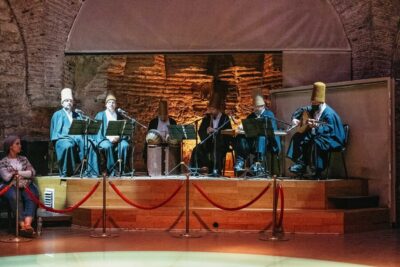
Hodjapasha Whirling Dervishes Show & Exhibition
Read our review →
Topkapi Palace & Harem Museum Ticket & Audio Guide
Read our review →