
Reviewed · WORKSHOPS
Visit to Cappadocia ceramic workshop and carpet store
Pottery and carpets reveal Cappadocia’s living traditions. I like the chance to try making pottery at no extra cost and the visit to a women’s cooperative carpet workshop, where weaving supports local livelihoods. The main caution is simple: the pottery experience may be more demonstration than hands-on workshop, so confirm what you will get before booking.
This private 2.5-hour outing costs $30 per person and includes a car, driver, pickup, drop-off, and pottery making. That makes it a useful short activity between Cappadocia’s bigger sights, especially if you want to shop without arranging transport yourself.
The experience has earned a 4.6 rating from 19 bookings. Mehmet, one of the drivers, receives especially warm praise for his gentle manner and easy conversation. One person who booked a 5 PM departure was also pleasantly surprised to find the outing was private rather than shared with a larger group.
In This Review
- Key points to know before you book
- Why Cappadocia is a fitting place for craft shopping
- The pottery workshop and the red clay of the Kızılırmak
- What to look for in Cappadocian ceramics
- The women’s cooperative carpet workshop
- How the 2.5-hour outing is likely to feel
- Is $30 per person good value?
- The shopping element: useful, but not for everyone
- Who will enjoy this Cappadocia activity most?
- Practical advice for a smoother visit
- Should you book the ceramic workshop and carpet store visit?
- FAQ
- How long does the Cappadocia ceramic and carpet experience last?
- How much does the experience cost?
- Is transportation included?
- Can I try making pottery?
- Is this a private group activity?
- What languages are available?
Key points to know before you book
- The pottery stop includes a live demonstration: You can watch a craftsperson shape clay and may try the wheel yourself at no additional cost.
- The carpet visit is linked to a women’s cooperative: Your purchase can support women gaining income and confidence through traditional weaving skills.
- You get private transport: A car and driver handle pickup and return, which is convenient in a spread-out region.
- The tour is built around shopping: Expect explanations of products and prices, followed by a chance to buy ceramics, carpets, and other Turkish goods.
- The $30 price is reasonable for a short private outing: The value comes mainly from transport, access to workshops, and a guided introduction to local crafts.
- The hands-on pottery portion needs clarification: One booking received a shop presentation but no chance to make pottery, despite that being advertised.
Why Cappadocia is a fitting place for craft shopping
Cappadocia is not only about fairy chimneys, cave churches, and hot-air balloons. It has also sat along major trade routes for centuries, including the Silk Road, so making and selling useful goods has long been part of local life.
Hittites, Assyrians, Greeks, Arabs, Jews, and Turks all took part in commerce here. That mixture helped shape the region’s craft traditions and explains why a short shopping outing can introduce you to more than one local art.
You will not be visiting a museum display with objects behind glass. At the pottery workshop, you see clay being shaped in front of you. At the carpet stop, you watch women work by hand and learn how a practical household item can also carry family knowledge from one generation to the next.
That is the strongest reason to choose this activity. If you only want the lowest possible price on a souvenir, you can shop on your own. If you want to see how the goods are made before you decide to buy, the workshop setting adds useful context.
A few more tours and experiences worth a look
- Cappadocia Small Group Original Green Tour (Non-Shopping)
★ 5.0 · 31 reviews - City of Side: Boat Tour on the Manavgat River w/ Bazaar Trip
★ 4.3 · 404 reviews - Istanbul Grand Bazaar: From Rooftops to the Secret Passages
★ 4.8 · 337 reviews
The pottery workshop and the red clay of the Kızılırmak
The pottery stop focuses on a tradition associated with the Hittites, who may have practiced pottery in Anatolia as early as about 1750 B.C. Some family businesses in Cappadocia have continued this work for generations.
The clay itself gives the demonstration a strong local connection. Red clay comes from the Red River, also known as the Kızılırmak, which runs for about 1,355 kilometers. White clay comes from the rocky parts of Cappadocia.
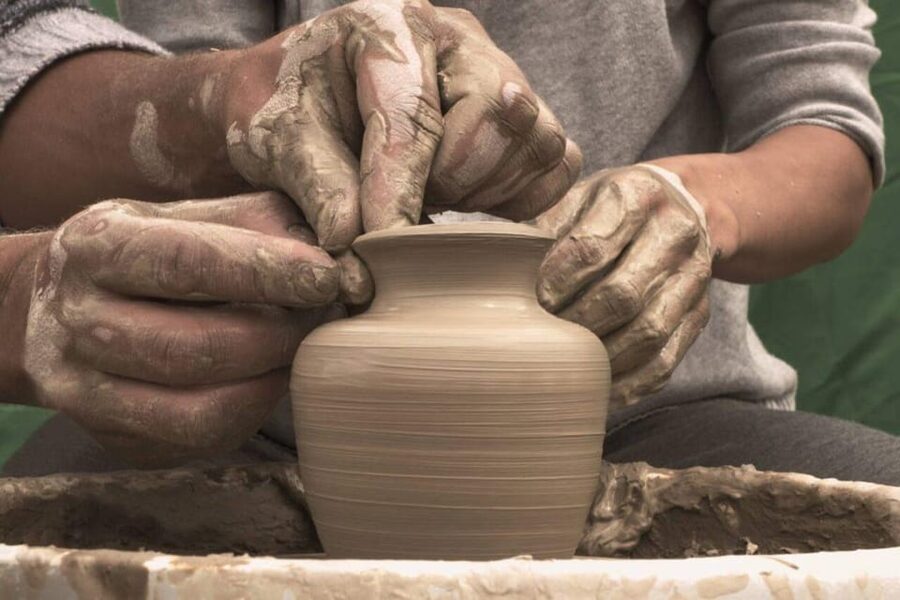
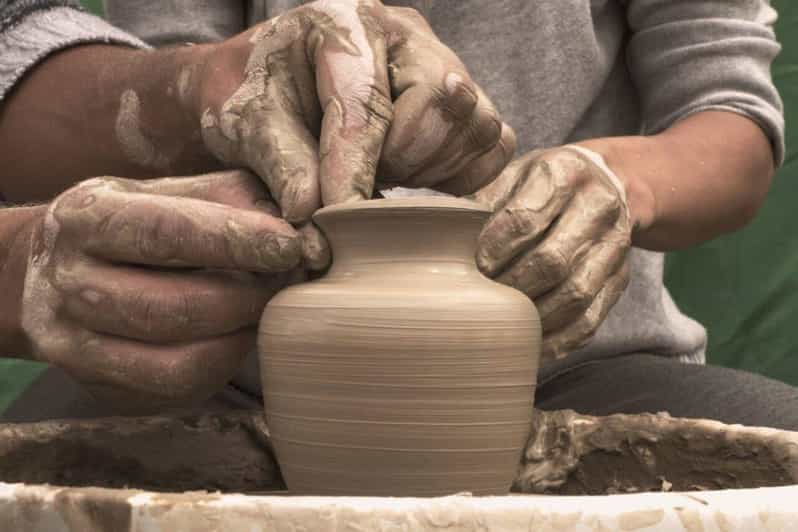
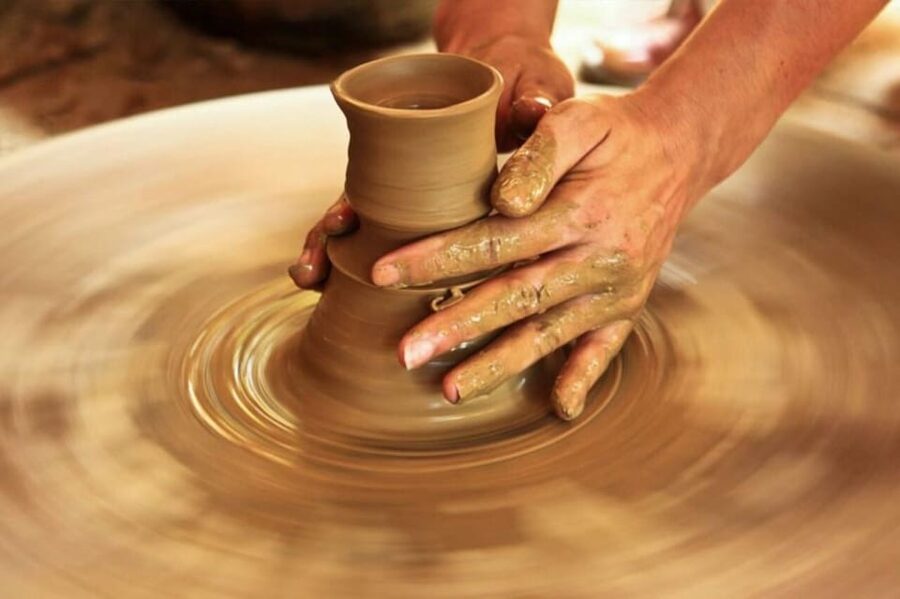
During the demonstration, you can watch a piece take shape on the wheel. The movement looks easy when an experienced potter does it, but the process requires patience and a steady touch. A small change in pressure can alter the form quickly.
You are also supposed to have the chance to try making pottery yourself. This is an important part of the experience for families, couples, and anyone who prefers doing something rather than only watching.
Still, I would keep expectations practical. The advertised pottery making did not happen for one person, who instead received a demonstration and an explanation of the prices of finished works. That does not mean the hands-on part never happens, but it does mean you should ask the driver or workshop staff at the start: Will I get to use the wheel today?
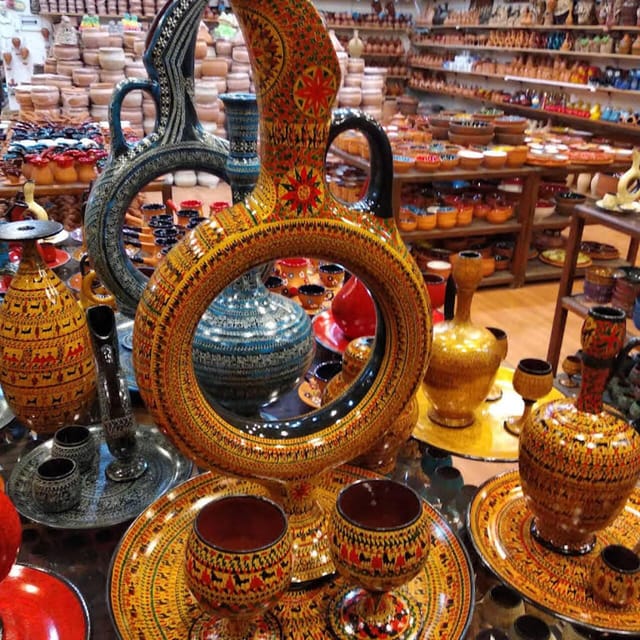
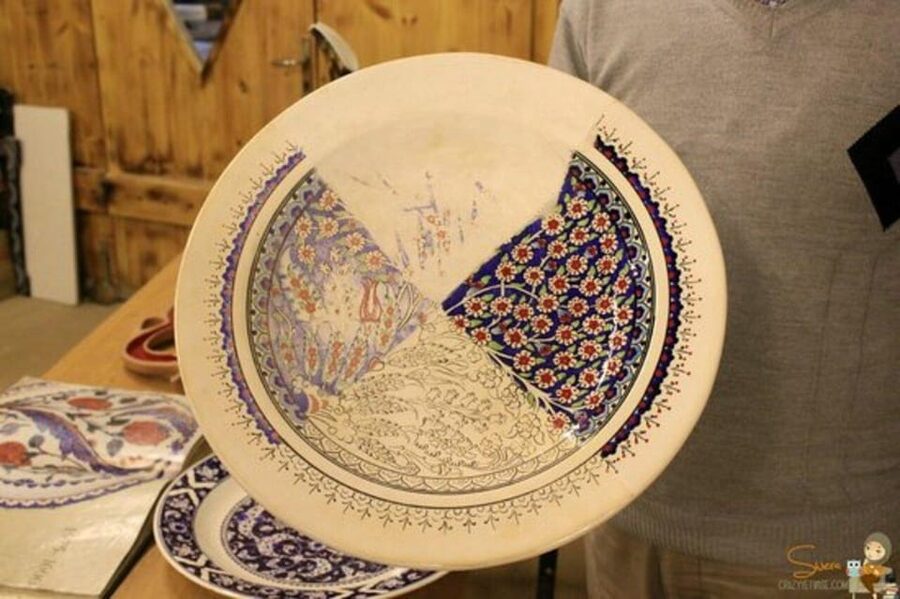
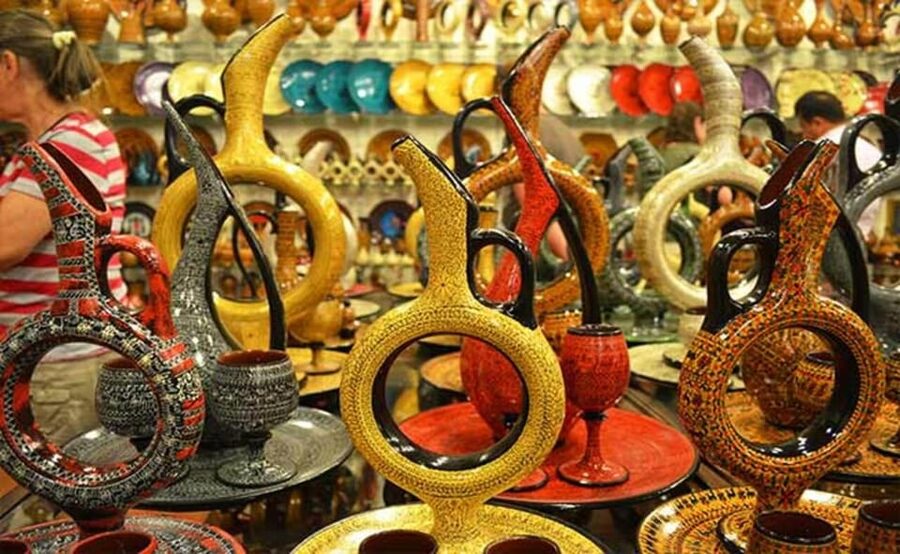
The finished work shown afterward is usually the shopping portion of the stop. You can expect handmade pottery and ceramics with styles and colors associated with the region. The visit gives you a chance to compare simple decorative pieces with more detailed objects before deciding if anything belongs in your luggage.
What to look for in Cappadocian ceramics
The most useful way to approach the pottery display is to first watch the making process, then inspect the finished items. Look at the shape, surface, painted design, and overall finish rather than buying the first colorful piece placed in front of you.
Cappadocian ceramics can be attractive because they combine practical forms with regional decoration. Bowls, plates, and other household objects may work as gifts, while smaller pieces are easier to carry home.
You should also remember that handmade goods vary. A small irregularity can be part of the handmade character, but you still want to check for cracks, loose parts, or rough finishing before paying.
The workshop can explain why pieces cost different amounts. One person found that the visit focused too much on these price explanations, so I would treat the sales talk as information rather than an obligation. You can admire the work without buying it.
The $30 fee does not appear to include a ceramic item. The pottery making itself is included, but purchased pieces are separate. If you want to bring something home, ask about the price, packing, and shipping before you agree to a purchase.
The women’s cooperative carpet workshop
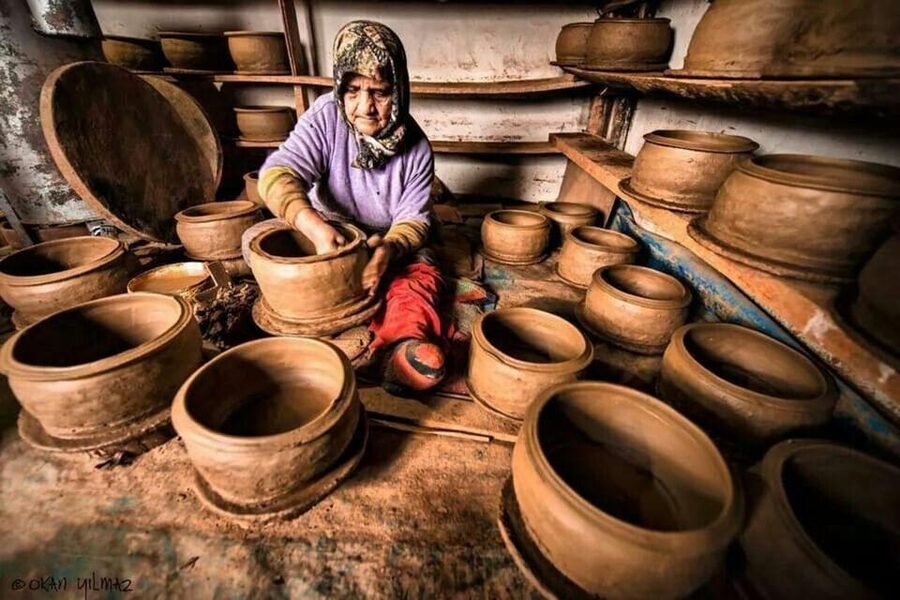
The carpet stop brings a different kind of craft into view. Instead of clay shaped on a wheel, you watch women weave carpets by hand in a cooperative setting.
The social purpose is part of the appeal. Women in Turkey have often had fewer chances than men to take part in the economy. Cooperatives can give women income, work experience, and greater financial independence. The skills taught in these workshops are often passed from one generation to another.
That makes the carpet visit more meaningful than a basic retail stop. You see the labor behind the product and learn why a handmade carpet cannot be priced like a factory-made floor covering.
You should still approach any purchase carefully. A carpet is a major souvenir, both in cost and size, and the sales presentation may include detailed explanations of materials, knotting, design, and price. The tour is intended to connect you with reputable sellers, which can reduce concern about buying a fake or paying an unfair amount, but you should never feel rushed.
Ask questions. Find out what the carpet is made from, how it was produced, and how long it took to weave. Ask whether the quoted price is final and how you would get the carpet home. Those questions are sensible anywhere, especially when the item is too large to pack in a suitcase.
If you love textiles, this may be the most valuable part of the outing. You get to watch the work close up and see why weaving remains an important skill. If you have no interest in buying a carpet, the stop may feel long if the sales portion takes over.
Something different for another day:
- Cappadocia Hot Air Balloon Ride / Royal Balloon
★ 5.0 · 6,829 reviews - Cappadocia: Goreme Hot Air Balloon Flight at Sunrise
★ 5.0 · 4,924 reviews - Cappadocia Hot Air Balloon Ride/ Turquaz Balloons
★ 5.0 · 3,330 reviews - Cappadocia Sunset ATV Tour
★ 5.0 · 2,984 reviews
How the 2.5-hour outing is likely to feel
The experience is short enough to fit into a busy Cappadocia schedule. Your car and driver pick you up, take you to the craft workshops, and return you afterward. Pickup and drop-off remove the need to find each location yourself.
The order of the stops can vary, so I would not plan a meal or another timed activity too tightly against the end. The stated duration is 2.5 hours, but shopping conversations can sometimes stretch if you are considering a purchase.
The private format is a real advantage. You are not sharing your time with a large group, so you can ask questions, spend more or less time looking at an item, and tell the driver if you want to move along.
The private setup also helps if you are traveling as a couple or family. One person can browse carpets while another watches pottery. A family can let children try clay without needing to keep pace with strangers.
Language support is broad. Hosting or greeting can be provided in Chinese, English, French, Italian, Japanese, Portuguese, Spanish, Turkish, or Russian. The available language should be checked when booking, since a suitable language can make price and product explanations much clearer.
The driver is an important part of the experience. Mehmet receives particular praise for being kind, gentle, and easy to talk to. That matters on a private outing because your driver is not simply behind the wheel. He or she helps set the tone and may help you understand what is happening at each stop.
Is $30 per person good value?
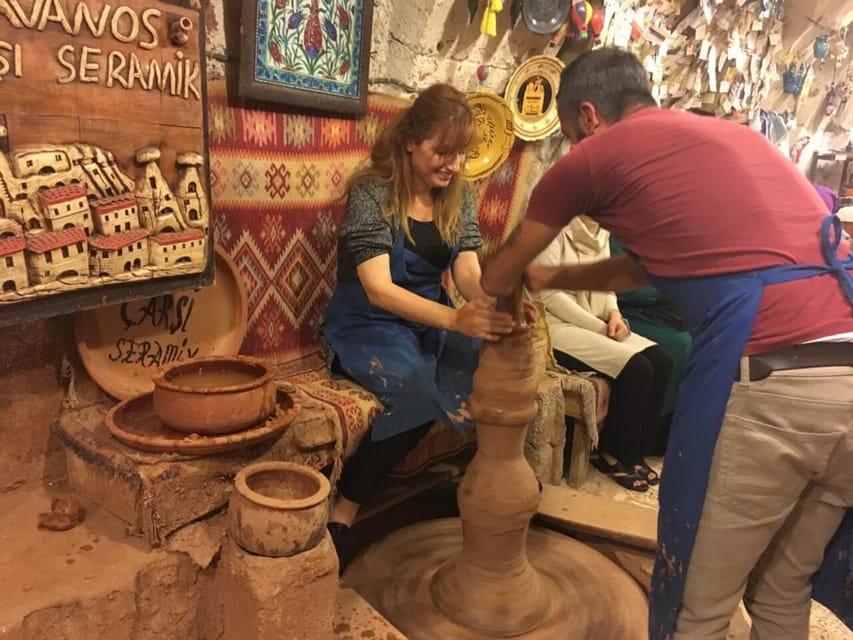
At $30 per person, this is fairly priced if you want transport and a private introduction to two traditional crafts. You receive a car, driver, pickup, return, and the chance to try pottery without paying a separate activity fee.
The value is weaker if you only want an inexpensive souvenir shop. In that case, the $30 pays for more than the objects themselves, including the transport and workshop access.
The private group format improves the calculation. A private car can cost more than a shared shopping shuttle, but you get a more personal outing and do not need to organize the route. For a short half-day activity, that convenience has real value.
The price does not remove the need for care when shopping. The pottery and carpets you buy are additional expenses. Consider this an introduction to local crafts with optional shopping, not an all-inclusive shopping budget.
I would also judge the value by your interest in the making process. If you want to watch artisans work, the fee makes sense. If you are expecting a full pottery class with extended instruction, the description may set a higher expectation than the actual visit delivers.
The shopping element: useful, but not for everyone
This is a shopping tour first, with cultural explanation built around it. You will be shown traditional products from Cappadocia and other parts of Turkey, including carpets and ceramics. The focus is on seeing, understanding, and potentially purchasing.
That arrangement works well for you if you are already hoping to buy a carpet, pottery, textiles, food, clothing, or other local goods. It gives you a more structured way to shop and brings you to established workshops rather than leaving you to search at random.
It works less well if you dislike sales conversations. The pottery visit may include explanations of why individual pieces cost what they do, and the carpet stop naturally leads toward a possible purchase.
My advice is to decide your budget before pickup. You can then enjoy the craftsmanship without making an expensive decision on the spot. Tell yourself that looking is a valid outcome. A good workshop visit should still be worthwhile even if you leave empty-handed.
The cooperative setting also gives you a reason to buy if you genuinely want a carpet. Your purchase can support the local economy and help the women working there gain greater independence. That is a positive purpose, but it should not replace normal checks on quality and price.
Who will enjoy this Cappadocia activity most?
I would recommend this outing to couples, families, and solo visitors who want a private, low-effort way to see local crafts. The short duration fits neatly into a day filled with valleys, underground cities, churches, or scenic viewpoints.
It suits you especially well if you like meeting craftspeople, watching traditional skills, and bringing home something with a local connection. The pottery trial is a nice touch for children and adults who enjoy hands-on activities.
It is also useful if you are worried about buying a fake carpet or paying too much. The workshop setting and local contact can give you more confidence than walking into the first store you see.
I would be more cautious if your main goal is a serious pottery class. The activity promises pottery making, but at least one booking became a demonstration and sales presentation instead. Ask for a clear explanation of the hands-on portion before you commit.
I would also skip it if you have no interest in shopping. Cappadocia offers many other activities that focus more directly on scenery and archaeology. This outing earns its place through craft, conversation, and optional buying.
Practical advice for a smoother visit
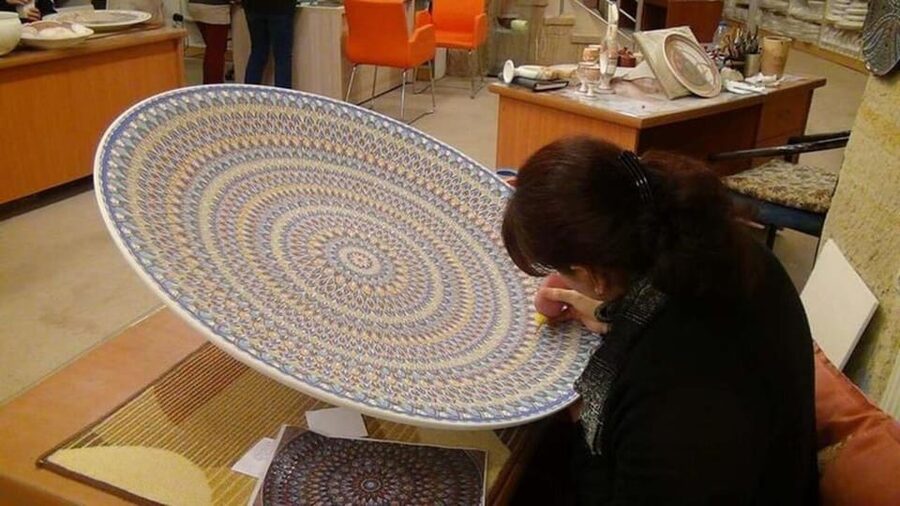
Keep your expectations clear from the start. Ask which part of the pottery stop will be hands-on and how much time you will have at the wheel.
Set a spending limit before you arrive. This helps you enjoy the colors, patterns, and workmanship without feeling pressured to purchase.
If you are considering a carpet, ask about materials, production method, price, and delivery. A reputable shop should be willing to explain these points plainly.
Use the private format to your advantage. You can tell the driver what interests you, ask for more explanation, or say that you are ready to leave after seeing the demonstration.
A late afternoon departure can work well if you want to fill a gap in your schedule. One person booked for 5 PM and found the timing worked smoothly, though you should still check the available start times for your date.
Free cancellation up to 24 hours before the activity and reserve-now, pay-later booking make it easier to keep your plans flexible. These terms are useful in Cappadocia, where weather and sightseeing plans can change.
Should you book the ceramic workshop and carpet store visit?
Book it if you want a private, two-and-a-half-hour craft outing with transport included, especially if carpets or ceramics are already on your shopping list. The women’s cooperative and the pottery demonstration give the visit more purpose than a simple store stop.
Book with one question firmly in mind: will you personally get to make pottery? If the answer is yes, the $30 price is attractive. If the answer is no, decide if watching demonstrations and browsing handmade goods still suits your plans.
I would call this a good-value choice for curious shoppers, families, and anyone who wants a gentle introduction to Cappadocia’s traditional crafts. I would not choose it for a full pottery lesson or for a day centered only on scenery.
FAQ
How long does the Cappadocia ceramic and carpet experience last?
The activity lasts 2.5 hours.
How much does the experience cost?
The listed price is $30 per person.
Is transportation included?
Yes. A car and driver, along with pickup and drop-off, are included.
Can I try making pottery?
Pottery making is included, and you are supposed to have the chance to try it at no extra cost. Because one booking did not include hands-on pottery, confirm this with the driver or workshop when the visit begins.
Is this a private group activity?
Yes. The activity is offered as a private group experience.
What languages are available?
Host or greeter support is listed in Chinese, English, French, Italian, Japanese, Portuguese, Spanish, Turkish, and Russian.
Just added around Cappadocia
- South Cappadocia Small Group Day Tour – Kaymakli Underground City★ 5.0 · 17 reviews
- Cappadocia Luxury Private Tour★ 5.0 · 17 reviews
- Top Notch Cappadocia: All in 1 Day Cappadocia Tour★ 5.0 · 18 reviews
- Private Cappadocia Tour in 1 Day with English Speaking Guide★ 5.0 · 18 reviews
- Cappadocia: Camel Safari★ 4.0 · 18 reviews
- Cappadocia ATV tour with transfer and guide★ 5.0 · 18 reviews
- Cappadocia Daily Mix Tour★ 5.0 · 19 reviews
- Hot Air Balloon Flight in Cappadocia with Champagne★ 4.0 · 19 reviews
Workshops, compared.
Original Turkish Mosaic Lamp Workshop w/ Snacks
Read our review →
Turkish Coffee Making and Fortune Telling Workshop
Read our review →
Turkish Mosaic Lamp Workshop with Bosphorus View
Read our review →
Turkish Mosaic Lamp Workshop in Galata – All Included
Read our review →
Turkish Coffee Making and Fortune Telling Workshop
Read our review →Browse the lists this tour appears in