
Reviewed · WORKSHOPS
Istanbul: Turkish Coffee Making and Fortune Telling Workshop
Turkish coffee turns a drink into a social ritual. This two-hour Istanbul workshop lets you grind premium beans and brew coffee in a traditional cezve, then taste several styles with Turkish delight. I especially like the clear link between coffee, conversation, and daily life, plus the useful gift set with a cezve, coffee, and traditional cup. The main consideration is location: the listed meeting point is in Fatih, while some sessions have taken participants by metro to a workshop on Istanbul’s Asian side.
The small-group format, limited to 10 people, keeps the class friendly and hands-on. Guides such as Kübra, Mehmet, Taner, Faruk, and Ilham have been praised for their warmth, humor, and patient teaching. Fortune telling is playful rather than factual, so you will get the most from it if you treat it as a cultural custom and a bit of fun.
In This Review
- Key points at a glance
- Why Turkish coffee deserves two hours
- Meeting at Merhaba Pastanesi in Fatih
- The opening talk: coffee as Turkish social life
- Grinding the beans and using a cezve
- Tasting different coffees with Turkish delight
- Fortune telling from the coffee grounds
- The take-home coffee set
- What the small-group format feels like
- Is $23 a good value?
- Who should book this Istanbul workshop?
- Should you book it?
- FAQ
- How long does the Turkish coffee workshop last?
- How much does the experience cost?
- Where is the meeting point?
- Is transportation included?
- What languages are available?
- How many people are in the group?
- Is the workshop wheelchair accessible?
- What is included in the take-home gift?
Key points at a glance
- A hands-on cezve lesson: You grind the beans yourself and brew coffee in the small copper or metal pot used for Turkish coffee.
- Coffee culture, not just coffee: The opening talk explains how coffee fits into Turkish and Ottoman social life.
- Several tastings included: Try different Turkish coffees with sweet Turkish delight, tea, and water available during the session.
- Fortune telling adds local character: Learn how coffee grounds are read from the overturned cup, with a lighthearted interpretation.
- A practical souvenir: The included set contains a cezve, Turkish coffee, and a traditional mug, with some sessions also providing a hand-painted tea set or certificate.
- Easy for English speakers: Instruction is available in English and Turkish, and the group is capped at 10.
Why Turkish coffee deserves two hours
Turkish coffee is prepared differently from filtered coffee or espresso. The finely ground beans are brewed directly in water, usually with sugar added before heating. The grounds remain in the cup, so you sip slowly and leave the final sediment behind.
That simple method explains why the workshop works well as a cultural activity. You are not only learning a recipe. You are seeing how a cup of coffee can create time for talk, hospitality, and ritual.
The session begins with a presentation on Turkish coffee culture and history. Guides connect the drink with Turkish and Ottoman life, coffee trading, and the customs that grew around serving it. One useful historical detail shared in the class is the origin of the word mocha, linked to Mukha in Yemen, an important coffee-trading port.
I like this beginning because it gives the brewing lesson a reason. Once you understand that coffee has long been tied to hospitality and social exchange, the careful pace of the process makes more sense. This is not a grab-and-go caffeine stop.
A few more tours and experiences worth a look
- Istanbul: Turkish Coffee Making and Fortune Telling Workshop
★ 4.9 · 451 reviews - Turkish Coffee on Sand Workshop: Fortune Telling & Gift Set
★ 5.0 · 309 reviews - Istanbul Highlights: Guided Tour with Turkish Tea or Coffee
★ 5.0 · 278 reviews
Meeting at Merhaba Pastanesi in Fatih
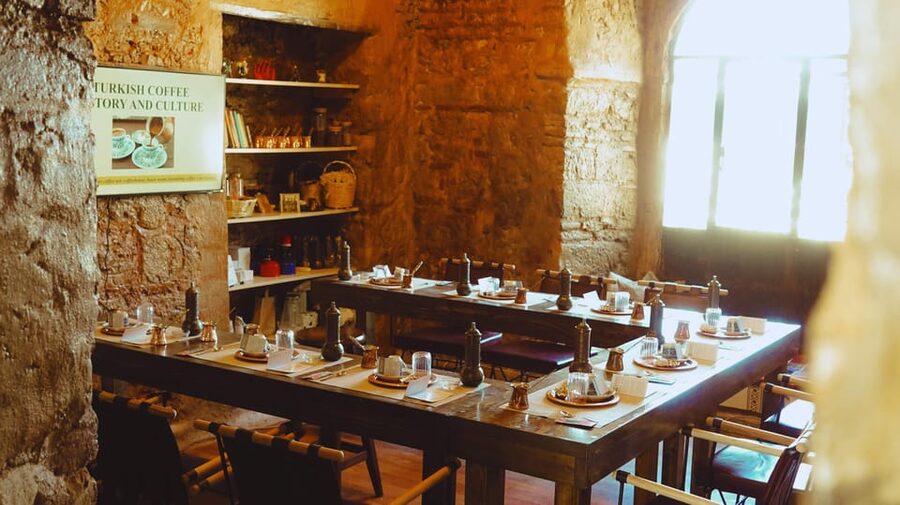
The stated meeting point is Merhaba Pastanesi at Hoca Paşa, Ankara Cd., 34112 Fatih, Istanbul. Look for the historical building and its vintage signboard marked merhaba. The activity provider asks you to meet just inside the entrance, where the guide will be waiting.
This is a practical location for a day in the old city. You can combine the workshop with time around Sultanahmet, Sirkeci, Eminönü, or the Spice Bazaar area. Allow enough time to find the entrance, especially if you are arriving by taxi in traffic.
There is one detail to check carefully when you book. Some sessions have met participants on the European side and then escorted them by metro to a workshop on the Asian side. One session included a guide who took a group from downtown Sultanahmet to the class, and the return journey by ferry became an enjoyable part of the day.
The supplied details do not promise hotel pickup or drop-off, so do not assume a private transfer. Confirm the exact meeting arrangement and venue for your chosen time. That matters more in Istanbul than it might in a smaller city, since crossing from one side to the other can take time.
The opening talk: coffee as Turkish social life
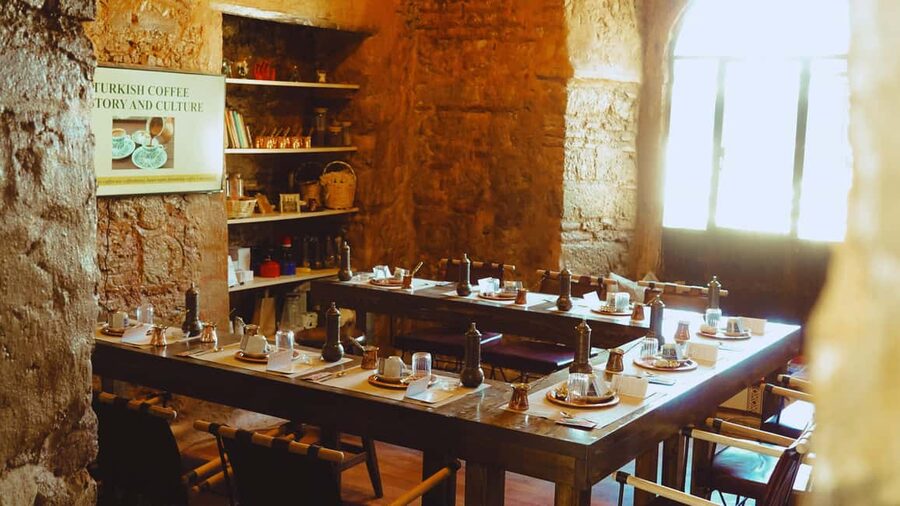
Once everyone is gathered, the guide introduces the history and social role of Turkish coffee. The tone appears to be informal and welcoming, with tea, coffee, and water offered on arrival in some sessions.
The strongest part of this talk is its connection to ordinary customs. You learn why coffee is served slowly, why it is often paired with sweets, and how the drink can mark a moment of welcome. Guides also place coffee within the wider story of Turkey and the Ottoman period.
Mehmet has been praised for making historical material accessible and funny, while Taner is known for sharing facts about coffee and Istanbul in an engaging way. Kübra receives repeated praise for her patience, clear explanations, and enthusiasm. The guide can vary, but the general strength of the activity is the teaching style.
The class is conducted in English or Turkish. English-speaking visitors should find the instructions manageable, since the brewing process is shown step by step rather than explained only through abstract theory.
Grinding the beans and using a cezve
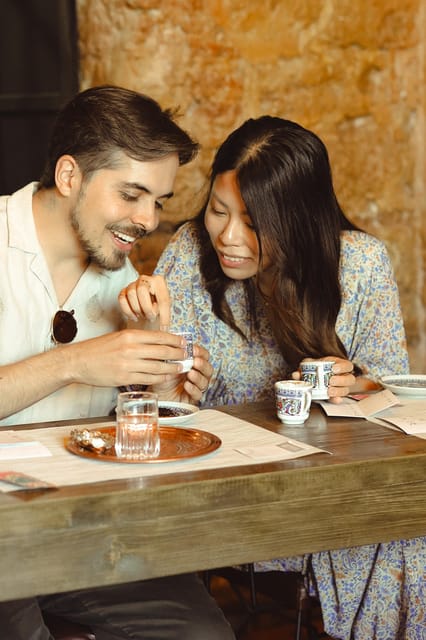
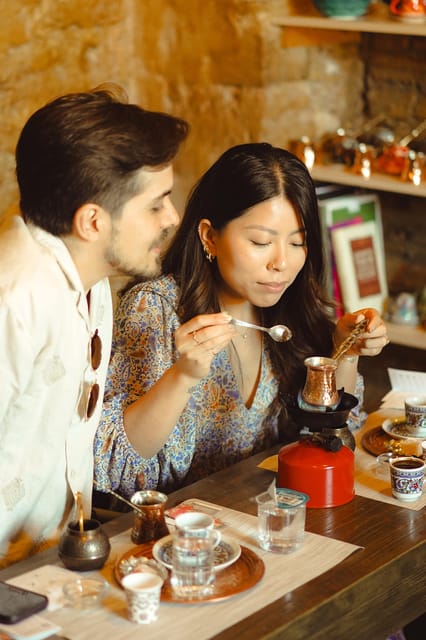
The workshop becomes hands-on when you grind coffee beans and prepare your own brew. The cezve is the traditional pot used for the job. You follow the guide’s instructions, add the ingredients, and heat the coffee carefully until it is ready to serve.
This is a beginner-friendly activity. Several participants found the method easy to follow because the guide demonstrated each stage clearly. You do not need previous coffee-making experience, and the point is not to produce a café-perfect drink on your first attempt.
The pace is part of the lesson. Turkish coffee is not rushed, and the class encourages you to pay attention to the texture, aroma, and preparation. One participant described the experience as a lesson in patience, which is a fair way to understand the mood of the workshop.
You also get to drink the coffee you make. That gives the brewing instructions practical value. You can ask questions, compare your cup with the guide’s preparation, and later repeat the process at home using the supplied set.
Something different for another day:
- Istanbul: Bosphorus Dinner Cruise & Show with Private Table
★ 4.8 · 44,561 reviews - Istanbul: Daytime or Sunset Sightseeing Cruise & Audio Guide
★ 4.8 · 14,430 reviews - Istanbul: Bosphorus Dinner Cruise with Turkish Night Show
★ 4.8 · 10,127 reviews - Best of Istanbul 1, 2 or 3-Day Private Guided Istanbul Tour
★ 5.0 · 8,922 reviews
Tasting different coffees with Turkish delight
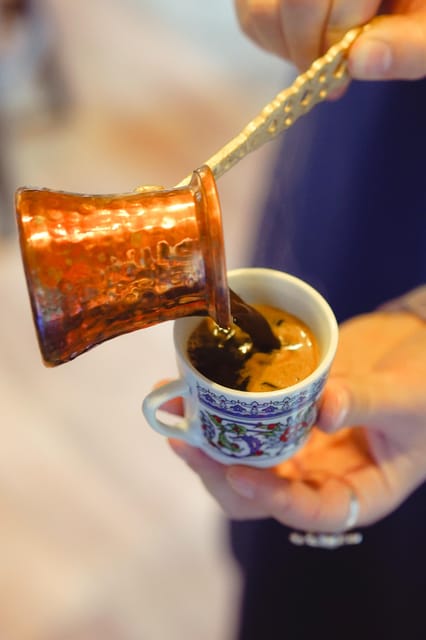
The tasting portion adds variety to the workshop. The experience includes three types of Turkish coffee according to the highlights, while the detailed description specifically mentions trying two different kinds. The exact selection may vary, but you should expect more than one style and a chance to compare flavors.
Turkish delight is served alongside the coffee. Tea and water are also available, and some sessions included extra coffee during the class. The sweets make sense here, since Turkish coffee is traditionally enjoyed as a small social treat rather than a large mug.
The coffee is strong and finely ground, with sediment at the bottom. If you are used to clear coffee, the texture and intensity may take some getting used to. The workshop is still suitable for someone who does not drink coffee regularly, since one participant who usually avoids coffee enjoyed the cultural side of the activity.
You can approach the tasting as a short introduction rather than a formal professional tasting. The value lies in learning what you are drinking and noticing how preparation changes the cup.
Fortune telling from the coffee grounds
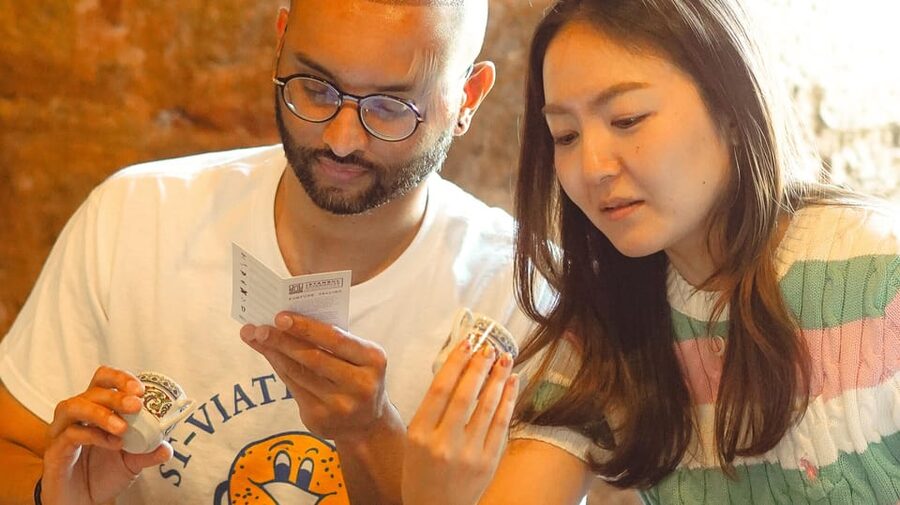
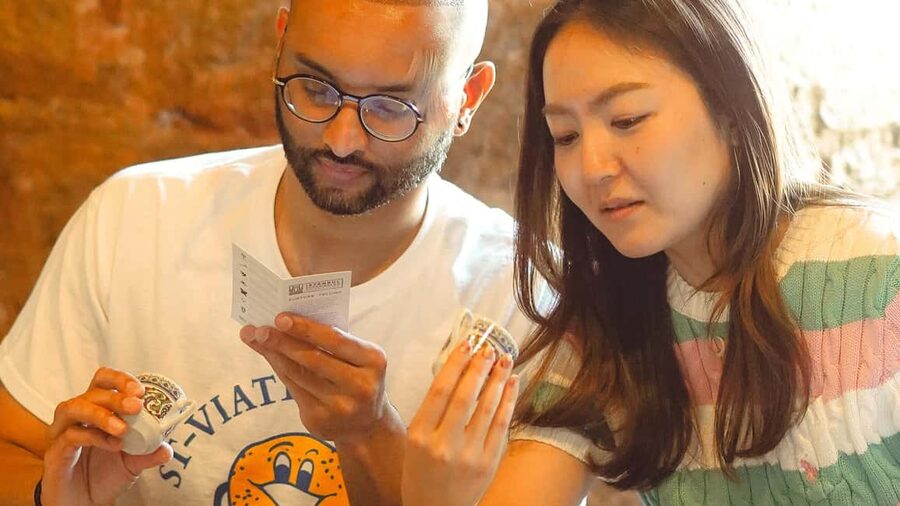
After the coffee is finished, the cup is turned upside down so the grounds can settle and form patterns. The guide explains the tradition of reading those shapes and may interpret what appears in your cup.
This is one of the most memorable parts of the session because it turns coffee into a shared conversation. It can be funny, personal, and a little theatrical. Some participants found their readings surprisingly detailed, while others treated the ritual as a playful custom.
Keep your expectations sensible. The activity presents fortune telling as part of Turkish coffee culture, not as a proven way to predict the future. If you enjoy folklore, symbolism, and friendly group interaction, this section will likely be a highlight. If you prefer strictly factual activities, you may find it gimmicky.
I like that the ritual is included because it shows how coffee traditions continue beyond the drink itself. The cup becomes a prompt for storytelling, jokes, and social connection.
The take-home coffee set
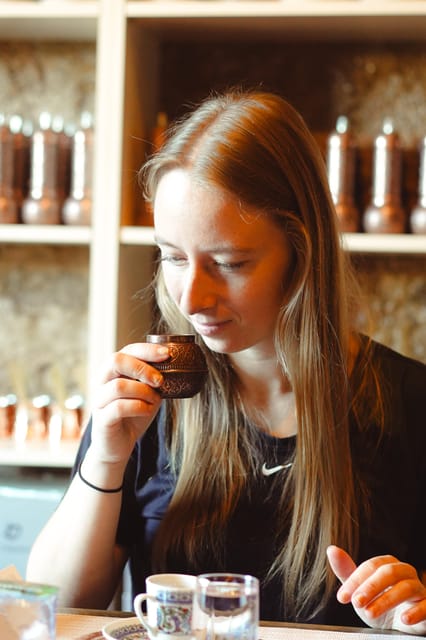
The included gift is a major reason the $23 price feels strong. You receive a Turkish coffee set with a cezve, coffee, and a traditional mug. Several sessions also provided a hand-painted tea set, gift bag, or certificate, though those extras may not be guaranteed for every ticket.
This is more useful than a standard souvenir. You can recreate the activity at home, share Turkish coffee with family or friends, and remember the preparation instead of simply displaying an object on a shelf.
Check how you will pack it before you arrive. A cezve and ceramic cup take up space and can be fragile, especially if you are traveling with only a small bag. Still, the set gives the experience lasting value, particularly for anyone who already enjoys coffee or likes practical crafts and food souvenirs.
What the small-group format feels like
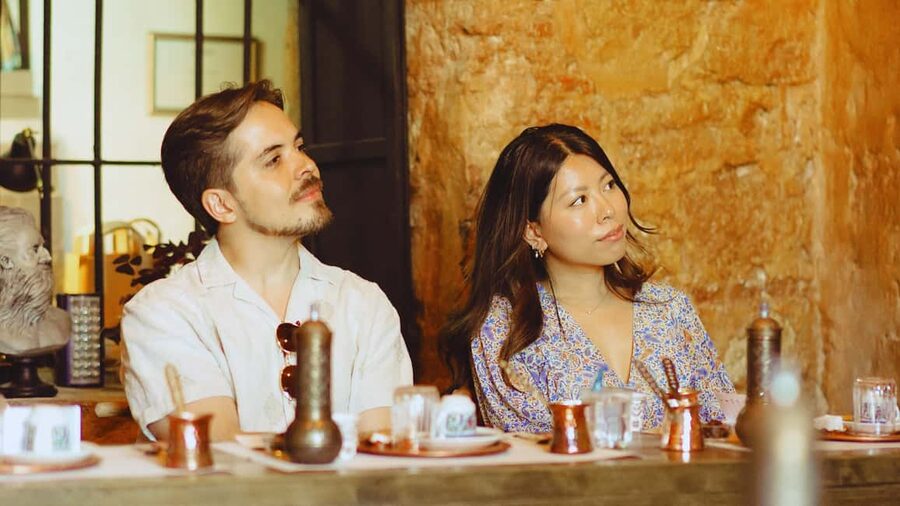
The group is limited to 10 participants. That is a good size for this kind of lesson, since everyone needs a turn at the grinder and cezve. It also leaves room for questions and conversation without making the class feel like a large demonstration.
The atmosphere is described as cozy, relaxed, and welcoming. Cats may be around the coffee venue, adding an unmistakably Istanbul touch, although they are not part of the formal activity.
Guides have been praised for helping late arrivals, answering questions, and offering restaurant suggestions. One instructor even helped participants arrange a taxi to the airport after the class. Those personal touches matter, but service can vary by guide and session.
There have been occasional reports of confusion involving pickup arrangements, an instructor delay, and overbooking. The staff resolved those problems in the examples provided, but I would still save the meeting details and arrive early. A clear phone connection with the provider is useful if you are crossing between the European and Asian sides.
Is $23 a good value?
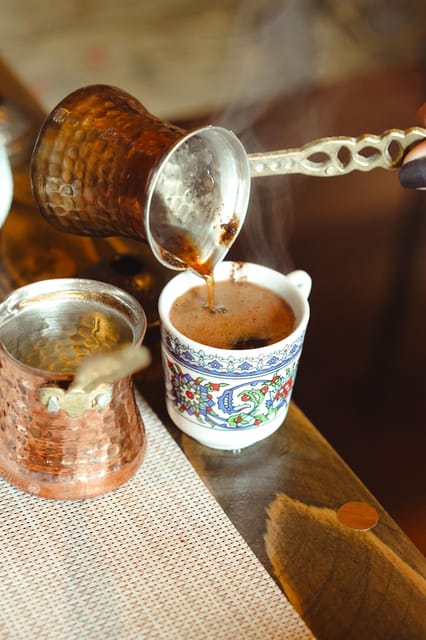
At $23 per person, this is a good-value Istanbul activity. The fee covers two hours of instruction, the cultural presentation, hands-on brewing, several tastings, Turkish delight, water, coffee beans, and a take-home cezve set.
The strongest value is that the activity combines three things: a lesson, a tasting, and a souvenir you can use. A simple coffee stop would cost less, but it would not give you the historical context or the chance to prepare the drink yourself.
The price is especially appealing for couples, families, and friends who want a break from monuments. It also works well as a birthday activity or a rainy-day plan. If you do not drink coffee, the value depends more on your interest in Turkish culture, storytelling, and food traditions.
Who should book this Istanbul workshop?
I would suggest it to:
- First-time visitors who want a cultural activity beyond major sights
- Coffee drinkers who want to learn a traditional brewing method
- Couples looking for a relaxed shared activity
- Families with older children who can take part in the preparation
- Anyone who enjoys folklore and lighthearted fortune telling
- Visitors who want a compact two-hour class with a useful souvenir
It may not suit you if you dislike strong coffee, have no interest in hands-on activities, or want a formal barista course. The class teaches traditional Turkish preparation, not advanced coffee science or café management.
The workshop is wheelchair accessible, and English and Turkish instruction is available. Since no hotel transfer is included, plan your route to the meeting point and verify the venue before setting out.
Should you book it?
Yes, if you want an easy, social way to understand Turkish coffee beyond simply drinking it. The patient instruction, small group, fortune-telling ritual, and take-home cezve give the session more substance than a standard tasting.
I would book it early in your Istanbul schedule, then use what you learn for the rest of your trip. The only points to confirm are the exact venue, the meeting arrangement, and how many coffee varieties your session includes. If those details work for you, $23 buys a generous two hours and a souvenir you can actually use.
FAQ
How long does the Turkish coffee workshop last?
The workshop lasts two hours. Starting times vary, so you need to check availability for your chosen date.
How much does the experience cost?
The listed price is $23 per person.
Where is the meeting point?
The meeting point is Merhaba Pastanesi at Hoca Paşa, Ankara Cd., 34112 Fatih, Istanbul. Look for the vintage signboard reading merhaba and meet the provider just inside the entrance.
Is transportation included?
Hotel pickup and drop-off are not included. Some sessions have met participants on Istanbul’s European side and accompanied them by metro to a venue on the Asian side, so confirm the arrangements for your booking.
What languages are available?
The workshop is offered in English and Turkish.
How many people are in the group?
The activity is a small group limited to 10 participants.
Is the workshop wheelchair accessible?
Yes, the activity is listed as wheelchair accessible.
What is included in the take-home gift?
The Turkish coffee gift set includes a cezve, Turkish coffee, and a traditional mug. Some sessions also provided additional items such as a hand-painted tea set or certificate.
Just added around Istanbul
- Istanbul Imperial & Bosphorus Tour – Incl. Lunch★ 5.0 · 62 reviews
- Istanbul to Cappadocia 2 Day Tour with Guide, Flights and Hotels★ 4.5 · 62 reviews
- A Magical Evening in Istanbul: Private City Tour★ 4.5 · 62 reviews
- Istanbul: Private Guided Tour★ 4.5 · 62 reviews
- 2-Days Private Tour to Gobeklitepe and Karahantepe from Istanbul★ 5.0 · 62 reviews
- Private 7-Hour Istanbul Tour with Red Carpet Treatment★ 4.7 · 62 reviews
- Istanbul Private Walking Tour: Highlights & Gems with a Local★ 5.0 · 63 reviews
- Private Istanbul Airport Transfer to Blue Mosque Sultan Ahmet★ 5.0 · 63 reviews
Workshops, compared.
Original Turkish Mosaic Lamp Workshop w/ Snacks
Read our review →
Turkish Mosaic Lamp Workshop with Bosphorus View
Read our review →
Turkish Mosaic Lamp Workshop in Galata – All Included
Read our review →
Turkish Coffee Making and Fortune Telling Workshop
Read our review →
Browse the lists this tour appears in