
Reviewed · SHOPPING TOURS
Private Turkish Carpet Shopping at Historic Caravanserai
Carpets can tell you where they come from. This private Istanbul experience pairs a historic caravanserai with a close look at Turkish weaving, silk making, motifs, and carpet buying. I like the small private format, with up to six people, and I like that guide Israfil brings art history and local context to what could otherwise feel like a sales visit. The main consideration is simple: you may be tempted to buy, and two hours can pass quickly once the carpets come out.
The meeting point beside the German Fountain is easy to reach in Sultanahmet, and the tour ends near Çemberlitaş. No purchase is required, but you should arrive with a clear budget and a little room in your luggage plans if you think a rug may follow you home.
In This Review
- Key points to know before you go
- Why this carpet experience feels different
- Starting beside the German Fountain
- From Constantine’s Column to the caravanserai
- Watching silk become carpet material
- Learning to read Turkish carpet motifs
- The private carpet presentation
- How much value do you get for $179?
- What makes Israfil a strong guide
- Who should book it, and who should skip it?
- Should you book this Istanbul carpet tour?
- FAQ
- How long does the private Turkish carpet experience last?
- Where does the tour begin and end?
- How many people can join the private tour?
- Is the experience offered in English?
- Do I have to buy a Turkish carpet?
- What happens if the weather is poor?
Key points to know before you go
- A real caravanserai setting: You visit a historic merchant lodging house linked to Silk Road trade, not just a modern carpet showroom.
- Silk and weaving demonstrations: You can watch silk being spun and see traditional carpet weaving techniques.
- Guide Israfil adds depth: His background in art philosophy helps explain why colors, symbols, and patterns matter.
- Private group format: The $179 price covers up to six people, making it better value for a small group than for a solo visitor.
- A broad carpet selection: Expect traditional, vintage, tribal, and modern designs, with help narrowing the choices.
- A no-haggle atmosphere: The experience is designed around explanation and selection rather than aggressive selling.
Why this carpet experience feels different
Shopping for a Turkish carpet can be awkward. You may want to admire the work without pretending you are ready to spend thousands of dollars. You may also worry that a sales visit will swallow your afternoon.
This experience handles the subject as a cultural visit first and a shopping opportunity second. You begin with Istanbul’s monuments, enter a former caravanserai, meet people involved in carpet production, and learn how to read the designs before seeing a large selection of rugs.
That order matters. A carpet is easier to judge once you understand the labor behind it. You will hear about materials, natural dyes, silk, weaving methods, regional styles, and the meaning of repeated forms. Even if you buy nothing, you leave with better tools for looking at Turkish textiles in shops and museums.
The private setup is another advantage. Only your group takes part, so you can ask basic questions without feeling out of place. You can also spend more time on the kinds of carpets that interest you, instead of following a fixed presentation for a large crowd.
The current rating is 4.9 from 20 ratings, with every rating recommending the experience. That is a strong signal, particularly for a shopping activity, where pressure and unclear pricing can quickly spoil a good afternoon.
More Historical Tours in Istanbul
- Istanbul Gedikpasa Historical Turkish Bath with Privacy Option
★ 5.0 · 1,285 reviews - Istanbul: Acemoglu Historical Turkish Bath w/Private Options
★ 4.6 · 1,190 reviews - Istanbul: Gedikpasa Historical Hammam with Privacy Add-On
★ 4.8 · 918 reviews
Starting beside the German Fountain
The tour begins at the German Fountain, at At Meydanı Cd in the Sultanahmet area. The fountain sits close to major historic sights, so this is a convenient place to meet if you are already visiting the old city.
You spend about 15 minutes here looking at the artistic side of Turkish culture. The stop is brief, but it sets up the main theme: Turkish design is not decoration alone. Color, geometry, plants, animals, and repeated symbols can carry ideas about family, faith, place, protection, and hope.
I would use this opening to get your bearings and ask Israfil what to watch for in the carpets later. The point is not a long monument lecture. It is a short introduction to the visual language that appears in Turkish textiles.
The German Fountain is also a practical meeting point because it is recognizable and close to public transportation. Still, Sultanahmet can be crowded and confusing, so give yourself enough time to find the fountain without rushing. The tour is in English, and confirmation is provided when you book.
From Constantine’s Column to the caravanserai
The next part takes place around the Column of Constantine and the old Çemberlitaş area. This section connects the modern shopping decision to Istanbul’s role as a meeting point between Europe and Asia.
The central stop is a historic caravanserai. These buildings offered food, shelter, storage, and business space for merchants moving goods across long routes. Carpets, silk, spices, metalwork, and other products passed through places like this, and commercial exchange went along with the exchange of ideas.
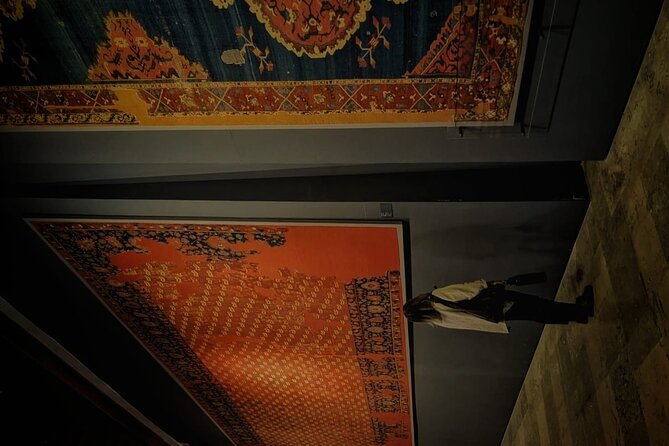
Inside, you can expect courtyards, arches, and a quieter setting than the main streets outside. The building gives the carpet presentation a sense of place. You are not simply looking at rugs under bright shop lights. You are seeing textile traditions in a space connected to trade and movement.
The caravanserai visit takes most of the two-hour experience, about one hour and 45 minutes. That timing leaves enough space for explanation, demonstrations, and shopping, but it is not a full-day textile course. If you want a long, technical lesson on knots, regional weaving schools, or conservation, you will need another visit.
For a first look at Turkish carpets, the pace should suit you well. The guide can give context without asking you to spend an entire morning on one subject.
Watching silk become carpet material
One of the most useful parts is seeing silk being spun and used in weaving. Silk changes the feel, shine, detail, and price of a carpet, so it helps to see the material before discussing finished pieces.
You can watch artisans demonstrate traditional carpet weaving and the delicate process of silk making. This is where the difference between a handmade textile and a factory-produced floor covering becomes easier to understand. The work is slow, careful, and dependent on trained hands.
The demonstrations also give you sensible questions to ask:
- What material is used in the pile and foundation?
- Is the color made from natural dyes?
- Where does the design come from?
- What region or weaving tradition does the piece reflect?
- Is the carpet intended for display, daily use, or collection?
You do not need to become a textile expert. You only need to understand that material, knotting, dye, age, and condition all affect value.
The staff are described as welcoming and professional, including with buyers working within a modest budget. That matters. Carpet sellers sometimes focus only on high-priced pieces, but here you should be able to explain what you can spend and see suitable options.
A few more tours and experiences worth a look
- Istanbul Grand Bazaar: From Rooftops to the Secret Passages
★ 4.8 · 337 reviews - Istanbul: Hagia Sophia, Blue Mosque and Grand Bazaar Tour
★ 4.5 · 222 reviews - Small-Group Bosphorus Cruise and Istanbul’s Egyptian Bazaar
★ 3.5 · 208 reviews - Istanbul: Hagia Sophia, Blue Mosque, Cistern & Bazaar Tour
★ 4.9 · 189 reviews
Learning to read Turkish carpet motifs
A Turkish carpet is a visual record. The patterns may point to a region, a family tradition, a village style, a religious idea, or the personal imagination of the weaver.
Israfil explains how colors, materials, and motifs carry cultural and spiritual meaning. You may see designs that suggest flowers, trees, medallions, stars, animals, or geometric forms. Their meaning can shift by region and tradition, so a good explanation should include context rather than a one-word label.
Color also does more than set the mood. Natural dyes can produce subtle variations, and the way color ages may help reveal the character of an older carpet. Silk can give a design a fine gleam, while wool often creates a warmer and more substantial surface.
This is where Israfil seems particularly useful. He has a PhD in art philosophy, and his role is not limited to pointing out expensive rugs. He connects the design to broader ideas about art, belief, and Turkish culture. He also shares brief historical details along the route, which helps the experience feel connected to Istanbul rather than sealed inside a shop.
I would still ask direct questions about every carpet you consider. Ask about materials, age, origin, care, shipping, and the reason for the price. A beautiful pattern is only one part of a sound purchase.
The private carpet presentation
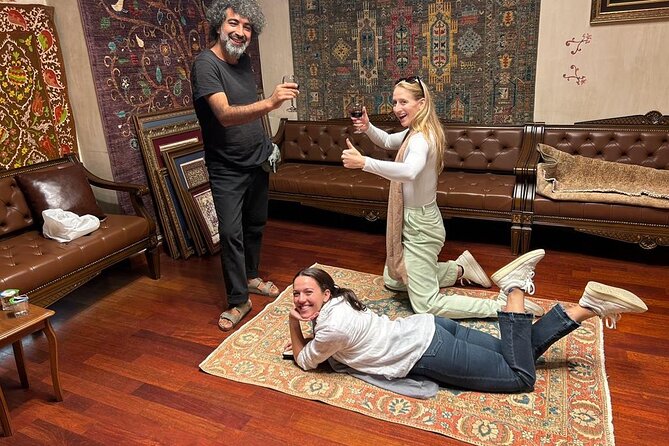
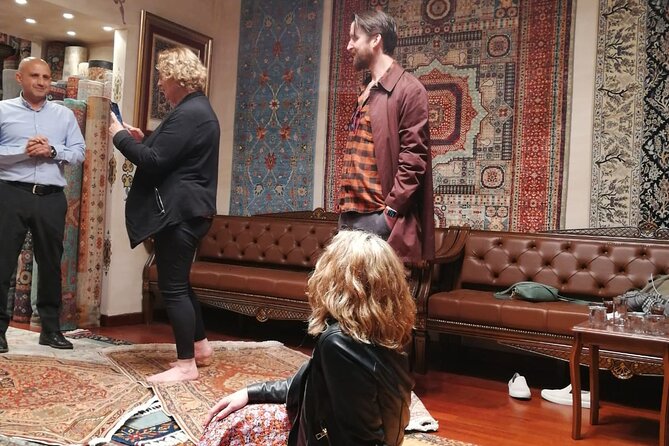
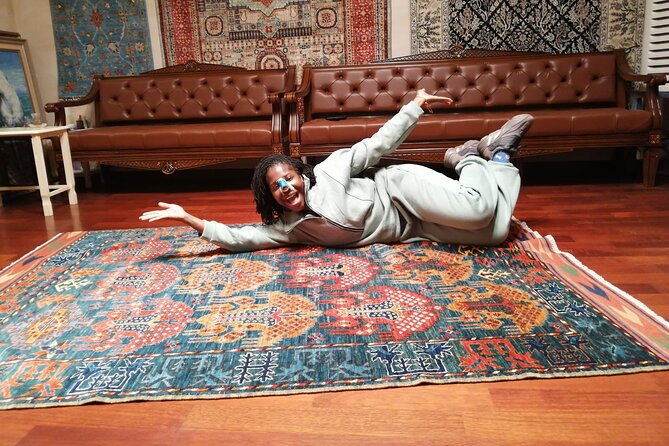
After the demonstrations, you see a large selection of Turkish carpets in a calm setting. The choices may include traditional, vintage, tribal, and modern designs. That range is useful because you may arrive imagining one kind of rug and discover that another style suits your home better.
The presentation is personalized. Israfil helps explain the artistry and symbolism, then guides you toward pieces that match your taste. This is a better method than simply throwing rugs across the floor until something catches your eye.
Still, you should remember that a personal presentation is also a sales moment. The staff want to sell carpets, and the tour is connected to a carpet business. That does not make the experience dishonest, but it means you should remain in control of the decision.
A good approach is to set three limits before you arrive:
- Your maximum budget
- The approximate size you need
- The style and colors that work in your home
You can then enjoy the presentation without losing track of your purpose. If you do not want to buy, say so clearly. The experience does not require a purchase, and the strongest praise for it centers on the lack of pressure.
The reported shopping experience is notably relaxed. People were able to look at many carpets, reduce the options to two or three, and leave without being pushed to stay longer than planned. That is a meaningful benefit in Istanbul, where carpet shopping can sometimes include hard bargaining and persistent sales talk.
How much value do you get for $179?
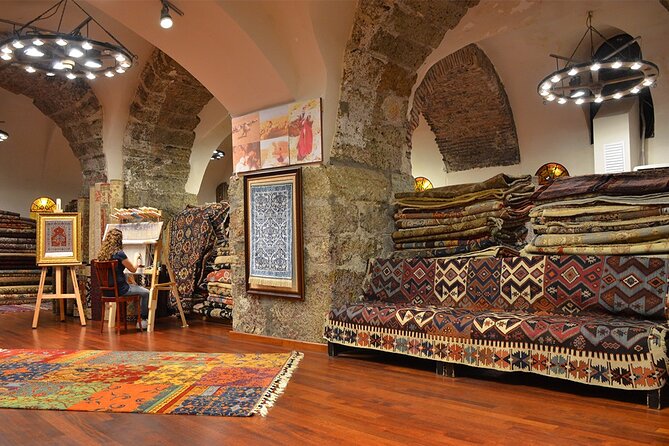
The price is $179 per group, not per person, for up to six people. For one person, that is a fairly expensive two-hour outing. For a couple, family, or group of friends, the cost becomes much easier to justify.
At full capacity, the price works out to just under $30 per person. You are paying for a private English-language guide, a historic setting, demonstrations, cultural interpretation, and a focused shopping opportunity. You are not paying an admission fee to the German Fountain or the Column of Constantine, and the experience is built around guided access rather than formal museum entry.
The value is highest if you already want to learn about or buy a Turkish carpet. If you have no interest in textiles, the shopping presentation may feel too long, even though the history and demonstrations remain worthwhile.
The price also buys time and confidence. A rug is a costly purchase, and help from someone who can explain patterns, materials, and regional styles may prevent a poor decision. I would not treat the guide’s advice as a substitute for your own budget, but it can make the process less confusing.
You should also remember that the carpet price itself is not included in the $179 tour fee. Think of the fee as payment for the private cultural introduction and guidance. Any rug purchase is a separate decision.
What makes Israfil a strong guide
Israfil receives the most consistent praise for his explanations, courtesy, and thoughtful approach. His art philosophy background gives him a useful way to discuss carpets as art objects, not just household goods.
He also seems attentive to the needs of different groups. One family appreciated the way he included their eight-year-old, even introducing the child to Turkish ice cream during the outing. That detail suggests a guide who notices the people in front of him instead of delivering the same speech to everyone.
His local connections help with the carpet presentation, but his role begins before you see the rugs. He points out sights, explains pieces of Istanbul’s past, and frames the visit as part of the city’s wider cultural story.
The experience is offered in English. If you want a guide who will explain the meaning behind designs and help you compare options, Israfil is likely the main reason this tour feels more personal than a standard showroom visit.
Who should book it, and who should skip it?
I would recommend this experience to a couple, family, or small group that wants a private introduction to Turkish carpets and may consider buying one. It also suits art lovers who prefer meeting artisans and seeing techniques rather than simply walking through museums.
Families may appreciate the short duration and private format. You can ask questions, adjust the pace, and avoid holding up a large group. The location near Sultanahmet also makes it easy to combine with other historic sights.
I would be more cautious if you are on a tight budget, have no interest in shopping, or want a purely architectural tour. The carpet presentation is central, not an optional extra. You should also expect to make your own judgment about price and quality, even with guidance.
The activity is near public transportation, service animals are allowed, and most people can participate. It requires good weather, and poor conditions may lead to a different date or a full refund. You can cancel for a full refund up to 24 hours before the start time, but changes or cancellations inside that window are not accepted.
Should you book this Istanbul carpet tour?
Book it if you want more than a quick look at Turkish rugs. The historic caravanserai, silk demonstration, motif lesson, and private presentation make this a useful introduction to one of Turkey’s most recognizable art forms.
I especially like it for small groups that may buy a carpet but do not want a tense shopping trip. Go in with a budget, ask clear questions, and treat the purchase as optional. If you do that, the $179 group price buys an informative two hours and a far better understanding of what you are seeing.
FAQ
How long does the private Turkish carpet experience last?
The experience lasts approximately two hours. About 15 minutes are spent at the German Fountain, followed by roughly one hour and 45 minutes around the Column of Constantine and the historic caravanserai.
Where does the tour begin and end?
The meeting point is the German Fountain on At Meydanı Cd in Istanbul’s Fatih district. The experience ends in Çemberlitaş, near Mollafenari.
How many people can join the private tour?
The price covers one private group of up to six people. Only your group participates.
Is the experience offered in English?
Yes. The experience is offered in English, and mobile tickets are available.
Do I have to buy a Turkish carpet?
No. A carpet purchase is not required. The experience includes an explanation of carpet art, weaving, silk making, motifs, and materials, followed by a private carpet presentation.
What happens if the weather is poor?
The experience requires good weather. If it is canceled because of poor weather, you will be offered another date or a full refund. You can also cancel up to 24 hours before the start time for a full refund.
Just added around Istanbul
- 2-Day Gallipoli and Troy Tour from Istanbul and return★ 5.0 · 17 reviews
- Sabiha Gokcen Airport Transfer Service (SAW)★ 4.0 · 17 reviews
- Istanbul Princes’ Islands Boat Trip with Lunch★ 4.0 · 17 reviews
- Best of Istanbul Full Day Private Tour With Guide★ 5.0 · 17 reviews
- Glories of Turkey 12-Day From Istanbul★ 5.0 · 17 reviews
- Istanbul: Bosphorus Morning or Sunset Yacht Tour with Snacks★ 4.9 · 17 reviews
- Full-Day Istanbul to Bursa Excursion With Cable Car★ 4.0 · 18 reviews
- Istanbul – Old City Tour★ 5.0 · 18 reviews
Shopping Tours, compared.


Istanbul Grand Bazaar: From Rooftops to the Secret Passages
Read our review →
Manavgat Boat, Bazaar, & Waterfall Day Trip with Lunch
Read our review →
Manavgat River Boat Trip & Grand Market w/ Lunch
Read our review →
Hagia Sophia, Blue Mosque and Grand Bazaar Tour
Read our review →
Small-Group Bosphorus Cruise and Istanbul’s Egyptian Bazaar
Read our review →
Hagia Sophia, Blue Mosque, Cistern & Bazaar Tour
Read our review →
Alanya/Side: Manavgat River & Waterfall, Boat Tour, & Bazaar
Read our review →Browse the lists this tour appears in