Reviewed · PRIVATE
Private Istanbul Sightseeing Tour
Old Istanbul rewards a well-planned day. This private tour packs the city’s biggest sights into roughly eight hours, with hotel pickup, a private vehicle, and an English-speaking guide. I especially like the one-on-one format and the chance to see the Blue Mosque, Hagia Sophia, Topkapi Palace, Basilica Cistern, and Grand Bazaar in one sweep. I also like that the guide can adjust the pace, which matters when the day includes plenty of walking.
The main caution is the shopping component. Several excellent days were reported, but some guides took visitors to rug or other specialty shops where the sales pitch became uncomfortable. Confirm at the start that shopping stops are optional. Admission tickets and lunch are extra, so the $265 per-person price is not the final cost.
In This Review
- Key points to know before booking
- Why this private Istanbul day works so well
- Blue Mosque and the Sultan Ahmet Square opening
- Hagia Sophia, a building with several lives
- Basilica Cistern beneath the old city
- Topkapi Palace and the Ottoman court
- The Hippodrome, obelisks, and imperial roads
- Grand Bazaar: color, craft, and commercial pressure
- Lunch, walking, and the pace of the day
- What the $265 price really buys
- The guide can make or break the day
- Practical details and possible changes
- Should you book this Istanbul tour?
- FAQ
- What is included in the private Istanbul sightseeing tour?
- How long does the tour last?
- Is lunch included?
- Are museum admission tickets included?
- What happens if Topkapi Palace is closed?
- Can I visit the Grand Bazaar on Sunday?
- Is the tour suitable for cruise ship passengers?
Key points to know before booking
- The full historic core in one day: The route covers the Blue Mosque, Hagia Sophia, Topkapi Palace, Basilica Cistern, Hippodrome, and Grand Bazaar.
- Private transport and hotel pickup: Pickup and drop-off are included for centrally located hotels on Istanbul’s European side.
- Guides earn the strongest praise: Seçkin Demirok, Hakan, Ilker Ulus, Gulay Gunay, Omer Boran, Sevilay, and Tibet are among the guides specifically praised for clear explanations and flexible pacing.
- Museum tickets cost extra: Hagia Sophia, Topkapi Palace, Basilica Cistern, and Hagia Irene list admission fees as not included.
- Shopping needs a clear boundary: Rug and leather demonstrations can be interesting, but you should say plainly if you do not want a sales stop.
- Watch the weekly closures: Topkapi Palace is replaced by the Istanbul Archaeology Museum on Tuesdays, and the Grand Bazaar is closed on Sundays.
Why this private Istanbul day works so well
Istanbul’s historic peninsula is compact on a map but crowded with major monuments. In a single day, you move through Byzantine, Roman, and Ottoman chapters of the city without spending time figuring out tickets, routes, or transport between stops.
The private setup is the real reason to consider this tour. You travel only with your own party, so you can ask questions freely and request a slower pace. A guide can spend more time on Ottoman court life if that interests you, or focus on architecture, religion, shopping, and local customs instead.
The day begins around 9:00 a.m. with pickup in an air-conditioned vehicle. The included transport is most useful at the beginning and end of the day, since the central sights are close enough to visit on foot once you reach the old city.
The experience receives a 4.4 rating from 220 published ratings, a solid result with a clear pattern. The best days depend heavily on the individual guide. Strong guides such as Seçkin Demirok, Hakan, Ilker Ulus, Gulay Gunay, Omer Boran, Sevilay, and Tibet were praised for making the past understandable, helping with photographs, and adjusting the walking pace.
A few more tours and experiences worth a look
- Istanbul: Bosphorus Dinner Cruise & Show with Private Table
★ 4.8 · 44,561 reviews - Best of Istanbul 1, 2 or 3-Day Private Guided Istanbul Tour
★ 5.0 · 8,922 reviews - Istanbul: Private Turkish Bath, Massage, and Spa in Old City
★ 4.6 · 3,225 reviews
Blue Mosque and the Sultan Ahmet Square opening
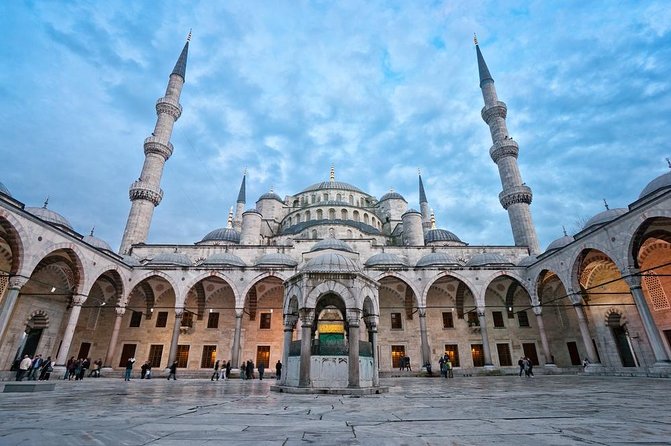
Your first major stop is the Sultan Ahmet Mosque, better known as the Blue Mosque. It faces the Hippodrome and gives you an immediate sense of the scale and ambition of Ottoman Istanbul.
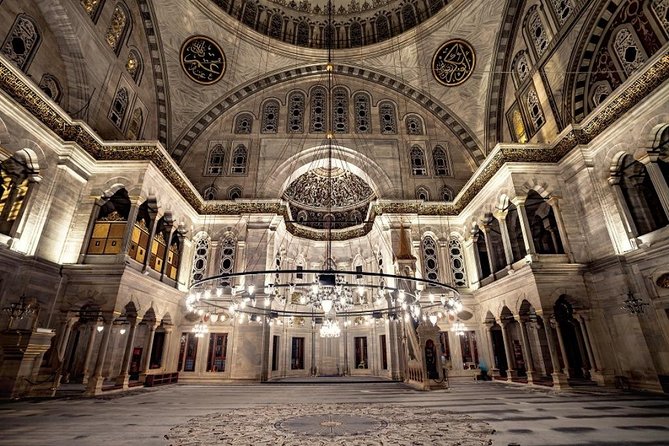
The mosque has six minarets, 260 windows, and more than 20,000 Iznik tiles. The interior is designed to catch sunlight across the tilework, creating the blue-toned effect that gave the mosque its familiar name.
The planned visit lasts about 30 minutes, and admission is free. That is enough time for a focused look, though it is not a slow architectural study. Ask your guide to point out the design features that separate a working mosque from a palace or museum.
This is also a place where clothing and visitor conduct matter. The tour information does not specify a dress code, so you should be prepared for the normal standards expected at a mosque. Your guide can help explain the local customs.
The first stop can feel rushed if you want extensive photographs or quiet time. Still, beginning here makes good sense. The mosque, Hippodrome, Hagia Sophia, and Basilica Cistern are all close together, so you start among the city’s most important monuments rather than losing the morning on transfers.
Hagia Sophia, a building with several lives
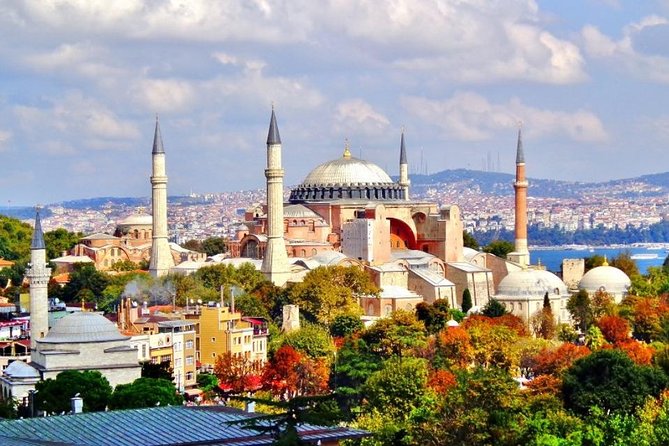
Hagia Sophia is the day’s great architectural lesson. It began as a Byzantine church, later served as a mosque, and is described in the tour material as the Saint Sophia Museum. Its vast dome made it a major engineering achievement and one of the most influential buildings in the city.
You are scheduled to spend about an hour here. The most rewarding part is not simply looking upward at the dome. It is noticing the way Byzantine mosaics and later Islamic features share the same enormous interior.
This is one stop where your guide makes a major difference. A short explanation can connect the building’s religious changes, construction, and political importance. Without that context, you may see a spectacular room but miss why the building has mattered for so many centuries.
Admission is not included. You should also confirm the day’s entry conditions with the tour company, since access arrangements can affect the timing. One published account described a major problem when the guide failed to return to Hagia Sophia later in the day after saying entry would be possible in the afternoon. That appears to have been a guide failure, not the advertised plan, but it is a useful reason to confirm the schedule at pickup.
Basilica Cistern beneath the old city
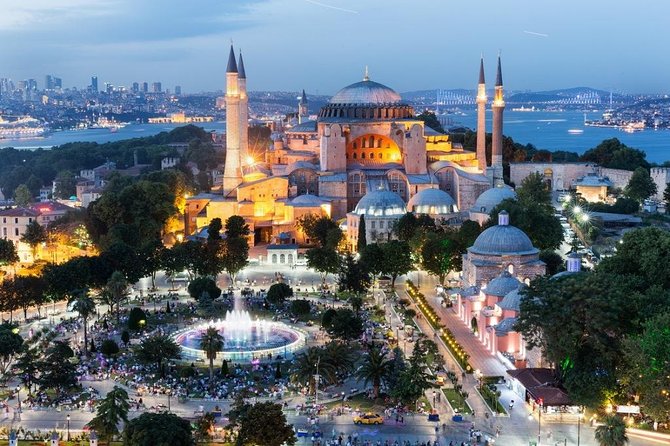
The Basilica Cistern gives the tour a welcome change of mood. After open squares and monumental buildings, you head underground into a dim forest of columns and water.
Built during the reign of Byzantine Emperor Justinian I in the sixth century, this is the largest of several hundred ancient cisterns beneath Istanbul. It lies about 150 meters southwest of Hagia Sophia, making it an easy addition to the old-city route.
The planned visit lasts 30 minutes, with admission extra. That is enough to appreciate the size, columns, reflections, and famous Medusa-related features, though you may want longer if you enjoy atmospheric photography.
The cistern is particularly valuable because it shows how a great city supported itself. Istanbul was not only about churches, palaces, and military power. It also needed vast systems for storing and managing water.
The tour description also allows for the Nakkas Cistern as an alternative in some circumstances. If the Basilica Cistern is unavailable, ask exactly which site you will visit and how much time will be provided. One published day substituted the Mosaic Museum when the cisterns were closed, which shows that the replacement can vary.
Shore-excursion passengers should pay special attention here. The tour information says cruise passengers will not have time to visit the Basilica Cistern because of limited time in Istanbul. This private day is better suited to hotel-based visitors with a full day available.
Something different for another day:
- Istanbul: Daytime or Sunset Sightseeing Cruise & Audio Guide
★ 4.8 · 14,430 reviews - Istanbul: Bosphorus Dinner Cruise with Turkish Night Show
★ 4.8 · 10,127 reviews - Istanbul: Basilica Cistern Fast-Track Entry and Audio Guide
★ 4.6 · 7,521 reviews - Istanbul: Hagia Sophia Skip-the-Line Ticket & Museum Option
★ 3.7 · 4,958 reviews
Topkapi Palace and the Ottoman court
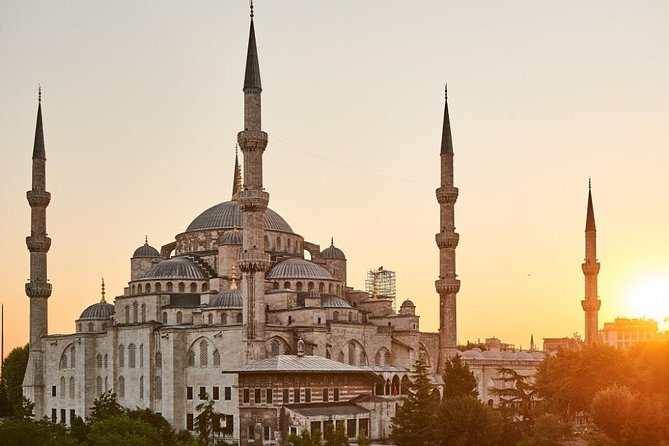
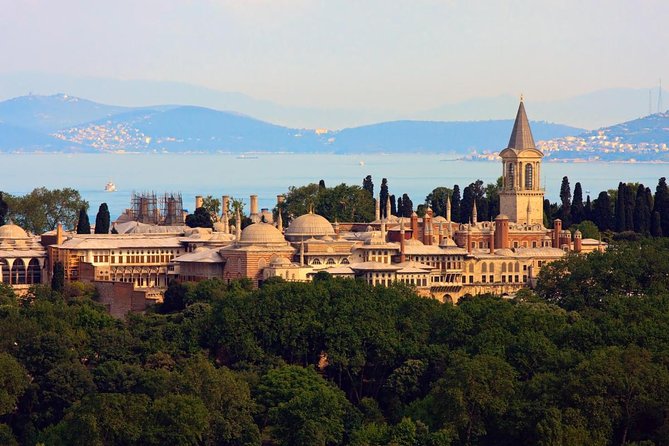
Topkapi Palace gets the longest scheduled visit, about two hours, and rightly so. This sprawling complex was the main Ottoman palace and offers more than a single grand room. You move through courtyards, ornate buildings, collections, and viewpoints overlooking the Golden Horn.
The palace treasury and imperial objects give the visit its visual punch, but I find the layout just as interesting. Courtyard after courtyard reveals how the Ottoman court organized movement, privacy, ceremony, and power.
Your guide can help you understand what you are seeing instead of letting the palace become a parade of decorated rooms. Ask about daily court life, the role of the palace buildings, and how the view toward the Golden Horn shaped the site’s importance.
Two hours is useful but still selective. Topkapi can occupy much of a day if you stop for every display. A private guide should help you choose the rooms and exhibits that best match your interests.
Admission is not included. Topkapi Palace is closed on Tuesdays, when the tour substitutes the Istanbul Archaeology Museum. That alternative is a sensible one for anyone interested in ancient objects and the city’s Roman and Byzantine past, but it is a different experience from the palace. If Topkapi is a personal priority, avoid booking this tour on Tuesday.
Hagia Irene Museum is also listed as a 30-minute stop. Located in Topkapi’s outer courtyard, Hagia Irene is described as the oldest church of the Eastern Roman Empire. Its inclusion adds another layer to the palace visit, though the exact order may change with opening conditions and timing.
The Hippodrome, obelisks, and imperial roads
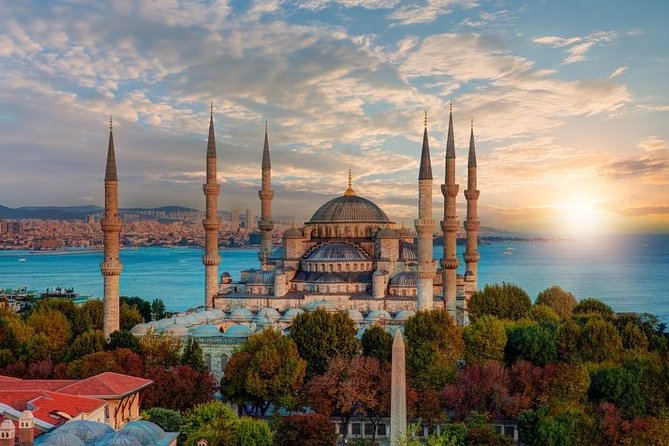
The Hippodrome helps you read the city beneath modern Istanbul. It once served as Constantinople’s political and sporting center, a place of races, public gatherings, and unrest. Today it is a civic park, but the name At Meydanı, or Horse Grounds, preserves a trace of its earlier role.
The 30-minute visit includes the Obelisk of Theodosius, originally made for the Egyptian king Thutmose III and later transferred to Constantinople. Its journey from Egypt to Istanbul is a reminder of how emperors displayed power by collecting and relocating monuments.
You also see the German Fountain, built in Germany and transported by ship before being completed in Istanbul. These shorter stops are free and require little time, but they make the surrounding neighborhood easier to understand.
The route also passes along Divan Yolu, the Road to the Imperial Council. In Ottoman times, this was the imperial road leading toward the council at Topkapi Palace. I like this part of the itinerary because it links separate monuments into one urban story. You are not simply checking off buildings. You are following the path of an imperial capital.
Grand Bazaar: color, craft, and commercial pressure
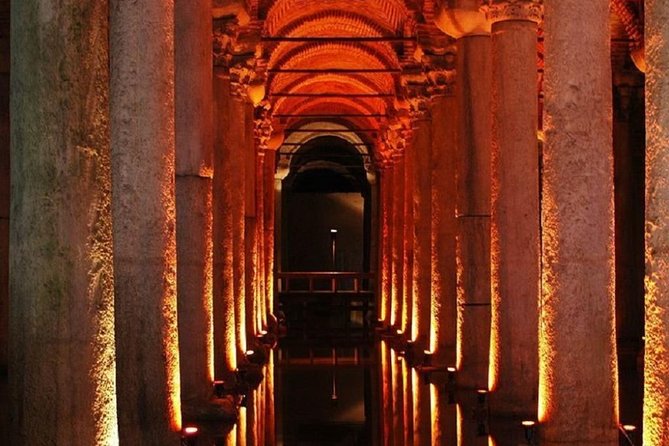
The Grand Bazaar is scheduled for about an hour and 15 minutes. With more than 4,000 shops on 58 streets, it is one of the world’s largest covered markets and has operated since the 14th century.
The market is known for leather, pottery, jewelry, spices, and carpets. Even if you buy nothing, it is worth seeing how the lanes, shops, and displays create a place built around trade.
A guide is useful here if you want help understanding products or negotiating the maze of streets. At the same time, you should protect your free time. The tour includes shopping as part of the day, but that does not mean you must purchase anything.
This is where the experience becomes less consistent. Several accounts describe enjoyable rug or pottery visits, including a family-run demonstration and a rug factory that produced a purchase the buyers were happy with. Other accounts describe aggressive sales tactics, long stops, and pressure to buy a carpet or visit a special shop.
I would set the rule clearly before entering the bazaar: browsing is welcome, but no unplanned sales demonstrations. If you are interested in buying a rug, leather, or jewelry, tell the guide. If you are not, ask to use that time inside the Grand Bazaar or at another historic site.
The Grand Bazaar is closed Sundays. The tour says the extra time will be spread among the other stops, creating a more intimate visit elsewhere. That may be a good trade if shopping is not a priority, but anyone eager to see the market should choose another day.
Lunch, walking, and the pace of the day
Lunch is not included, and food and drinks are extra unless specifically stated. The day’s schedule leaves room for a restaurant stop, but you should ask your guide early about the length, location, and price range.
One published experience included lunch at Deraliye Terrace, praised for its panoramic view, while another described the food as less impressive than the setting. That is a fair warning not to assume that a scenic restaurant will provide the best meal of the day.
The itinerary involves substantial walking, stairs, standing, and time on hard surfaces. It is not recommended for children aged four and under, though most other participants can take part. The private format helps if someone needs regular rests or a slower pace.
This flexibility is one of the tour’s strongest features. Hakan adjusted the day for a sore knee, and another guide waited patiently for a participant with a leg problem. A guide named Seçkin was praised for making sure everyone in a group of four could keep up. An 80-year-old participant also received a slower, considerate pace.
Still, eight hours is a long sightseeing day. You should wear comfortable shoes, carry water, and avoid planning another demanding activity afterward.
What the $265 price really buys
At $265 per person, the tour is not a budget sightseeing option. For two people, the base price is $530 before museum admission, lunch, and shopping.
The value comes from privacy and time control. You receive hotel pickup and drop-off, private vehicle transport, and a local English-speaking guide. For a first visit, that can remove a great deal of friction from a complicated day, especially when you want to cover several major sites without arranging each transfer yourself.
The price is easier to justify for a small family or group that would otherwise hire separate transport and pay for individual guiding. A solo visitor may find it expensive, while a larger private party can spread the cost across the group if group discounts apply.
The tour also saves planning time. Your guide can explain the Blue Mosque, Hagia Sophia, Topkapi Palace, cistern, Hippodrome, and bazaar in a connected sequence. That is useful when your stay is short.
The price is harder to justify if you want only independent sightseeing or if you dislike shopping stops. In that case, ask for a written confirmation that the day will focus on the advertised monuments and that any commercial visit is optional.
The guide can make or break the day
The strongest part of this experience is the human element. The most praised guides were described as warm, articulate, patient, and able to bring the past to life without making the day feel like a lecture.
Omer Boran was praised for working around cruise-ship crowds and giving people time with the artifacts. Gulay Gunay received especially warm praise for answering questions, taking photographs, and helping with cameras. Ilker Ulus was noted for explaining both Turkish culture and history, while Sevilay and Tibet were praised for their command of Istanbul’s story and their friendly manner.
You cannot necessarily select a particular guide when booking, so treat these names as examples of what to request if available, not as a guarantee. The private format gives a good guide room to tailor the day, but it cannot remove the need to communicate clearly.
At pickup, say what matters most to you. You might want more time inside Topkapi, a proper visit to Hagia Sophia, no carpet presentation, or a slower walking pace. The clearer you are, the more useful the private arrangement becomes.
Practical details and possible changes
Pickup is offered from centrally located hotels on Istanbul’s European side. The stated start time is 9:00 a.m., and confirmation is provided at booking.
The tour is offered in English, includes mobile ticketing, and operates as a private activity for your group alone. Public transportation is nearby, but the included private vehicle handles the planned pickup and drop-off.
Museum admission is not included for Hagia Sophia, Topkapi Palace, Basilica Cistern, or Hagia Irene. Blue Mosque, Grand Bazaar, German Fountain, Obelisk of Theodosius, and Hippodrome entries are listed as free.
Closures can change the route. Topkapi Palace is replaced by the Istanbul Archaeology Museum on Tuesdays. The Grand Bazaar is closed Sundays. If a museum closes unexpectedly, the company says a similar alternative will be offered.
Free cancellation is available up to 24 hours before the start time. Changes or cancellations made less than 24 hours before the tour are not accepted for a refund, based on local time.
Should you book this Istanbul tour?
I would choose this tour if you are visiting Istanbul for the first time, have one full sightseeing day, and value an efficient route with a private guide. It is especially suitable for families, older adults, or small groups who need flexible pacing and hotel pickup.
I would hesitate if you want a low-cost day, prefer to explore independently, or strongly dislike commercial stops. Before paying, ask the operator to confirm the monument schedule, museum tickets, lunch plan, and that rug or leather shopping is optional.
For the best experience, avoid Tuesday if Topkapi Palace is essential and avoid Sunday if the Grand Bazaar matters to you. With a good guide and clear expectations, this tour can give you a strong first look at Istanbul’s imperial center without the usual transport and planning headaches.
FAQ
What is included in the private Istanbul sightseeing tour?
The tour includes hotel pickup and drop-off, a local English-speaking guide, and transport by private vehicle.
How long does the tour last?
The tour lasts approximately eight hours and begins at 9:00 a.m.
Is lunch included?
No. Lunch, food, and drinks are not included unless specifically stated.
Are museum admission tickets included?
No. Admission is not included for Hagia Sophia, Topkapi Palace, Basilica Cistern, or Hagia Irene Museum.
What happens if Topkapi Palace is closed?
Topkapi Palace is closed on Tuesdays. On that day, the tour visits the Istanbul Archaeology Museum instead.
Can I visit the Grand Bazaar on Sunday?
No. The Grand Bazaar is closed on Sundays. The tour says extra time will be distributed among the other locations.
Is the tour suitable for cruise ship passengers?
Cruise passengers can book the tour, but the information states that limited time in Istanbul means they will not have time to visit the Basilica Cistern.
Just added around Istanbul
- Istanbul to Cappadocia 2 Day Tour with Guide, Flights and Hotels★ 4.5 · 62 reviews
- Istanbul Imperial & Bosphorus Tour – Incl. Lunch★ 5.0 · 62 reviews
- A Magical Evening in Istanbul: Private City Tour★ 4.5 · 62 reviews
- Istanbul: Private Guided Tour★ 4.5 · 62 reviews
- 2-Days Private Tour to Gobeklitepe and Karahantepe from Istanbul★ 5.0 · 62 reviews
- Private 7-Hour Istanbul Tour with Red Carpet Treatment★ 4.7 · 62 reviews
- Istanbul Private Walking Tour: Highlights & Gems with a Local★ 5.0 · 63 reviews
- Private Istanbul Airport Transfer to Blue Mosque Sultan Ahmet★ 5.0 · 63 reviews
Private, compared.
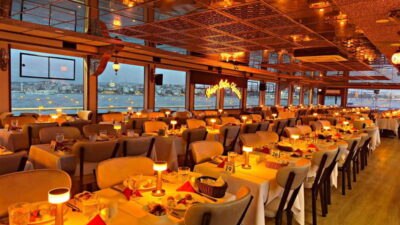
Bosphorus Dinner Cruise & Show with Private Table
Read our review →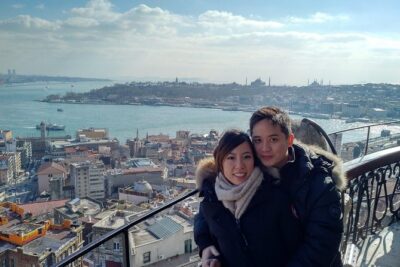
Best of Istanbul 1, 2 or 3-Day Private Guided Istanbul Tour
Read our review →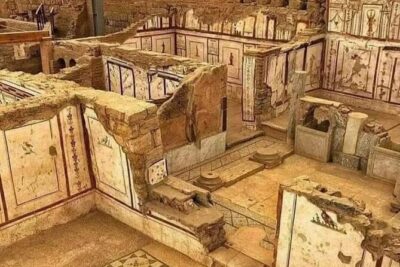
FOR CRUISERS: Skip The Lines PRIVATE EPHESUS TOUR &On Time Return
Read our review →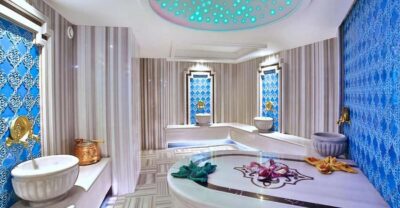
Private Turkish Bath, Massage, and Spa in Old City
Read our review →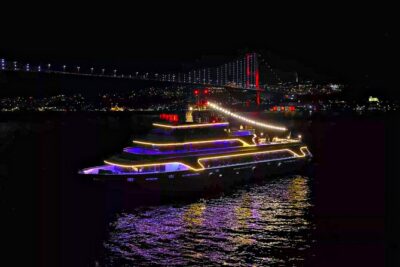
Bosphorus Dinner Cruise with Show and Private Table
Read our review →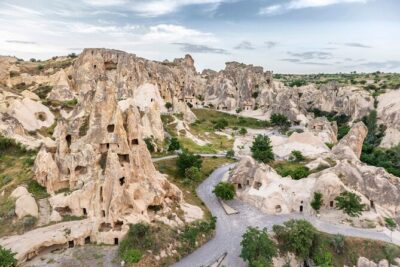
Full-Day Private Tour of Cappadocia’s Highlights (Car&Guide )
Read our review →