
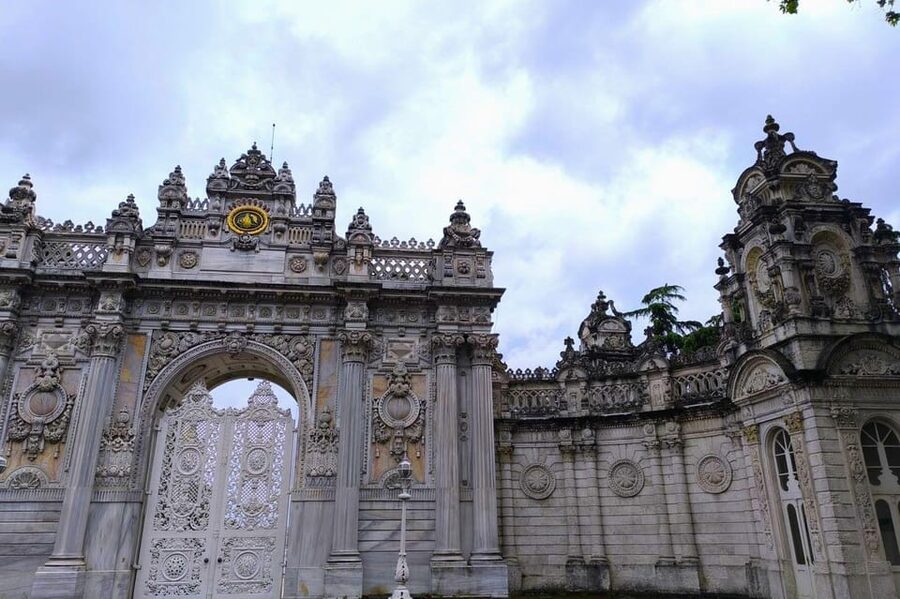
Reviewed · DOLMABAHCE PALACE TOURS
Istanbul: Dolmabahce Palace and Harem Skip-the-Line Ticket
Opulence meets the Bosphorus here. This self-guided ticket gives you skip-the-ticket-line entry to Istanbul’s Dolmabahçe Palace, including the Selamlık, Harem, and Painting Museum. I like the freedom to explore at your own pace, and I especially like having an audio guide because the palace offers few written explanations inside.
The grand halls, crystal work, gardens, and waterfront setting make this one of Istanbul’s most striking sights. The main drawback is that photography is not allowed indoors, and some rooms can only be viewed from behind barriers. At $62 per person, the price makes the most sense if you plan to see all three sections and spend several hours on the grounds.
In This Review
- Key points to know before you go
- Why Dolmabahçe feels different from Topkapı Palace
- Getting inside with the electronic ticket
- The Selamlık: formal rooms built for state power
- The Harem: a quieter look at palace life
- The Painting Museum and Ottoman art
- Gardens, Bosphorus views, and the best outdoor moments
- How useful is the audio guide?
- Is $62 good value?
- Timing, clothing, and what to bring
- Who should book this experience?
- Should you book the Dolmabahçe Palace ticket?
- FAQ
- Is this a guided tour?
- What areas does the ticket include?
- Does skip-the-line access avoid security checks?
- What are the palace opening hours?
- Which languages are available for the audio guide?
- What do I need to bring?
- Can I take photographs inside Dolmabahçe Palace?
Key points to know before you go
- The famous Bohemian crystal chandelier hangs in the ceremonial interiors and is one of the palace’s most memorable sights.
- The ticket covers three areas, Selamlık, Harem, and the Painting Museum, so you are not paying only for the main palace rooms.
- You enter independently, with no live guide or transportation included.
- The audio guide matters, since signage inside is limited and the palace can otherwise feel like a long series of beautiful rooms without much explanation.
- Allow at least two and a half hours, and closer to four hours if you move slowly, visit the gardens, and stop at the cafe.
- Security still takes place, even with skip-the-line admission, and everyone needs a passport or ID card.
Why Dolmabahçe feels different from Topkapı Palace
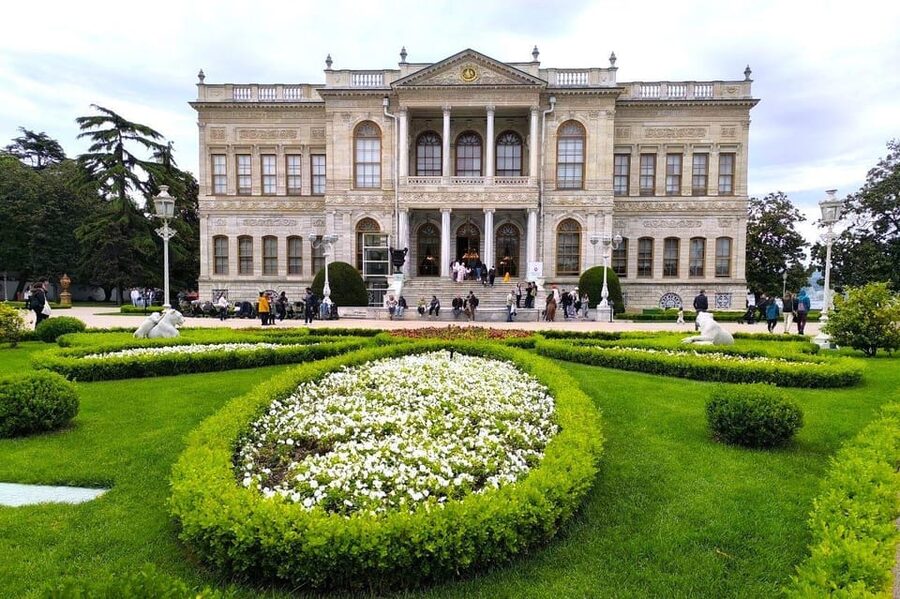
Dolmabahçe Palace tells a different Ottoman story from Topkapı Palace. Topkapı feels older, more layered, and more connected to the early and middle Ottoman court. Dolmabahçe reflects the empire’s later years, when the sultans favored European-style decoration, formal ceremony, and grand state rooms.
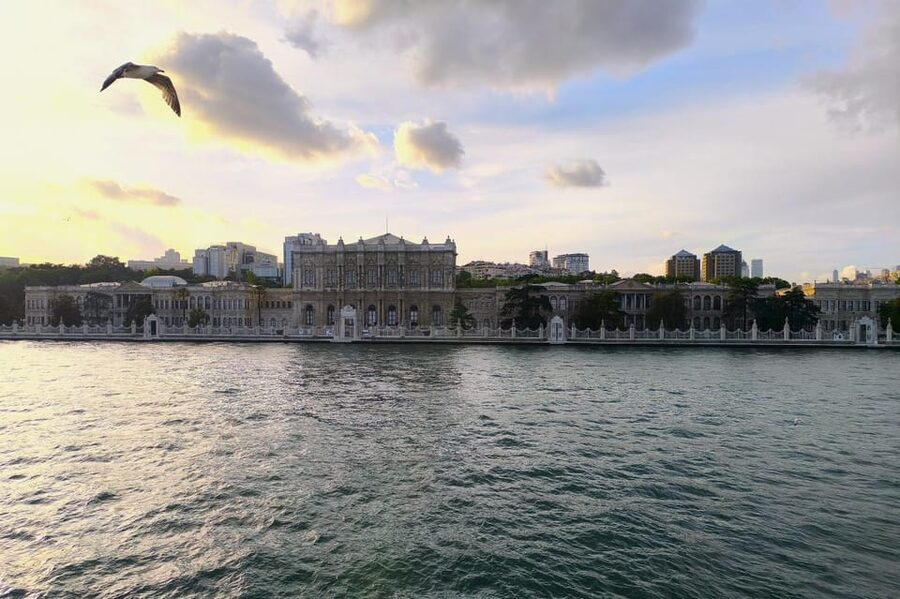
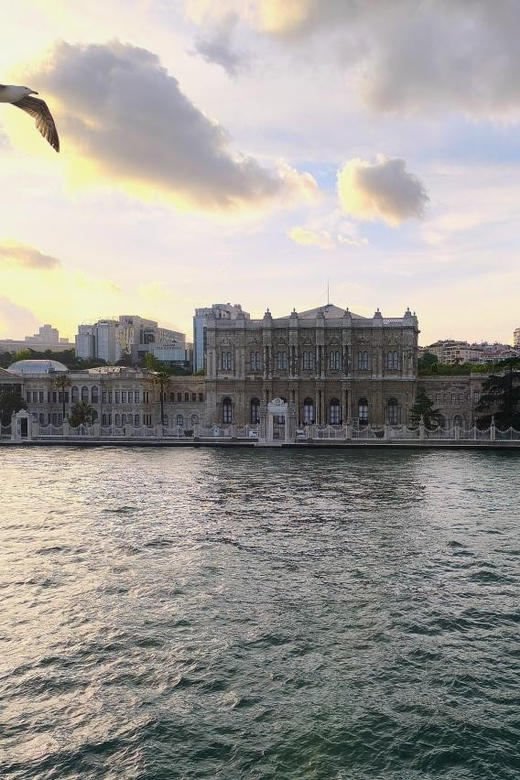
The palace sits on the European shore of the Bosphorus. Its location gives the visit a pleasant rhythm: lavish interiors first, then gardens and water views outside. I find that combination more memorable than a palace visit limited to indoor rooms.
The building is designed to impress. Gold decoration, crystal chandeliers, formal staircases, polished furnishings, and oversized halls all point to royal power. The style may feel excessive, but that excess is the point. Dolmabahçe was meant to show that the Ottoman court could compete with Europe’s grandest palaces.
The palace is not a small stop. You will walk through a large complex, and the visit can become tiring if you rush from room to room. Give yourself time to pause, listen to the audio stops, and look at the details rather than treating the palace as a quick photo stop.
More Dolmabahce Palace visits:
- Dolmabahce Palace & Harem Fast-Track Entry with Audio Guide
★ 4.6 · 966 reviews - Istanbul: Dolmabahce Palace & Harem Skip-the-Line Entry
★ 4.7 · 488 reviews - Istanbul: Dolmabahce Palace & Harem Skip-the-Line Entry
★ 4.5 · 401 reviews
Getting inside with the electronic ticket
You go directly to Dolmabahçe Palace on your own. There is no meeting with a guide, group transfer, or organized walk from another part of Istanbul.
At the entrance, use the left-side security line and then proceed to scan your ticket. Skip-the-line access helps you avoid the ticket-purchase queue, but it does not allow you to bypass security. This distinction matters during busy periods. You may move quickly through the ticket area but still need to wait briefly for the security check.
Keep the QR code for every person in your party ready. Saving a ticket in a phone wallet may not be enough if the QR code is not clearly visible. I would keep the original email accessible, since the instructions and ticket attachments can sometimes be confusing, especially when several tickets arrive together.
Tickets are sent by email one day before the selected visit date. Check your inbox before leaving for the palace, and do not rely only on a screenshot unless the QR code is easy to scan.
Before entering, you exchange your passport or ID card for an audio guide device. Keep the device number safe. You need it to reclaim your ID when you leave. This is a small but important detail, since losing track of the number can make the exit process awkward.
The Selamlık: formal rooms built for state power

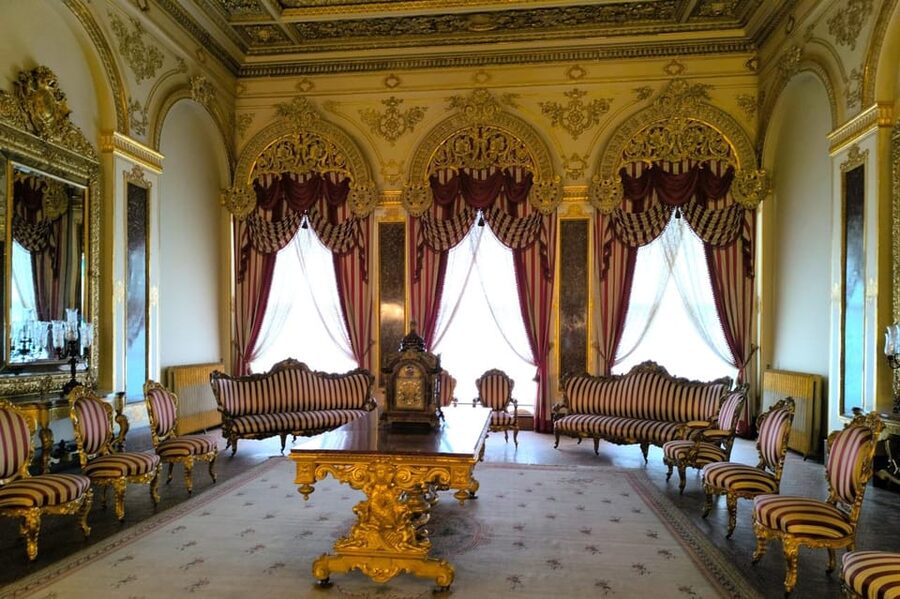
Begin with the Selamlık, the formal section of the palace. This was the part used for official business, ceremonies, and state affairs. It is also where Dolmabahçe makes its strongest first impression.
Expect wide halls, elaborate ceilings, gold details, and large crystal lighting fixtures. The Crystal Staircase is one of the most recognizable features, although access and visibility can change if restoration work is taking place. One visitor found the staircase partly boarded off during a visit, so it is wise to keep expectations flexible when a famous feature is under repair.
The ceremonial hall is another major highlight. Its scale is hard to appreciate from a quick glance, so stop and listen to the relevant audio explanation before moving on. The enormous Bohemian crystal chandelier is the centerpiece, and it captures the palace’s taste for theatrical display better than almost anything else.
The interiors are generally viewed from designated paths rather than entered freely. You may glimpse into rooms from behind ropes or barriers instead of walking across them. That protects the furnishings, but it can also make the indoor visit feel less intimate, especially when other people are gathered at the viewing points.
This is where the audio guide earns its place. Without it, you see chandeliers, furniture, and decorated rooms but may miss why the space mattered. With it, the rooms become easier to connect to court life, official ceremonies, and the final period of Ottoman rule.
The audio guide is available in English, French, German, Russian, Italian, Spanish, Polish, Arabic, Chinese, and Turkish. Its quality and operation may vary. Some people find it clear and easy to follow, while others have reported faulty equipment or incomplete language availability. If you specifically need Polish, confirm it at the audio desk rather than assuming it will be available simply because it appears among the listed options.
The Harem: a quieter look at palace life
The Harem was the private section where the sultan’s family lived. It has a different mood from the Selamlık. The formal state rooms are about ceremony and public authority, while the Harem gives you a better sense of domestic life within the imperial household.
The rooms are ornate but generally feel more personal and contained. The audio guide helps explain how the family areas differed from the spaces used for government business. I would not skip the Harem simply because the Selamlık contains the largest rooms. It adds the human side of the palace story.
The Harem also gives the visit better balance. If you only see the grand ceremonial rooms, Dolmabahçe can seem like a display of wealth with little connection to daily life. The family quarters show how the palace functioned as a home as well as a political center.
That said, the Harem does not offer the same dramatic scale as the main ceremonial areas. If you have limited energy or very little time, the Harem is the smaller and more manageable section. If you have come to understand the whole palace, visit both.
Plan on roughly three hours for a steady visit through the palace and Harem. With garden time, a cafe break, and the Painting Museum, four hours is reasonable. One particularly useful detail is the cafe between the palace and Harem areas, where you can stop for sandwiches and drinks rather than leaving the grounds immediately.
A few more tours and experiences worth a look
- Istanbul: Hagia Sophia Skip-the-Line Ticket & Museum Option
★ 3.7 · 4,958 reviews - Istanbul: Basilica Cistern Skip-the-Line Entry Ticket
★ 4.6 · 2,270 reviews - Istanbul: Hagia Sophia Skip-the-Line Ticket and Audio Guide
★ 4.3 · 2,246 reviews - Istanbul: Hagia Sophia Skip-the-Line Ticket with Audio Tour
★ 4.4 · 1,767 reviews
The Painting Museum and Ottoman art
The Painting Museum completes the visit with a change of subject. Instead of focusing mainly on architecture and royal rooms, it presents Ottoman art and paintings connected to the period.
This stop is valuable if you want more than ornate interiors. The paintings give you another way to understand how the Ottoman court viewed itself, its ceremonies, its people, and its changing relationship with Europe. It also helps explain why Dolmabahçe looks so different from older Ottoman sites.
The museum may not hold the same immediate visual punch as the ceremonial hall. Still, it rewards anyone interested in art, court culture, or the transformation of the empire during its later years. Since the ticket includes it, I would visit rather than treating it as an optional extra.
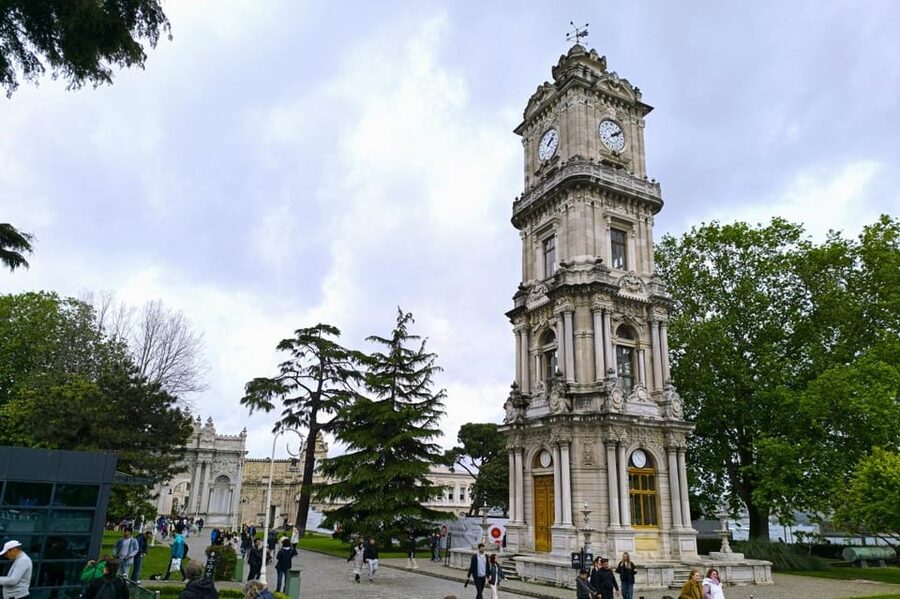
Conditions at related palace attractions can change. A clock museum and crystal pavilion were closed for restoration during one visit, despite being expected as part of the experience. Check what is open when you arrive, and do not assume every nearby building will be accessible just because it appears in general palace information.
Gardens, Bosphorus views, and the best outdoor moments
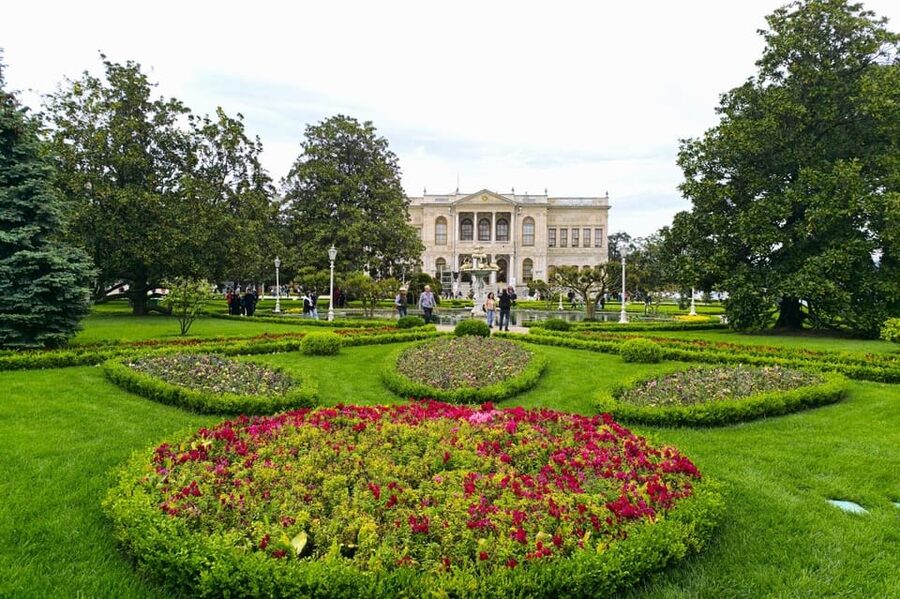
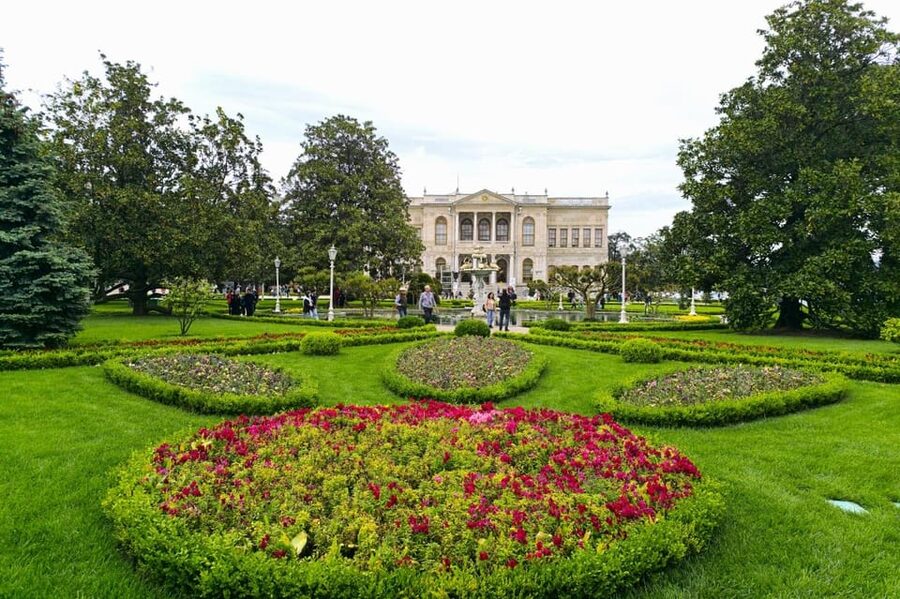
The gardens are one of the easiest parts of Dolmabahçe to underestimate. After the dark wood, gold, and crystal indoors, the open grounds provide breathing room. The setting beside the Bosphorus is especially appealing, with views across the water and carefully maintained planting areas.
You will find some of the best photography opportunities outside. Since indoor photography is prohibited, use the grounds for your palace pictures. The exterior views, gardens, waterfront setting, and swans give you plenty to remember even if you cannot photograph the rooms.
I would visit the outdoor areas after the indoor sections, when you need a break, or before entering if you want to get oriented. The grounds also make Dolmabahçe a better choice for people who enjoy a slower visit rather than a strictly museum-like experience.
The setting adds real value to the admission cost. You are not simply walking through a decorated building. You are seeing how the palace relates to the Bosphorus and to Istanbul’s wider royal waterfront.
How useful is the audio guide?
For this ticket, the audio guide is not a minor extra. It is the main source of context because the palace has limited interpretive signage. I would strongly recommend using it, especially if you do not already know much about Ottoman history.
The guide is designed to help you understand what you are looking at as you move through the rooms. It explains the difference between the Selamlık and Harem, points out major features, and gives the palace a historical framework.
The system is not perfect. Equipment can malfunction, and the staff member distributing the devices may not always explain the process clearly. You should test the volume and make sure the device is working before moving far from the desk.
The audio guide also lets you control your own pace. You can pause, repeat sections, or move ahead when a room is crowded. That is a benefit over a live group tour, but you do not get the opportunity to ask questions or receive personal explanations.
If you want a private, flexible visit, this arrangement works well. If you prefer conversation and detailed answers, you may find the experience a little impersonal.
Is $62 good value?
At $62 per person, this is not a bargain admission ticket. The value depends on how much of the complex you use and how much time you have in Istanbul.
I think the price is reasonable for someone who wants the Selamlık, Harem, Painting Museum, and audio guide in one visit. Skip-the-line access can also matter when ticket queues are long. Several people have found advance tickets especially useful during busy periods, although queues may be short on quieter days.
The price is harder to justify if you only want a quick look at the main palace. Dolmabahçe is large, the indoor route can take several hours, and some rooms are seen only from behind barriers. If you are pressed for time, you may prefer to visit fewer sections or choose another major Istanbul sight.
The ticket becomes better value if you enjoy architecture, Ottoman history, palace interiors, and outdoor views. It is less appealing if your main goal is indoor photography, because cameras are not permitted inside.
A strong plan is to reserve enough of the day for a calm visit. Rushing through all three areas makes the admission feel expensive. Taking your time, using the audio guide, visiting the gardens, and stopping at the cafe gives you a fuller experience.
Timing, clothing, and what to bring
Dolmabahçe Palace is open from 9:00 AM to 5:30 PM, except Mondays. Last admission is at 3:30 PM, so do not arrive near closing and expect to see every section properly.
There is no strict dress code, but modest, comfortable clothing is the sensible choice. Cover your shoulders and knees, particularly in formal or ceremonial areas. Sleeveless tops, shorts, and strapless dresses are best avoided.
Bring your passport or ID card. You will need it for the audio guide deposit and to reclaim it afterward. Do not bring luggage or large bags, and leave baby strollers behind because they are not allowed.
The site is wheelchair accessible. Transportation is not included, so you arrange your own way to the palace and your own return. Since this is an independent entry ticket, allow extra time to find the entrance and complete security before your intended visit.
Who should book this experience?
I would choose this ticket for a first visit to Dolmabahçe if you want to see the palace thoroughly without joining a fixed group. It suits adults, older children who can manage a long indoor visit, architecture fans, and anyone curious about the Ottoman court’s later period.
It is also a good fit if you want language flexibility. The audio guide covers ten languages, though you should confirm your preferred language when collecting the device.
I would think twice if you dislike audio tours, have less than two hours, or mainly want photographs of the interiors. The palace is visually powerful, but the visit involves walking, waiting at viewing points, and following rules that protect the rooms and furnishings.
Should you book the Dolmabahçe Palace ticket?
Book it if you want the full Dolmabahçe experience: Selamlık, Harem, gardens, Bosphorus views, Painting Museum, and historical explanations in your own time. The palace is one of Istanbul’s most impressive reminders of the Ottoman court’s final, highly European style, and the setting adds plenty beyond the interiors.
Skip it if your schedule is tight or if you prefer Topkapı Palace’s older, more layered atmosphere. At $62, this ticket needs several hours to feel worthwhile. For the right visitor, skip-the-line entry and the audio guide make the visit much easier, but the real value comes from slowing down and seeing the whole complex.
FAQ
Is this a guided tour?
No. You enter Dolmabahçe Palace independently and explore with an audio guide. A live tour guide is not included.
What areas does the ticket include?
The ticket is valid for the Selamlık, Harem, and Painting Museum.
Does skip-the-line access avoid security checks?
No. You can skip the ticket-purchase line, but all visitors must pass through security.
What are the palace opening hours?
Dolmabahçe Palace is open from 9:00 AM to 5:30 PM, except Mondays. Last admission is at 3:30 PM.
Which languages are available for the audio guide?
The audio guide is listed in English, French, German, Russian, Italian, Spanish, Polish, Arabic, Chinese, and Turkish.
What do I need to bring?
Bring your passport or ID card. You exchange it for the audio guide and reclaim it when you leave.
Can I take photographs inside Dolmabahçe Palace?
No. Photography is not allowed inside, but there are many good photography opportunities in the gardens and outside areas.
Just added around Istanbul
- Istanbul Imperial & Bosphorus Tour – Incl. Lunch★ 5.0 · 62 reviews
- Istanbul to Cappadocia 2 Day Tour with Guide, Flights and Hotels★ 4.5 · 62 reviews
- A Magical Evening in Istanbul: Private City Tour★ 4.5 · 62 reviews
- Istanbul: Private Guided Tour★ 4.5 · 62 reviews
- 2-Days Private Tour to Gobeklitepe and Karahantepe from Istanbul★ 5.0 · 62 reviews
- Private 7-Hour Istanbul Tour with Red Carpet Treatment★ 4.7 · 62 reviews
- Istanbul Private Walking Tour: Highlights & Gems with a Local★ 5.0 · 63 reviews
- Small-Group Istanbul Old City Guided Tour★ 5.0 · 63 reviews
Dolmabahce Palace Tours, compared.
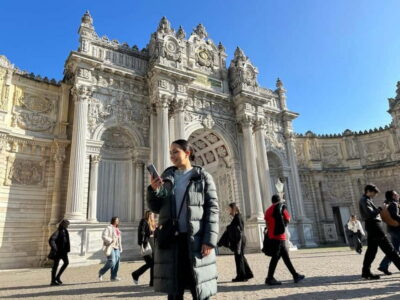
Dolmabahce Palace & Harem Fast-Track Entry with Audio Guide
Read our review →

Istanbul Boat Cruise and Dolmabahce Palace & Two Continents
Read our review →Browse the lists this tour appears in