
Reviewed · BASILICA CISTERN TICKETS
Istanbul: Basilica Cistern Skip-the-Line Entry & Audio Guide
Beneath Istanbul, water tells the story. I like the skip-the-ticket entry and the chance to hear a guide explain the Medusa heads before exploring at your own pace. The cistern is cool, atmospheric, and easy to fit into a busy day around Sultanahmet. The main drawback is that $54 per person is a serious price for a visit lasting about an hour, especially if you only want a quick look.
I also like the flexible format. Guides such as Oğuzhan Gürkcü, Emre Eriskon, and Adam have been praised for clear explanations, good organization, and a friendly manner. Just remember that security lines cannot be skipped, and the meeting point changes with the option you book.
In This Review
- Key points to know before booking
- Why the Basilica Cistern is worth seeing
- Entering through 52 stone steps
- Walking beneath the 336 columns
- The Medusa heads and the questions they raise
- Aqueducts, reservoirs, and Justinian’s water system
- Film connections and modern atmosphere
- Choosing the early 9:00 start
- What the $54 price really buys you
- Meeting points, tickets, and practical details
- Who will enjoy this format most
- Should you book the Basilica Cistern ticket?
- FAQ
- Where is the Basilica Cistern experience located?
- How long does the activity last?
- Does the ticket skip all lines?
- Will I receive a QR code for entry?
- What should I bring?
- Is a guide included?
- Is the audio guide available in English?
- Is hotel pickup included?
- Does the visit include internet access?
- Can I cancel the booking?
Key points to know before booking
- The 532 AD cistern is cathedral-size, with forest-like rows of columns, shallow water, colored lighting, and a cool underground setting.
- The guided portion is usually short, often around 30 minutes, followed by free time for photos and further exploration.
- The skip-line benefit applies to the ticket queue, not the mandatory security check at the entrance.
- The Medusa heads are the star sight, with their sideways and upside-down positions still prompting plenty of questions.
- The 9:00 starting time can be especially useful, since an early visit may bring a quieter cistern before crowds build.
- The audio guide and eSIM are useful extras, but the audio guide is optional and the internet access is limited in time.
Why the Basilica Cistern is worth seeing
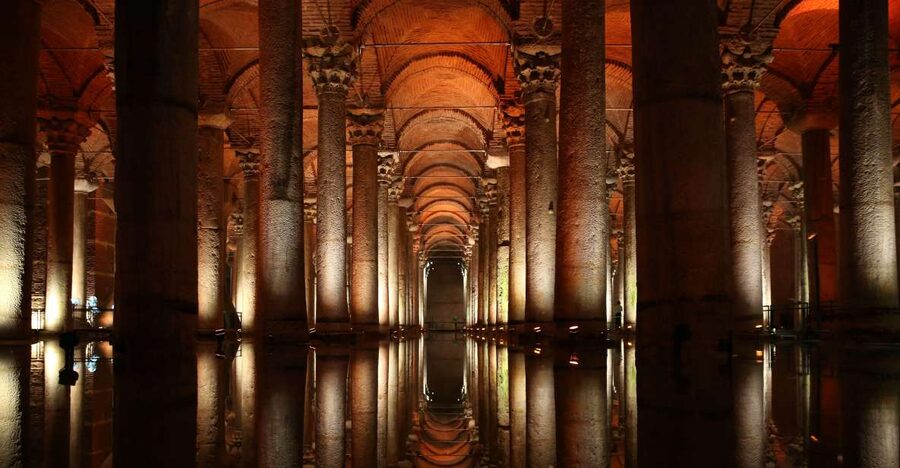
The Basilica Cistern is not a church, despite its name. It is an underground water-storage chamber built in the fourth century and enlarged in 532 AD during the reign of Emperor Justinian I. Its job was practical: supply water to the Great Palace and the surrounding imperial center.
That practical purpose makes the place more interesting, not less. You are not looking at a decorated palace built only for show. You are standing inside a huge piece of Byzantine infrastructure, designed to move and store water for a powerful city.
The scale is hard to grasp from the street. The cistern can hold up to 80,000 cubic meters of water, supplied through about 20 kilometers of aqueducts from a reservoir near the Black Sea. Once below ground, the regular grid of columns gives the room a calm, almost unreal quality.
I like attractions that explain how a city worked, and this one does. Istanbul’s famous mosques and palaces show imperial taste. The Basilica Cistern shows the engineering that helped keep that empire functioning.
More ways into the Basilica Cistern:
- Istanbul: Basilica Cistern Fast-Track Entry and Audio Guide
★ 4.6 · 7,521 reviews - Istanbul: Basilica Cistern Skip-the-Line Entry Ticket
★ 4.6 · 2,270 reviews - Istanbul: Basilica Cistern & Hagia Sophia Combo Ticket
★ 4.6 · 1,990 reviews
Entering through 52 stone steps
Your visit begins at the entrance, where you descend 52 stone steps into the cistern. The start can feel busy, particularly at popular times, and everyone must pass through security. The skip-the-line ticket does not remove that check, so do not assume you will walk directly underground.
Once inside, the temperature usually feels noticeably cooler than outside. Several people have found the cistern a welcome break from Istanbul’s hot, humid weather. That makes this a smart stop during the middle of the day, when an outdoor sightseeing plan can become tiring.
The firebrick walls are about four meters thick and covered with waterproofing mortar. Those details help you picture the work involved. This was not a shallow cellar. It was a carefully sealed underground reservoir built to protect the city’s water supply.
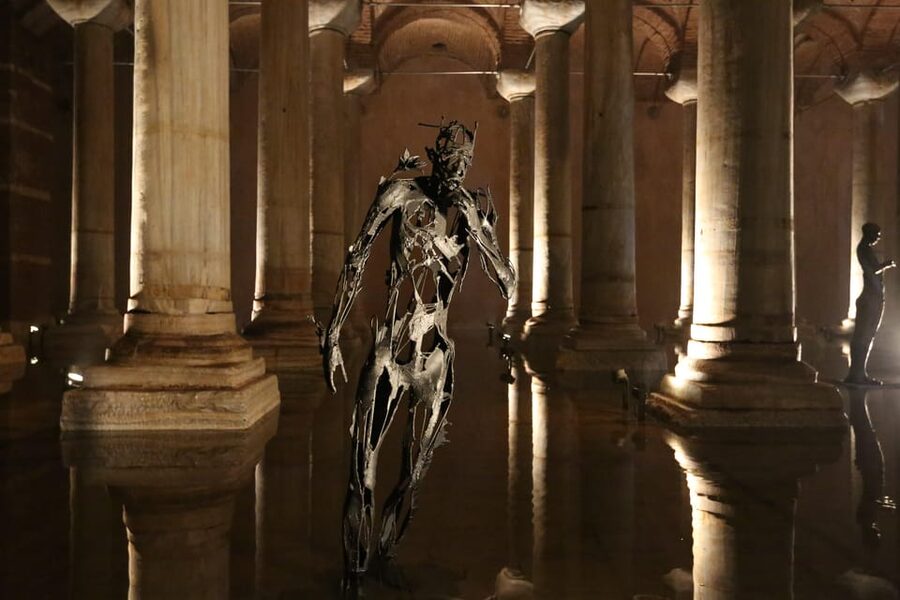
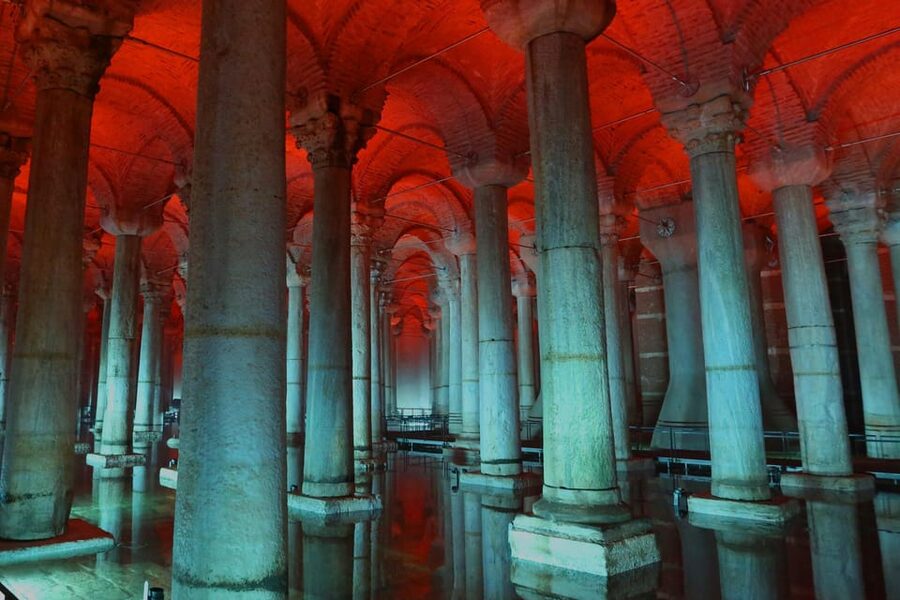
The lighting adds drama, with colored illumination reflecting off the columns and water. It also creates one small complication: the modern lighting and occasional art installations can make the cistern feel more like a cultural venue than an untouched archaeological site. I found that some people enjoy this theatrical approach, while others prefer the stonework without contemporary additions.
Walking beneath the 336 columns
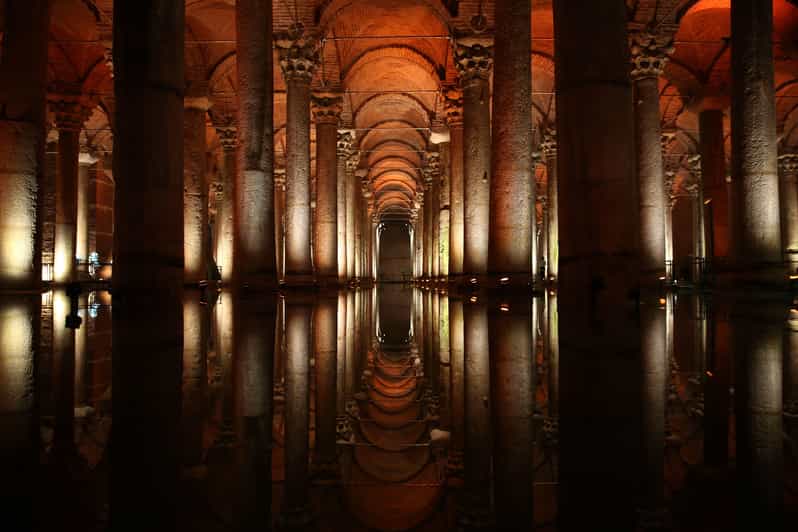
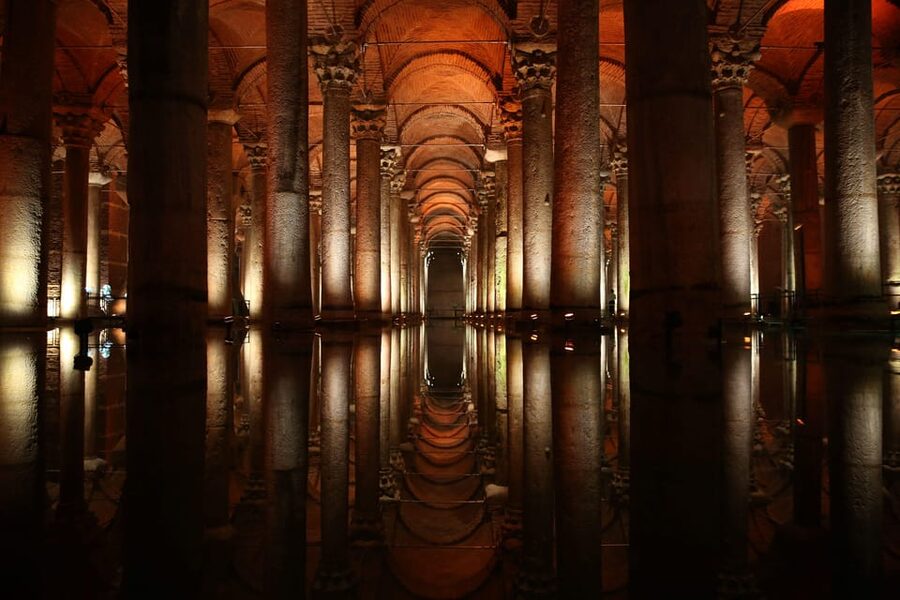
Inside, you follow walkways through the cathedral-size chamber. The cistern’s repeated columns create the strongest visual effect. Their height, spacing, and reflections make the space feel much larger than the entrance suggests.
The visit is not a long hike. A guided introduction can take around 30 minutes, and you may then have time to remain inside, take photographs, and look more closely at the details. The full activity is listed at one hour to 75 minutes, though some arrangements may allow you to stay longer in the cistern after the formal explanation.
I prefer this format to a nonstop group walk. You get the useful background first, then you can slow down at the spots that interest you. If you want photographs, that free time matters. If you are short on time, the whole stop can fit neatly between Hagia Sophia, the Blue Mosque, and Topkapı Palace.
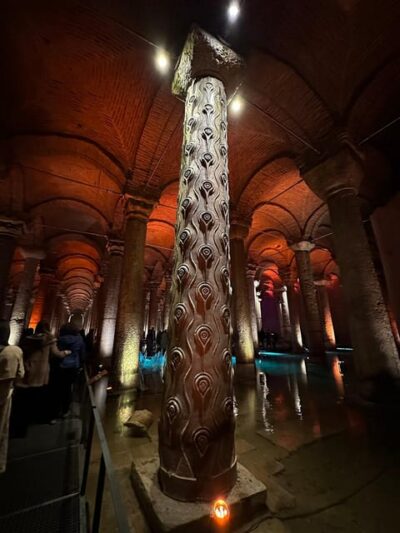
One guide, Adam, has been praised for showing the main features, including the Medusa heads and the so-called Tears Column. Other guides, including Oğuzhan and Emre, have been singled out for strong storytelling, humor, and well-organized explanations. The guide quality can vary by departure, but the best guides make the building much easier to understand.
The Medusa heads and the questions they raise
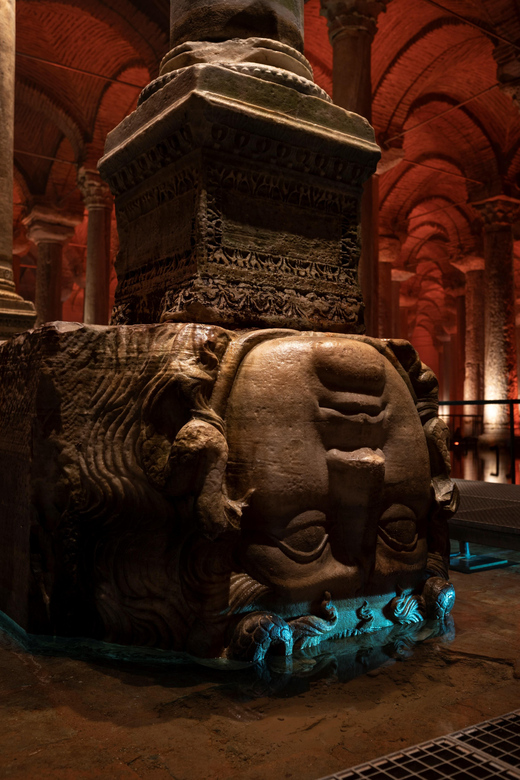
The two Medusa heads are the cistern’s most famous details. They come from Greek mythology and are used as column bases. One lies on its side, while the other is placed upside down.
No single explanation is provided here as proven fact, and that is part of the appeal. The unusual placement has led to plenty of theories. Some connect the position to the need to fit the blocks beneath the columns. Others see symbolic meaning in turning Medusa away or neutralizing her power.
A good guide gives you the known facts and leaves room for the mystery. This is where a guided visit earns its keep. Without context, you may notice two strange stone heads and move on. With an explanation, you start looking at the cistern as a place where Roman and Byzantine building materials were reused in ways that still puzzle people today.
The audio guide can cover this story if you choose the self-guided format. It is listed as optional and in English. If you prefer to set your own pace or avoid joining a group, that is a useful alternative. If you enjoy asking questions, hearing local context, and getting help with the main sights, choose the guide option instead.
A few more tours and experiences worth a look
- Istanbul: Hagia Sophia Skip-the-Line Ticket & Museum Option
★ 3.7 · 4,958 reviews - Istanbul: Hagia Sophia Skip-the-Line Ticket and Audio Guide
★ 4.3 · 2,246 reviews - Istanbul: Hagia Sophia Skip-the-Line Ticket with Audio Tour
★ 4.4 · 1,767 reviews - Istanbul: Basilica Cistern Skip-the-Line Entry & Audio Guide
★ 4.6 · 1,477 reviews
Aqueducts, reservoirs, and Justinian’s water system
The cistern’s water came through a large network, rather than from a nearby spring. Water was carried from the Eğrikapı Water Distribution Center in the Belgrade Forest toward the city.
The route included the 971-meter Valens Aqueduct and the 115-meter Mağlova Aqueduct, both linked with the water system built under Emperor Justinian. The cistern could then store the supply until the city needed it.
These measurements are worth hearing on site because they change your sense of the building. You are not simply looking at a damp underground room. You are seeing one part of a long chain that brought water from outside Istanbul to the imperial heart of the city.
Ask your guide to connect the aqueducts with the cistern’s purpose. That explanation gives the columns, walls, and water a clear job to do. It also helps you appreciate why the site was built on such a large scale.
Film connections and modern atmosphere
Movie fans may recognize the Basilica Cistern from the James Bond film From Russia with Love. The film connection is a fun extra, but it should not be the reason you book the visit. The real attraction is the structure itself, with its long lines of columns and dim reflections.
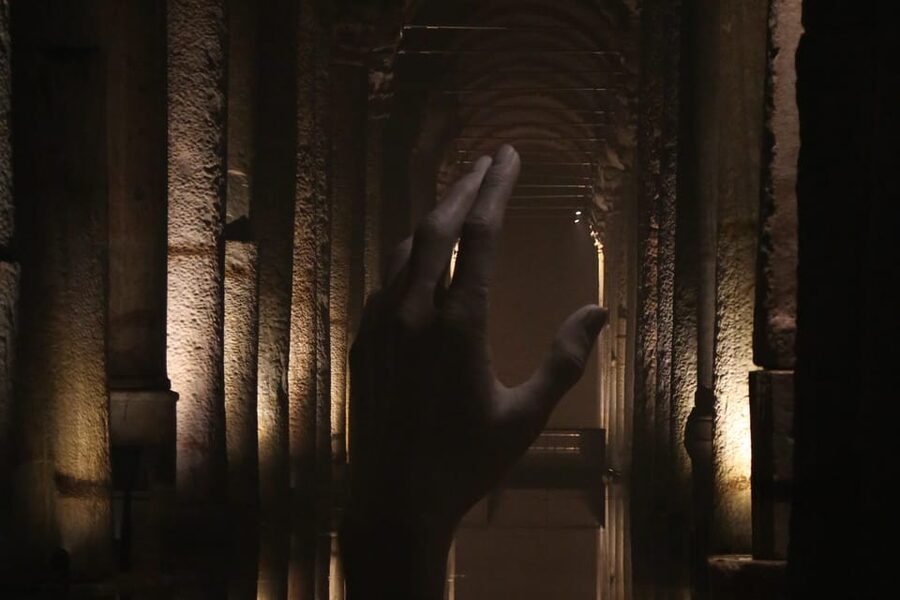
The modern presentation can be mixed. Colored lights make the architecture photograph well and give the cistern a memorable mood. At times, temporary sculptures or other art displays may appear in the space. Some people find these additions distracting, especially when they compete with the original stonework.
I would treat the installations as part of the current visit rather than expecting a completely bare archaeological site. The building remains the main event. If you like contemporary art, you may enjoy the contrast. If you want a strictly historical presentation, the extra displays may feel out of place.
Choosing the early 9:00 start
If a 9:00 departure is available, I would give it serious thought. An early visit can help you get inside before the day’s largest queues develop, and one well-organized group described being among the first visitors in the cistern.
That does not guarantee an empty room. Security still applies, and start times depend on availability. Still, early entry is often the best way to protect the quiet mood that makes the cistern special.
A later time may fit better if you are staying outside Sultanahmet or want a slower morning. The attraction works in either case, but the crowd level can affect your photographs and your ability to hear the guide clearly. One group had to cope with noise from a school visit, though the guide adjusted well.
What the $54 price really buys you
At $54 per person, this is not a bargain admission ticket. You are paying for more than access to the cistern: the package can include the skip-the-ticket entry, a guide or audio guide, and limited-time eSIM internet access. The value depends heavily on how long the ticket line is and how much help you want inside.
If the regular queue is long, the time savings can justify the extra cost. One person reported that the ordinary line would have taken more than an hour and a half. Another described walking in after only a short wait for the guide to collect the tickets.
If the queue is short, the price feels harder to defend. A self-guided visitor who already understands the site may prefer a cheaper entry method, if available. The guided option makes the most sense for a first visit, a tight schedule, or anyone who wants the Medusa heads and water system explained without reading up beforehand.
The eSIM is a modest bonus rather than the main reason to book. Internet access is limited in time, so treat it as a useful connection aid for meeting up or checking maps, not as a full replacement for your regular mobile plan.
Meeting points, tickets, and practical details
The meeting point depends on the option you select. Check the exact instructions carefully, and allow enough time to find the guide. Several departures have been praised for clear meeting arrangements and guides who were waiting on time.
The QR code link for your entry tickets is sent in a separate email by Istanbul Tourist Pass. Keep an eye on your inbox and have the code ready. You must bring a passport or identity card.
There is no hotel pickup. The activity begins at the stated meeting point and ends back there. Since the visit is centered in Istanbul’s historic district, plan your surrounding sightseeing with that fixed start and end in mind.
Free cancellation is available up to 24 hours in advance for a full refund, and you can reserve now while paying later. Those terms help if your Istanbul plans are still shifting, but you should still check the exact option and start time before confirming.
Who will enjoy this format most
I would recommend this for a first-time visitor who wants a clear introduction without committing to a long city tour. The cistern is compact enough for a quick visit, yet complicated enough that a good explanation adds real value.
It also suits families and mixed groups. A guide can keep the visit moving, answer questions, and then let everyone explore independently. The cool interior is welcome during hot weather, though the entrance security and 52 steps are worth noting when planning your day.
This is less ideal if you dislike organized meeting points, already know the cistern well, or are watching every dollar. You may not need a guide for a second visit. The $54 fee is easiest to justify when it saves substantial queue time and gives you a strong guide.
Should you book the Basilica Cistern ticket?
Book it if you want the famous underground sight with less time spent in the ticket queue, clear historical explanations, and a little freedom to explore alone afterward. Try for the 9:00 start if your schedule permits.
I would choose the guided option for a first visit, especially if Oğuzhan, Emre, or another well-regarded guide is assigned. Choose the audio guide if you want privacy and a flexible pace. Skip it only if the price feels too high for a one-hour attraction or if you are comfortable waiting and arranging entry on your own.
The Basilica Cistern is one of Istanbul’s most memorable stops because it works on two levels. It is visually striking, with reflections, columns, and Medusa heads. It is also a useful lesson in how an empire kept its capital supplied with water. That combination makes the cost easier to accept when the queue is long and your time is short.
FAQ
Where is the Basilica Cistern experience located?
It is in Istanbul Province, in the historic central area of Istanbul.
How long does the activity last?
The stated duration is about one hour to 75 minutes. Check the available starting times when booking.
Does the ticket skip all lines?
No. The ticket can skip the ticket line if that option is selected, but all visitors must pass through the security line.
Will I receive a QR code for entry?
Yes. The entry ticket QR code link is sent by separate email from Istanbul Tourist Pass.
What should I bring?
Bring your passport or identity card.
Is a guide included?
The experience can be taken independently with an audio guide or with a guide, depending on the option selected.
Is the audio guide available in English?
Yes. English is listed as an available audio guide language.
Is hotel pickup included?
No. Hotel pickup is not included.
Does the visit include internet access?
The package includes internet through an eSIM for a limited time.
Can I cancel the booking?
Yes. You can cancel up to 24 hours in advance for a full refund. Reserve now and pay later is also available.
Just added around Istanbul
- Istanbul to Cappadocia 2 Day Tour with Guide, Flights and Hotels★ 4.5 · 62 reviews
- Istanbul Imperial & Bosphorus Tour – Incl. Lunch★ 5.0 · 62 reviews
- A Magical Evening in Istanbul: Private City Tour★ 4.5 · 62 reviews
- Istanbul: Private Guided Tour★ 4.5 · 62 reviews
- 2-Days Private Tour to Gobeklitepe and Karahantepe from Istanbul★ 5.0 · 62 reviews
- Private 7-Hour Istanbul Tour with Red Carpet Treatment★ 4.7 · 62 reviews
- Istanbul Private Walking Tour: Highlights & Gems with a Local★ 5.0 · 63 reviews
- Private Istanbul Airport Transfer to Blue Mosque Sultan Ahmet★ 5.0 · 63 reviews
Basilica Cistern Tickets, compared.
Blue Mosque, Hagia Sophia, & Basilica Cistern Tour
Read our review →
Blue Mosque, Basilica Cistern, & Hagia Sophia Tour
Read our review →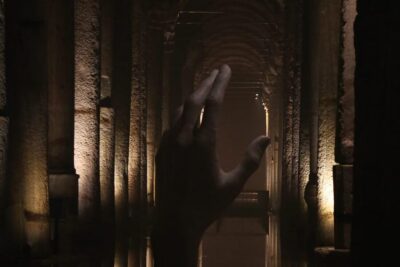
Basilica Cistern Skip-the-Line Entry & Audio Guide
Read our review →
Topkapi, Hagia Sophia and Basilica Cistern Tour
Read our review →
Basilica Cistern &Topkapi Palace &Hagia Sophia Combo Tickets
Read our review →
Basilica Cistern Guided Tour & Skip the Line Ticket
Read our review →Browse the lists this tour appears in