
Reviewed · CRUISES & BOAT TOURS
Full Day Private Guided Istanbul Tour From Hotel or Cruise Ships
Istanbul rewards a flexible plan. This private tour links the city’s grandest monuments, markets, waterfront sights, and older neighborhoods with a local guide, giving you room to shape the day around your interests. I like the private format, which lets you ask questions and adjust the pace, and I like the option of meeting at a central hotel or cruise port on foot. The main drawback is that the long list of stops can look more generous than a seven or eight-hour day really allows.
The advertised price is $67 per person, before admissions, food, drinks, and transport. That can be good value for a small private group, especially if your guide is as helpful as Kivanc, Kaya, Huseyin, or Atilla was on well-run days. Still, you should treat this as a customizable introduction, not a complete visit to every palace, church, market, and district named in the plan.
In This Review
- Key things to know before booking
- Why this tour works best as a private Istanbul overview
- Sultanahmet brings Istanbul’s biggest sights together
- Hagia Sophia and the Blue Mosque require patience and respect
- The Hippodrome explains the city’s Roman and Byzantine past
- Basilica Cistern adds a cool, mysterious pause
- Grand Bazaar and Spice Market offer two different shopping moods
- Dolmabahçe shows the Ottoman court’s European turn
- Galata, Taksim, and Istiklal show modern Istanbul
- Fener and Balat reveal a quieter side of the Golden Horn
- Pierre Loti Hill and the Golden Horn finish with broad views
- The Bosphorus option needs careful planning
- Price, transport, and pacing at $67
- Who should book this private day?
- Should you book it?
- FAQ
- How long does the Istanbul private tour last?
- What is the tour price?
- Is this a private tour?
- Where does the tour begin?
- Can cruise ship passengers join the tour?
- Are museum and attraction tickets included?
- Which attractions are closed on certain days?
- Can I cancel the tour for a refund?
Key things to know before booking
- This is a private walking tour: Your group has its own guide, and the day can be adjusted instead of following a rigid group schedule.
- The route covers far more than one day allows: Sultanahmet, the Grand Bazaar, Dolmabahçe, Galata, Taksim, Fener, Balat, Eyüp, and the Golden Horn are all possible themes, but not each can receive a full visit.
- Museum tickets cost extra: Topkapı Palace, Hagia Sophia, Basilica Cistern, Dolmabahçe Palace, Galata Tower, and the Bosphorus cruise are not included.
- Central pickup is simple: A guide can meet you on foot at a centrally located hotel or at the cruise port gate.
- Hagia Sophia may involve a wait: Guides do not have skip-the-line priority there, so security and ticket lines can affect the schedule.
- Plan around closing days: Dolmabahçe Palace closes Monday, Topkapı Palace closes Tuesday, and the Grand Bazaar closes Sunday.
Why this tour works best as a private Istanbul overview
Istanbul is not a city you can neatly tick off. Its historic center alone brings together Byzantine churches, Ottoman mosques, underground waterworks, imperial courtyards, and crowded shopping streets. Add the Bosphorus, Galata, Taksim, and the old quarters beside the Golden Horn, and even a full day becomes a quick survey.
That is why the private setup matters. You can tell your guide that you care more about Ottoman palaces than shopping, or that you want neighborhood walks rather than long museum visits. A private guide can also explain how to move between districts and offer practical help with public transport when walking alone would take too long.
The strongest part of the experience is the human element. Kivanc received especially warm praise for adapting to requests, explaining Turkish and Istanbul history, and helping during a rainy day. Kaya was valued for clear communication and useful local tips. Huseyin helped one group move comfortably from place to place during a six-hour visit.
You should also know that one poor experience involved inappropriate comments, impatience with photographs, and an itinerary that was cut short. The operator said that guide was no longer employed. That response is useful, but it also points to a practical truth: guide quality matters greatly on a private tour. If possible, request a guide with strong communication skills and tell the operator what you want to see before the day begins.
More Boat Trips in Istanbul
- Istanbul: Bosphorus Dinner Cruise & Show with Private Table
★ 4.8 · 44,561 reviews - Istanbul: Daytime or Sunset Sightseeing Cruise & Audio Guide
★ 4.8 · 14,430 reviews - Istanbul: Bosphorus Dinner Cruise with Turkish Night Show
★ 4.8 · 10,127 reviews
Sultanahmet brings Istanbul’s biggest sights together
The day commonly begins in Sultanahmet, the old city district where the most famous monuments sit close together. The German Fountain is used as the listed meeting point, near the Hippodrome and the Blue Mosque.
This opening area is ideal for orientation. In a short walk, you can discuss the Byzantine and Ottoman layers of Istanbul, then see Hagia Sophia, the Blue Mosque, the Hippodrome, Topkapı Palace, and the Basilica Cistern. The guide’s role here is not just to name buildings. A good explanation helps you understand why these places were built beside one another and how the old imperial center functioned.
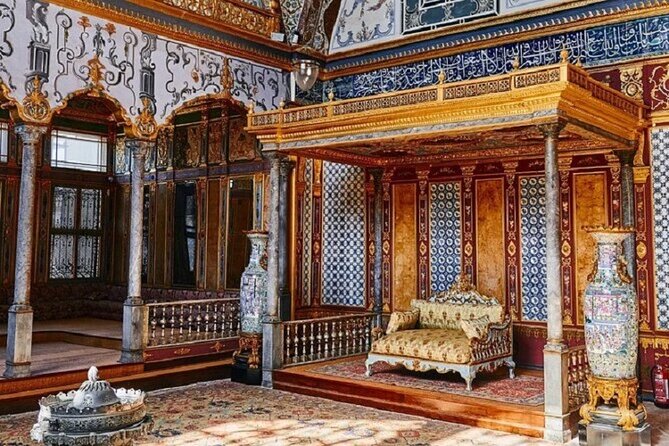
Topkapı Palace deserves more than the listed 30-minute stop if you want to enter its courtyards, treasury, or Harem. It served as the Ottoman administrative center, royal home, and educational base for about four centuries, beginning with Sultan Mehmet II. The palace is arranged around four courtyards, with open-air spaces that make it feel different from a single grand European-style residence.
At $67, entrance to Topkapı is not included, so budget for a separate ticket. Also check the day of your visit carefully because it is closed Tuesdays. If Topkapı is a priority, tell your guide early and be prepared to give up several shorter stops elsewhere.
Hagia Sophia and the Blue Mosque require patience and respect
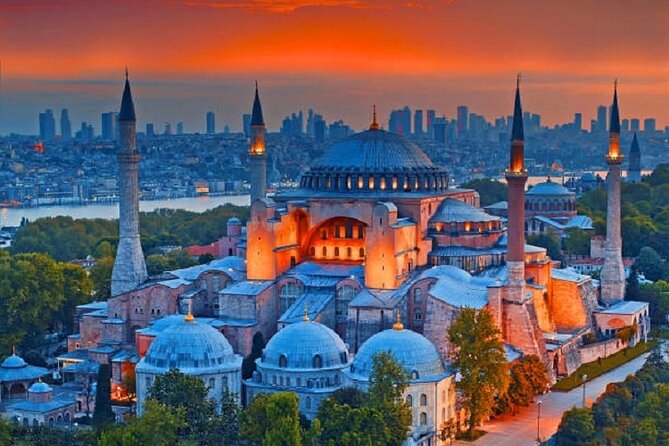
Hagia Sophia is one of the essential sights in Istanbul, but the visit may be less straightforward than the schedule suggests. The building was constructed three times on the same site and served as a Greek Orthodox cathedral until the Byzantine Empire ended. After the conquest of Constantinople in 1453, Sultan Mehmed II converted it into a mosque.
Its appeal comes from the meeting of eras: Byzantine mosaics, an enormous dome, Ottoman additions, and a long life as a museum before its current use as a mosque. You can expect security and ticket lines, since the guide does not have priority access there. A 30-minute allocation may shrink if the entrance is busy.
The Blue Mosque sits directly across from Hagia Sophia. Built for Sultan Ahmet I and completed in 1617, it is known for its handmade blue İznik tiles and six minarets. The interior visit is free, but it remains an active place of worship, not simply a museum stop.
Dress carefully. Women need to cover their heads, shoulders, and knees. Men need to cover their knees if wearing shorts or bermuda shorts above the knee. Scarves and wraps are available at mosque entrances for a charge, so carrying your own scarf is the simpler choice.
The Hippodrome explains the city’s Roman and Byzantine past
The Hippodrome is now an open urban square, but it once served as a major center for public life. Your guide can point out three important monuments along its central area.
The Egyptian Obelisk was made in Egypt in the 16th century BC for Pharaoh Tuthmosis and brought to Istanbul by boat in the fourth century AD. The Serpentine Column originally stood at Delphi in Greece. Its three snake heads disappeared over time, though one is displayed in the archaeological museum.
The Column of Constantine also carries a story of loss. It was once covered in bronze and silver, but Crusaders stripped those materials in 1204, melted them, and made coins. These details make the Hippodrome more than a photo stop, even though 15 minutes is enough only for an explanation and a quick look.
A few more tours and experiences worth a look
- Istanbul: Full-Day Highlights Tour with Guide and Lunch
★ 4.6 · 1,662 reviews - From Istanbul: Full-Day Princes Island Tour with Lunch
★ 4.0 · 1,550 reviews - ISTANBUL BEST: Iconic Landmarks Full Day PRIVATE Guided City Tour
★ 5.0 · 1,032 reviews - Istanbul: Best of The City Full-Day Tour with Transfers
★ 4.6 · 616 reviews
Basilica Cistern adds a cool, mysterious pause
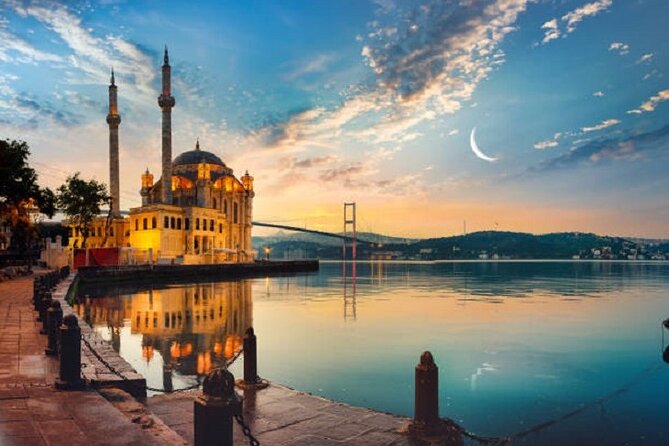
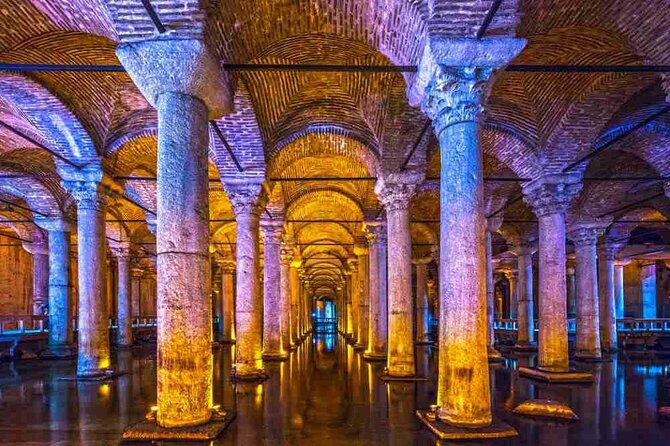
Below the streets near Hagia Sophia lies the Basilica Cistern, the largest and best excavated of the few underground cisterns open to the public. It could hold about 80,000 cubic meters of water and has appeared in films including From Russia with Love and Inferno.
The columns, dim setting, and underground scale provide a sharp change from the open squares and crowded streets above. I would make this a priority if you enjoy unusual places and want something beyond mosques and palaces.
Admission is extra, and the listed 30 minutes is a brisk visit. If you want time for photographs or a slower look, ask your guide to protect that part of the schedule.
Grand Bazaar and Spice Market offer two different shopping moods
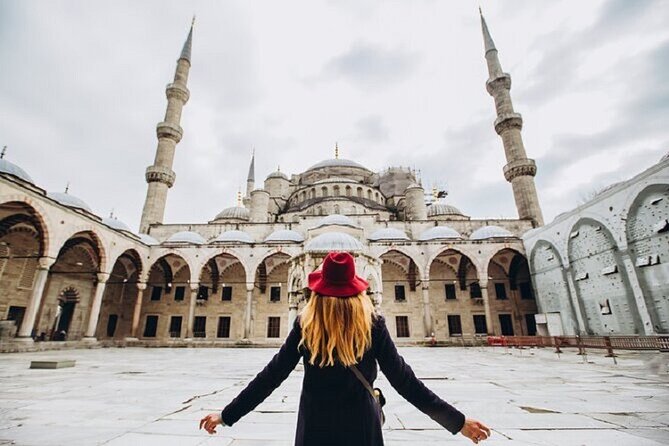
The Grand Bazaar dates from 1461, after the Ottoman conquest, and was Istanbul’s first covered market. Its streets were traditionally organized by trade, with different quarters devoted to different types of merchandise.
A guide can help you understand the layout and Ottoman atmosphere, but the experience still involves shopping pressure in some stores. You do not need to buy anything. Use the visit to look at the building, compare goods, and watch the flow of daily commerce.
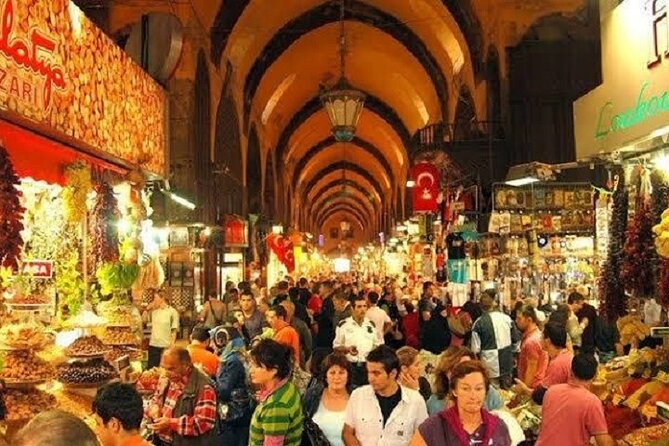
The Spice Market sits behind the New Mosque in Eminönü. Built in 1660 as part of the mosque complex, it was funded in part by taxes on Egyptian imports, which explains its other name, the Egyptian Bazaar. Traditional spice merchants still occupy many of its roughly 100 shops.
The two markets are worthwhile, but visiting both in half an hour each leaves little room for a relaxed browse. If shopping is not important to you, ask for more time at a palace or neighborhood instead. The Grand Bazaar closes Sundays, so do not build your plan around it on that day.
Dolmabahçe shows the Ottoman court’s European turn
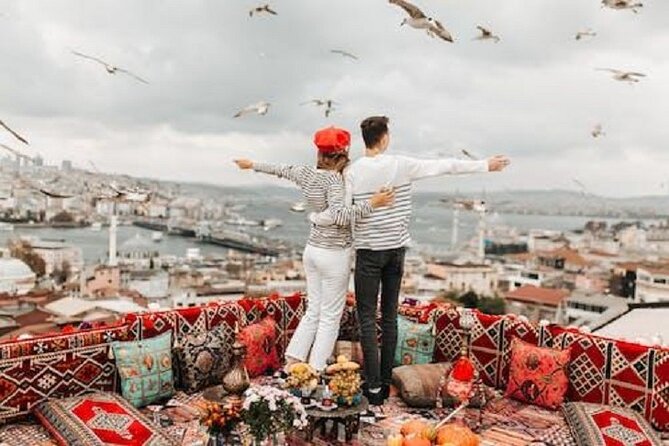
Dolmabahçe Palace sits on the southern Bosphorus shore in Beşiktaş. Built in the mid-19th century, it served as a residence for the last six Ottoman sultans for varying periods.
Its Baroque, Rococo, and Neoclassical influences make it a striking contrast to Topkapı’s courtyards and older Ottoman style. The palace was renovated and converted into a museum in 1984. A one-hour stop is more realistic here than at many of the shorter entries, but admission remains extra.
Dolmabahçe closes Mondays. If you want to see both Ottoman palaces inside, you should confirm the opening days and accept that other districts may need to be removed from the route.
Galata, Taksim, and Istiklal show modern Istanbul
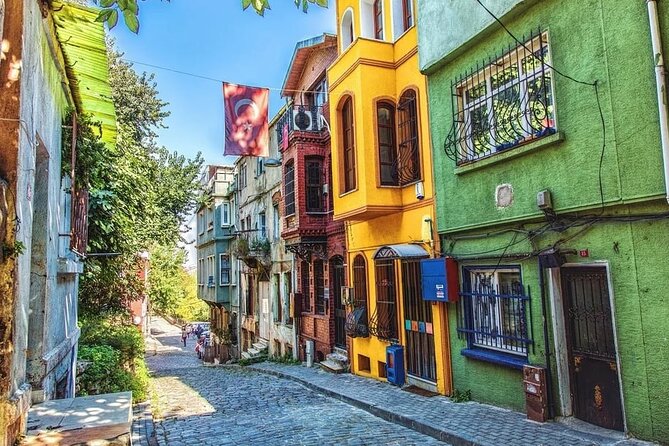
Galata Tower is the most important surviving structure from the Genoese colony. First built in the 14th century, it rises above the Golden Horn entrance and has been restored and reused many times.
The approach is part of the appeal. Small streets, brick paving, boutiques, and cafés give this part of the city a more European feel than Sultanahmet. The listed half-hour visit is enough to see the tower and neighborhood, but entrance to the tower costs extra.
Taksim Square gives you a different picture of Istanbul. Its name refers to the old distribution of water to city neighborhoods. Today, the area connects historic references with commercial activity and Istiklal Street, one of the city’s best-known thoroughfares.
The old tram runs along Istiklal, which stretches from Taksim toward the Karaköy area. Ten or 15 minutes here is only a quick orientation. If you want shopping, cafés, or a proper walk along the street, tell your guide that this should be a main section of the day.
Fener and Balat reveal a quieter side of the Golden Horn
Fener and Balat are among the most rewarding areas for visitors who want more than headline monuments. Their steep cobbled lanes, colorful Ottoman houses, small workshops, cafés, and religious buildings create a village-like feel within the city.
Fener was home to Greek-speaking Jews during the Byzantine period and remains associated with Greek Orthodox life. Balat became home to Sephardic Jews expelled from Spain in the 15th century. Churches, synagogues, and mosques appear close together, reflecting the mixed communities that shaped this part of Istanbul.
The Fener Greek Patriarchate and the Church of St. George share a courtyard. The patriarchate has remained in Istanbul for more than seventeen centuries and continues as the mother church for around 300 million people worldwide. St. George’s is the fifth church to house the patriarchate since the 15th century.
The Bulgarian Orthodox Church, also called the Iron Church, was built from iron and steel for the Bulgarian community during the final years of the Ottoman Empire. Its restored interior and icon wall make it a worthwhile short stop.
The schedule allows only 10 minutes for several of these places. That is enough for a glimpse, not a full neighborhood walk. If Fener and Balat interest you, ask to focus there rather than trying to cover every central sight.
Pierre Loti Hill and the Golden Horn finish with broad views
Pierre Loti Hill is in Eyüp and is named for French writer Julien Viaud, who settled in Istanbul in 1876 and wrote at a coffeehouse here. The stop is linked with a romantic atmosphere and views over the Golden Horn.
The Golden Horn itself was once a trading harbor and residential area. During the Byzantine period, a large chain blocked its entrance to unwanted ships. Under Ottoman rule, Jewish immigrants from Spain lived along its shores, alongside Armenians, Greeks, Roma, and Turks.
These final stops help connect the city’s geography with its social past. They are especially useful if you have already seen the imperial center and want a broader sense of Istanbul’s neighborhoods. Since they lie away from Sultanahmet, reaching them can make an already ambitious day feel rushed.
The Bosphorus option needs careful planning
The plan includes a Bosphorus cruise described under the Bosphorus Bridge stop. From the water, you can view imperial palaces, historic mansions, and buildings on both the European and Asian shores.
The cruise is not included in the tour price, and transportation is also excluded. Confirm exactly what boat trip is intended, where it departs, how long it lasts, and how it fits with the walking route before you pay for any additional tickets.
For a first look at Istanbul, the Bosphorus can be a fine choice. It also consumes time that could otherwise go toward Topkapı, Dolmabahçe, or Fener and Balat. I would choose it if the water and city views matter more to you than another interior visit.
Price, transport, and pacing at $67
The $67 per-person price is attractive for a private guide, particularly if you are splitting the cost among several people. You are paying for personal attention and flexibility rather than a fixed group lecture.
The price does not include museum admissions, food, drinks, or transportation. The tour is described as a walking experience, though public transportation may be used when helpful and paid for by you. Wear shoes suited to cobbles, slopes, and a long day on foot.
Central hotel pickup is offered on foot. Cruise ship passengers meet the guide at the port gate on foot and must provide the ship name, docking time, disembarkation time, and reboarding time when booking. Hotels outside the central area may involve an extra pickup charge.
The experience is usually booked about 62 days ahead, suggesting that planning early is sensible. Free cancellation is available up to 24 hours before the start time. Poor weather or failure to meet a minimum number of participants can lead to a new date or a full refund.
Who should book this private day?
I would recommend it for first-time visitors, couples, families, and cruise passengers who want a guide focused only on their group. It is also a good fit if you want to ask many questions, adjust the route, or combine major monuments with one less familiar neighborhood.
It is less suitable if you want slow museum visits. The schedule names 20 stops, but a seven or eight-hour day cannot give each one proper attention. You will get more from the tour if you choose three or four priorities before meeting your guide.
Ask for a clear plan that accounts for closing days, entrance lines, walking time, and the cost of transport. Also tell the guide whether you want history, architecture, food, shopping, photography, or neighborhood life. The best reports from this experience came when the guide listened and adapted.
Should you book it?
Book this tour if you value a private guide and want a broad first look at Istanbul for $67 per person before admission costs. Its real strength is flexibility, not the promise of seeing every stop in one day.
I would prioritize Sultanahmet, one Ottoman palace, and either the Bosphorus or Fener and Balat. Request a guide such as Kivanc if available, confirm the route in advance, and leave room for lines and photographs. If you want depth, choose fewer sights. If you want orientation and local help on your first day, this can be a sensible starting point.
FAQ
How long does the Istanbul private tour last?
The tour lasts approximately seven to eight hours.
What is the tour price?
The listed price is $67 per person.
Is this a private tour?
Yes. Only your group participates in the private activity.
Where does the tour begin?
The listed meeting point is the German Fountain in Sultanahmet. If you book from a centrally located hotel, the guide can meet you there on foot.
Can cruise ship passengers join the tour?
Yes. Cruise ship passengers meet the guide on foot at the port gate. You must provide your ship name, docking time, disembarkation time, and reboarding time when booking.
Are museum and attraction tickets included?
No. Admission fees for museums and attractions are not included. This applies to places such as Topkapı Palace, Hagia Sophia, Basilica Cistern, Dolmabahçe Palace, Galata Tower, and the Bosphorus cruise.
Which attractions are closed on certain days?
Dolmabahçe Palace is closed Mondays, Topkapı Palace is closed Tuesdays, and the Grand Bazaar is closed Sundays.
Can I cancel the tour for a refund?
You can cancel at least 24 hours before the start time for a full refund. Changes or cancellations made less than 24 hours before the start time are not accepted for a refund.
Just added around Istanbul
- 2-Day Gallipoli and Troy Tour from Istanbul and return★ 5.0 · 17 reviews
- Sabiha Gokcen Airport Transfer Service (SAW)★ 4.0 · 17 reviews
- Best of Istanbul Full Day Private Tour With Guide★ 5.0 · 17 reviews
- Istanbul Princes’ Islands Boat Trip with Lunch★ 4.0 · 17 reviews
- Glories of Turkey 12-Day From Istanbul★ 5.0 · 17 reviews
- Istanbul: Bosphorus Morning or Sunset Yacht Tour with Snacks★ 4.9 · 17 reviews
- Full-Day Istanbul to Bursa Excursion With Cable Car★ 4.0 · 18 reviews
- Istanbul – Old City Tour★ 5.0 · 18 reviews
Cruises & Boat Tours, compared.
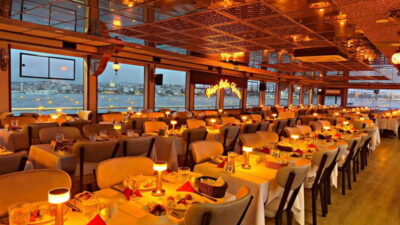
Bosphorus Dinner Cruise & Show with Private Table
Read our review →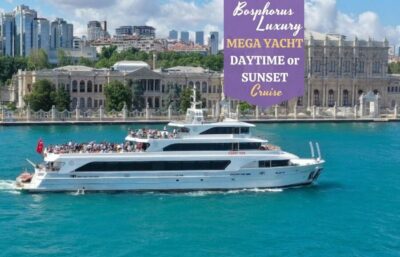
Daytime or Sunset Sightseeing Cruise & Audio Guide
Read our review →
Bosphorus Dinner Cruise with Turkish Night Show
Read our review →
Suluada Island Small-Group Boat Tour w/ Lunch
Read our review →
Sunset or Day Small-Group Yacht Cruise with Snacks
Read our review →
Jeep Safari & Green Lake Boat Trip with Lunch
Read our review →
Old City, Waterfalls, Olympos Cable Car, Boat
Read our review →
Bosphorus Sunset Cruise on Yacht with Live Guide
Read our review →Browse the lists this tour appears in