
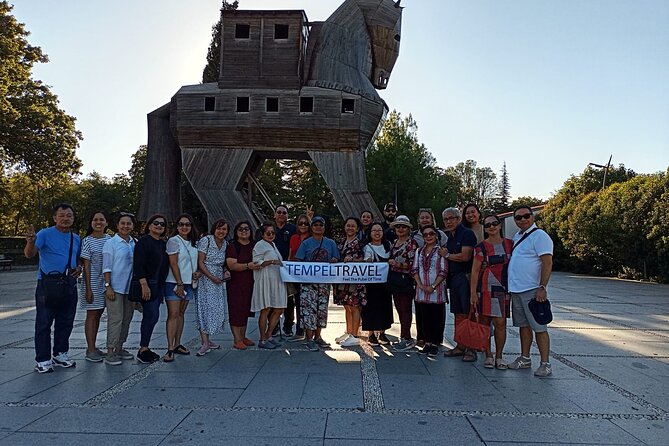
Reviewed · EPHESUS & VIRGIN MARY TOURS
Cappadocia & Ephesus & Pamukkale 4Days 3Nights Tour by Plane
Turkey packs a lot into four days. This fast-moving trip links Cappadocia’s fairy chimneys, Ephesus, and Pamukkale with domestic flights instead of punishing overnight bus rides. I like the strong mix of nature and ancient sites, and I like the local guides, including guides such as Hasan, Nazli, Esat, and Cemil, who are praised for patience, humor, and clear explanations. The main drawback is the pace: early pickups, long sightseeing days, several airport transfers, and limited free time leave little room for slowing down.
The price is $1,499 per person, which is a serious spend, but it covers four days of guided touring, domestic flights, airport transfers, museum admissions, and local transportation. I would look closely at the hotel arrangements before booking, since accommodations are not included, and I would confirm exactly what breakfast and dinner cover.
In This Review
- Key points to know before booking
- Why this four-day route works
- Day one: Cappadocia’s strange stone world
- Day two: underground cities and Rose Valley
- The optional balloon ride: worth the early alarm?
- Day three: walking through ancient Ephesus
- Day four: Pamukkale’s white terraces and Hierapolis
- Guides, groups, and the human side of the trip
- What the $1,499 price really buys
- Who should book this trip?
- Should you book it?
- FAQ
- How long is the Cappadocia and Ephesus and Pamukkale tour?
- Where does the tour begin?
- Are domestic flights included?
- Are entrance tickets included?
- Is the hot-air balloon ride included?
- Are hotels included in the price?
- Is breakfast included?
- How much walking is required?
- Can I cancel for a full refund?
Key points to know before booking
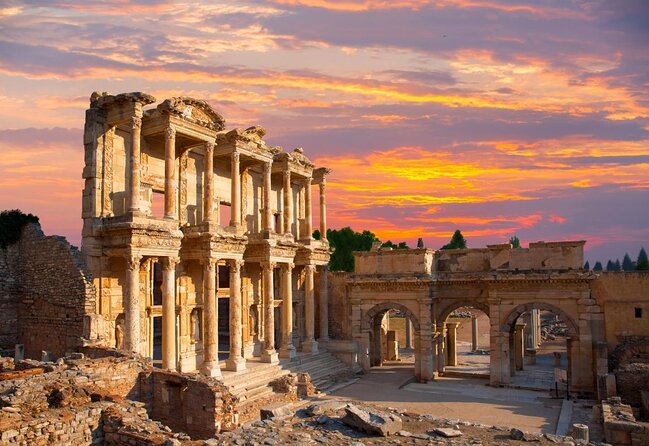
- Three major Turkish highlights in four days: You see Cappadocia, Ephesus, and Pamukkale without spending long hours crossing the country by bus.
- Cappadocia gets the most time: The first two days include Goreme, Avanos, Pasabag, Rose Valley, an underground city, and several viewpoints.
- The hot-air balloon ride is optional: The sunrise flight is not included in the listed price, but it is one of the area’s most popular add-ons.
- Ephesus is a serious walking visit: The route includes the Library of Celsus, Great Theater, Odeon, and several other ancient structures.
- Pamukkale requires barefoot walking: You should be ready to walk about half a mile over the travertines without shoes.
- Expect a tightly managed schedule: This suits you if you want efficient sightseeing more than long lunches or unplanned wandering.
Why this four-day route works
Turkey is large, and the three regions on this route are widely separated. Cappadocia is in central Anatolia, Ephesus is near the Aegean coast, and Pamukkale is inland from the coast. Reaching all three by road in four days would be exhausting, so the internal flights are the practical heart of the plan.
The route begins in Istanbul with a hotel pickup around 4:00 in the morning for a 6:55 flight. That is early enough to make the first day feel like two days stitched together. Still, flying saves valuable hours and gets you into Cappadocia in time for a full tour.
The experience is described as a small-group trip with a maximum of 15 people, while the additional information also describes it as private, with only your group participating. Those descriptions do not fully match, so I would ask the operator to confirm the group format before paying. Either way, the use of local guides and organized transfers should make the route easier than arranging each flight, taxi, admission, and guide yourself.
More ways to see Ephesus:
- 4 Days Turkey Tour – Cappadocia, Ephesus and Pamukkale Tour
★ 5.0 · 138 reviews - 6 Days Turkey Tour Cappadocia, Pamukkale, Ephesus, Gallipoli Troy
★ 5.0 · 109 reviews - Daily Ephesus & House of Virgin Mary from Istanbul – Small Group
★ 4.0 · 95 reviews
Day one: Cappadocia’s strange stone world
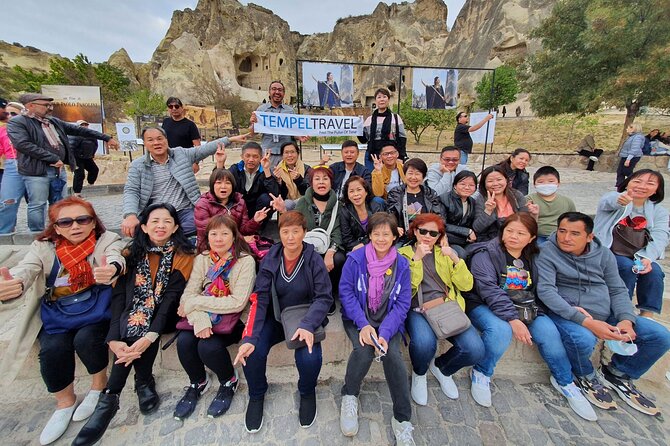
After arriving in Cappadocia, you are transferred to Goreme to meet your local guide. The first day follows the area’s classic Red Tour, with a long sightseeing program that can last about seven hours.
The Goreme Open-Air Museum is the most important early stop. Churches and chapels were cut into the soft volcanic stone, and their interiors contain frescoes that give the site more depth than a simple viewpoint visit. Plan to look closely at the painted walls, not just the rock exteriors. Admission is included, which is useful because this is one of the area’s main ticketed sights.
From there, the route moves through the visual high points of Cappadocia. Uchisar is described as a castle village, though you should think of it as a tall rock outcrop shaped by caves, weather, and human use. It offers the kind of improbable setting that makes Cappadocia feel unlike anywhere else on this itinerary.
Pasabag, also called Monk’s Valley, is a short listed stop but a major visual treat. Its tall fairy chimneys have multiple stone caps and narrow trunks, giving them a carved, almost comic appearance. The valley connects the geology of Cappadocia with its Christian past, since monks once used the rock formations as places of retreat.
Devrent Valley has a different appeal. It is called Imagination Valley because the rocks suggest animals and other shapes. Your guide can help you spot the forms, but allow yourself to disagree. One person’s camel may be another person’s seal.
Avanos provides a useful change of pace. This town sits beside the Kizilirmak, or Red River, whose clay deposits support a pottery tradition said to reach back to the Hittite period. You see local craftspeople working with the red clay, and the stop adds a human, working-town side to a day otherwise filled with cliffs and rock spires.
Love Valley finishes the visual tour with its unusual stone columns. The name refers to the formations themselves, which have a distinctive shape and make for one of Cappadocia’s most memorable photo stops.
After the tour, you are transferred to your Cappadocia hotel. Since the day starts before sunrise in Istanbul and continues through several sites, do not expect much energy left for a late evening. Comfortable shoes, water, and a light layer will help.
Day two: underground cities and Rose Valley
Day two begins with an optional hot-air balloon experience around 5:00 in the morning. After the flight, a champagne toast is offered at landing, followed by a transfer back to the hotel. You then check out and begin the day’s guided sightseeing around 9:30.
The schedule labels this day in two different ways, referring to both a Blue Tour and a Green Tour. The actual stops listed are Rose Valley, Cavusin, Ortahisar Castle, Kaymakli or Ozkonak Underground City, and Pigeon Valley. Confirm the final route with Tempel Travel because the names of regional tour packages can vary.
Rose Valley is the active part of the morning. You walk through the valley to see rock-cut churches, with the scenery changing as the path passes cliffs, caves, and open views. This is not a bus-window excursion. You need to be comfortable walking on uneven ground, and the morning will feel more rewarding if you bring proper footwear.
Cavusin was an old Greek village, known for Christian houses and churches. It gives you a closer look at how people adapted homes and places of worship to the stone around them. The visit is shorter than the main archaeological stops, but it helps connect Cappadocia’s natural forms with its lived past.
After lunch, the route continues to Ortahisar Castle. Like Uchisar, this is a rock citadel shaped by caves and human use. The storage caves are part of the story, showing that these dramatic formations were not simply admired from a distance. They were used for daily life and food storage.
The most striking stop for many people is Kaymakli Underground City, with Ozkonak offered as an alternative. At Kaymakli, you descend through rooms that included stables, cellars, storage areas, refectories, churches, and wineries. The site shows how much life could be organized below ground, but narrow passages and low ceilings may be uncomfortable if you dislike enclosed spaces.
Pigeon Valley brings you back into open air. Its dovecotes were built into the cliffs, and pigeon manure was used to fertilize vineyards. The viewpoint also includes cave homes and old Greek houses, with Uchisar and Ortahisar visible in the distance.
The tour is due to finish around 5:30 in the afternoon. You are then taken to the airport for an 8:30 flight to Izmir. This is an efficient connection, but it is also a demanding day. The balloon ride, if you choose it, means you start before dawn and finish with an evening flight.
The optional balloon ride: worth the early alarm?
The balloon ride is not included in the tour price, and the schedule marks it as optional. You should also understand that this activity depends on weather. The cancellation terms allow a different date or a full refund if poor weather cancels the experience, but that may not help much when you are moving on to Izmir the same evening.
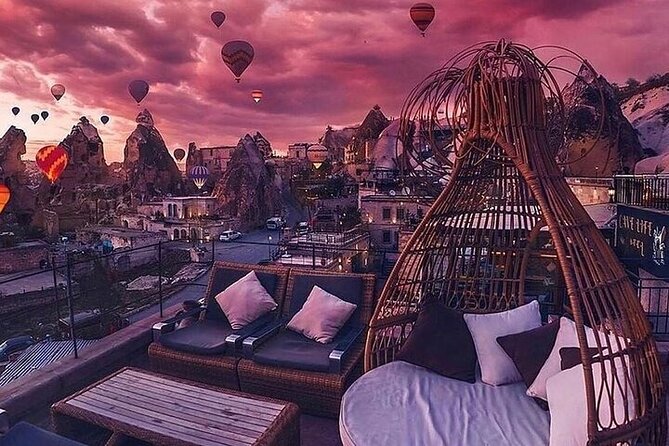
The appeal is obvious. You rise over Cappadocia at sunrise, with the valleys and rock formations below and other balloons in the air nearby. A champagne toast follows landing. Several accounts of the wider experience praise the balloon ride as a high point, but one also notes that weather prevented another planned activity. That is a useful reminder not to build your entire trip around one weather-sensitive add-on.
If you choose it, protect your sleep where you can. The second day already includes walking, sightseeing, and a late flight, so the balloon ride is best for you if the experience matters more than a relaxed morning.
More Pamukkale and Hierapolis day trips:
- 7 Days Best of Turkey Tour: Istanbul-Cappadocia-Ephesus-Pamukkale
★ 5.0 · 91 reviews - 5-Day Aegean Tour – Gallipoli, Troy, Ephesus, Kusadasi, Pamukkale
★ 4.5 · 86 reviews - Istanbul, Ephesus, Pamukkale and Cappadocia 8 Day Package
★ 5.0 · 83 reviews - Private 4 Days Turkey Tour from Istanbul to Cappadocia, Ephesus, Pamukkale
★ 5.0 · 80 reviews
Day three: walking through ancient Ephesus
After breakfast in the Kusadasi area, you set out for Ephesus. The principal visit takes about three hours and begins at the Magnesia Gate before following a downhill route through the ancient city.
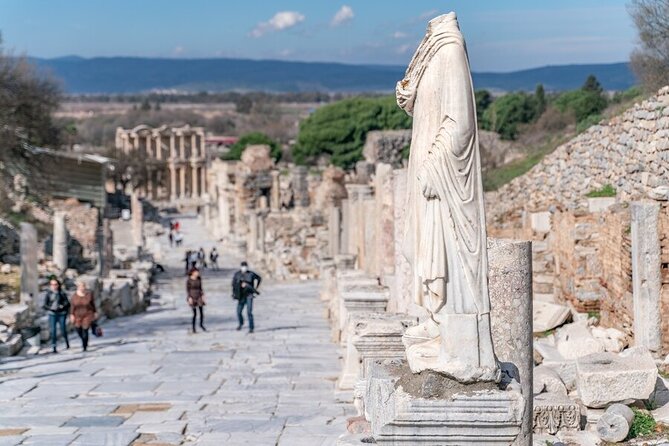
The downhill direction is helpful, since you see the ruins without starting with a steep climb. Your guide leads you past the Odeon, the Celsus Library, the Temple of Hadrian, the Fountain of Trajan, and the Great Theater.
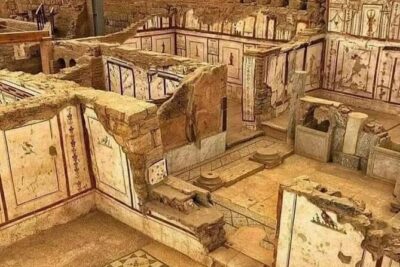
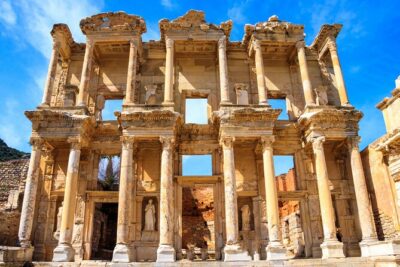
The Library of Celsus is the visual centerpiece, with its elaborate facade restored from surviving pieces. It is easy to focus on photographs, but I would take time to notice the scale of the street and the way public buildings were arranged along the route.
The Great Theater is another major moment. It once held about 24,000 people and is associated with St. Paul’s preaching to the Ephesians. The theater is still used for a local spring festival, which gives the ancient structure a continuing role rather than leaving it as a silent ruin.
The walk is mostly downhill, but Ephesus is an extensive archaeological site. Wear shoes with a firm sole, carry water, and bring protection from the sun. The tour includes admission, and having a guide matters here because a row of stones becomes far more interesting when you understand what each building did.
The next stop is Meryemana, the House of the Virgin Mary, on the slopes of Bulbul Mountain. The site is connected with the tradition that St. John brought Mary there after Christ’s death, and that she lived there until her death at age 64. For many people, this is a quiet religious visit after the scale and noise of Ephesus.
The Temple of Artemis is a very different kind of sight. The temple was built around 650 BC and was dedicated to Artemis, but only limited remains survive today. You should not expect a complete monument. Its value is in understanding that Ephesus once belonged to a much older sacred setting and that the site was financed by the wealthy king of Lydia.
Isa Bey Mosque adds a Seljuk-era layer to the day. Built in the late 14th century, it reflects the final period of the Seljuk Empire and shows how the region’s religious and political identity changed long after the classical city declined.
You then transfer to a Kusadasi or Pamukkale hotel. The exact overnight arrangement matters, since the following morning includes a three-hour journey to Pamukkale.
Day four: Pamukkale’s white terraces and Hierapolis
Pickup for Pamukkale is around 7:30 in the morning, with about three hours on the road and a refreshment stop along the way. The drive is not glamorous, but flying between the major regions makes this road segment manageable.
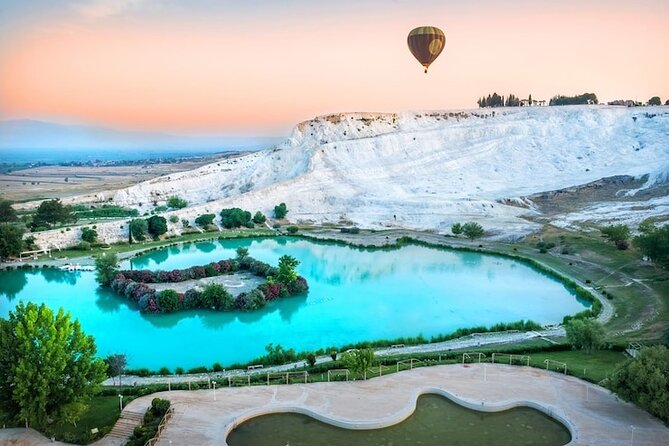
Pamukkale’s white travertines are formed by calcium-rich thermal water flowing over the plateau. The result is a series of pale terraces that look almost artificial from a distance. The color and water levels can vary, so the site may not look identical in every season.
The practical detail here is important: you must walk approximately half a mile over the travertines without shoes. Bring sunglasses, sunscreen, and a comfortable swimsuit. The stone can feel rough or warm underfoot, and you should not treat this as a quick photo stop.
The Sacred Pool and thermal springs add a spa-town element, with a garden and adjacent teahouse. Swimming access and exact conditions can vary, so confirm what is available on your date. Even if you do not enter the water, the terraces are the main reason to make the trip.
Above the pools is Hierapolis, the ancient sacred city. It was built on the solid limestone plateau created by the same mineral water that formed Pamukkale. The ruins help you see how the Romans and earlier communities used the thermal setting for religious and civic life.
The tour is scheduled to finish around 4:00, followed by a drive to Denizli Airport for a 7:20 flight back to Istanbul. On arrival, a pickup takes you to your hotel. This final transfer is short compared with the rest of the day, but you may feel the accumulated effect of four early starts and constant movement.
Guides, groups, and the human side of the trip
A good guide is especially valuable on this route because the sites span geology, Christianity, Greek and Roman culture, Seljuk architecture, and modern Turkish life. The guide names associated with positive experiences include Hasan, Nazli, Esat, Cemil, Safak, Seyfullah, and Duygu.
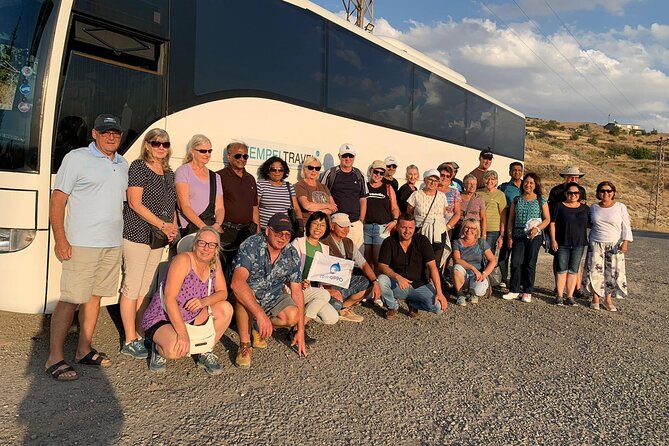
The praise is consistent in a few useful ways. Guides are described as patient, friendly, humorous, helpful, and good at explaining key events without making the group feel rushed. Esat is noted for working well with teenage children, while Cemil is praised for combining warmth with detailed stories about the sites.
There is also a practical caution. One account praised the organization and guiding but criticized the cleanliness of some hotel toilets. Since hotel bookings are not included, ask exactly what is being arranged, what standard to expect, and if you can select your own accommodation. That may be the best way to protect the overall value of the trip.
What the $1,499 price really buys
At $1,499 per person, this is not a budget tour. The value comes from convenience: domestic flights, airport pickups, guided sightseeing, transportation at each destination, entrance tickets, domestic taxes, and at least some meals or breakfast arrangements are included in the package description.
The information about meals is not perfectly clear. Dinner is listed among the inclusions, while the exclusions also mention dinner and drinks, and breakfast is marked optional in one place. Confirm the meal plan in writing before booking. You should also budget for personal expenses, drinks, tips for guides and drivers, and the optional balloon ride.
If you tried to arrange this route independently, you would need to coordinate several flights, airport transfers, regional guides, archaeological admissions, and hotel nights. The tour can be worthwhile if your time is short and you place a high value on having someone manage the connections.
It is less attractive if you want flexibility, slow meals, or several open afternoons. You pay for speed and structure, not spontaneity.
Who should book this trip?
I would recommend it to a first-time visitor with only four days beyond Istanbul who wants the country’s most famous sights in one organized package. It also suits families and small groups who prefer a guide, included admissions, and door-to-door transfers.
You should be comfortable with early mornings, airport routines, walking on uneven surfaces, and a three-hour road transfer to Pamukkale. The itinerary is not a good fit if you need long rest periods or want to explore one region in depth.
Before booking, confirm four points: the group size, the hotel arrangements, the breakfast and dinner plan, and the exact Cappadocia tour label for day two. Also ask how the operator handles a weather cancellation when your schedule is already moving between regions.
Should you book it?
Book this tour if your priority is seeing Cappadocia, Ephesus, and Pamukkale efficiently, with guides and transport handled for you. The strongest parts are the variety of sights, the useful local explanations, and the decision to fly between distant regions.
Skip it if you want a leisurely holiday. Four days is enough to sample these places, but not enough to linger. For the right person, the $1,499 cost buys rare efficiency. Just go in rested, pack light, wear good shoes, and confirm the details that are unclear before you commit.
FAQ
How long is the Cappadocia and Ephesus and Pamukkale tour?
The tour lasts approximately four days and three nights.
Where does the tour begin?
The tour begins with pickup from your Istanbul hotel, usually around 4:00 in the morning on the first day.
Are domestic flights included?
Yes. The itinerary includes flights from Istanbul to Cappadocia, Cappadocia to Izmir, and Denizli back to Istanbul, along with airport transfers.
Are entrance tickets included?
Yes. Museum and attraction entrance tickets are included, including Goreme Open-Air Museum, Kaymakli Underground City, Ephesus, the House of the Virgin Mary, the Temple of Artemis, Isa Bey Mosque, and Pamukkale.
Is the hot-air balloon ride included?
No. The hot-air balloon ride in Cappadocia is optional and is not listed among the included services.
Are hotels included in the price?
No. Hotel bookings are not included. You should confirm how hotel arrangements are handled before booking.
Is breakfast included?
The tour information lists breakfast as optional in one section, so you should confirm the exact breakfast plan with Tempel Travel.
How much walking is required?
You should expect walking at Goreme Open-Air Museum, Rose Valley, Ephesus, and Pamukkale. At Pamukkale, you must be able to walk about half a mile over the travertines without shoes.
Can I cancel for a full refund?
You can cancel up to 24 hours before the experience begins for a full refund. Changes or cancellations made less than 24 hours before the start time are not accepted or refunded, and weather or minimum-participant cancellations may result in a new date or full refund.
Just added around Istanbul
- 2-Day Gallipoli and Troy Tour from Istanbul and return★ 5.0 · 17 reviews
- Sabiha Gokcen Airport Transfer Service (SAW)★ 4.0 · 17 reviews
- Best of Istanbul Full Day Private Tour With Guide★ 5.0 · 17 reviews
- Istanbul Princes’ Islands Boat Trip with Lunch★ 4.0 · 17 reviews
- Glories of Turkey 12-Day From Istanbul★ 5.0 · 17 reviews
- Istanbul: Bosphorus Morning or Sunset Yacht Tour with Snacks★ 4.9 · 17 reviews
- Full-Day Istanbul to Bursa Excursion With Cable Car★ 4.0 · 18 reviews
- Istanbul – Old City Tour★ 5.0 · 18 reviews
Ephesus & Virgin Mary Tours, compared.
FOR CRUISERS: Skip The Lines PRIVATE EPHESUS TOUR &On Time Return
Read our review →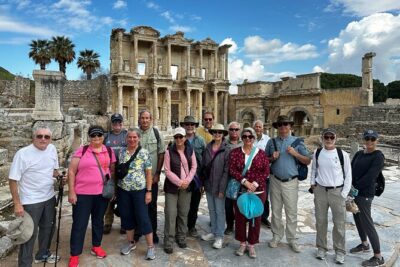
ALL INCLUDED: Ephesus Ruins, Mary’s House Tour incl ENTRY TICKETS
Read our review →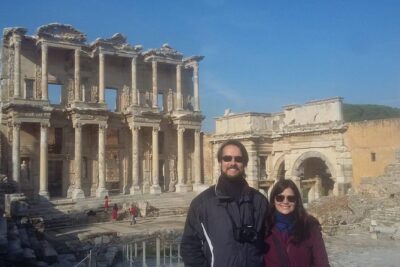
SKIP-THE-LINE: Group & Private Ephesus Tour ENTRY FEE & LUNCH
Read our review →
All Inclusive Private Access Ephesus Tour (SKIP-THE-LINE)
Read our review →Browse the lists this tour appears in