
Reviewed · CITY TOURS
Byzantion Walk Path and City Walls of Istanbul
Walls tell better stories. This private Byzantion Walk links Istanbul’s major land defenses with Yedikule, old gates, and the Chora Museum, giving you a clear route through centuries of Byzantine and Ottoman history. I like the way the tour focuses on places that are easy to miss on a standard Sultanahmet visit, and I like that the itinerary can be adjusted to your group.
The guide is English-speaking and the tour is private for up to 15 people, which makes questions and pacing easier. I also appreciate the friendly, flexible approach praised by several guests, especially from guides Taha, Ally, and Taja. The main drawback is physical: this is a walking-heavy outing around old fortifications, so it is not a good choice if you have leg problems or prefer a relaxed, mostly seated tour.
In This Review
- Key points at a glance
- Why Istanbul’s walls deserve a morning
- Yedikule and the Golden Gate
- Silivrikapı and the quieter gate route
- Mevlanakapı and the engineering of survival
- Chora Museum and Byzantine art
- A guide-led walk with room to adjust
- Price, group size, and what you receive
- Walking demands and useful planning tips
- Who will enjoy this experience most
- Should you book the Byzantion Walk?
- FAQ
- Where does the tour start?
- What time does the tour begin?
- Where does the tour end?
- How long does the experience last?
- Is the tour private?
- What language is the tour offered in?
- Is admission to Chora Museum included?
- Is Chora Museum open every day?
- Is lunch included?
- Can I cancel for a full refund?
Key points at a glance
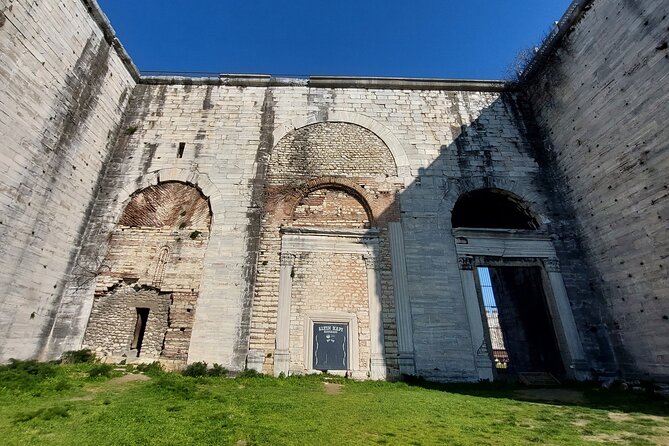
- Yedikule opens with Istanbul’s most imposing surviving wall section, including the Golden Gate and Ottoman-era dungeons.
- Theodosian Walls were a layered defense, with a moat, outer wall, and inner wall reaching about 12 meters.
- Silivrikapı and Mevlanakapı show quieter sections of the old land route, away from the city’s busiest sights.
- Chora Museum adds exceptional Byzantine art, but it is closed on Fridays and admission is extra.
- A private group of up to 15 gives you room to ask questions, request breaks, and shape the pace.
- The $372.07 group price can be good value for a full party, but less so for one or two people.
Why Istanbul’s walls deserve a morning
Istanbul’s famous monuments are concentrated around the old imperial center, but the city walls tell a different story. They show how Constantinople protected its landward side for more than a thousand years, and they make the city’s past feel practical rather than merely ceremonial.
The Theodosian Walls were not one simple barrier. They formed a defense system with a deep moat, an outer wall, and a huge inner wall. The inner wall rose about 12 meters, giving defenders height and a strong position against siege engines and attacking armies.
That structure is the real reason I like this experience. You are not just looking at old stones. You are learning how the defenses worked, why gates mattered, and how an army approaching the city would have faced layer after layer of resistance.
The tour begins at the German Fountain near Sultanahmet at 9:00 a.m. From there, you go to the Yedikule area by taxi or public transportation. The transport is not included as a separate feature, so you should expect to handle that local movement with the guide. The route then works north through Silivrikapı and Mevlanakapı before reaching Chora Museum.
The listed duration ranges from one to five hours, while the timed stops add up to about four hours and 15 minutes before transport and any breaks. In practice, you should plan for a substantial half-day, not a quick one-hour stroll.
More City Tours in Istanbul
- Istanbul: Private Turkish Bath, Massage, and Spa in Old City
★ 4.6 · 3,225 reviews - ISTANBUL BEST: Iconic Landmarks Full Day PRIVATE Guided City Tour
★ 5.0 · 1,032 reviews - Istanbul: Best of The City Full-Day Tour with Transfers
★ 4.6 · 616 reviews
Yedikule and the Golden Gate
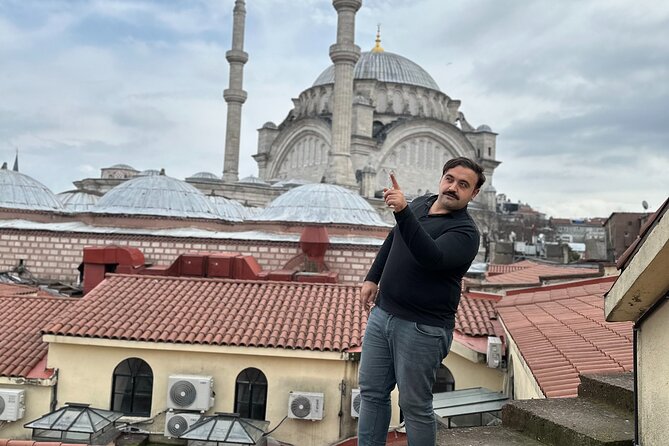
Yedikule is the strongest opening stop because it brings together the scale and political importance of Istanbul’s defenses. You see the largest part of the city walls mentioned in the route, along with the Golden Gate.
The Golden Gate was an important entrance in the city’s defensive system. During the Ottoman period, Yedikule also became associated with dungeons, giving the area a darker chapter beyond its Byzantine military role.
I would give this stop the full 90 minutes listed. The walls are large enough that rushing past them would miss the point. This is where a good guide can explain the layers, the gates, and the shift from Byzantine defenses to Ottoman use.
The setting also helps you understand the difference between seeing a monument and reading a city. The Golden Gate was not just a decorative entrance. It marked access, power, and control. Yedikule’s later use as a prison adds another human element to the stonework.
You should wear sturdy shoes here. The route involves walking around old defensive structures, and the tour is not recommended for anyone with leg problems. The guide’s willingness to offer breaks is useful, especially for anyone who enjoys history but does not want to race from one stop to the next.
Silivrikapı and the quieter gate route
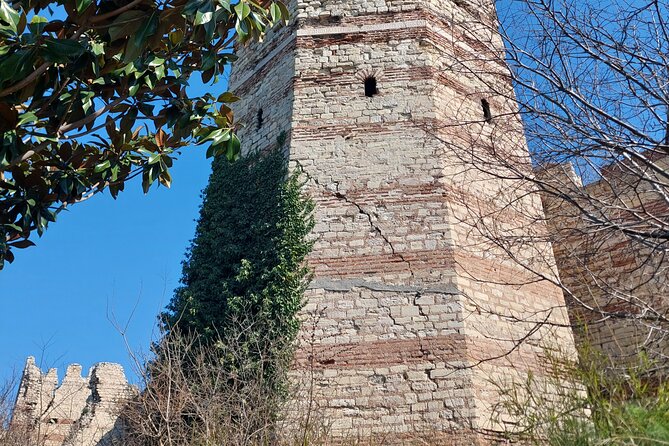
After Yedikule, the walk continues to Silivrikapı, the next major gate north of Belgrad Kapı. It sits between two polygonal gateway towers, and its construction shows how the walls were repaired and altered over time.
The gate was renewed in the Late Byzantine period using irregular stones with rows of brick between them. That detail may sound small, but it gives you something specific to look for. Instead of seeing a single uniform wall, you can spot different building phases and changes in repair methods.
The scheduled time here is 40 minutes. That is enough for an explanation and a close look without making the gate feel overworked. This part of the route is especially useful if you want to understand the wall as a long working defense rather than one isolated monument.
I would not choose this tour expecting polished museum displays at every stop. Silivrikapı is valuable because it is architectural and historical, not because it offers a large collection of objects. Your guide carries much of the interpretation, so the quality of the explanation matters.
The private format helps here. If you are curious about the irregular stonework, gate design, or the relationship between the different wall layers, you can ask immediately rather than follow a fixed group script.
Mevlanakapı and the engineering of survival
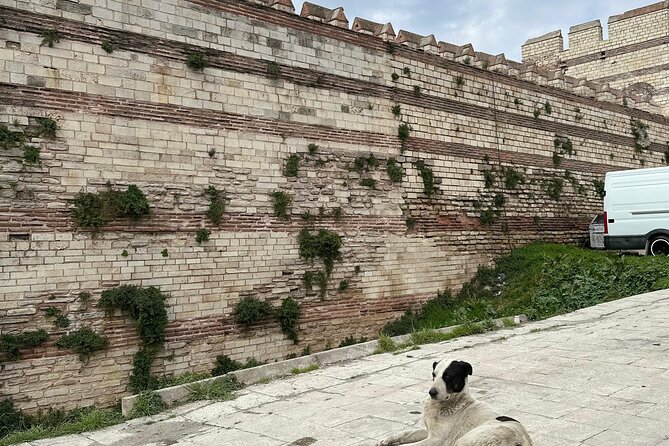
Mevlanakapı gives the tour its clearest lesson in military planning. Here, you walk along defenses that held off invaders for more than a millennium.
The key idea is that Constantinople was protected by depth. An attacking force did not meet one wall and finish the job. It faced a moat, an outer defense wall, and then a massive inner wall. Each layer slowed an advance and gave defenders another chance to resist.
The inner wall reached roughly 12 meters high. That scale helps explain why the fortifications were so difficult to overcome. The design was intended to absorb attacks from siege engines and later cannon fire, while also giving defenders a strong position above the attackers.
The listed time is 45 minutes. That should be enough for the guide to explain the defense system and point out why the walls were so effective. It is also a good moment to stop and picture the old city as a fortified capital, not simply as the historic center you see today.
I like that this route treats military architecture as a story about people. The walls protected homes, palaces, churches, markets, and government. Their purpose was not abstract. If the defenses failed, the whole city was exposed.
If you prefer art, food, or lively neighborhoods to fortifications, this section may feel technical. If you enjoy seeing how old cities worked, it is one of the strongest parts of the experience.
More Walking Tours in Istanbul
- Istanbul: Fener Balat Half-day Guided Walking Tour
★ 4.9 · 1,711 reviews - Istanbul Highlights Small-Group Walking Guided Tour
★ 4.5 · 1,346 reviews - Istanbul: European and Asian Side Guided Foodie Walking Tour
★ 4.9 · 1,038 reviews - Half day Fener-Balat Walking Tour in Turkiye
★ 5.0 · 308 reviews
Chora Museum and Byzantine art
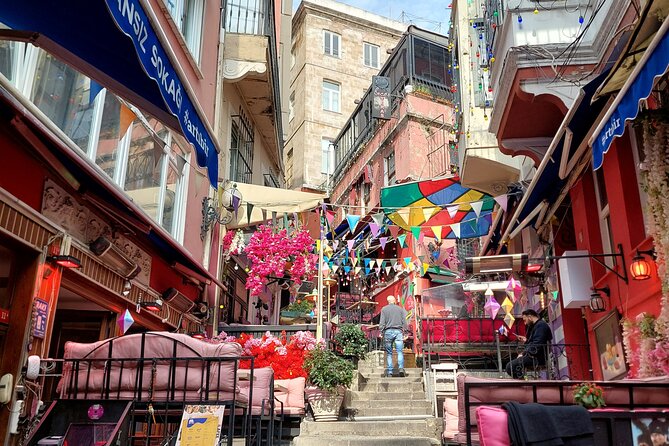
The final scheduled stop is Chora Museum, originally the Church of the Holy Savior in Chora. Admission is not included, and the museum is closed on Fridays, so this is the one part you need to check carefully before booking.
Chora is included for good reason. Its 14th-century mosaics and frescoes are considered among the finest surviving examples of Byzantine art. They belong to the Palaeologan Renaissance, a period known for more natural figures, stronger emotion, and scenes that feel less rigid than much earlier Byzantine work.
You can expect this stop to change the mood of the tour. The walls outside explain defense and power. Chora turns to faith, storytelling, and artistic expression. Together, the stops show two sides of medieval Constantinople: a city built to resist armies and a city filled with complex religious art.
The listed time is 80 minutes, making it the longest stop after Yedikule. That is sensible. A quick glance at the mosaics would not do them justice, especially if you enjoy art or history.
Admission is extra, so factor that into the total cost. The supplied information does not give a ticket price, and it does not specify any special entry arrangement. Friday is the clear day to avoid for this itinerary because the museum is closed then.
I would also confirm the current operating details before you go. The tour information identifies it as Chora Museum, and the practical point is simple: make sure the museum will be open on your selected date before paying for a route built around it.
A guide-led walk with room to adjust
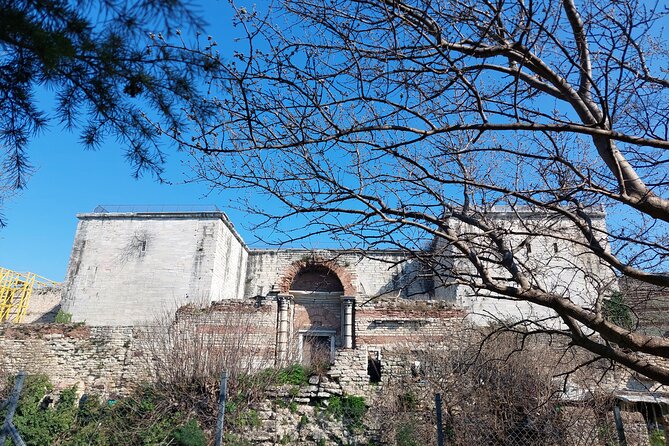
This is a private activity, not a shared group tour. Up to 15 people can participate, and that changes the feel of the day. A couple or small family may get a more personal conversation, while a larger group can spread the fixed price across more people.
Several guests praised Taha for explaining important points clearly, answering questions when he was sure of the facts, and checking when the group wanted a break. That is exactly the kind of guiding this route needs. The walls do not explain themselves, and the best experience comes from connecting visible details with the city’s story.
Taha was also praised for tailoring a walking route to individual interests and saving time through a well-planned schedule. Ally and Taja were also singled out for friendly, helpful guiding and for building an itinerary around the group’s needs.
Those comments suggest a warm, flexible style rather than a formal lecture. That suits a route with several outdoor stops. You can ask for more detail at Yedikule, move along more quickly at Silivrikapı, or spend extra attention on the art at Chora if the schedule allows.
The guide is licensed or certified and speaks English. That matters here because the experience depends more on explanation than on admission-ticket spectacle.
Price, group size, and what you receive
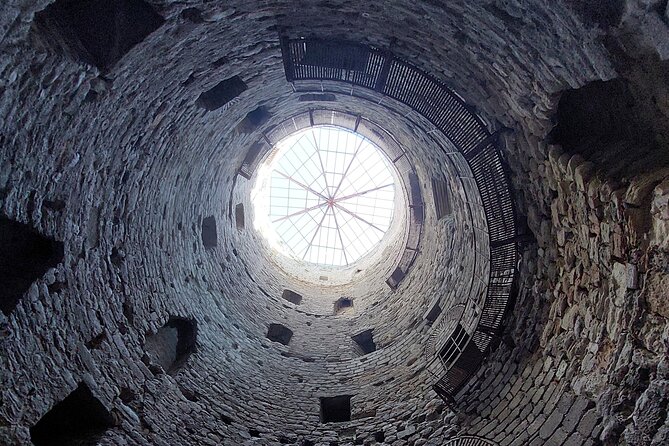
The price is $372.07 per group of up to 15 people. That is a high total for one or two people, but it becomes much more reasonable when divided among a larger party. For example, a full group would pay about $24.80 per person before transport, lunch, and Chora admission.
For four people, the cost works out to about $93 per person. For two, it is about $186 each. That makes this tour best suited to families, friends, or a private party that values having its own guide and schedule.
The price covers the licensed English-speaking guide. It does not include lunch, transport costs, or admission to Chora Museum. Lunch is listed at about 300 to 6,000 Turkish lira, a very wide range, so you should treat that as a rough guide rather than a firm meal cost.
The value comes from the route and private attention. You are covering several parts of the city walls, learning how the defenses functioned, and adding one of Istanbul’s major Byzantine art sites. If you were planning to hire a guide separately and organize this route yourself, the group price may compare well.
If you mainly want to see the walls from a taxi window, it is not good value. You pay for the walking, interpretation, and time spent understanding the sites. That is worthwhile only if those are the parts you want.
Walking demands and useful planning tips
The tour starts at the German Fountain on At Meydanı Cd in the Fatih district and ends back at the same meeting point. You should allow time to reach the start for 9:00 a.m., especially if you are staying outside the old center.
The route uses a taxi or public transportation to reach Yedikule, then continues on foot through the wall area. The information does not specify the exact transport type, cost, or travel time, so ask the provider how that part will work on your date.
A moderate level of physical fitness is expected. The tour is specifically not recommended for people with leg problems, and you should expect outdoor walking around old fortifications rather than smooth indoor sightseeing throughout.
These simple choices will help:
- Wear comfortable shoes with good support.
- Bring water and plan for breaks.
- Avoid Friday if Chora Museum is important to you.
- Ask about transport costs before the tour begins.
- Build in more than four hours if you prefer a slow pace.
- Bring questions, because the private format makes discussion part of the experience.
Service animals are allowed, and the route is near public transportation. The available information does not provide detailed accessibility measurements, so anyone with mobility concerns should ask the provider about the exact walking surfaces and access at each site.
Who will enjoy this experience most
I would recommend this tour to someone who has already seen Hagia Sophia and the Blue Mosque and wants a different side of Istanbul. It also works well as a first visit if your main interest is the Byzantine and Ottoman story rather than a checklist of famous interiors.
History lovers will get the most from the defensive design, the old gates, and the transition from Byzantine to Ottoman use. Art lovers will value the Chora stop, provided it is open on the chosen day.
Families and private groups may appreciate the ability to pause, ask questions, and adjust the pace. The guide’s reported habit of checking on breaks is a practical advantage for mixed-age groups.
I would be more cautious if your group wants a light stroll with little historical explanation. The route asks you to walk, listen, and pay attention to architectural details. It is rewarding, but it is not a passive sightseeing ride.
Should you book the Byzantion Walk?
Book it if you want to understand how Istanbul was defended, not just photograph its best-known monuments. Yedikule, Silivrikapı, and Mevlanakapı form a strong sequence, while Chora Museum adds some of the city’s finest Byzantine art.
The best value comes with a larger private group. Solo visitors and couples should compare the total price with other guided options, since $372.07 is charged per group rather than per person.
Before confirming, check three things: Chora’s opening day, the likely transport cost, and your ability to manage several hours of walking. If those fit your plans, this is a thoughtful, focused way to see Istanbul’s land walls with a guide who can turn old masonry into a readable story.
FAQ
Where does the tour start?
It starts at the German Fountain on At Meydanı Cd in Binbirdirek, Fatih, Istanbul.
What time does the tour begin?
The start time is 9:00 a.m.
Where does the tour end?
The activity ends back at the meeting point near the German Fountain.
How long does the experience last?
The listed duration is approximately one to five hours. The scheduled stops together total about four hours and 15 minutes, before allowing for transport and breaks.
Is the tour private?
Yes. Only your group participates, with up to 15 people included in the group price.
What language is the tour offered in?
The tour is offered in English with an in-person licensed or certified guide.
Is admission to Chora Museum included?
No. Admission to Chora Museum is not included in the tour price.
Is Chora Museum open every day?
No. Chora Museum is closed on Fridays.
Is lunch included?
No. Lunch is not included. The listed estimated cost is about 300 to 6,000 Turkish lira.
Can I cancel for a full refund?
Yes, if you cancel at least 24 hours before the local start time. Cancellations made less than 24 hours before the start time are not refunded. The experience may also be rescheduled or refunded if poor weather or an insufficient minimum number of participants causes cancellation.
Just added around Istanbul
- 2-Day Gallipoli and Troy Tour from Istanbul and return★ 5.0 · 17 reviews
- Sabiha Gokcen Airport Transfer Service (SAW)★ 4.0 · 17 reviews
- Istanbul Princes’ Islands Boat Trip with Lunch★ 4.0 · 17 reviews
- Best of Istanbul Full Day Private Tour With Guide★ 5.0 · 17 reviews
- Glories of Turkey 12-Day From Istanbul★ 5.0 · 17 reviews
- Istanbul: Bosphorus Morning or Sunset Yacht Tour with Snacks★ 4.9 · 17 reviews
- Istanbul – Old City Tour★ 5.0 · 18 reviews
- Full-Day Istanbul to Bursa Excursion With Cable Car★ 4.0 · 18 reviews
City Tours, compared.

Private Turkish Bath, Massage, and Spa in Old City
Read our review →
Jeep Safari & Green Lake Boat Trip with Lunch
Read our review →
Old City, Waterfalls, Olympos Cable Car, Boat
Read our review →
Full Day Cappadocia Tour( Red Tour + Underground City )
Read our review →
Green Canyon Jeep Tour, Boat Trip & Waterfall
Read our review →

Guided City Tour with Top 2 Waterfalls incl. Lunch
Read our review →
Browse the lists this tour appears in