Reviewed · KUSADASI TOURS
Seven Churches of Revelation Tour ( Private)
Follow the early Christian trail. This four-day private tour links the Seven Churches of Revelation with major Roman sites, thermal pools, and the House of the Virgin Mary. I like the private format, which gives your group its own vehicle and guide, and I like that hotels, meals, entrances, parking, and airport transfers are bundled into the price. The main drawback is the pace: several long drives and repeated ancient ruins can make the four days feel full.
I also like the choice of three-, four-, or five-star hotels, plus the chance to adjust the lodging level to your budget. Guide Ozgur received especially warm praise for tailoring explanations to a family and making the religious and cultural parts easier to understand. You should still check the exact hotel locations and daily driving plan before paying, since overnight arrangements may be in Pergamon or Izmir on the first night.
In This Review
- Key points to know before booking
- What the four-day route really offers
- Day 1: Smyrna and the altar at Pergamon
- Day 2: Thyatira, Sardis, and faithful Philadelphia
- Day 3: Hierapolis, Pamukkale, and lukewarm Laodicea
- Day 4: Ephesus, Mary’s house, and St. John
- A private guide can change the whole experience
- Hotels, meals, and the real cost
- Walking, timing, and who should book
- Should you book the Seven Churches of Revelation Tour?
- FAQ
- How long is the Seven Churches of Revelation Tour?
- Where does the tour begin?
- Is this a private tour?
- Which Seven Churches are included?
- Are hotel stays included?
- Are meals included?
- Are admission fees included?
- Is Pamukkale part of the tour?
- What fitness level is required?
- What is the cancellation policy?
Key points to know before booking
- Seven biblical sites in four days: You visit Smyrna, Pergamon, Thyatira, Sardis, Philadelphia, Laodicea, and Ephesus.
- A genuinely private experience: Only your own group participates, with private transport, guiding, entrance fees, parking, and airport transfers included.
- More than a church tour: Hierapolis, Pamukkale, the House of the Virgin Mary, and the Basilica of St. John add Roman, Jewish-Christian, and Turkish cultural context.
- Ozgur is a notable guide choice: His ability to adjust the tour for a family was praised, so requesting him may be worth asking about.
- Meals and hotels are part of the package: Breakfast, lunch, and dinner are included, while beverages and gratuities are extra.
- Expect walking and full days: Moderate physical fitness is requested, with ruins, theater steps, necropolis paths, travertines, and thermal areas along the way.
What the four-day route really offers
The tour is built around the seven churches named in the Book of Revelation, but it is not limited to church remains. You also see some of western Turkey’s most important ancient sites, including Pergamon, Hierapolis, Laodicea, and Ephesus.
That wider scope matters. In many places, the Christian message makes more sense when you can see the Roman streets, theaters, temples, baths, and commercial centers around it. The tour connects religious passages with the physical places that shaped those communities.
You pay $1,313.55 per person, which is a serious price. The value depends on how much you use the package. Private transport, a dedicated guide, entrance fees, parking, airport transfers, three to five-star lodging, and full-board meals are included. If you would otherwise arrange several hotel nights, intercity transfers, site tickets, and meals yourself, the package can be practical.
The private setup is especially useful for families or small groups with mixed interests. You can ask questions without waiting for a large group, and the guide can spend more time on the parts that matter to you. The tradeoff is that a private tour costs more than joining a shared coach.
A few more tours and experiences worth a look
- FOR CRUISERS: Skip The Lines PRIVATE EPHESUS TOUR &On Time Return
★ 5.0 · 8,527 reviews - PRIVATE EPHESUS TOUR FOR CRUISERS: On-time Return and Skip-Line
★ 5.0 · 5,807 reviews - PRIVATE NO HIDDEN FEES Ephesus, Mary’s House Guided Tour /GRP OPT
★ 5.0 · 2,455 reviews
Day 1: Smyrna and the altar at Pergamon
The first stop is Izmir, ancient Smyrna, described in Revelation as the suffering church. The visit focuses on the city’s place in early Christianity and on Polycarp, the important second-century bishop who was burned alive at age 85.
The listed visit lasts about 45 minutes and has no separate admission charge. That is enough for an introduction, but not a long archaeological visit. I would treat Smyrna as a meaningful opening rather than the largest physical ruin on the route.
Smyrna’s importance is its connection to a living Christian community that faced pressure and persecution. The biblical message here centers on endurance, fear, and suffering. A good guide can make that setting personal without turning the stop into a sermon. Ozgur’s ability to explain the material in a way that fits a family would be useful here.
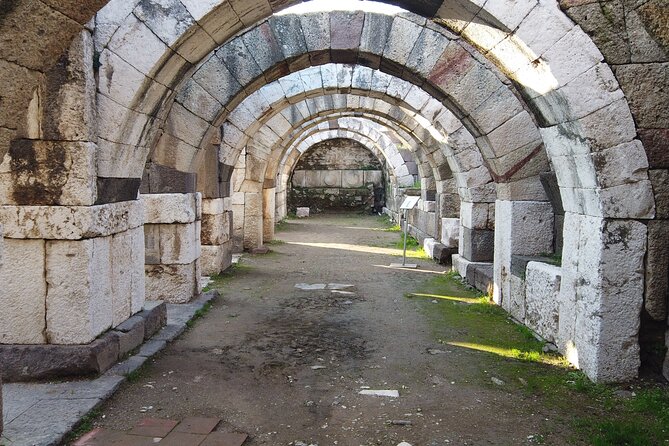
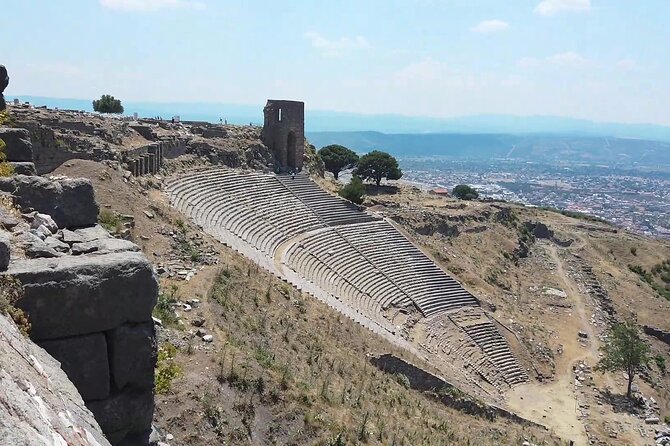
Next comes Pergamon, the compromising church. Revelation refers to Pergamon as the place where Satan’s seat is located, commonly connected with the city’s monumental altar of Zeus. The ancient city visit takes about two hours, with admission included.
Pergamon is one of the tour’s major archaeological stops. You have enough time to understand the scale of the hilltop city and to connect its pagan monuments with the Christian community described in Revelation. The word compromise is central here. The early church was not operating in isolation. It lived among powerful civic, religious, and political institutions.
After Pergamon, you return toward Izmir for the night. The overnight location may be in Pergamon or Izmir, so confirm this before departure. That detail affects how much time you spend on the road and how early the next morning begins.
Day 2: Thyatira, Sardis, and faithful Philadelphia
The second day begins in Akhisar, the modern town associated with Thyatira. Revelation presents Thyatira as a church that tolerated false teaching linked with Jezebel. The visit lasts about an hour and has no separate admission charge.
The physical remains here are not presented as the main attraction. The value is in understanding the community’s place in the route and the contrast between its commercial and religious life and the warnings in Revelation. If you are mainly interested in large ruins, this may feel like a quieter stop. If you want all seven churches represented, it is essential.
Sardis follows, with about 90 minutes at the site and admission included. Revelation describes Sardis as a church with a reputation for being alive but actually dead. That sharp criticism gives the stop a clear theme: public reputation does not always match inner strength.
Sardis is also one of the more substantial ancient sites on the route. The remains help you see the setting of a wealthy and important city, rather than treating the church as an abstract name on a map. Allow time for uneven surfaces and walking. The tour asks for moderate fitness, and this is one of several days when comfortable shoes will matter.
The final stop is Philadelphia, identified with the faithful church. The visit to the Siesean Kilisesi lasts about 45 minutes and includes admission. The biblical message here is more encouraging than the warnings at Thyatira or Sardis, and the contrast gives the second day a useful rhythm.
You then stay overnight in Pamukkale. This is a sensible base for the next day, though the route remains active. You are not simply checking into a hotel and resting after a short excursion. The tour covers several sites and moves between different towns, so keep your day bag light and easy to carry.
Day 3: Hierapolis, Pamukkale, and lukewarm Laodicea
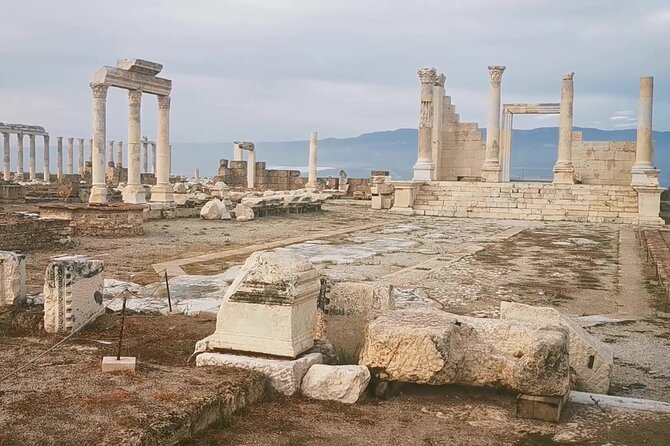
Pamukkale is one of the visual highlights of the tour. The day includes ancient Hierapolis, where you walk through ruins, stop for photographs, see a well-preserved Roman theater, and visit the necropolis, a burial area with more than 2,000 graves.
The route also passes Roman baths before reaching the Ancient Pool. You can spend free time swimming in warm spring water, or choose to walk barefoot along the travertines filled with calcium-rich thermal water. The plan allows about two hours at Pamukkale, with no separate admission charge listed for this stop.
The choice between the pool and the travertines is important. If you want a slower break, the warm spring water may appeal. If you prefer scenery and a short physical activity, walking the travertines may be the better use of your time. Ask your guide how the day’s timing works before choosing, since two hours can pass quickly when the site includes ruins, photographs, bathing, and walking.
Hierapolis also gives the tour a welcome change of pace. After several stops tied directly to Revelation, you spend time with Roman theater architecture, funerary monuments, baths, and thermal water. The site is not just a backdrop for photographs. It shows how daily life, death, medicine, leisure, and religion overlapped in an ancient city.
Laodicea comes next, with about 90 minutes and admission included. Revelation criticizes this church for being lukewarm, neither hot nor cold, and for combining pagan and Christian beliefs too comfortably.
The idea is easy to remember, especially after visiting Pamukkale’s hot springs. The geographic connection also helps: the tour places Laodicea after a thermal-water stop, giving the biblical image a physical reference. The visit adds another layer to the route, since the churches are not all criticized for the same reason.
After Laodicea, you transfer to Kusadasi for the night. This is another travel-heavy day, but the overnight location sets up the final day around Ephesus and nearby Christian sites.
Something different for another day:
- Top Choice For Cruisers: Ephesus, Mary’s House WITH TICKETS+LUNCH
★ 5.0 · 7,233 reviews - For Ship Guests:BEST SELLER EPHESUS PRIVATE TOUR & On Time Return
★ 5.0 · 2,029 reviews - ALL INCLUDED: Ephesus Ruins, Mary’s House Tour incl ENTRY TICKETS
★ 5.0 · 1,670 reviews - Ephesus Temple of Artemis and House of Mary Private Half Day Tour
★ 5.0 · 1,573 reviews
Day 4: Ephesus, Mary’s house, and St. John
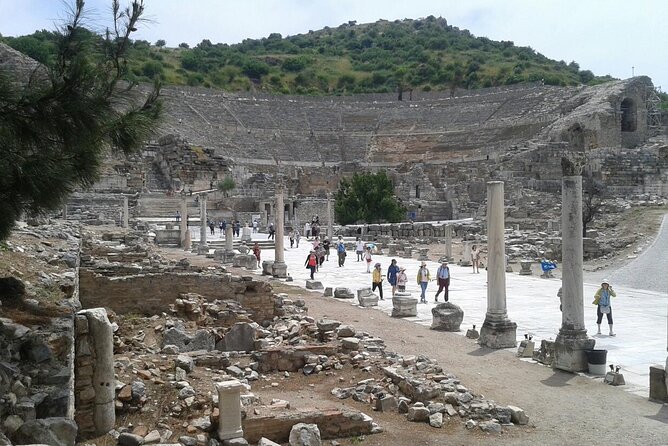
Ephesus is described as the loveless church and is called the most important of the seven churches on this route. The schedule lists a two-minute stop, which is almost certainly a timing error given the scale of Ephesus and the inclusion of a full ancient-city visit. Confirm the intended duration with the provider before booking and ask how much walking time is planned.
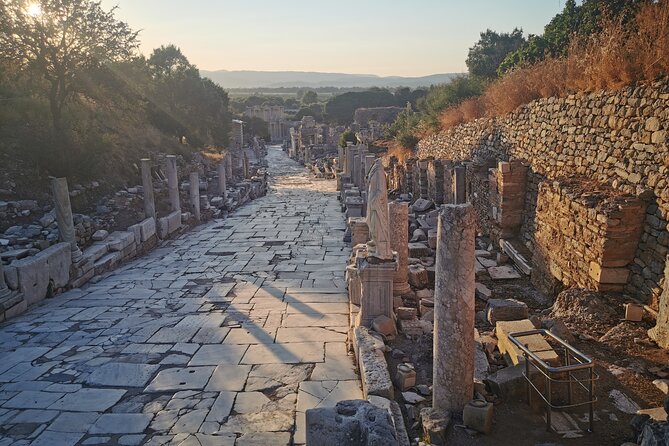
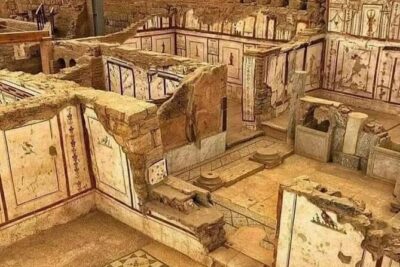
Ephesus is the logical centerpiece of the final day. Its streets and monumental remains give you the clearest sense of how a major ancient city worked. The Christian connection is only one part of the site, but it is a crucial one. The city helps explain why messages to the churches carried such weight: these were communities operating in large, influential urban centers.
The House of the Virgin Mary follows, with about 45 minutes and admission included. This is the place where Mary is said to have spent her final years. The wording matters because the tradition is presented as a belief, not as a proven fact. If your group includes people with different religious views, the stop can still work well as a place of pilgrimage and reflection.
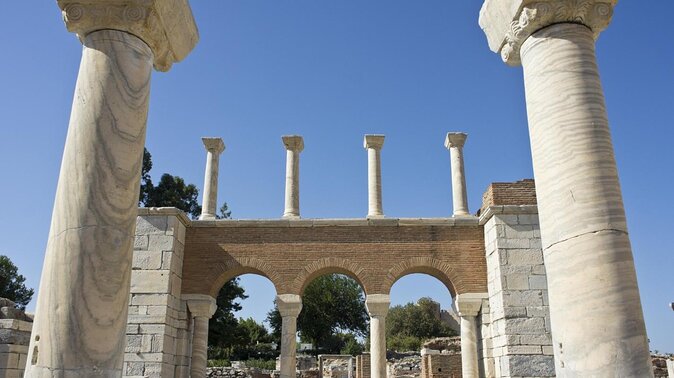
The last visit is the Basilica of St. John, also known as the Church of St. John the Theologian. The visit takes about 30 minutes and is followed by transfer to Izmir airport.
This final church site gives the route a fitting ending. You move from the warnings and promises addressed to the seven churches toward a major Christian monument connected with St. John. The short visit means your guide’s explanation will matter, especially if you want to understand what remains and what has disappeared.
A private guide can change the whole experience
The strongest praise attached to this tour concerns its guide service, especially Ozgur. He was described as flexible, helpful, quick to respond, and attentive to a family’s interests. Those qualities matter more here than on a simple sightseeing transfer.
The route covers religious texts, Roman cities, archaeology, local traditions, and practical movement between towns. A guide who can adjust the level of detail will help prevent the tour from becoming a string of names and dates. You can ask why Pergamon is associated with Satan’s seat, what makes Sardis spiritually dead, or how the ancient cities functioned beyond their biblical references.
The private format also lets your group control the tone. You can request more time for photographs at Pamukkale, ask for a clearer explanation at Ephesus, or keep moving when a smaller site has given you enough. The exact flexibility should be confirmed with the operator, but the tour is designed for only your group.
Hotels, meals, and the real cost
You can choose three-, four-, or five-star hotels. Dinners are specified at four- or five-star hotels, while breakfast, lunch, and dinner are included for the tour. Beverages are not included, and gratuities are extra.
This arrangement makes budgeting easier. You do not need to find lunch during each transfer or work out dinner after arriving at a new town. It also means you have less control over where you eat. If local restaurants and independent food choices are a major part of your trip, ask how much freedom the schedule allows.
The price is easier to justify for a small private group that values convenience and direct guiding. It is less attractive if you already have a rental car, prefer simple hotels, or want to travel slowly. The tour packs seven churches and several additional sites into four days, so you are paying partly for time saved in planning and driving.
The tour is commonly booked well ahead, with an average booking lead time of about 140 days. That suggests you should plan early, especially if you want a particular hotel category or guide. Confirmation is provided at booking.
Walking, timing, and who should book
You need a moderate level of physical fitness. Expect walking through ancient ruins, uneven ground, cemetery paths, theaters, and thermal areas. Pamukkale may involve barefoot walking, and Ephesus and Pergamon can make a long day feel longer than the distance on a map suggests.
I would book this tour if you want the seven churches covered in a single organized journey and you value a private guide. It is particularly well suited to families, church groups, and first-time visitors to western Turkey who do not want to arrange several transfers and hotel nights.
I would hesitate if you want a relaxed pace, long independent visits, or a strong focus on food and local neighborhoods. The route is ambitious, and the religious sites may feel repetitive if you are not interested in early Christianity.
The operator offers pickup from hotels in Izmir, Selcuk, and Kusadasi, along with private airport transfers. Cancellation is free up to three full days before the start time, but later cancellations and changes are not refunded or accepted.
Should you book the Seven Churches of Revelation Tour?
Book it if the combination of biblical sites and major ancient ruins appeals to you. The private vehicle, included meals, hotel choices, and airport transfer remove much of the work from a complicated route. The strongest reason to choose it is the chance to have a guide such as Ozgur shape the explanations around your group.
Before paying, confirm the first night’s hotel location, the exact daily driving times, and the suspiciously short Ephesus duration. If those details suit your schedule, this is a useful and well-supported way to cover western Turkey’s Seven Churches in four active days.
FAQ
How long is the Seven Churches of Revelation Tour?
The tour lasts approximately four days.
Where does the tour begin?
Pickup is offered from any hotel in Izmir, Selcuk, or Kusadasi. Private airport transfers are also included.
Is this a private tour?
Yes. Only your own group participates in the activity.
Which Seven Churches are included?
The route visits Smyrna, Pergamon, Thyatira, Sardis, Philadelphia, Laodicea, and Ephesus.
Are hotel stays included?
Yes. Three-, four-, and five-star hotel options are available to choose from.
Are meals included?
Breakfast, lunch, and dinner are included. Beverages are not included.
Are admission fees included?
Entrance fees are included for Pergamon, Sardis, Philadelphia, Laodicea, Ephesus, the House of the Virgin Mary, and the Basilica of St. John. Smyrna, Thyatira, and Pamukkale are listed without a separate admission charge.
Is Pamukkale part of the tour?
Yes. The tour includes ancient Hierapolis, its Roman theater, necropolis, baths, the Ancient Pool, and the travertines.
What fitness level is required?
A moderate physical fitness level is required. The tour includes walking through ancient ruins, the necropolis, theater areas, and thermal sites.
What is the cancellation policy?
You can receive a full refund if you cancel at least three full days before the experience start time. Cancellations or changes made less than three full days in advance are not accepted for a refund.
Just added around Kusadasi
- Best of Ephesus Private Tour FOR CRUISE GUESTS / On Time Return★ 5.0 · 17 reviews
- Kusadasi: Full–Day Boat Trip with Lunch★ 4.3 · 18 reviews
- Istanbul: 8-Day Cappadocia, Ephesus, Konya, Pamukkale Tour★ 4.9 · 18 reviews
- “Ephesus tours” the “house of virgin mary tours” Tours from KUSADASI CRUİSE PORT★ 5.0 · 18 reviews
- Small Group Ephesus Tour from Selcuk / Kusadası★ 5.0 · 18 reviews
- From Istanbul: 2-Day Ephesus, Pamukkale, & Hierapolis Tour★ 4.1 · 18 reviews
- Cesme: Small Group Boat Tour with Open Buffet Lunch★ 4.5 · 18 reviews
- Ephesus Shore Excursion from Kusadasi Port with Guide★ 5.0 · 18 reviews
Kusadasi Tours, compared.
FOR CRUISERS: Skip The Lines PRIVATE EPHESUS TOUR &On Time Return
Read our review →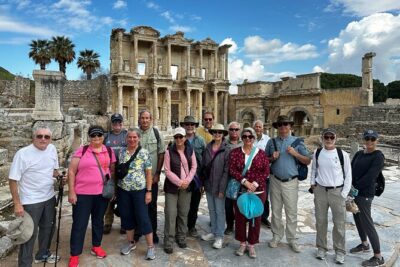
ALL INCLUDED: Ephesus Ruins, Mary’s House Tour incl ENTRY TICKETS
Read our review →
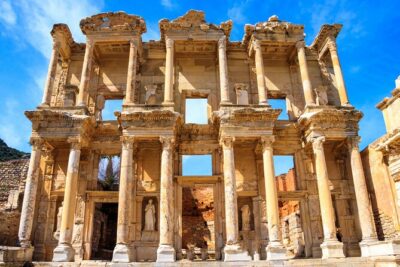
SKIP-THE-LINE: Group & Private Ephesus Tour ENTRY FEE & LUNCH
Read our review →