
Reviewed · PAMUKKALE & HIERAPOLIS DAY TRIPS
Pamukkale and Hierapolis
White stone, Roman ruins, and a very early start. This Pamukkale and Hierapolis day trip pairs Turkey’s most unusual natural site with one of its grandest ancient cities. I like the small maximum group of 15 and the fact that hotel pickup, an English-speaking guide, and air-conditioned transport are included. I also like that you see both the famous travertine terraces and the less-famous ruins of Hierapolis, rather than making the long drive for photographs alone. The main drawback is the distance: the journey from Izmir can take roughly three and a half to four hours each way, leaving some people feeling that the road time is too high for a single day.
The tour costs $160 per person and lasts about nine hours. That price can be fair if you value door-to-door transport, an included guide, and organized admission to Hierapolis, but it is not a quick outing. I would book it for a once-only visit to Pamukkale, not for a relaxed day with lots of unplanned time.
In This Review
- Key points before you book
- Why Pamukkale is worth the long ride
- Three hours at the terraces and thermal water
- Hierapolis, the Roman city on a mineral plateau
- The Necropolis is the stop many people underestimate
- What the long drive is really like
- The guide can shape the whole day
- Is $160 good value from Izmir?
- Practical advice for making the day work
- Should you book the Pamukkale and Hierapolis tour?
- FAQ
- How long does the Pamukkale and Hierapolis tour from Izmir last?
- Where does the tour start?
- What is included in the price?
- Are food and drinks included?
- Can children join the tour?
- Can I cancel for a full refund?
Key points before you book
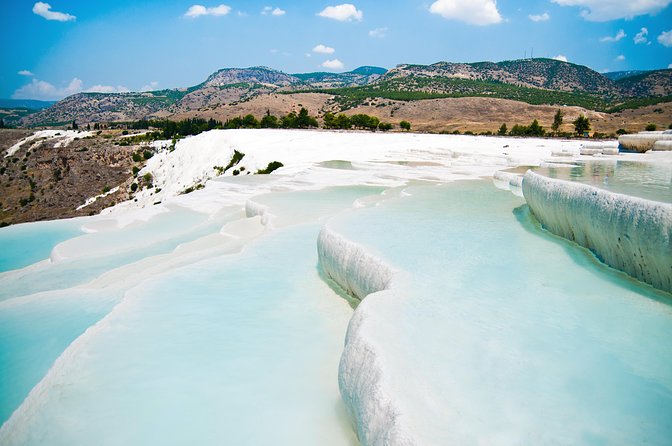
- Pamukkale’s white terraces are the main event: Calcium-rich thermal water has formed shallow basins, cascades, and hardened deposits on the hillside.
- Hierapolis adds real historical weight: You see the Theatre, Apollo Temple, Nymphaeum, basilica, and one of Anatolia’s largest ancient cemeteries.
- The road journey is long: Allow for a full day, with much of it spent in the vehicle between Izmir and Pamukkale.
- Small groups can work well: The maximum is 15 people, and some departures have operated with only a few people.
- Bring swimwear: You may have the chance to use thermal water, including Cleopatra’s Pool at an extra cost according to tour information.
- The season matters: Water levels and the look of the terraces can vary, especially in winter.
Why Pamukkale is worth the long ride
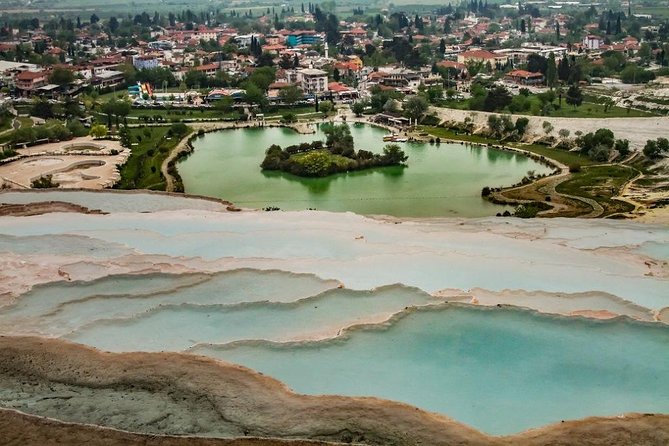
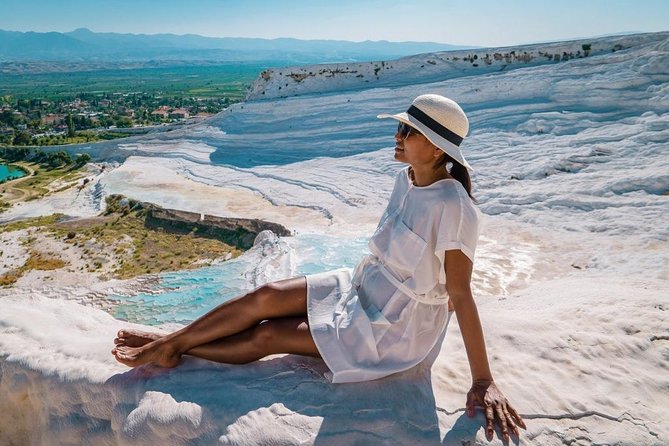
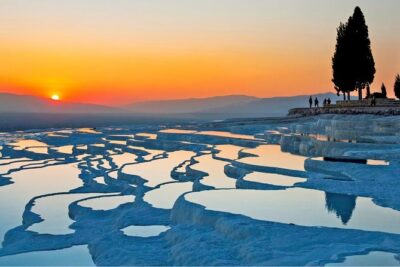
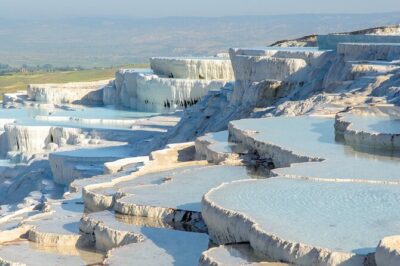
Pamukkale means cotton castle, a fitting name for the bright white formation outside Denizli. Thermal water, carrying calcium deposits, has flowed down the hillside for centuries. As the water cooled and evaporated, it left behind hardened terraces, ridges, stalactite-like shapes, and shallow pools.
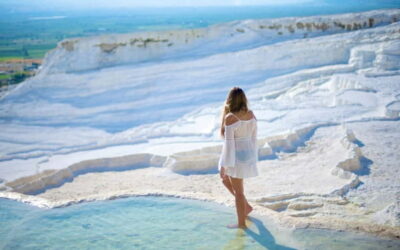
The first sight can be startling. From a distance, the hillside looks snow-covered. Up close, the surface is hard, uneven, and bright enough to make sunglasses useful. Water trickles across some sections, while other basins may be dry or only partly filled. This is one reason the site may look different from the familiar photographs used in advertising.
I like the way this stop combines geology with ancient life. The water was not only a pretty feature for the Romans. It helped make Hierapolis a major thermal center, where people came to use the springs for their supposed healing qualities. Your guide explains how the water shaped the terraces and why the springs mattered to the Roman city above them.
The site is also a place for photographs, but it rewards slower looking. Notice the curved edges of the basins and the way the white deposits change shape as the water moves. The effect is natural, but it has an almost theatrical quality. That unusual contrast, white mineral terraces beside old stone ruins, is what makes Pamukkale unlike most other stops in Turkey.
More Pamukkale and Hierapolis day trips:
- Pamukkale Tour from Izmir
★ 5.0 · 806 reviews - Pamukkale Small Group Tour from Kusadasi Port/Hotels
★ 5.0 · 434 reviews - Pamukkale Small Group Tour From Kusadasi or Selcuk Hotels
★ 5.0 · 393 reviews
Three hours at the terraces and thermal water
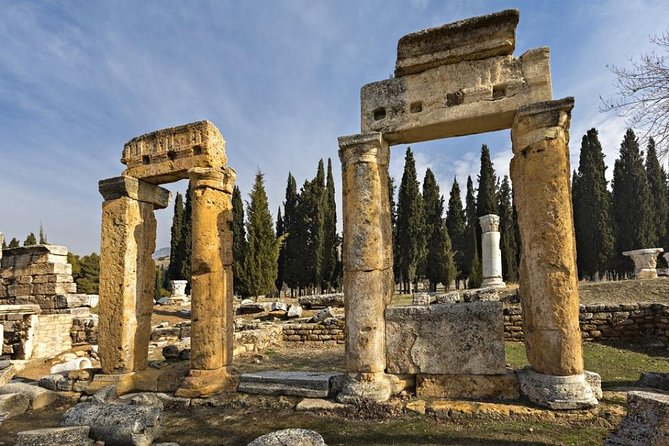
The planned Pamukkale visit is listed at about three hours. That sounds generous, but the time can pass quickly once you stop for photos, walk across the terraces, and look toward the plateau where Hierapolis begins.
You should expect some walking over uneven ground. The tour calls for a moderate level of physical fitness, and that is sensible advice. The terraces are not a flat park, and the white mineral surface can be hard underfoot. Wear secure footwear for the approach and be prepared for a different rule at the water terraces if required by site conditions.
The thermal water is warm, but the open terraces are not necessarily deep bathing pools. One useful distinction is that the natural basins may be shallow, while Cleopatra’s Pool is deeper and set up for swimming. The pool has sunken Greek and Roman columns, according to the information provided with the experience, and requires an additional payment of 30 Turkish lira as noted in the tour details.
Bring a swimsuit if you want the bathing option. Food and drinks are not included, so carry what you need or plan to purchase refreshments during the day. The experience does not promise a full thermal bathing session as part of the basic price, so you should treat swimming as an optional extra rather than the central activity.
Winter deserves special attention. Water flow can be lower, and one disappointing visit described arriving to find little or no water on the terraces. The white formations remain impressive, but the classic image of cascading pools may not match conditions on the day. If flowing water is your main reason for going, ask about current conditions before booking.
Hierapolis, the Roman city on a mineral plateau
Hierapolis is not an afterthought. It occupies the broad limestone plateau created by the same mineral water that formed Pamukkale. The name means sacred city, linked to the large number of temples that once occupied the site.
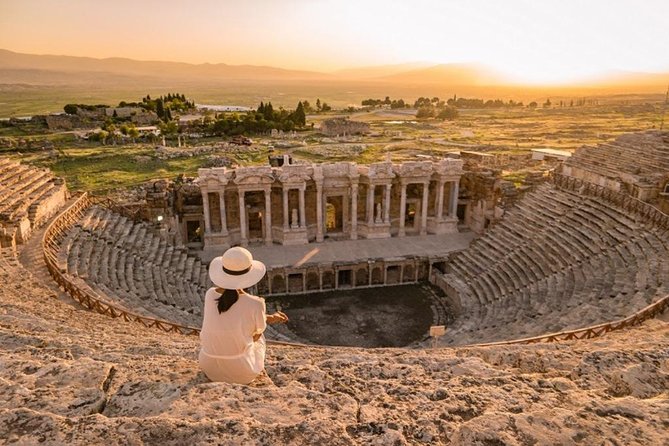
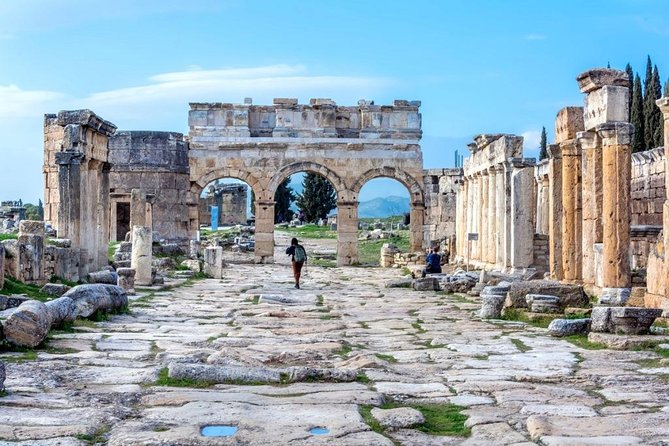
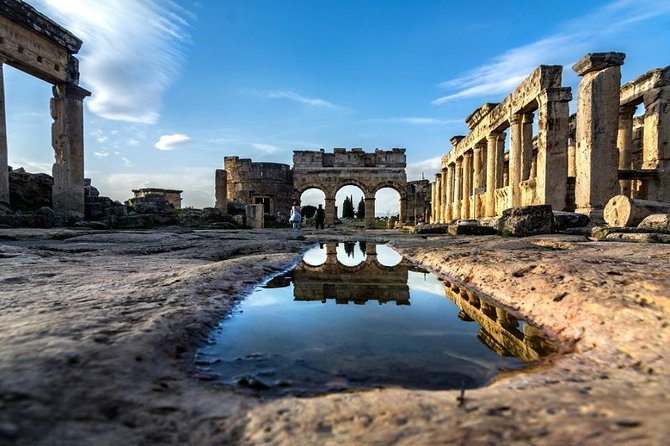
A guided visit helps here because the ruins are spread over a wide area. Without context, you might see broken columns and walls without understanding how the city worked. The guide connects the temples, public buildings, theatre, water features, and cemetery to the role of Hierapolis as a Roman thermal center.
The Theatre is one of the most memorable structures. Its surviving seats and stage architecture give you a sense of the city’s public life. This is not just a pile of stones beside the terraces. It was a place built for performance, gathering, and civic display.
The Apollo Temple brings a different mood. The site is associated with the religious side of Hierapolis and helps explain why the city carried its sacred name. The ruins are a reminder that people came here for more than warm water. Religion, healing, burial, and public life all shared this elevated plateau.
The Nymphaeum, described in the tour details as a fourth-century basilica or monumental fountain structure, adds another stop to the route. The terminology can be confusing, so listen to the guide’s explanation of the building and its function. The key point for you is that Hierapolis preserves a mix of religious, civic, and water-related remains rather than a single isolated monument.
The Necropolis is the stop many people underestimate
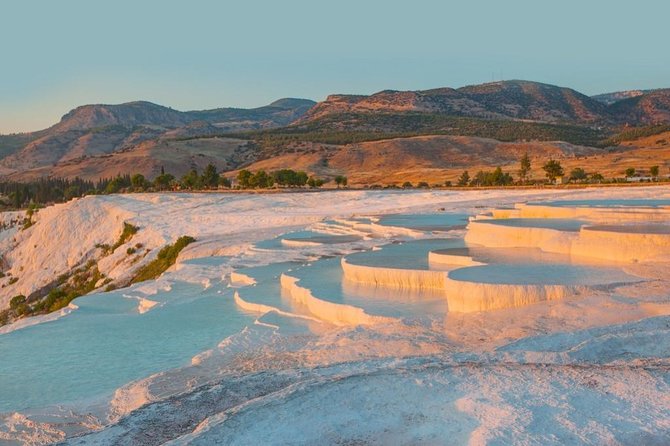
Hierapolis has one of the largest ancient graveyards in Anatolia. The Necropolis is extensive, and it gives the ancient city a stronger sense of scale than the Theatre alone.
Tombs line the old approach beyond the city, with different forms reflecting status and burial customs. Even from a distance, the sheer number of monuments makes clear that Hierapolis was a major center. People came here, lived here, used the springs, and were eventually buried near the city.
The Necropolis also gives the tour a more grounded feel. Pamukkale is visually striking, almost unreal. The cemetery shows the practical side of an ancient settlement, including death, family, memorials, and the movement of people along the road. I would not rush this section, even if the terraces are the more famous sight.
The time available can be a concern. The itinerary lists one hour for Hierapolis, while the broader stop at Hierapolis and Pamukkale is longer. Some departures have reached the area late because of holiday traffic or schedule changes, leaving only about two and a half hours for both sites. If you care equally about the Roman remains and the terraces, ask the guide early how the available time will be divided.
Something different for another day:
- FOR CRUISERS: Skip The Lines PRIVATE EPHESUS TOUR &On Time Return
★ 5.0 · 8,527 reviews - Top Choice For Cruisers: Ephesus, Mary’s House WITH TICKETS+LUNCH
★ 5.0 · 7,233 reviews - PRIVATE EPHESUS TOUR FOR CRUISERS: On-time Return and Skip-Line
★ 5.0 · 5,807 reviews - PRIVATE NO HIDDEN FEES Ephesus, Mary’s House Guided Tour /GRP OPT
★ 5.0 · 2,455 reviews
What the long drive is really like
The advertised duration is about nine hours, but the road can account for much of the day. Several accounts describe approximately three and a half to four hours each way. That means you may spend seven or more hours seated, depending on traffic, pickup timing, and the route.
The air-conditioned coach or van is a real benefit. A newer vehicle and a small group can make the trip more comfortable than arranging a complicated journey alone. Hotel pickup and drop-off also remove the need to find a bus station or work out local connections.
Still, air conditioning does not make four hours disappear. I would bring water, a light snack, and something to read. Since food and drinks are not included, do not assume breakfast or lunch will be supplied. One account expected both breakfast and lunch but received only lunch, while another praised lunch at a small restaurant. The safest approach is to treat meals as your responsibility unless the operator confirms otherwise.
The early start is fixed at 6:30 a.m. from the DoubleTree by Hilton Izmir in Alsancak, at İsmet Kaptan, 1373. Sk. No: 5. Pickup is offered from central Izmir hotels, but the meeting information identifies this hotel as the start point, so confirm the exact pickup arrangement. Confusion over pickup times has caused trouble for some people, and an early morning clarification can prevent a long wait.
The guide can shape the whole day
The strongest part of the experience is often the guide. Guides named in accounts include Erman, Mehmet, and Engin. Erman was praised for his friendly manner and explanations of Pamukkale and nearby sights. Engin was described as warm, informative, and attentive to the group. Mehmet was especially appreciated by people who had already toured Pergamum with him.
That praise matters because the ruins need interpretation. A good guide can explain why the city was built on mineral deposits, how the springs shaped Roman life, and what you are looking at in the Theatre, Apollo Temple, Nymphaeum, and Necropolis. The best guides also know when to step back and give you time to look.
The experience is not guaranteed to feel the same on every departure. One low-rated account described a guide who gave only a short introduction and spent much of the drive in silence. Another person felt the guide talked too much and wanted more independent time. If you prefer a steady balance of explanation and quiet exploration, say so politely at the start.
A maximum of 15 people is a useful limit. In the low season, departures have sometimes been nearly private, with only two or three people. That can mean a more flexible feel, though it is not something you should assume for your date.
Is $160 good value from Izmir?
At $160, this is not the cheapest way to see Pamukkale. The value comes from convenience: hotel pickup, return transport, an English-speaking local guide, air conditioning, and organized access to Hierapolis. You also avoid managing a very long day on your own.
The price feels stronger when the group is small and the guide is engaged. A nearly private departure in a comfortable van can compare well with a hotel-arranged excursion at a higher price. The value feels weaker if you receive little commentary and only a short visit at the site.
The key question is not simply whether Pamukkale is worth $160. It is whether Pamukkale is worth the long return journey from Izmir. I think it can be, especially if you have limited time in western Turkey and want both the terraces and Roman ruins in one organized day.
It is less appealing if you dislike long road trips, want a leisurely lunch, or expect several hours of independent exploration. A shorter departure from a nearer base would give you more time on site, but that is not what this Izmir excursion offers.
Practical advice for making the day work
Wear comfortable shoes and expect uneven walking. The terraces may be hard underfoot, and the ruins cover a broad area. A swimsuit is useful if you plan to use the thermal pool option.
Bring sunglasses, water, and snacks. The white surface can be glaring, and no food or drinks are included in the basic tour. Confirm lunch arrangements rather than relying on assumptions.
Keep your morning clear from the 6:30 a.m. pickup onward. Delays at hotels or on the road can reduce your time at Pamukkale. If you are visiting during a public holiday, ask whether opening hours or traffic could affect the schedule.
Do not judge the site only by photographs. Water levels vary. A dry terrace can still show the strange mineral forms that make Pamukkale special, but it may not deliver the full flowing-water scene you expect.
The tour is not recommended for children aged four and under. Anyone aged 18 or younger must travel with an adult. The stated fitness requirement is moderate, so consider your comfort with a long vehicle ride and several hours of walking before booking.
Should you book the Pamukkale and Hierapolis tour?
Book it if Pamukkale is high on your Turkey wish list and you want transport, a guide, and Hierapolis handled in one day. The white terraces are genuinely unusual, and the Roman Theatre and Necropolis give the outing substance beyond a quick photo stop.
Think twice if the thought of seven or more hours on the road makes you miserable. The tour’s 3.9 rating reflects that split: the destination and several guides earn strong praise, while the journey, unclear meal expectations, limited site time, and seasonal water levels cause the main complaints.
My practical choice would be to book during a season when the terraces have good water flow, confirm pickup and meal details, and ask how much time will be reserved for Hierapolis. With those points clear, this is a worthwhile but demanding day trip, best suited to someone who values seeing a rare natural site even when reaching it takes most of the day.
FAQ
How long does the Pamukkale and Hierapolis tour from Izmir last?
The tour lasts approximately nine hours. The drive can take about three and a half to four hours each way, so much of the day is spent traveling.
Where does the tour start?
The listed meeting point is the DoubleTree by Hilton Izmir in Alsancak, at İsmet Kaptan, 1373. Sk. No: 5, Konak, Izmir. Hotel pickup is offered, so confirm the exact arrangement before departure.
What is included in the price?
The tour includes hotel pickup and drop-off, an English-speaking local guide, an air-conditioned vehicle, and admission to Hierapolis as specified in the tour details.
Are food and drinks included?
No. Food and drinks are not included unless specifically stated. Confirm whether lunch is arranged for your departure and bring water or snacks.
Can children join the tour?
Children aged four and under are not recommended for this activity. Anyone aged 18 or under must be accompanied by an adult.
Can I cancel for a full refund?
Yes, you can cancel for a full refund if you cancel at least 24 hours before the local start time. Cancellations or changes made less than 24 hours in advance are not accepted for a refund.
Just added around Kusadasi
- Kusadasi Boat Trip With Lunch And Hotel Transfer★ 4.5 · 63 reviews
- FOR CRUISERS: Ephesus Tour from Kusadasi Port /GUARANTEED ON-TIME RETURN TO BOAT★ 5.0 · 64 reviews
- From Kusadasi/Selcuk: Highlights of Ephesus Small Group Tour★ 4.8 · 64 reviews
- Ephesus, Mary’s House, Artemis Tour(Private) (Skip the line)★ 5.0 · 64 reviews
- EPHESUS TOUR From Cruise Port: Private Tour & Skip The Line★ 5.0 · 65 reviews
- SKIP LINES Private Ephesus Tour for Cruise Guests ON TIME RETURN★ 5.0 · 66 reviews
- From Istanbul: Ephesus & Pamukkale 2-Day Trip with Flights★ 4.5 · 66 reviews
- From Istanbul: Day Trip to Ephesus with Flight and Lunch★ 4.7 · 66 reviews
Pamukkale & Hierapolis Day Trips, compared.
Pamukkale Hierapolis and Cleopatra’s Pool Tour with lunch from Antalya
Read our review →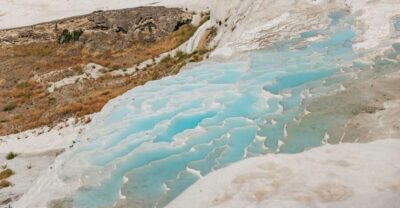

Antalya Pamukkale Hot Springs & Hierapolis Tour With Lunch
Read our review →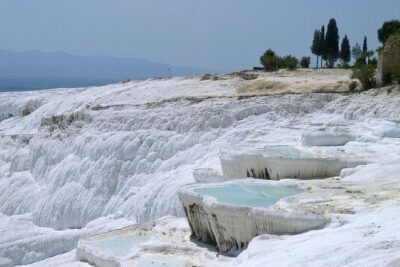
Full-Day Tour of Pamukkale from Antalya with Lunch
Read our review →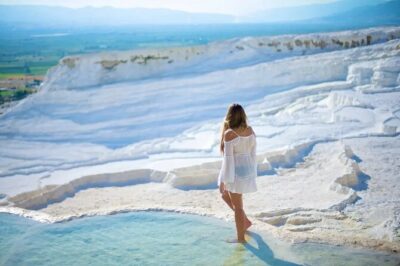
Full-Day Tour to Pamukkale From Marmaris w/ Breakfast & Lunch
Read our review →Browse the lists this tour appears in