
Reviewed · EPHESUS & VIRGIN MARY TOURS
NEW: Private The Most Detailed Ephesus Shore Excursion / with Lunch
Ephesus rewards a slow, curious look. This private Kusadasi excursion covers the famous sights plus less-discussed places such as the State Agora, Odeion, and Hercules Gate. I like the private format, which lets your guide adjust the day to your interests, and I like that lunch at a local restaurant is included. The main drawback is the extra admission cost, which can add €79 per person if you enter every separately priced site.
The tour also earns praise for its guides. Selin, Nesli, Ahmet, Asli, Mehmet, Tas, Devon, Mary, and Özgür, also called Oscar, are singled out for warmth, clear explanations, and family-friendly service. You should also know that some outings include a carpet demonstration, and the sales presentation can feel persistent if you are not shopping.
In This Review
- Key points to know before booking
- Why this private Kusadasi excursion works well
- Pickup from the cruise port, hotel, or airport
- Mary’s House gives the morning a different tone
- Ephesus begins with streets, trade, and civic life
- The State Agora explains how Ephesus governed itself
- The Odeion was both senate house and concert hall
- Domitian’s Temple shows imperial ambition
- Hercules Gate marks the change to a pedestrian street
- Hadrian’s Temple is one of the best-preserved façades
- The Terrace Houses reveal private Roman life
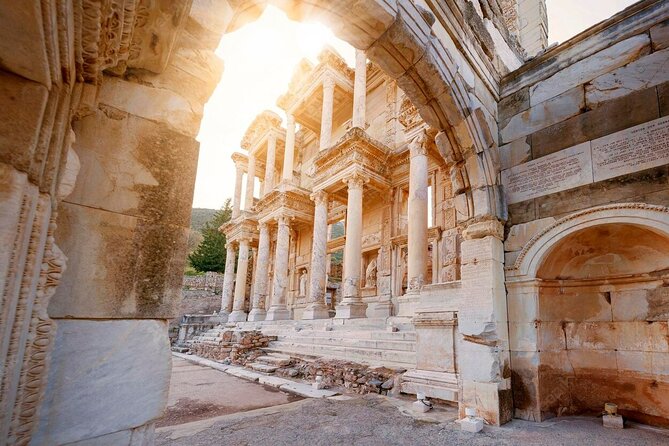
- The Library of Celsus remains the great visual prize
- The Great Theatre puts Ephesus on a huge scale
- Artemis, St. John, and the final choices
- Lunch and the shopping question
- What the €79.20 price really covers
- Who should book this Ephesus tour?
- Should you book it?
- FAQ
- How long does the private Ephesus excursion last?
- Where does cruise-port pickup take place?
- Is hotel pickup available?
- Is airport pickup available?
- Is this a private tour?
- Is lunch included?
- Are Ephesus entrance fees included?
- How much are the other stated admission fees?
- Does the tour include an English-speaking guide?
- What information must cruise passengers provide when booking?
Key points to know before booking
- Private Mercedes van transport: You get round-trip pickup in an air-conditioned vehicle, with parking fees covered.
- A serious Ephesus route: The two-hour ancient-city visit includes major monuments and smaller civic buildings many short tours skip.
- Lunch is part of the price: The meal is described as good and plentiful, with local touches such as figs and fresh pomegranate juice appearing on some outings.
- Extra fees matter: Ephesus, Mary’s House, the Terrace Houses, and St. John’s Basilica are not all covered by the advertised tour price.
- Flexible guiding: Your guide can adjust the pace and focus, useful for families, history fans, and cruise passengers.
- Allow time for shopping stops: Carpet demonstrations may be included in practice, even though they are not listed as a formal stop in the supplied schedule.
Why this private Kusadasi excursion works well
At $79.20 per person, this is priced attractively for a private half-day or longer outing with transport, a licensed English-speaking guide, lunch, and parking included. The value improves when you have several people in your group, since the vehicle and guide are not shared with strangers.
The word detailed is important here. A basic Ephesus visit may focus on the Library of Celsus, the Great Theatre, and Curetes Street. This route adds the State Agora, Odeion, Domitian’s Temple, Hercules Gate, public baths, fountains, and other civic remains.
You can also shape the day around your group. Families may want fewer long explanations and more movement. History fans may prefer extra time at the Terrace Houses or the ancient government buildings. Guides such as Selin, Nesli, and Özgür have been praised for changing the pace and answering questions rather than delivering a fixed speech.
The duration is listed as five to seven hours. That range matters because the full selection of stops can create a long day, especially if you add Mary’s House, the Terrace Houses, St. John’s Basilica, and the Temple of Artemis. The stated stop times add up to more than five hours before driving and lunch, so ask your guide at the start which places deserve your group’s full attention.
More ways to see Ephesus:
- FOR CRUISERS: Skip The Lines PRIVATE EPHESUS TOUR &On Time Return
★ 5.0 · 8,527 reviews - Top Choice For Cruisers: Ephesus, Mary’s House WITH TICKETS+LUNCH
★ 5.0 · 7,233 reviews - PRIVATE EPHESUS TOUR FOR CRUISERS: On-time Return and Skip-Line
★ 5.0 · 5,807 reviews
Pickup from the cruise port, hotel, or airport
For cruise passengers, pickup is at the exit gate of the immigration terminal at Kusadasi cruise port. Look for the OTTI Travel sign. Hotel pickup is arranged at reception, and airport pickup is at the exit gate of the domestic terminal with the same sign.
The private vehicle is a Mercedes van with air conditioning. Parking fees are included, and the driver has received praise for safe, careful service. That is especially useful on a full sightseeing day, when you want to save energy for the ruins rather than manage local transport.
Cruise passengers need to provide the ship name, docking time, disembarkation time, and re-boarding time when booking. Build in a clear return buffer. One group arrived late back at its ship, and the sailing was delayed by 30 minutes. That situation worked out, but you should not depend on a ship waiting.
Mary’s House gives the morning a different tone
The first stop is Meryemana, known as the House of Virgin Mary. You have about 30 minutes here, and the admission fee is not included.
This is a short, quiet stop before the larger archaeological site. It appeals most to visitors interested in Christian tradition and the religious story connected with Ephesus. The tour description presents it as a visit to the house itself, so do not expect a long archaeological session here.
The extra €18 fee is worth considering alongside your interests. If your main goal is Roman architecture, you may prefer to save time and money for the Terrace Houses or St. John’s Basilica. If the religious side of Ephesus matters to you, Mary’s House gives the day a useful change of pace.
Ephesus begins with streets, trade, and civic life
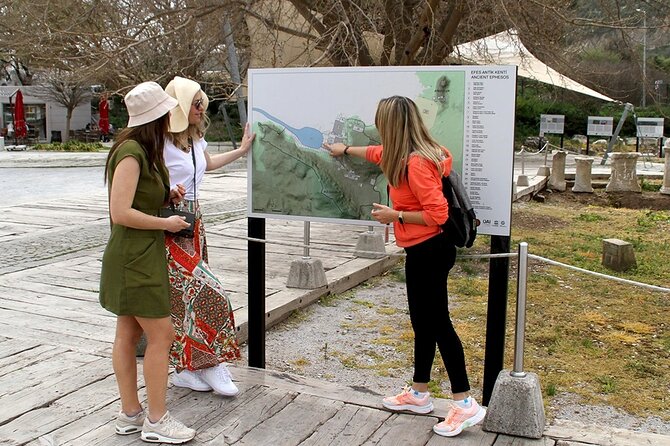
The main ancient-city visit is scheduled for about two hours. It includes Harbour Street, Marble Street, the Commercial Agora, latrina, Hadrian’s Temple, the Scolastica Baths, Trajan’s Fountain, Curetes Street, the Polio Fountain, Memnius Monument, Domitian’s Temple, the Prytaneion, Odeion, and State Agora.
That list shows why this is more than a quick photo stop at the Library of Celsus. You see the systems of daily life: roads, markets, toilets, baths, fountains, meeting spaces, and government buildings. I like this approach because it helps you picture Ephesus as a working city rather than a row of isolated ruins.
The site requires a moderate level of physical fitness. You will be walking over ancient streets, and the day includes stairs, particularly at the Terrace Houses. Comfortable shoes are a sensible choice, and you should tell your guide if your group needs a slower pace.
A few more tours and experiences worth a look
- Kusadasi Shore Excursion: Ephesus Sightseeing Tour with Lunch
★ 4.5 · 145 reviews - Kusadasi Shore Excursion : Ephesus Private Tour ONLY FOR CRUISE GUESTS
★ 5.0 · 101 reviews - Ephesus Shore Excursion: Private Guide and Vehicle
★ 4.5 · 98 reviews - Best Seller: Private Ephesus Shore Excursion from Kusadasi Port
★ 5.0 · 69 reviews
The State Agora explains how Ephesus governed itself
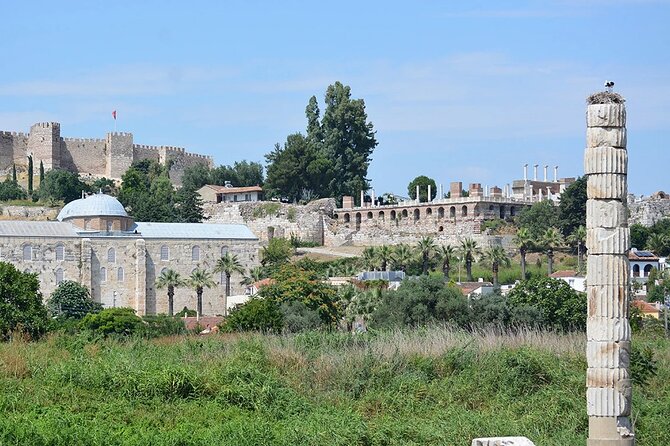
The State Agora sits south of the Basilica and dates to the Roman period, with origins in the first century BC. Unlike a commercial agora, it was used for official business and government discussions.
This is one of the more useful stops for understanding how the city functioned. The space was tied to public decisions, not simply buying and selling. Excavations also found older graves from the seventh and sixth centuries BC, an ancient stone-paved road, and an archaic terracotta sarcophagus.
A water reservoir at the corner of the agora points to the city’s water system. Water arrived through the Pollio Aqueduct, whose remains can still be seen about five kilometers away along the Selçuk to Aydin highway. Your guide can connect these details to the wider city, which is exactly where a private tour earns its keep.
The Odeion was both senate house and concert hall
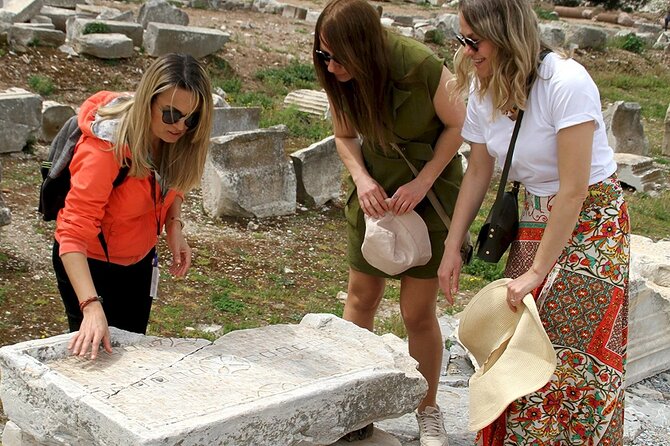
The Odeion looks like a small theatre, but it had two jobs. It served as the Bouleuterion, where the city’s senate met, and as an Odeum for musical performances.
Built in the second century AD by Publius Vedius Antonius and his wife Flavia Paiana, it held about 1,500 people. The stage building once had two stories, columns, and a wooden roof. Parts of the seating and the podium have been restored.
The political detail is especially helpful. Ephesus had two councils. The public Demos met in the Great Theatre, while the Bouleia met in this smaller building. In a few minutes, you can see how architecture reflected the city’s political structure.
Domitian’s Temple shows imperial ambition
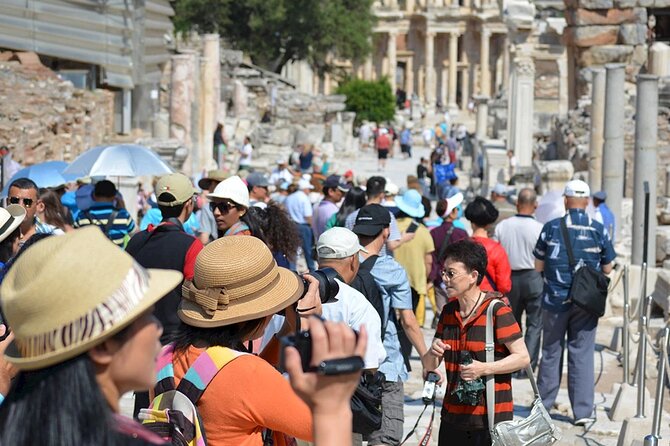
At the southern end of Domitian Street, this was the first known Ephesus structure dedicated to an emperor. It occupied a large terrace, about 50 by 100 meters, built over vaulted foundations.
Only fragments remain, but the scale tells you something about imperial worship and civic status. During Domitian’s reign, Ephesus received permission to become neocoros, meaning it could host an official emperor temple. That honor mattered greatly to an ancient city competing for influence.
The stop is brief, about 15 minutes. It works best when your guide explains the political meaning rather than treating the site as another pile of stones.
Hercules Gate marks the change to a pedestrian street
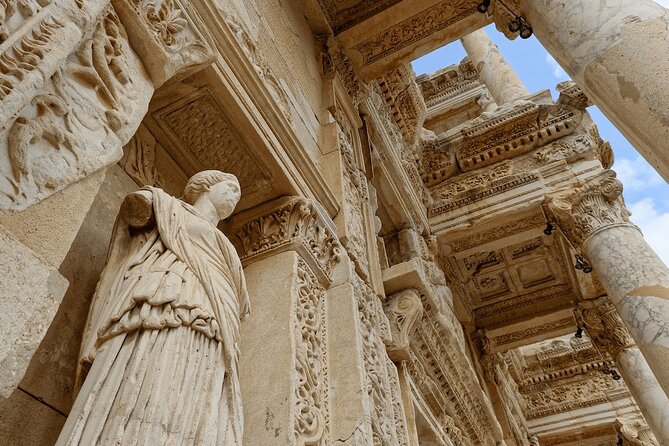
Near the end of Curetes Street, Hercules Gate is named for the reliefs of Hercules on its columns. The gate was moved to its present location in the fourth century AD, while the reliefs date to the second century AD.
Only the two sides survive. The gate narrowed access to Curetes Street, preventing vehicles from passing. That suggests the street had become pedestrian-only by the fourth century.
This is a small stop, but it gives you a practical sense of city planning. Ancient streets were not just scenic routes. They controlled traffic, commerce, status, and movement through the city.
Hadrian’s Temple is one of the best-preserved façades
The Temple of Hadrian is among the most attractive surviving structures on Curetes Street. Built before 138 AD, it honored Emperor Hadrian after his visit to Ephesus in 128 AD.
The façade has four Corinthian columns supporting a curved arch with a relief of Tyche, the goddess of victory. In front, inscribed pedestals once supported statues of four emperors from AD 293 to 305.
You get only about 10 minutes here, so this is a place to have your camera ready. The temple’s remaining details make it easy to appreciate the decorative side of Roman architecture, even with a short stop.
The Terrace Houses reveal private Roman life
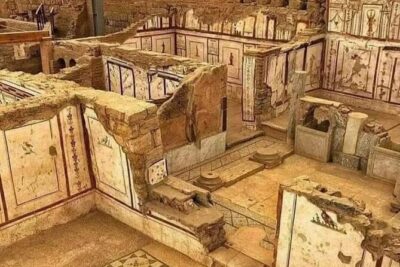
Across from Hadrian’s Temple, the Terrace Houses are among the most valuable additions to this route. They were homes for wealthy Romans, and their mosaics, frescoes, and room layouts offer a look at family life that public monuments cannot provide.
Six residential units occupied three terraces on the lower slope of Bulbul Mountain. The oldest building dates to the first century BC and remained in use until the seventh century AD. Two houses are open as a museum beneath protective roofing.
The visit takes about 30 minutes and includes stairs. One guide specifically helped a visitor understand that the effort was worth it, but you should still consider your group’s fitness. The extra admission is €15 per person. For many people, this is the best optional add-on because the decorated interiors give Ephesus a human scale.
The Library of Celsus remains the great visual prize
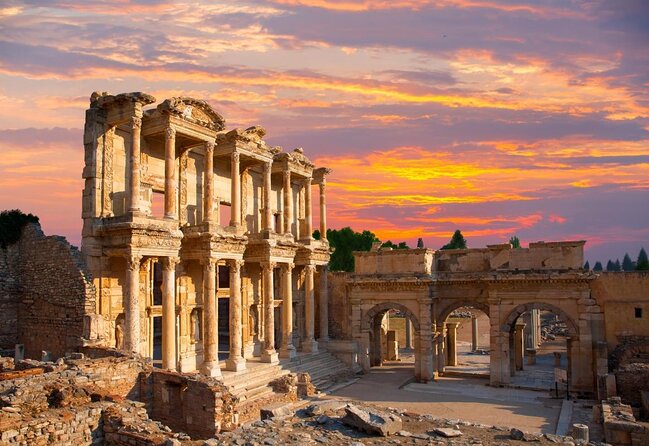
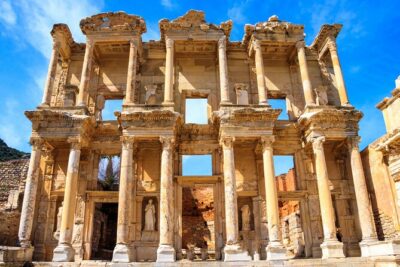
The Library of Celsus is the image most associated with Ephesus, and it deserves its fame. Built in AD 117 by Gaius Julius Aquila as a monument to his father, Gaius Julius Celsus Polemaeanus, it also served as Celsus’s tomb.
The library held more than 12,000 scrolls. Double walls behind the bookcases helped protect the manuscripts from heat, cold, and humidity. A statue of Athena, the goddess of wisdom, stood above the tomb.
Your guide can help you look beyond the grand façade. This building was both a memorial and a place of learning. Give yourself time to notice the columns, niches, inscriptions, and the way the structure frames the street.
The Great Theatre puts Ephesus on a huge scale
The ancient Greek Theatre is the largest structure in Ephesus and the biggest theatre in Anatolia, with space for about 25,000 people. It began in the Hellenistic period, around the third century BC, and was enlarged under Roman rule.
The seating area has 66 rows divided into three sections by walkways. The theatre hosted plays and concerts, but also religious events, political meetings, philosophical discussions, gladiator contests, and animal fights.
This is a strong stop for families because the size is easy to grasp. You can also see why the public Demos met here, while the city senate used the smaller Odeion. Admission to the theatre is shown as included in the stop information, but the wider Ephesus Ancient City admission is listed separately at €40 per person. Confirm exactly what your ticket covers before entering.
Artemis, St. John, and the final choices
The Temple of Artemis takes about 40 minutes and has a €0? No, the listed admission fee is not included, but no separate price is provided for this stop. Once one of the Seven Wonders of the ancient world, it now survives mainly as foundations in a former swampy area.
You need to set expectations. This is not a complete temple complex today. The most impressive sculptures and architectural pieces are displayed at the British Museum in London, while the site itself helps you understand the temple’s former scale and fame.
The Basilica of St. John takes another 40 minutes, with a €6 admission fee. Tradition holds that St. John spent his final years near Ephesus and was buried on Ayosolug Hill. A small chapel was built over the grave in the fourth century, and Emperor Justinian later ordered a large basilica.
This stop adds early Christian history to a day otherwise shaped by Greek and Roman remains. The tradition also connects St. John with Mary and Ephesus, giving the route a clear religious thread from Meryemana to the basilica.
Lunch and the shopping question
Lunch is included at a local restaurant, while drinks are extra. The meal has been described as good and plentiful, and local touches such as figs, fresh pomegranate juice, and an olive-oil and pomegranate dressing have made a strong impression.
That makes lunch more than a basic refueling break, especially after walking the ruins. You should budget separately for drinks, and ask your guide what the meal includes if you have dietary concerns.
Some outings include a carpet-weaving presentation after lunch. Learning how the rugs are made can be interesting, and the craft is treated with visible pride. The sales portion may feel uncomfortable if you are not shopping, since rugs can be expensive and staff may continue showing pieces.
I would treat this as a possible time cost, not an automatic reason to reject the tour. Tell your guide early if you want the historical visit and lunch without a long shopping stop. The supplied experiences show that guides often try to keep the tone polite, but the pressure can still vary.
What the €79.20 price really covers
The advertised price includes a licensed English-speaking guide, pickup and drop-off, a private air-conditioned Mercedes van, parking, and lunch. For a private outing, that is a strong starting price.
The extra admissions can change the final bill:
- Ephesus Ancient City: €40 per person
- House of Virgin Mary: €18 per person
- Terrace Houses: €15 per person
- St. John Basilica: €6 per person
Entering all four separately priced sites adds €79 per person. The Temple of Artemis does not have a separate amount stated in the supplied details, so ask before the day begins. Admission handling appears flexible, and one guide had already bought tickets so the group could avoid lines and settle the cost later.
The guaranteed skip-the-line service is useful at a major archaeological site, particularly on a cruise-port day. Still, ask which entrances and fees are covered. The price is attractive, but only if you treat admissions as part of the real budget.
Who should book this Ephesus tour?
I would choose this for a family, a couple, or a small group that wants control over the pace. It is especially good for people who want more than the standard highlights, or who prefer a guide to explain how government, water, religion, and private life fitted together.
It also suits cruise passengers who need a direct pickup and return plan. Give the operator precise ship times, and leave a generous margin before re-boarding.
I would hesitate if you want a no-cost day after booking, since entrance fees are substantial. I would also hesitate if you dislike shopping presentations or have trouble with stairs. Tell the guide your limits and priorities at the start, then use the private format to keep the day comfortable.
The strongest part of the experience is the human service. Guides including Selin, Nesli, Ahmet, Asli, Tas, Devon, Mary, and Özgür have been praised for making the history clear, treating children well, and tailoring the route. Requesting a preferred guide may be possible, but it is not guaranteed by the supplied information.
Should you book it?
Book this tour if you want a well-supported Ephesus day with a private vehicle, lunch, and a guide who can move beyond the famous library and theatre. The State Agora, Odeion, Hercules Gate, and Terrace Houses make the route more rewarding than a quick highlight reel.
Before paying, calculate the added entrance fees, confirm the exact stops, ask about any carpet presentation, and agree on your ship return time. If those details suit you, the $79.20 base price offers good value, especially for a group that wants flexibility and a fuller picture of Ephesus.
FAQ
How long does the private Ephesus excursion last?
The experience lasts approximately five to seven hours. The actual length can depend on your chosen stops, lunch, traffic, and how much time your private group spends at each site.
Where does cruise-port pickup take place?
Cruise passengers meet at the exit gate of the immigration terminal at Kusadasi cruise port. The guide holds a board marked with the OTTI Travel sign.
Is hotel pickup available?
Yes. For hotel pickup, the meeting point is at the hotel reception.
Is airport pickup available?
Yes. Airport pickup takes place at the exit gate of the domestic terminal. Look for the board with the OTTI Travel sign.
Is this a private tour?
Yes. Only your own group participates in the activity.
Is lunch included?
Yes. Lunch at a local restaurant is included. Drinks at lunch are not included.
Are Ephesus entrance fees included?
No. The listed admission fee for Ephesus Ancient City is €40 per person. Other separate fees may apply to Mary’s House, the Terrace Houses, and St. John’s Basilica.
How much are the other stated admission fees?
Mary’s House is €18 per person, the Terrace Houses are €15 per person, and St. John’s Basilica is €6 per person.
Does the tour include an English-speaking guide?
Yes. The tour includes an English-speaking professional licensed guide.
What information must cruise passengers provide when booking?
Cruise passengers must provide the ship name, docking time, disembarkation time, and re-boarding time.
More Lunch Experiences
- SKIP-THE-LINE: Group & Private Ephesus Tour ENTRY FEE & LUNCH
★ 5.0 · 935 reviews - ALL INCLUSIVE Private Ephesus, House of Virgin Mary with lunch
★ 5.0 · 819 reviews - Ephesus: Mary’s House Private & Group Tour with Ticket+Lunch
★ 4.8 · 738 reviews - ALL INCLUSIVE Private Ephesus, House of Mary, LUNCH, Entrances
★ 5.0 · 735 reviews
Just added around Kusadasi
- Kusadasi Boat Trip With Lunch And Hotel Transfer★ 4.5 · 63 reviews
- Pamukkale and Hierapolis★ 4.0 · 63 reviews
- FOR CRUISERS: Ephesus Tour from Kusadasi Port /GUARANTEED ON-TIME RETURN TO BOAT★ 5.0 · 64 reviews
- From Kusadasi/Selcuk: Highlights of Ephesus Small Group Tour★ 4.8 · 64 reviews
- Ephesus, Mary’s House, Artemis Tour(Private) (Skip the line)★ 5.0 · 64 reviews
- EPHESUS TOUR From Cruise Port: Private Tour & Skip The Line★ 5.0 · 65 reviews
- SKIP LINES Private Ephesus Tour for Cruise Guests ON TIME RETURN★ 5.0 · 66 reviews
- From Istanbul: Ephesus & Pamukkale 2-Day Trip with Flights★ 4.5 · 66 reviews
Ephesus & Virgin Mary Tours, compared.
FOR CRUISERS: Skip The Lines PRIVATE EPHESUS TOUR &On Time Return
Read our review →
ALL INCLUDED: Ephesus Ruins, Mary’s House Tour incl ENTRY TICKETS
Read our review →
SKIP-THE-LINE: Group & Private Ephesus Tour ENTRY FEE & LUNCH
Read our review →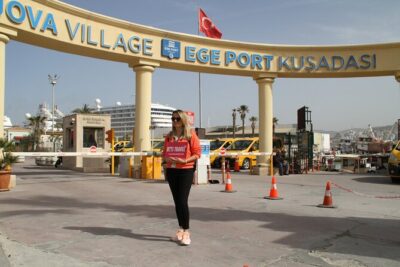
All Inclusive Private Access Ephesus Tour (SKIP-THE-LINE)
Read our review →Browse the lists this tour appears in