Reviewed · CAPPADOCIA TOURS
In The Footsteps Of Rumi
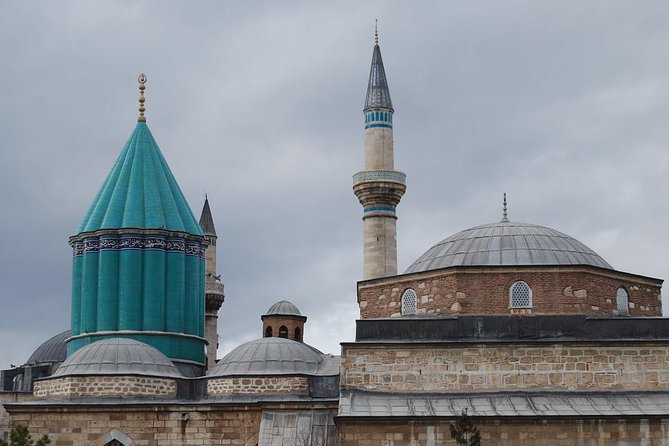
The turquoise dome tells only part of Konya’s story. This six to eight hour private tour follows Mevlana Celaleddin-i Rumi through the city, from his tomb at the Mevlana Museum to the people and places tied to his spiritual life. I like the mix of major sights and quieter memorials, and I like that guides such as Hayri, Fatma, Belkis, and Hüseyin bring personal warmth and strong knowledge of Sufism.
The tour also makes Rumi easier to understand as a person, not just as a poet whose lines appear on coffee mugs. You visit Shams-i Tebrizi’s tomb, the old gold bazaar linked with Rumi’s first whirling, and the graves of people who served or supported him. The main consideration is time: several stops are short, and the day may feel packed if you want long, quiet visits at every site.
In This Review
- Key points to know before booking
- Why Konya is the right place to meet Rumi
- Two hours beneath the turquoise dome at Mevlana Museum
- Alaeddin Tepesi and the meeting of Rumi and Shams
- Iplikci Mosque and the lost Altunaba Madrasah
- Shams-i Tebrizi’s tomb and the gold bazaar
- Ateşbaz-ı Veli and the spiritual meaning of the kitchen
- Tabib Ekmeluddin, Rumi’s doctor
- Meram Baglari and Cemel Ali Dede
- How the six to eight hour schedule feels
- What the $100 price gives you
- The guides are a major part of the experience
- Who should book In the Footsteps of Rumi?
- Should you book this Konya tour?
- FAQ
- How long does In the Footsteps of Rumi last?
- Where does the tour take place?
- Is the Mevlana Museum included?
- Is lunch included?
- Is transportation provided?
- Is this a private tour?
- What does the tour cost?
- Are tips included?
- Can I cancel for a full refund?
Key points to know before booking
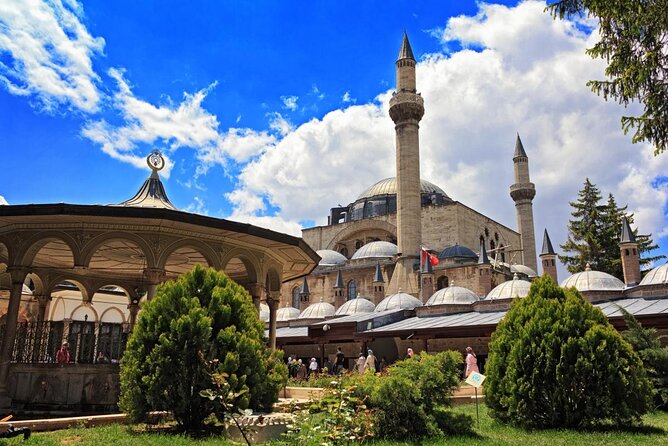
- Rumi’s tomb is the emotional center: Spend two hours at the Mevlana Museum, the former lodge of the whirling dervishes.
- The route goes beyond the famous museum: You also visit Shams-i Tebrizi, Ateşbaz-ı Veli, Tabib Ekmeluddin, and Cemel Ali Dede.
- The gold bazaar carries a striking legend: The sound of metalworkers’ hammers is said to have inspired Rumi’s first whirling.
- This is a private experience: Only your group participates, with private transportation and a professional guide.
- Lunch is included: The $100 price covers lunch, transport, entrance fees, and guiding, but not tips.
- Guides shape the day: Past guiding has included Hayri, Fatma, Belkis, Bilkish, and Hüseyin, with praise for English, storytelling, and personal attention.
Why Konya is the right place to meet Rumi
Konya is where Rumi spent much of his adult life and where the Mevlevi tradition took root. Born in the 13th century, Rumi became known as Mevlana, meaning our master, and his teachings later inspired the whirling dervishes.
You do not need to be Muslim, or already familiar with Sufi poetry, to get something from this tour. The route gives you a way to connect names, buildings, legends, and relationships. Rumi’s bond with Shams-i Tebrizi becomes more than a line in a guidebook. His connection to his cook, doctor, nanny, and students gives the story a human scale.
I especially like that the experience does not stop at the city’s best-known monument. The Mevlana Museum is essential, but the smaller tombs help explain the community around Rumi. You see how a spiritual tradition grew through teachers, companions, household figures, and places of study.
The private format matters here. Sufism includes ideas and practices that benefit from explanation, and your guide can adapt the discussion to your questions. You can ask about Rumi’s poetry, the Mevlevi order, the symbolism of whirling, or the difference between historical fact and local tradition.
Other Cappadocia trips people book alongside this one:
- Cappadocia Hot Air Balloon Ride / Royal Balloon
★ 5.0 · 6,829 reviews - Cappadocia: Goreme Hot Air Balloon Flight at Sunrise
★ 5.0 · 4,924 reviews - Cappadocia Hot Air Balloon Ride/ Turquaz Balloons
★ 5.0 · 3,330 reviews
Two hours beneath the turquoise dome at Mevlana Museum
The tour begins with the Mevlana Museum, the main reason many people come to Konya. Its fluted turquoise dome is one of the city’s most recognizable sights, and it marks the former lodge of the whirling dervishes.
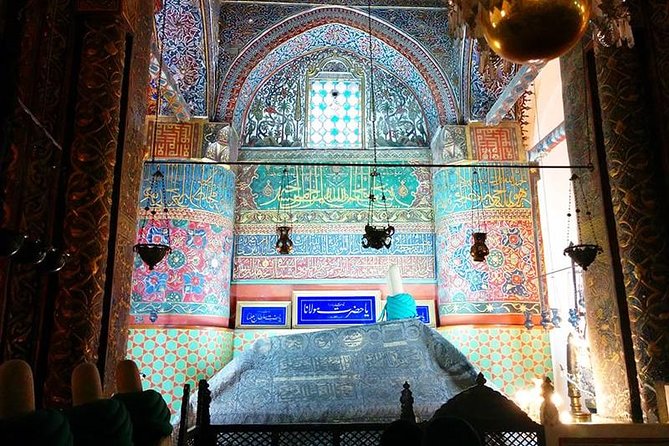
The two-hour visit gives you time to pay respects at Rumi’s tomb and see the site as more than a photogenic building. This was a Sufi center, a place connected with religious instruction and the Mevlevi community. The setting helps explain why Konya remains important to followers of Rumi and to people interested in Islamic mysticism.
For me, this is the point where the tour earns its price. A short stop can leave you with a photograph and a famous name. Two hours allows your guide to provide context and gives you some breathing room around the tomb and museum displays.
The museum is also the place to learn about the whirling dervishes and the tekke, or lodge, tradition. The whirling ceremony is not simply a performance. It is tied to Mevlevi religious practice, discipline, music, and a search for spiritual closeness. Your guide can help you approach the subject with respect rather than treating it as a colorful show.
Still, expect a solemn visit rather than an entertainment stop. The museum’s importance comes from its religious and historical meaning, so you should dress and behave appropriately. The supplied details do not specify a dress code, but modest clothing is a sensible choice at tombs and mosques.
Alaeddin Tepesi and the meeting of Rumi and Shams
The next stop is Kultur Park at Alaeddin Tepesi, identified as the place where Rumi and Shams-i Tebrizi first met. The visit lasts about five minutes and has no admission charge.
That short timing tells you what to expect. This is a story stop, not a long museum visit. Your guide provides the setting and explains why the meeting mattered, then the group moves on.
The relationship between Rumi and Shams is central to understanding Rumi’s transformation. Shams was his spiritual guide, inspiration, and companion. Their connection helped shape the mystical voice for which Rumi became famous.
I would listen closely here, even though the stop is brief. A few minutes at a location linked with their first meeting can add meaning to everything that follows, especially the visit to Shams’s tomb.
Iplikci Mosque and the lost Altunaba Madrasah
Iplikci Mosque dates to 1202 and offers a glimpse into Konya’s Seljuk-era religious world. The visit takes about 15 minutes and is free of charge.
The mosque once stood beside the Altunaba Madrasah, which was known as Rumi’s madrasah. The school itself has not survived, and that absence is part of the lesson. You are not simply looking at a complete historic complex. You are piecing together the setting where Rumi taught and studied from the buildings and remains that remain.
This is a useful stop for anyone who wants more than poetry and tombs. Rumi was a scholar and teacher as well as a mystic. The madrasah connection shows that his life was grounded in study, instruction, and the intellectual traditions of his period.
Fifteen minutes is enough for an introduction, but not for a long architectural examination. If you enjoy Seljuk architecture, ask your guide to point out what can still be understood from the mosque and its surroundings.
Something different for another day:
- Cappadocia Sunset ATV Tour
★ 5.0 · 2,984 reviews - Cappadocia Sunrise Hot Air Balloon Flight / Discovery Balloons
★ 5.0 · 2,882 reviews - Cappadocia: Goreme Hot Air Balloon Flight Over Fairychimneys
★ 4.8 · 2,347 reviews - Green (South) Tour Cappadocia (small group) with lunch and ticket
★ 5.0 · 2,317 reviews
Shams-i Tebrizi’s tomb and the gold bazaar
At the Sems-i Tebrizi Tomb and Mosque, the focus returns to Rumi’s closest spiritual companion. Shams-i Tebrizi’s tomb is considered one of the most important places connected with Rumi in Konya.
This stop gives the earlier meeting at Alaeddin Tepesi a destination. You first hear about the meeting, then visit the memorial of the man who became such a powerful influence on Rumi’s life.
The itinerary then continues to the historic gold bazaar. Local tradition connects this market with Rumi’s first whirling. According to the story, he heard apprentices striking sheets of gold with hammers and began to whirl in response to the rhythm.
It is a wonderful story because it links ordinary work with spiritual experience. You are not being asked to picture enlightenment in a distant mountain retreat. The legend places it amid metal, sound, labor, and the daily life of Konya.
The bazaar visit lasts about 40 minutes, longer than most of the smaller memorial stops. That gives you more time to take in the setting and understand the tale. The gold bazaar is still a commercial place, so this part may feel more active and less hushed than the tombs.
Keep the distinction between tradition and proven fact in mind. The account is presented as a story connected with the site, not as something you can verify from a surviving record. That does not make it useless. Local stories often show how a city remembers its most important figures.
Ateşbaz-ı Veli and the spiritual meaning of the kitchen
Ateşbaz-ı Veli was Rumi’s cook, and his tomb receives about 30 minutes. His role may seem modest beside that of a saint or scholar, but the stop reveals something important about Mevlevi life.
The kitchen, called Matbah-ı Şerif, was one of the key parts of a Mevlevi dervish house. Ateşbaz-ı Veli represented the authority connected with that kitchen. Food preparation was not treated as a trivial household task. It formed part of the discipline and organization of the lodge.
I like this stop because it widens the story. Rumi’s world was made up of people who taught, prayed, cooked, cared for children, and kept the community functioning. A tour that includes the cook gives you a more grounded picture of spiritual life.
Thirty minutes should allow your guide to explain the role without rushing. As with the other tombs, the value comes mostly from the story and interpretation rather than from a large collection of objects.
Tabib Ekmeluddin, Rumi’s doctor
The route returns to Kultur Park and Alaeddin Tepesi for the tomb of Tabib Ekmeluddin. He was Rumi’s doctor and one of the best-known physicians of the 13th century.
The visit lasts around 15 minutes and is free. It is another short stop, but it adds a practical detail to Rumi’s life. Great teachers still needed medical care, and the people who served them were part of their daily circle.
I would see this as a connective stop rather than a major monument. It may not have the visual power of the turquoise dome, but it helps build the fuller portrait the tour aims to provide.
The sequence also shows how the day is organized. You are not simply moving from one major attraction to another. You are tracing a network of relationships across Konya.
Meram Baglari and Cemel Ali Dede
The final listed visit takes you to Meram Baglari, where you see the tomb of Cemel Ali Dede. He was Rumi’s nanny and a person who loved and respected him.
The story attached to his name is memorable. It is said that he entertained young Rumi by carrying him on his back like a camel, which led to the name Cemel, meaning camel.
This is a gentle way to finish the route. After visiting scholars, companions, and religious figures, you end with someone connected to Rumi’s childhood. The story makes Rumi feel less remote and monumental. Before he was a famous poet and spiritual leader, he was a child cared for by people around him.
The stop lasts about 15 minutes. You may find it especially appealing if you enjoy personal stories more than formal dates and architecture.
How the six to eight hour schedule feels
The full experience lasts approximately six to eight hours. That is a substantial part of your day, but the itinerary covers a lot of ground and includes private transportation.
The day combines walking and riding, based on the experiences described by past participants. Private transport is useful because the sites are spread around Konya. It also lets your guide keep the route focused instead of making you work out each connection by public transport.
The schedule is not evenly divided. The museum receives two hours, the gold bazaar about 40 minutes, and the other stops range from five to 30 minutes. That rhythm suits people who want a broad introduction to Rumi’s Konya.
It may be less suitable if you prefer to linger at one site for a long time. The five-minute Alaeddin Tepesi visit, for example, is enough for an explanation but not a leisurely exploration. Tell your guide if you have a particular interest in one location, though the available information does not promise that the route can be changed.
Lunch is included, which makes the long duration easier to manage. All listed fees and taxes are also included. Tips for the guide and driver are not included, so plan for those separately if you feel the service deserves it.
What the $100 price gives you
At $100 per person, this is not a bare sightseeing transfer. You are paying for a private guide, private transportation, lunch, entrance fees, and a full half-day or longer of interpretation.
The value depends on how much you want to understand. If you only want to see the Mevlana Museum, visiting independently would likely be simpler. If you want the links between Rumi, Shams, the Mevlevi kitchen, the madrasah, and the lesser-known tombs, the guide is the main reason to book.
A private tour is also useful for solo visitors and couples. You are not sharing the guide’s attention with a large group, and the experience can feel more personal. One solo participant described the day with Hayri as similar to spending time with a local friend. That is a good indication of the tone you can hope for, though guide assignment can vary.
Group discounts are available, so the per-person value may improve if you are traveling with friends or family. Confirmation is provided at booking, and the experience is offered Monday through Sunday during the stated operating period. Pickup is offered, but the supplied details do not specify every pickup location, so confirm that when you reserve.
The guides are a major part of the experience
The strongest praise centers on the guides. Hayri is described as offering clear information about Rumi and Konya, while Fatma is praised for combining stories with historical facts. Hüseyin is noted for explaining the Seljuk period while leading a walking and riding route.
Belkis, also spelled Bilkish in one account, is described as especially warm, passionate, and willing to show less familiar places. Another guide shared Rumi’s poetry in Arabic, Persian, and English, helping connect the written work with the religious figure behind it.
These details matter because this is not a tour where the buildings can carry the whole experience by themselves. Several stops are modest. Their meaning depends on the guide’s ability to explain who lived, studied, prayed, or worked there.
English ability has been praised, but the specific guide is not guaranteed. I would ask the operator who will lead your tour and mention any particular interests before the day begins. If you want a stronger focus on poetry, Sufi teachings, Seljuk history, or local legends, saying so early can improve the conversation.
Who should book In the Footsteps of Rumi?
I would recommend this experience to anyone who wants to understand Rumi in both historical and spiritual terms. It suits first-time visitors to Konya, readers of Rumi’s poetry, people curious about Sufism, and anyone who prefers a local guide to a self-guided museum visit.
It is also a good fit for solo visitors who want company without joining a large group. Couples and small family groups should appreciate the private format and included transport.
You may want to skip it if your main goal is a whirling dervish performance. The tour teaches you about the dervishes and visits an old tekke setting, but the supplied details do not state that a ceremony is included.
You should also think twice if you dislike religious sites, tombs, or stories based partly on local tradition. This tour spends much of its time around sacred memorials and people connected with Rumi’s spiritual circle.
Free cancellation is available if you cancel at least 24 hours before the start time. Changes or cancellations made later are not accepted for a refund. Service animals are allowed, the tour is near public transportation, and most people can participate, but the information provided does not give a detailed mobility assessment.
Should you book this Konya tour?
Book it if you want the Mevlana Museum to be the beginning of your understanding, not the end. The best feature is the human chain around Rumi: Shams as spiritual companion, Ateşbaz-ı Veli in the kitchen, Tabib Ekmeluddin as doctor, and Cemel Ali Dede from Rumi’s childhood.
The $100 cost is fair for a private six to eight hour experience with lunch, transport, entrance fees, and guiding. I would make sure your schedule allows the full day and confirm which guide will lead you.
For a quick monument visit, this is more than you need. For a thoughtful introduction to Rumi, Sufism, and Konya’s living memory of its most famous son, it offers a meaningful route through the city.
FAQ
How long does In the Footsteps of Rumi last?
The tour lasts approximately six to eight hours.
Where does the tour take place?
The experience takes place in Konya, Turkey, with visits to the Mevlana Museum, Kultur Park and Alaeddin Tepesi, Iplikci Mosque, Shams-i Tebrizi’s tomb, the historic gold bazaar, Ateşbaz-ı Veli’s tomb, and Meram Baglari.
Is the Mevlana Museum included?
Yes. Admission to the Mevlana Museum is included, and the visit lasts about two hours.
Is lunch included?
Yes. Lunch is included in the tour price.
Is transportation provided?
Yes. Private transportation is included, and pickup is offered.
Is this a private tour?
Yes. Only your group participates in the activity.
What does the tour cost?
The listed price is $100 per person. Group discounts are available.
Are tips included?
No. Tips for the guide and driver are not included.
Can I cancel for a full refund?
Yes, if you cancel at least 24 hours before the experience start time. Cancellations made less than 24 hours in advance are not refunded.
Just added around Cappadocia
- South Cappadocia Small Group Day Tour – Kaymakli Underground City★ 5.0 · 17 reviews
- Cappadocia Luxury Private Tour★ 5.0 · 17 reviews
- Private Cappadocia Tour in 1 Day with English Speaking Guide★ 5.0 · 18 reviews
- Top Notch Cappadocia: All in 1 Day Cappadocia Tour★ 5.0 · 18 reviews
- Cappadocia: Camel Safari★ 4.0 · 18 reviews
- Cappadocia ATV tour with transfer and guide★ 5.0 · 18 reviews
- Hot Air Balloon Flight in Cappadocia with Champagne★ 4.0 · 19 reviews
- Cappadocia Daily Mix Tour★ 5.0 · 19 reviews
Cappadocia Tours, compared.
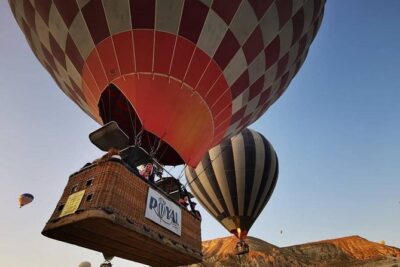
Cappadocia Hot Air Balloon Ride / Royal Balloon
Read our review →
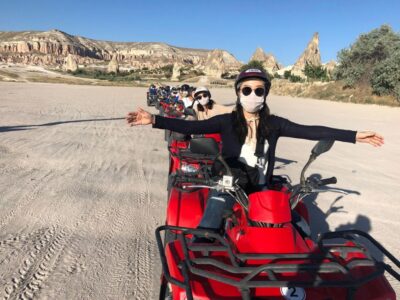
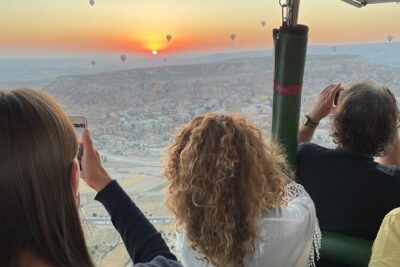
Cappadocia Sunrise Hot Air Balloon Flight / Discovery Balloons
Read our review →
Goreme Hot Air Balloon Flight Over Fairychimneys
Read our review →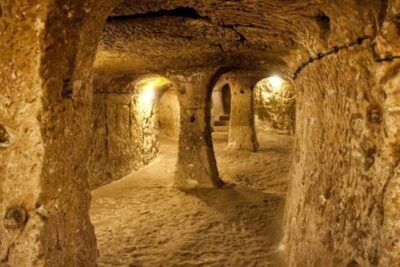
Green (South) Tour Cappadocia (small group) with lunch and ticket
Read our review →
Cappadocia Hot Air Balloons or Kelebek Flight
Read our review →