
Reviewed · TURKEY
Gobeklitepe, The World’s First Temple
Ancient stones rewrite the human story. This private day tour links Göbeklitepe, Abraham’s Cave, Balıklıgöl, and Harran in one long but rewarding loop from Şanlıurfa. I especially like the private air-conditioned vehicle with Wi-Fi, and I like that the day begins and ends at GAP Şanlıurfa Airport, which is useful if you are flying in for a short visit.
The English-speaking guides Serdar and Murad have both earned warm praise for clear explanations and thoughtful conversation. The main drawback is the price, $377.30 per person, plus the fact that you can spend about three hours in the vehicle because the sites are spread across southeastern Türkiye.
In This Review
- Key points to know before booking
- Why Göbeklitepe changes the way you see prehistory
- Arriving at GAP Şanlıurfa Airport
- Harran’s beehive houses and old scholarly center
- Abraham’s Cave, Balıklıgöl, and Şanlıurfa’s sacred heart
- A long day made easier by private transport
- The included Turkish meal and the value of $377.30
- Guides, language, and the pace of the day
- Who should book this Göbeklitepe tour?
- Should you book it?
- FAQ
- Where does the tour begin and end?
- Are domestic flights included?
- How long does the tour last?
- Is this a private tour?
- What language is the tour offered in?
- What is included in the price?
- Do I need to confirm anything before pickup?
Key points to know before booking
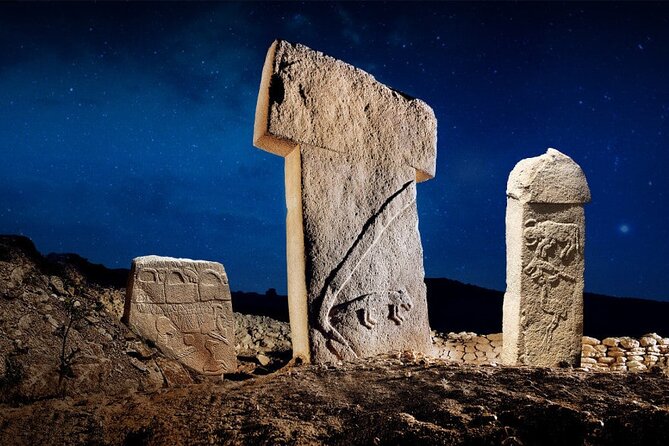
- Göbeklitepe gets the most time: Expect about two and a half hours at the site, enough to study its T-shaped pillars and carved animals without rushing through.
- This is a true private tour: Only your group participates, so the pace and discussion can be adjusted to your interests.
- The airport transfer adds real value: Pickup and drop-off at GAP Şanlıurfa Airport make this practical for a flight-based visit.
- Harran adds a second ancient world: Its ruins, beehive houses, old mosque, and scholarly past give the day more range than a single-site excursion.
- A meal is included: The tour ends with a traditional Turkish dinner, while one account also describes a substantial lunch stop, so confirm the meal timing when arranging your day.
- Plan for a full day outdoors: You need a moderate level of physical fitness, and Şanlıurfa can be extremely hot, with one account describing temperatures above 40 degrees Celsius.
Why Göbeklitepe changes the way you see prehistory
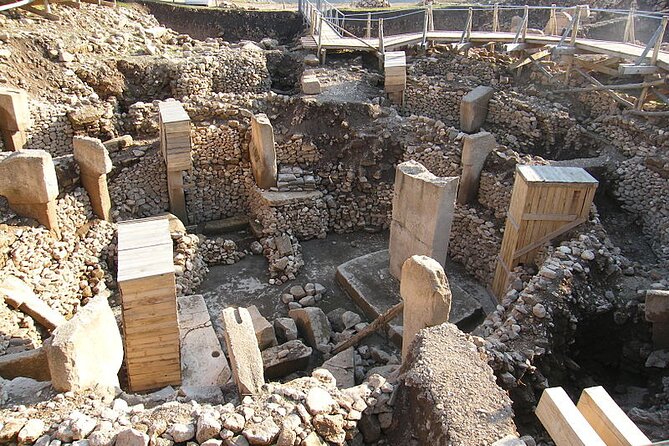
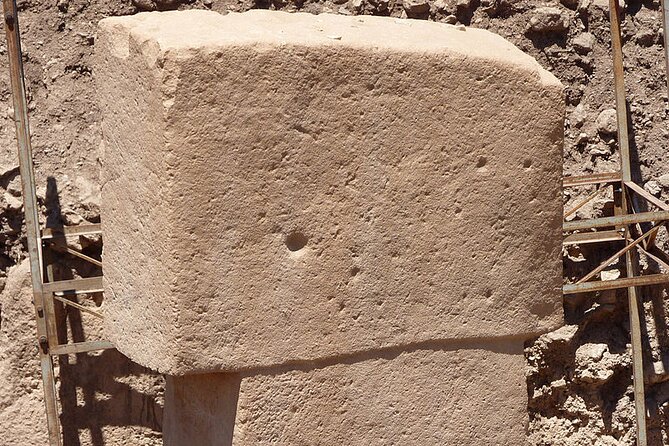
Göbeklitepe is the reason most people book this experience. The site dates back roughly 12,000 years, to the Mesolithic and Pre-Pottery Neolithic periods. That places its monumental stonework before pottery, metal tools, writing, and the cities most people associate with organized religion.
The familiar picture of early humans is simple: small groups hunt, gather food, and move often. Göbeklitepe complicates that picture. Its massive carved pillars suggest that people were capable of planning, transporting, shaping, and assembling monumental structures long before the rise of the cities of Mesopotamia.
I would not treat the popular label world’s first temple as a final answer to every question. Archaeologists continue to study the site, and much remains underground. But the scale, age, and decoration make Göbeklitepe one of the most important archaeological places in the world.
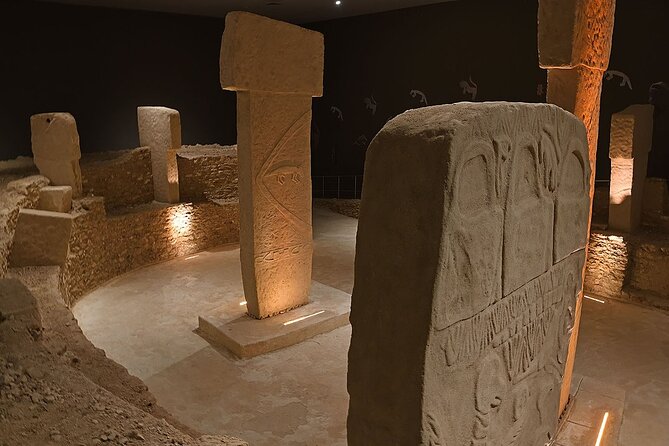
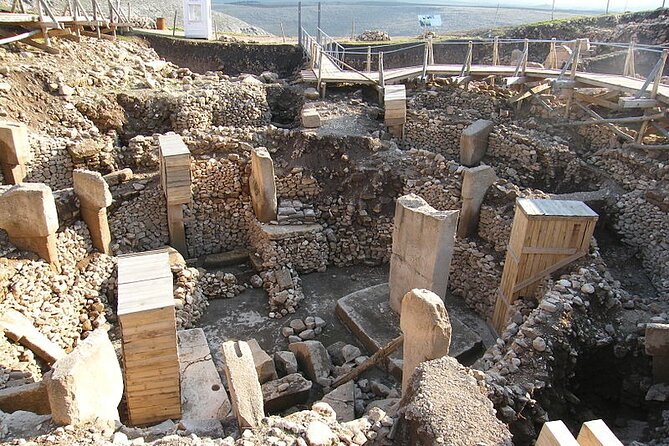
The site contains T-shaped pillars, some with reliefs of wild animals and plants. You may see carved snakes, predators, birds, and other figures, along with stylized human forms. The details are not decorative filler. They are clues to how people in this period understood animals, community, ritual, and the world around them.
A guide matters here. Without context, you see upright stones in a protective structure. With a strong explanation, you begin to consider the work involved in cutting and moving stone, the role of repeated animal images, and the way this site may connect geography, climate, technology, and human cooperation.
Serdar has been praised for explaining both established findings and the ideas that archaeologists are still testing. Murad brings training in history and philosophy, and his conversations focus on the possible links between Göbeklitepe, religion, gathering, and the origins of organized human cooperation.
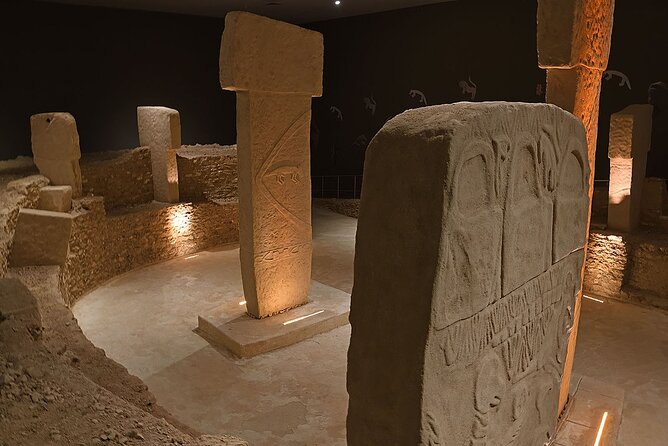
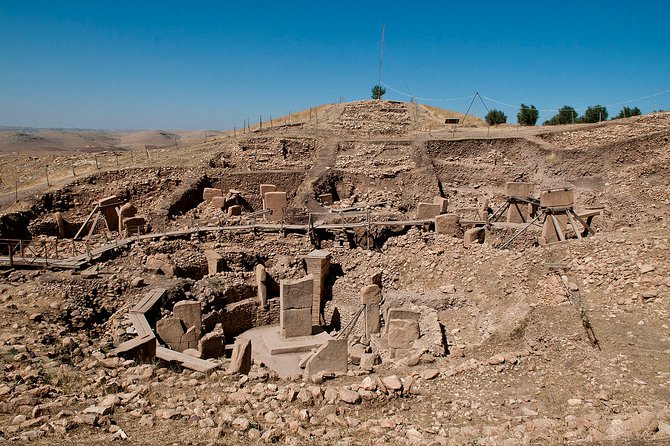
You receive about two hours and 30 minutes at Göbeklitepe, which is generous compared with a quick photo stop. That time lets you look closely at the central pillars, decorated belts, high-relief predators, the bird with a human face, the Urfa Statue, the skin-head, and other objects connected with the site.
The main caution is that Göbeklitepe is still being excavated. You will not see a fully revealed ancient city with every question answered. If you expect complete temples, reconstructed interiors, and a tidy story, the site may feel unfinished. If you enjoy evidence, open questions, and archaeology in progress, that unfinished quality is part of the appeal.
Other Turkey trips people book alongside this one:
- Istanbul: Bosphorus Dinner Cruise & Show with Private Table
★ 4.8 · 44,561 reviews - Istanbul: Daytime or Sunset Sightseeing Cruise & Audio Guide
★ 4.8 · 14,430 reviews - Istanbul: Bosphorus Dinner Cruise with Turkish Night Show
★ 4.8 · 10,127 reviews
Arriving at GAP Şanlıurfa Airport
The day starts with an airport meet and greet at GAP Şanlıurfa Airport. A representative is supposed to meet you at the arrival gate and identify you by name along the route to the exit. You are given written instructions before the journey, and you should keep them on your phone or tablet.
You need to contact Deren Koray Tourism at least 24 hours before the transfer. Confirm your group size and the number of suitcases, since the vehicle arrangement depends on both. Domestic flights are not included, so you must arrange your own connection to Şanlıurfa.
The introduction to Şanlıurfa gives you useful regional context. The city is often called The City of Prophets, and its modern name, Şanlıurfa, reflects the heroism associated with the city after World War I. The guide may also explain the reforms of Mustafa Kemal Atatürk and how the Turkish Republic was formed.
This opening stop is brief, listed at about five minutes, so do not expect a city tour at the airport. Its real purpose is to get you oriented and into the vehicle quickly.
Harran’s beehive houses and old scholarly center
Harran comes either before or after the main archaeological visit in the exact flow of the day, but the experience includes about an hour in the town and another 45 minutes among the ruins. Together, those stops give you a useful look at Harran’s religious, commercial, and intellectual importance.
The town is associated with Abraham in biblical and Torah traditions, and it is mentioned as early as Genesis 13. Long before its later Islamic period, Harran was linked with the worship of the moon god Sin. Its location helped it serve as a commercial and agricultural center for many different peoples and empires.
The list is long: Akkadians, Babylonians, Assyrians, Hittites, Persians, the Alexandrian Empire, Romans, Byzantines, Seljuks, Ayyubids, and others all left their mark. That sequence is not just a parade of names. It helps you understand why Harran feels like a crossroads rather than a site tied to one single culture.
One of the most memorable sights is the group of conical, beehive-shaped houses. They are called Altınbaşa in the supplied tour details and are described as similar in style to much older dwellings, though the existing houses do not date to the fourth century BC. Their unusual shape makes them instantly recognizable and gives Harran a strong visual identity.
The town also includes the remains of the Grand Mosque, with a square tower, a central pool, and ruins connected with an old Arab university. The tour presents this university as the oldest in known history and explains Harran’s role as a center of learning. The wording is grand, but the larger point is sound for a visitor: Harran was not a minor rural settlement in its prime.
From 718 to 913, the town reached a major cultural period under Islamic rule. Scholars associated with Harran include Thabit Ibn Qurra, Al-Battani, and Ibn Taymiyyah. The site gives you a reminder that medieval scientific and intellectual life was spread across many centers, not confined to the places most familiar from standard European history courses.
Harran later lost power under Abbasid rule, suffered during Crusader campaigns, and saw renewed construction during the time of Saladin. Hospitals, bazaars, schools, and bathhouses were built during that period. In 1260, Hulagu Khan’s forces destroyed much of the city, including major gates and mosque structures, after which Harran became a much smaller settlement.
You should expect ruins rather than a polished archaeological park. That is a plus if you like seeing ancient remains in their local setting, but it also means you need to listen closely to the guide to picture the vanished city.
Abraham’s Cave, Balıklıgöl, and Şanlıurfa’s sacred heart
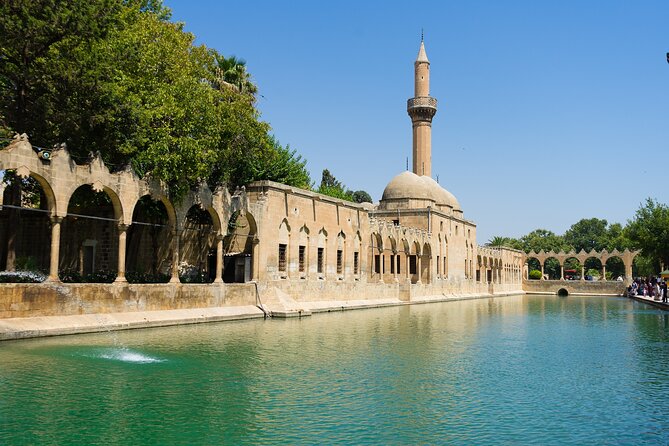
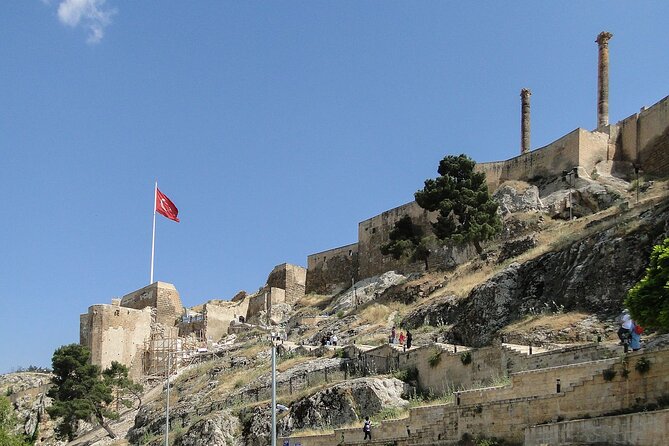
Back in Şanlıurfa, the tour visits Abraham’s Cave beside the citadel and the holy fishpond of Balıklıgöl. The setting is central to the city’s religious identity, and it offers a clear change of mood after the open archaeological spaces at Göbeklitepe and Harran.
Local tradition says Abraham was thrown into a great fire at this spot. The fire became a pond, and the burning wood turned into fish. The story is central to the sacred character of the place, so you should approach it as a living religious site rather than only as an archaeological attraction.
The stop lasts about 30 minutes and admission is listed as free. That is enough time to see the pond and cave area, take in the atmosphere, and hear the story from your guide. It is not long enough for an extended visit through every part of Şanlıurfa’s old center.
One account also describes a stop in the old bazaar and a demonstration of traditional carpet making. Those activities are not listed as fixed itinerary stops, so you should not assume they are guaranteed on every departure. Still, they show the sort of local additions that may be possible on a private day, depending on timing and your guide.
Something different for another day:
- Best of Istanbul 1, 2 or 3-Day Private Guided Istanbul Tour
★ 5.0 · 8,922 reviews - FOR CRUISERS: Skip The Lines PRIVATE EPHESUS TOUR &On Time Return
★ 5.0 · 8,527 reviews - Istanbul: Basilica Cistern Fast-Track Entry and Audio Guide
★ 4.6 · 7,521 reviews - Top Choice For Cruisers: Ephesus, Mary’s House WITH TICKETS+LUNCH
★ 5.0 · 7,233 reviews
A long day made easier by private transport
The private vehicle is one of the strongest practical features of this experience. You travel with your own group in an air-conditioned car or van, with bottled water, Wi-Fi, parking, fuel, and private transportation included.
That matters in southeastern Türkiye. The roads between Şanlıurfa, Göbeklitepe, and Harran take time, and the heat can be serious. One account describes a day above 40 degrees Celsius, with an air-conditioned restaurant providing welcome relief. You still need sensible clothing, water, sun protection, and shoes suited to walking around archaeological remains.
The tradeoff is road time. A full day includes roughly three hours in the car, according to one detailed account. I would see that as the cost of combining three very different places in one outing. If you prefer slow exploration, café breaks, and a single archaeological site, this schedule may feel too packed.
The private format helps. You are not locked into the needs of a large group, and the guide can spend more time on the topics that interest you. A history-minded group may want extra discussion at Göbeklitepe, while another group may care more about religious traditions, Harran’s houses, or local food.
Pickup and drop-off at the airport are especially helpful if you have limited time in Şanlıurfa. You can arrive, tour, eat, and return to the airport without arranging separate taxis or hotel transfers. If you are staying in the city, confirm the pickup plan, since the published meeting point is the airport.
The included Turkish meal and the value of $377.30
At $377.30 per person, this is not a budget day trip. The price makes more sense for a small private group that values convenience, a dedicated guide, airport transfers, and a full itinerary.
Included items cover the air-conditioned vehicle, bottled water, fuel surcharge, parking, Wi-Fi, private transportation, soft drinks, and dinner. The final meal is intended to introduce you to Şanlıurfa’s regional cooking. One account describes a delicious lunch at a comfortable air-conditioned restaurant, while the scheduled details place the included traditional meal at the end of the day as dinner.
Because those meal details do not line up perfectly, I would confirm the timing before you set your flight or plan another meal. The important point is that food is part of the experience, not an extra cost added at the end.
The value is strongest when you are traveling with family or friends and can share the private vehicle and guide service. Group discounts are offered, but the exact savings are not provided. Solo visitors should compare the price with a standard group trip or separate taxi and guide arrangements before committing.
Guides, language, and the pace of the day
The tour is offered in English. Serdar has been described as friendly, punctual, and easy to understand, with strong command of English. Murad is noted for his background in history and philosophy and for helping visitors connect the archaeological evidence with larger questions about religion and human society.
An Italian-speaking interpreter can be arranged on request, according to one account. The main guide in that situation spoke English, while the interpreter provided Italian support. If you need interpretation, request it in advance rather than assuming it will appear automatically.
The schedule is active but not extreme. You need moderate physical fitness, and you should be ready for walking at Göbeklitepe, Harran, the cave area, and the ruins. Wheelchair users must explain in advance whether they are fully dependent on a chair or able to walk or transfer partly, so the operator can understand the support needed.
The tour operates every day, with listed hours from midnight to 11:30 p.m. Those broad hours describe availability rather than the exact sightseeing schedule. Your pickup and return time should be confirmed directly before the trip.
Who should book this Göbeklitepe tour?
I would recommend this experience to anyone with a serious interest in archaeology, early religion, ancient settlements, or the history of southeastern Türkiye. It is also a smart choice if you have only one day and want to connect Göbeklitepe with Şanlıurfa’s sacred sites and Harran’s ruins.
It suits visitors who prefer a private guide to a fixed group schedule. The strongest part of the day is the conversation: Göbeklitepe raises questions that are difficult to answer with a quick audio guide or a few display panels.
I would hesitate if you dislike long drives, hot weather, or unfinished archaeological sites. The price also deserves careful thought, especially for solo visitors. You pay for the vehicle, airport handling, guide, included food, and the ability to keep the day private, not just for entry to Göbeklitepe.
Should you book it?
Book this tour if you want the most convenient one-day introduction to Şanlıurfa and its ancient surroundings, especially when arriving or departing by air. The combination of Göbeklitepe, Harran, Abraham’s Cave, Balıklıgöl, and a regional meal gives you a broad sense of the area rather than a single isolated monument.
I would book it for a history-focused trip and request a guide such as Serdar or Murad if available. Before paying, confirm the exact pickup time, meal timing, number of suitcases, and whether any extra bazaar or carpet stops are planned. Skip it if your main goal is a cheap visit to Göbeklitepe alone, since the private format and eight-hour schedule cost more than a basic transfer.
FAQ
Where does the tour begin and end?
The tour begins at GAP Şanlıurfa Airport in Şanlıurfa and includes drop-off at the airport at the end of the day.
Are domestic flights included?
No. Domestic flights are not included in the tour price.
How long does the tour last?
The experience lasts approximately eight hours.
Is this a private tour?
Yes. Only your group participates, and transportation is provided in a private air-conditioned vehicle.
What language is the tour offered in?
The tour is offered in English. An Italian interpreter can be requested, according to the provided tour information.
What is included in the price?
The price includes private transportation, an air-conditioned vehicle, Wi-Fi, bottled water, fuel surcharge, parking fees, soft drinks, and dinner.
Do I need to confirm anything before pickup?
Yes. You should contact Deren Koray Tourism at least 24 hours before the scheduled transfer to confirm transportation, the number of people, and the number of suitcases.
Just added around Turkey
- Bodrum Fullday Private Tour with Licenced Guide & Dlx Van★ 4.5 · 17 reviews
- Manavgat River Cruise and Bazaar Tour w/ Lunch★ 3.5 · 17 reviews
- 2-Day Gallipoli and Troy Tour from Istanbul and return★ 5.0 · 17 reviews
- South Cappadocia Small Group Day Tour – Kaymakli Underground City★ 5.0 · 17 reviews
- Cappadocia Luxury Private Tour★ 5.0 · 17 reviews
- Cleopatra Island Boat Trip, Lunch and Soft Drinks include ,from Marmaris★ 4.0 · 17 reviews
- Sapadere Canyon & Waterfall Tour w. Lunch & Transfer from Alanya★ 4.5 · 17 reviews
- Sabiha Gokcen Airport Transfer Service (SAW)★ 4.0 · 17 reviews