
Reviewed · EPHESUS & VIRGIN MARY TOURS
Ephesus, Priene, Miletos and Didyma Tour
Four ancient cities, one long Aegean day.
This private, eight-hour tour packs Ephesus, Priene, Miletos, and Didyma into one well-planned circuit from Kusadasi. I like the unusual route, which goes far beyond the usual Ephesus visit, and I like that entry fees, transport, and a licensed guide are included in the $210 price. The main drawback is simple: the pace is brisk, and four archaeological sites in one day will suit energetic walkers better than anyone wanting a slow, lingering visit.
I also like the flexible feel reported by guests who traveled with guides such as Volkan and Olkan, along with driver Mohammed. The guide and driver combination has earned especially warm praise for friendly service, clear explanations, and help adjusting the day to personal interests. Just remember that Priene, Miletos, and Didyma are open-air ruins with sun exposure, uneven ground, and limited shade.
In This Review
- Key points at a glance
- Why this four-site route is worth your day
- Ephesus: the grand opening act
- Priene: a hillside city built on a grid
- Miletos: where trade met philosophy
- Didyma: a temple built for prophecy
- Transport, guides, and the private-tour advantage
- What $210 really buys you
- Pace, walking, and what to pack
- Who should book this tour?
- Should you book the four-city circuit?
- FAQ
- How long does the tour last?
- What sites does the tour visit?
- What is included in the price?
- How much does the tour cost?
- Is this a private tour?
- Where can pickup and drop-off take place?
- Which guide languages are available?
- Can I cancel for a full refund?
- Can I reserve now and pay later?
- Is the tour suitable for wheelchair users?
Key points at a glance
- Four major ancient sites in eight hours: Ephesus supplies the famous Roman grandeur, while Priene, Miletos, and Didyma add Greek city planning, philosophy, and oracle traditions.
- A private tour with a driver and guide: You avoid a large group and can ask questions throughout the day.
- The $210 price includes the important costs: Site entry, an air-conditioned vehicle, professional driver, guide, and pickup and drop-off are covered.
- Priene rewards sturdy shoes: Its hillside position brings fine views, but also uphill walking and uneven ancient paving.
- Didyma ends the day on a dramatic note: The enormous Temple of Apollo is one of the most memorable stops, even in its unfinished state.
- This is best for archaeology fans: You will see a lot, but the schedule leaves less time for sitting, shopping, or taking long breaks.
Why this four-site route is worth your day
Most visitors coming through Kusadasi head straight to Ephesus, and for good reason. It is one of the finest ancient sites in Turkey. Yet Ephesus alone gives you only part of the Aegean story.
This tour connects four places that played different roles in the ancient world. Ephesus shows you the machinery of a major Roman city. Priene reveals how carefully a Hellenistic town could be designed. Miletos brings you to the birthplace of early Greek philosophy and a once-powerful port. Didyma shifts the focus from daily city life to religion, pilgrimage, and prophecy.
I find that contrast valuable. You are not simply walking through four sets of broken columns. You are comparing city planning, trade, politics, theater, philosophy, and worship across one day.
The private format also matters. With your own vehicle and guide, you are not tied to the pace of a large coach group. You can ask why a building mattered, pause for a photograph, or request more explanation at a site that catches your attention. The tradeoff is that this route covers a lot of ground, so the day feels more like an archaeological survey than a relaxed outing.
More ways to see Ephesus:
- FOR CRUISERS: Skip The Lines PRIVATE EPHESUS TOUR &On Time Return
★ 5.0 · 8,527 reviews - Top Choice For Cruisers: Ephesus, Mary’s House WITH TICKETS+LUNCH
★ 5.0 · 7,233 reviews - PRIVATE EPHESUS TOUR FOR CRUISERS: On-time Return and Skip-Line
★ 5.0 · 5,807 reviews
Ephesus: the grand opening act
Ephesus is the largest and most famous stop, so it comes first. The site gives you a powerful sense of scale as you walk along Marble Street, a road used roughly 2,000 years ago.
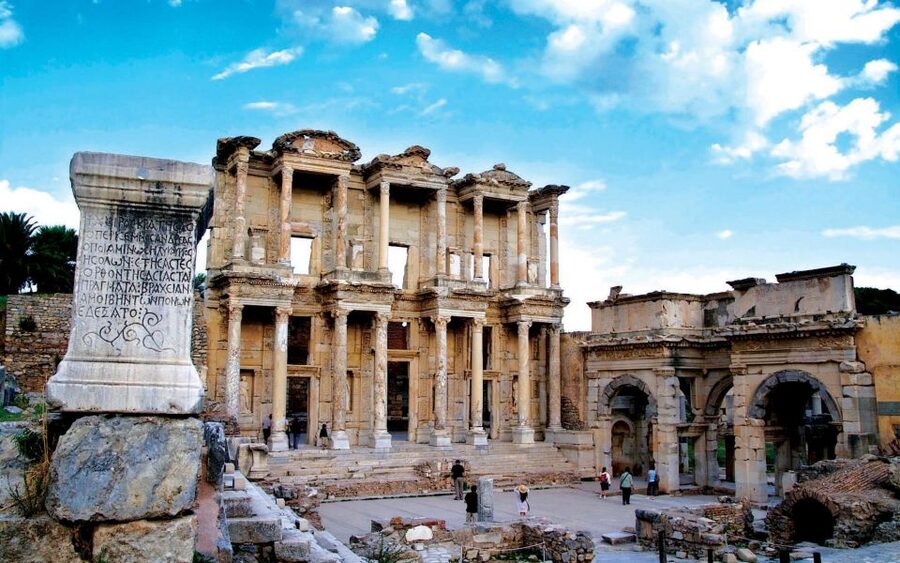
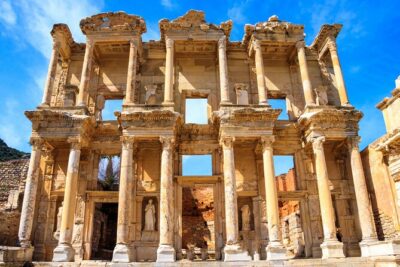
The Library of Celsus is the expected star, with its ornate facade and familiar columns. But your guide can help place it within the larger city rather than treating it as a photo stop. Ephesus was a major Roman center, and the remains show how public life, trade, entertainment, and religion fit together.
The Great Theatre is particularly useful for understanding the city’s size. It could hold about 24,000 people and served more than theatrical performances. Political assemblies and gladiatorial events also took place there. Looking across the seating, you get a clearer idea of how public opinion and spectacle worked in an ancient city.
Keep an eye out for the carved footprint and heart that point toward the ancient brothel. It is often described as one of the world’s earliest advertisements. This small detail adds humor to a site otherwise filled with imperial monuments and serious religious buildings.
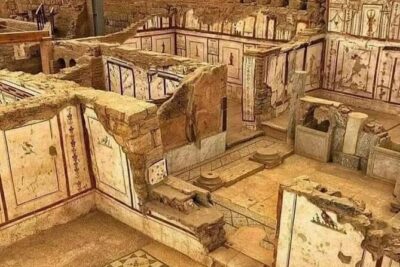
You may also have the option to visit the Terrace Houses for an extra charge. These were the luxurious homes of wealthy Ephesians, decorated with mosaics and frescoes. If domestic life interests you, they add color and human detail to the grand public ruins. If you are trying to control costs or save energy for the other three sites, the main Ephesus route already offers plenty to see.
Ephesus can be hot, exposed, and tiring. Wear shoes with a firm sole, carry water, and use the early part of the day wisely. The tour includes skip-the-line access according to the supplied details, which is useful because waiting at the first major site would make an already full schedule even tighter.
Priene: a hillside city built on a grid
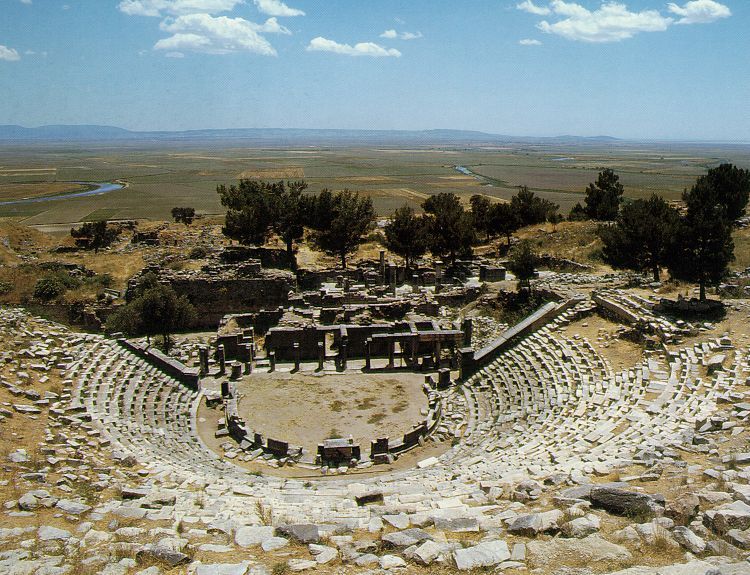
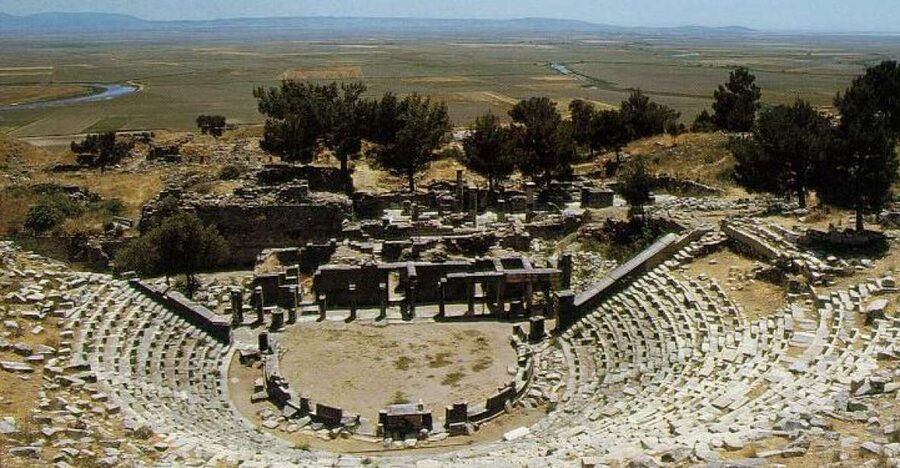
Priene changes the mood completely. Instead of a broad Roman metropolis, you get a smaller Hellenistic city set high on a hillside.
Its fame comes partly from its street plan. Priene was laid out on a regular grid, a carefully ordered design associated with the planner Hippodamus. You can see how streets and public spaces were arranged rather than simply added over many centuries.
The Temple of Athena Polias is the key monument. Its Ionic columns and hillside setting make it one of the most elegant stops on the route. The ruins are less complete than Ephesus, but that is part of their appeal. You need to look at the setting, the plan of the city, and the relationship between buildings instead of relying on a single restored facade.
The theater is another strong point. From its seating area, you get a wide view toward the Meander River delta. The view helps explain Priene’s strategic position and gives you a welcome pause from close-up stonework.
There is a practical catch. Priene requires uphill walking over uneven ground. The site is not suitable for wheelchair users, and anyone with limited mobility should discuss the terrain before booking. For most able walkers, the climb is manageable, but it is not the place for flimsy sandals or a rushed wardrobe.
Miletos: where trade met philosophy
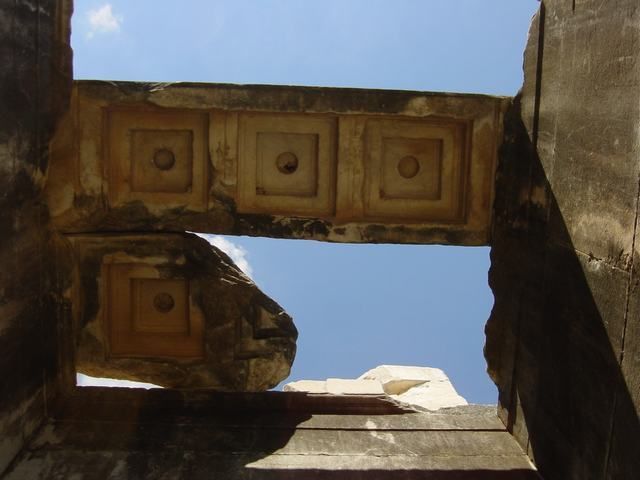
Miletos once looked out over an important harbor and was one of the leading cities of the ancient Greek world. It is also associated with early philosophers such as Thales and Anaximander.
That connection gives the stop a different character. At Ephesus, the focus is often Roman public life. At Miletos, your guide can explain how a trading city produced thinkers who tried to understand nature and the universe through reason rather than myth alone.
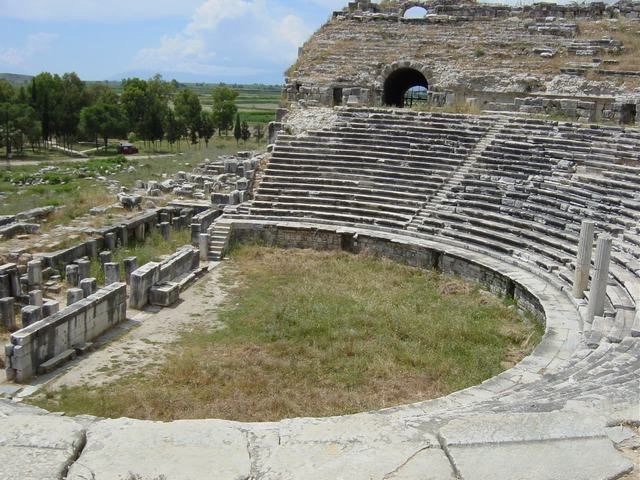
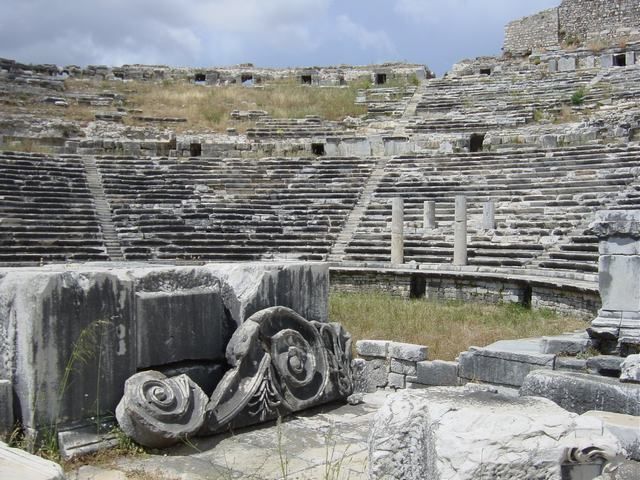
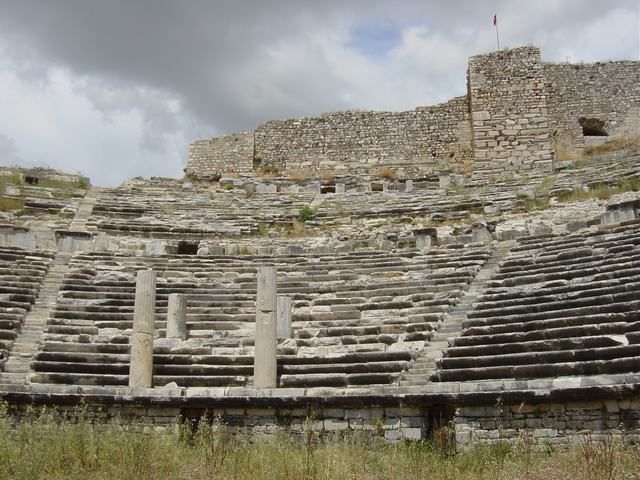
The theater is the most immediately impressive structure. It could seat around 15,000 people, a large audience for a city whose power depended on seaborne trade and regional influence. Walk through the seating and imagine the theater not as an isolated ruin, but as a civic meeting place tied to the city’s political and social life.
The Baths of Faustina are another worthwhile stop. They were built by Faustina, the wife of Emperor Marcus Aurelius, and remain remarkably intact in places. Bath complexes were not just for washing. They were social centers, and their scale shows how Roman customs shaped older Greek cities.
You will also see the Agora, once a vast marketplace. The ancient harbor is no longer the busy Mediterranean port it was, but the open spaces help you picture goods, ships, merchants, and public business moving through the city.
Miletos is more open and less polished than Ephesus. That can be a strength if you prefer ruins that require imagination, but it also means fewer complete buildings and less shade. Listen closely to the guide here, since the historical meaning is easier to miss when the remains appear scattered.
Something different for another day:
- PRIVATE NO HIDDEN FEES Ephesus, Mary’s House Guided Tour /GRP OPT
★ 5.0 · 2,455 reviews - For Ship Guests:BEST SELLER EPHESUS PRIVATE TOUR & On Time Return
★ 5.0 · 2,029 reviews - ALL INCLUDED: Ephesus Ruins, Mary’s House Tour incl ENTRY TICKETS
★ 5.0 · 1,670 reviews - Ephesus Temple of Artemis and House of Mary Private Half Day Tour
★ 5.0 · 1,573 reviews
Didyma: a temple built for prophecy
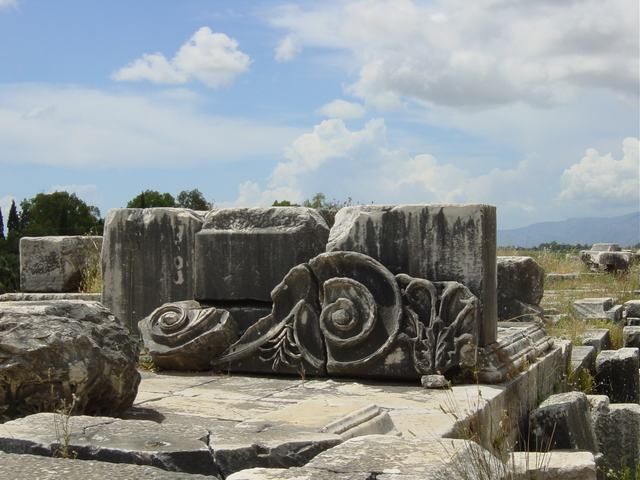
Didyma provides the strongest final image of the day. It was not a city in the same sense as Ephesus, Priene, or Miletos. It was a major sanctuary centered on the Temple of Apollo.
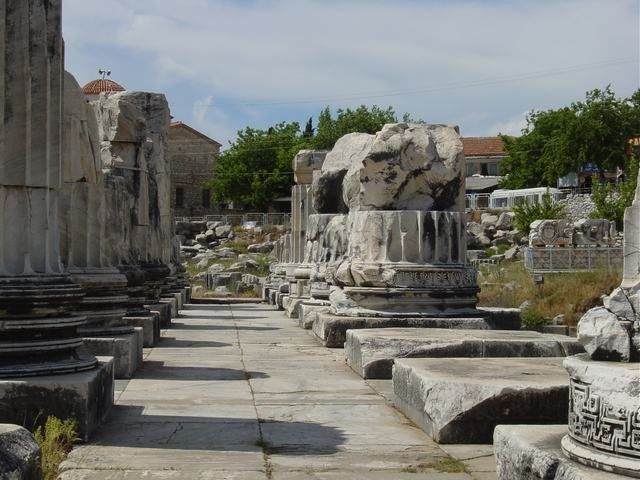
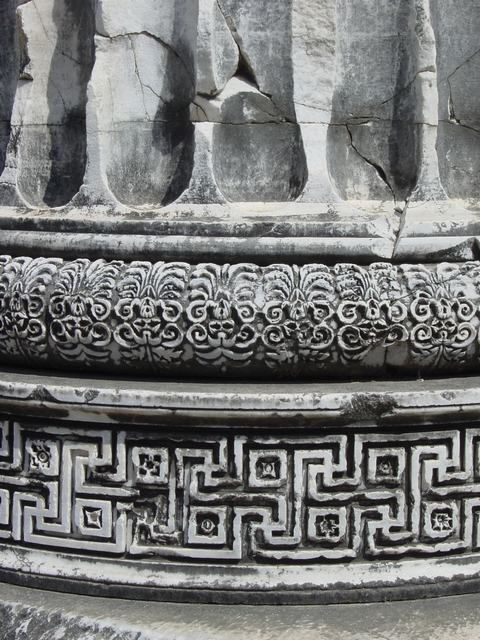
The scale is hard to grasp from photographs. Three tall, fluted columns still rise above the ruins, giving you a clear sense of the building’s ambition. The temple was among the largest in the Greek world, yet it was never fully completed. That unfinished quality makes the site feel both grand and strangely vulnerable.
Didyma was famous for its oracle, whose reputation rivaled Delphi. Pilgrims came seeking guidance, including people whose decisions could affect kingdoms and empires. The Sacred Way connected the sanctuary with the wider religious world, and your guide can bring the myths and rituals to life as you walk through the remains.
This is also a good place to think about the difference between a ruin and a museum display. Didyma does not hand you a perfect reconstruction. Instead, huge blocks, column drums, stairs, and fragments show the effort required to create a sacred center of this size.
The site is exposed, so a sun hat and sunglasses are not optional extras on a bright day. Bring a camera too. The remaining columns, wide foundations, and carved details make Didyma especially photogenic in the later part of the afternoon.
Transport, guides, and the private-tour advantage
The tour uses an air-conditioned luxury vehicle with a professional driver. That is important on this route, since the four sites are spread across the Aegean Coast Region and the day includes substantial road time between stops.
Pickup and drop-off are available at Kusadasi port or a local hotel. Hotel pickup is also listed for Aydin and Izmir, so you should confirm the exact meeting point when booking. If you are coming from a cruise ship, port pickup is the most convenient arrangement because it removes the need to find local transport before the tour begins.
The guide languages listed include English, German, French, Dutch, Spanish, Italian, Greek, and Russian. The supplied details identify the tour as a private group experience, which means you can expect a more personal setting than a large shared excursion.
Guide quality is one of the tour’s strongest points. Volkan is praised for his enthusiasm and for explaining the region from early Anatolian history onward. Another booking identifies Olkan and driver Mohammed as an especially kind and helpful team. Since guide assignments can change, treat these names as examples rather than a guarantee.
The driver matters too. A smooth, comfortable ride makes a difference when you are visiting four sites in one day. You will spend time sitting between ruins, and a professional driver lets you conserve energy for the walking portions.
What $210 really buys you
At $210 per person, this is not the cheapest way to see Ephesus. It is also not a simple admission ticket. The price includes a licensed professional guide, air-conditioned private transport, a professional driver, pickup and drop-off, and entry fees for Ephesus, Priene, Miletos, and Didyma.
That makes the value easier to judge. If you tried to arrange four sites independently, you would need to coordinate transport, tickets, route planning, and timing. You would also lose the historical thread that connects the cities.
The cost makes the most sense for solo visitors, couples, families, or small groups who want a full day without managing every detail themselves. A solo visitor may find the tour particularly useful because private transport and a guide can save a great deal of time.
The optional Terrace Houses visit at Ephesus is a possible extra expense. Personal items and anything not specifically listed are also outside the price, so budget separately for food, drinks, and other personal purchases. The key point is that the major site entry fees are included, which reduces unpleasant surprises.
Pace, walking, and what to pack
Eight hours is enough for a strong overview, not an exhaustive study of every ruin. You will be moving across a large route, and the four stops each deserve more time than the schedule can probably provide.
I would wear comfortable walking shoes with good grip. The tour specifically advises comfortable shoes, sunglasses, a sun hat, and a camera. Those suggestions are practical, not decorative. Much of the day takes place outdoors, and Priene in particular includes uneven hillside walking.
Bring identification, since a passport or ID card is required. Wheelchair users should not book this experience because it is listed as unsuitable for wheelchair access.
The best attitude is to accept a little compression. You will not have unlimited time at every column, theater, and temple. In return, you get a broad picture of the ancient Aegean world in a single day, with a guide helping you understand what you are seeing.
Who should book this tour?
I would choose this tour if you have a serious interest in archaeology, ancient Greek and Roman culture, or the development of cities. It is also a smart option if you have only one day in the Kusadasi area and want more than the standard Ephesus visit.
It suits people who value efficient planning, private transport, and access to a guide. The route is especially good for anyone who wants to compare four very different sites rather than spend an entire day at one location.
I would hesitate if you dislike long sightseeing days, struggle with uneven surfaces, or prefer slow travel with long café stops. Families with young children may find the number of sites tiring, though the private format gives you more control than a large group tour.
The high 4.9 rating from 21 bookings matches the experience’s strongest qualities: broad coverage, friendly staff, clear explanations, and a well-organized route. The most consistent praise goes to the guide and driver team, not just the ruins themselves. That matters because a busy archaeological day can feel confusing without good storytelling and sensible timing.
Should you book the four-city circuit?
Book it if you want to see the full range of ancient Aegean culture in one day and you are ready for a brisk walking schedule. Ephesus is the headline, but Priene, Miletos, and Didyma are what make this experience special.
At $210 per person, the tour offers solid value for a private, all-inclusive day, especially when you count four entrance fees, a vehicle, driver, pickup, and a multilingual guide. If your priority is comfort, context, and efficient sightseeing from Kusadasi, this is a strong choice.
If you want a slow visit focused only on Ephesus, choose a shorter tour instead. If you want the wider story, bring sturdy shoes, protect yourself from the sun, and reserve this route.
FAQ
How long does the tour last?
The tour lasts eight hours.
What sites does the tour visit?
It visits Ephesus, Priene, Miletos, and Didyma.
What is included in the price?
The price includes a licensed professional guide, an air-conditioned luxury vehicle, a professional driver, pickup and drop-off, and entrance fees to the four listed sites.
How much does the tour cost?
The listed price is $210 per person.
Is this a private tour?
Yes. The experience is described as a private group tour.
Where can pickup and drop-off take place?
Pickup and drop-off are available at Kusadasi port or a local hotel. Pickup from hotels in Aydin and Izmir is also listed.
Which guide languages are available?
The listed languages are Spanish, English, Italian, Dutch, Greek, German, French, and Russian. The included guide information also names English, German, French, and Dutch.
Can I cancel for a full refund?
Yes. You can cancel up to 24 hours in advance for a full refund.
Can I reserve now and pay later?
Yes. The reserve-now, pay-later option lets you book without paying on the day of reservation.
Is the tour suitable for wheelchair users?
No. The tour is listed as unsuitable for wheelchair users because the archaeological sites include uneven and difficult walking areas.
Just added around Kusadasi
- Best of Ephesus Private Tour FOR CRUISE GUESTS / On Time Return★ 5.0 · 17 reviews
- Kusadasi: Full–Day Boat Trip with Lunch★ 4.3 · 18 reviews
- Istanbul: 8-Day Cappadocia, Ephesus, Konya, Pamukkale Tour★ 4.9 · 18 reviews
- “Ephesus tours” the “house of virgin mary tours” Tours from KUSADASI CRUİSE PORT★ 5.0 · 18 reviews
- Small Group Ephesus Tour from Selcuk / Kusadası★ 5.0 · 18 reviews
- From Istanbul: 2-Day Ephesus, Pamukkale, & Hierapolis Tour★ 4.1 · 18 reviews
- Cesme: Small Group Boat Tour with Open Buffet Lunch★ 4.5 · 18 reviews
- Ephesus Shore Excursion from Kusadasi Port with Guide★ 5.0 · 18 reviews
Ephesus & Virgin Mary Tours, compared.
FOR CRUISERS: Skip The Lines PRIVATE EPHESUS TOUR &On Time Return
Read our review →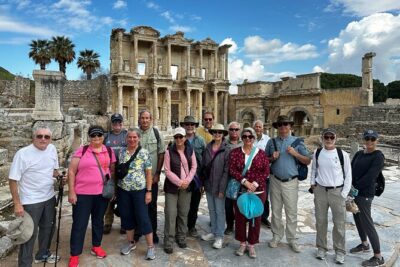
ALL INCLUDED: Ephesus Ruins, Mary’s House Tour incl ENTRY TICKETS
Read our review →
SKIP-THE-LINE: Group & Private Ephesus Tour ENTRY FEE & LUNCH
Read our review →
All Inclusive Private Access Ephesus Tour (SKIP-THE-LINE)
Read our review →Browse the lists this tour appears in